
Buying guide
Best Aquarium Heater for a 55-Gallon Tank: 7 Reliable Options
A 55-gallon aquarium usually needs about 200 watts in an average room, but two smaller heaters can give you better coverage and a safer fallback.
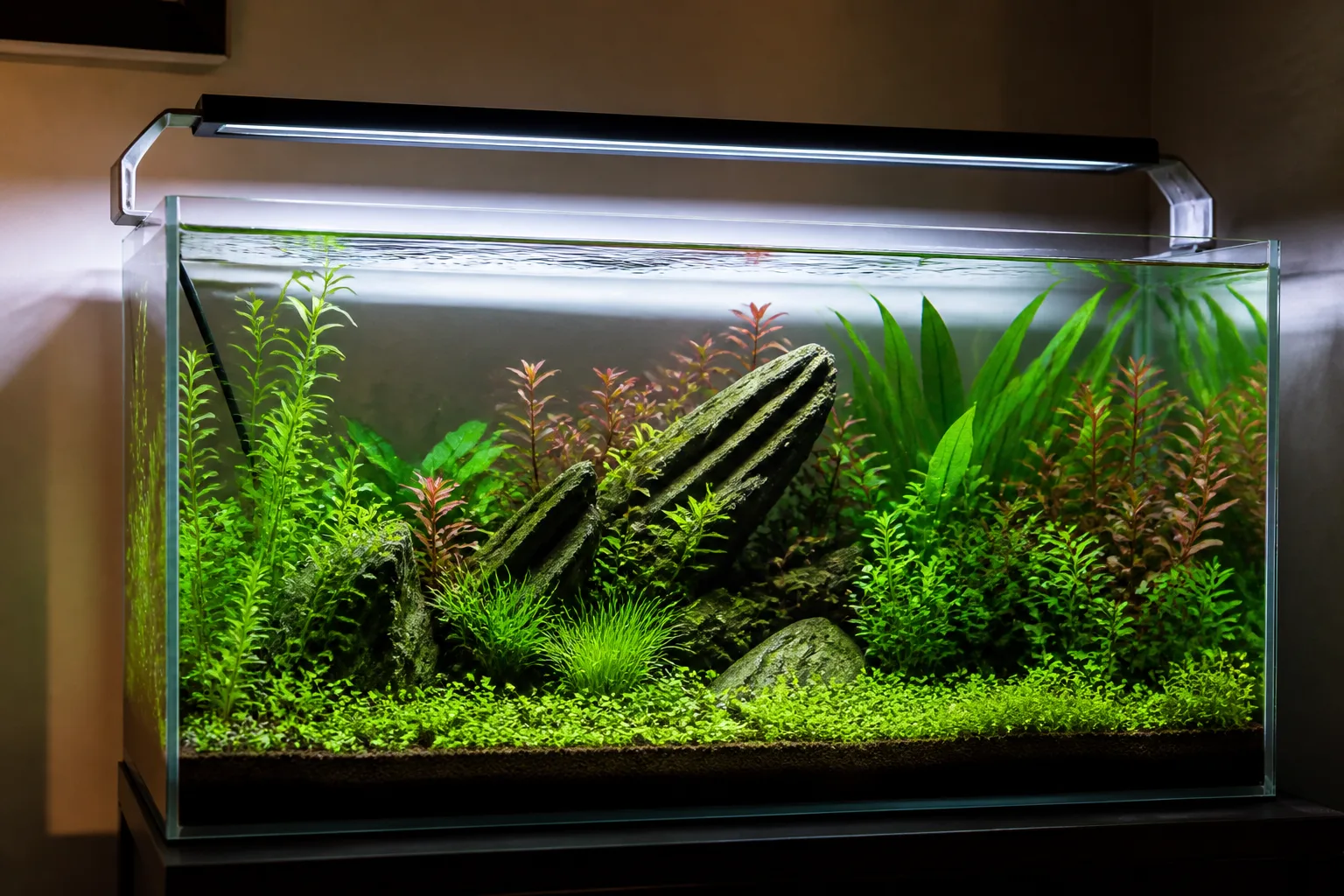
A 55-gallon aquarium holds enough water that heating strategy matters more than a simple wattage label. In a typical room, a 200-watt adjustable heater is a sensible starting point. A colder room, an open-top tank, or a large temperature gap may call for more capacity. Two heaters can spread heat along the tank and leave some warmth if one unit fails, but they also add another thermostat to monitor. We compared current models and setup approaches by published specifications. We did not test them in a live aquarium.
Quick comparison
| Product | Best for | Main advantage | Main drawback |
|---|---|---|---|
| EHEIM Jager 200W Heater | Traditional adjustable heating | Proven glass-tube format | Long body |
| Fluval E200 Electronic Heater | Digital monitoring | Electronic display | Costs more |
| Aqueon Pro Adjustable 200W Heater | Value setup | Straightforward adjustable control | Needs an external thermometer |
| Cobalt Aquatics Neo-Therm 200W | Low-profile layouts | Flat electronic body | Verify current availability |
| Hygger 200W Digital Aquarium Heater | Visible controller | Set temperature display | Several similar models |
| Aqueon Preset 200W Heater | Simple tropical setup | No dial to set | Fixed temperature |
| Two 100W Adjustable Aquarium Heaters | Heat distribution | Split load and coverage | Two units to inspect |
EHEIM Jager 200W
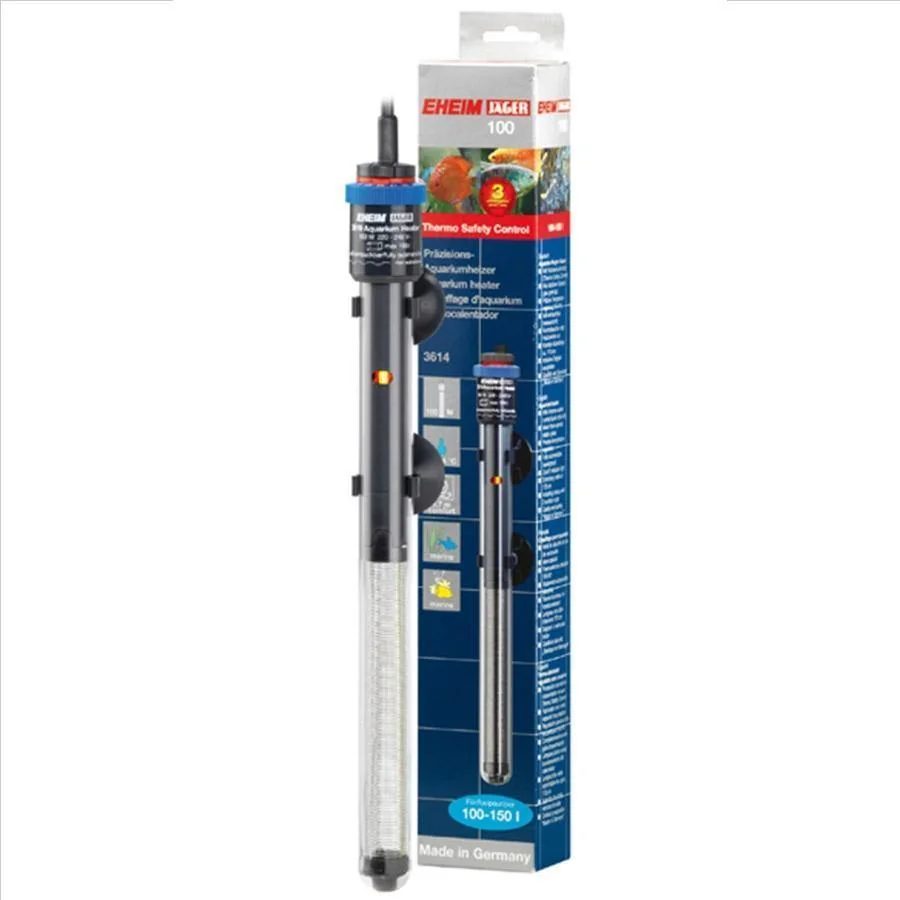
The Jager is the sensible conventional pick when you want an adjustable thermostat and a widely recognized heater format. EHEIM publishes a thermocontrol range with different wattages, so check the exact 200W listing, voltage and dimensions before ordering. Its long glass body needs room away from rocks and décor. Pros: adjustable; familiar installation; broad range. Cons: glass can break; long body may be awkward behind hardscape. See EHEIM’s range.
Fluval E200 Electronic Heater
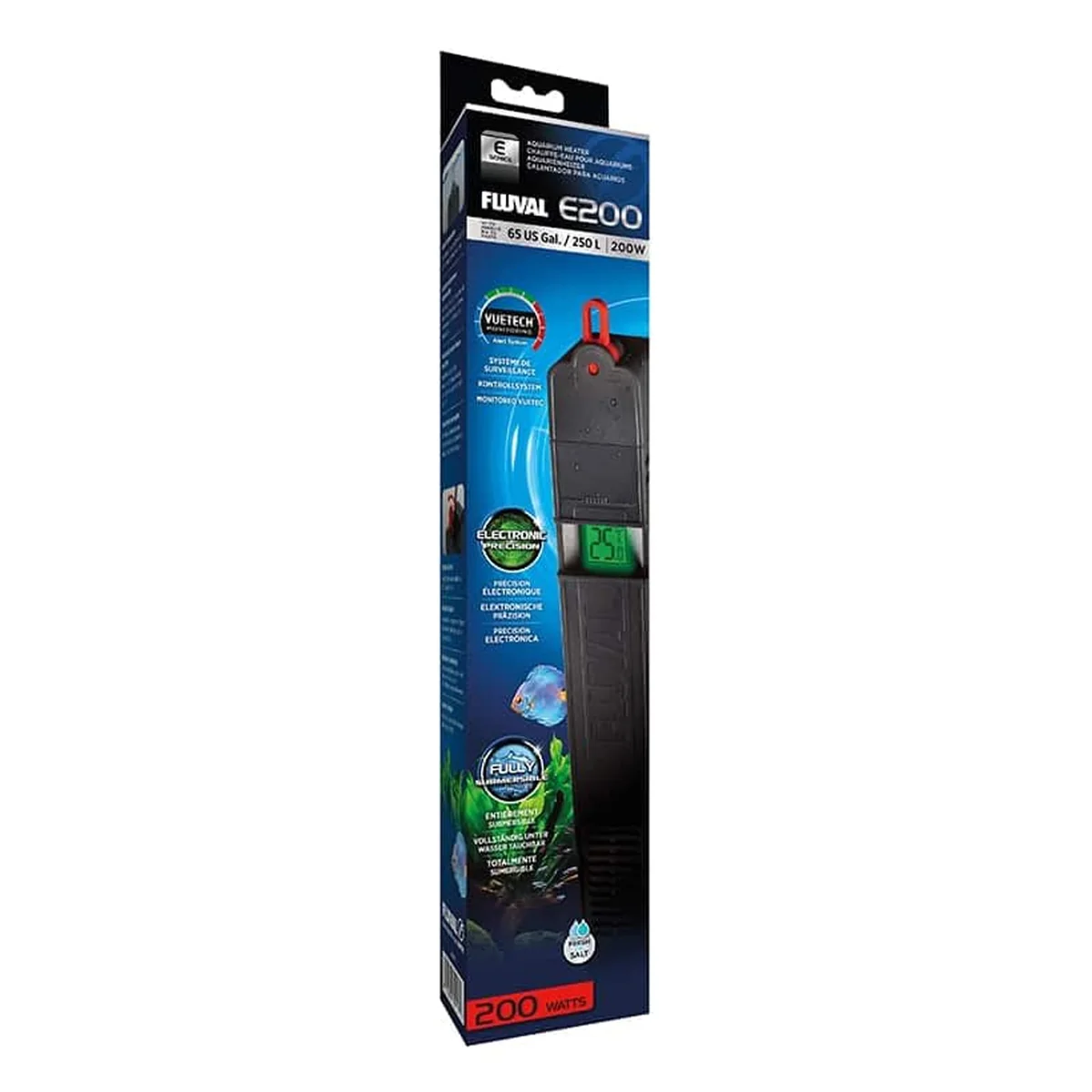
Choose an electronic Fluval model when you want the set temperature and an alert visible on the controller. Fluval’s E series is designed around electronic temperature monitoring and a display that can signal an out-of-range condition. Confirm that the current model is the 200W version and that its aquarium-size recommendation fits your setup. Pros: readable controller; electronic monitoring; useful for a display tank. Cons: higher price; still requires an independent thermometer. Check Fluval’s heater information.
Aqueon Pro Adjustable 200W
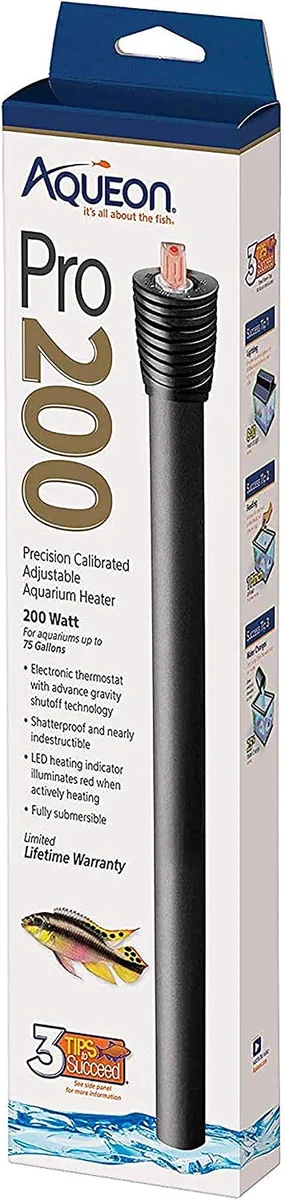
Aqueon’s Pro Adjustable line fits a practical 200W budget setup. The dial lets you set a species-appropriate temperature rather than accepting a preset. Place the heater where filter flow can carry warmed water across the tank, then compare its setting with a separate thermometer. Pros: adjustable; common replacement class; simple controls. Cons: dial alone is not a temperature measurement; check the exact model’s maximum tank rating. Aqueon’s heating range explains the available formats.
Cobalt Aquatics Neo-Therm 200W
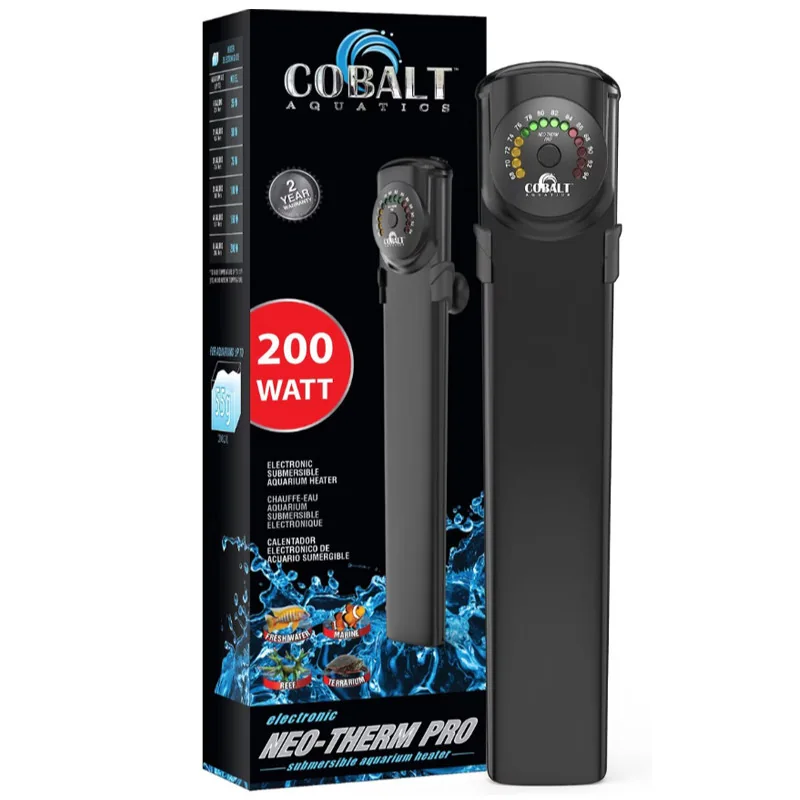
The Neo-Therm is worth a look when a flat heater is easier to position than a round tube. The compact shape can sit discreetly beside a filter intake or return, provided the manual allows that placement. Cobalt listings and wattage availability change, so verify the current 200W variant, voltage and seller. Pros: low-profile body; adjustable electronic design. Cons: availability varies; a flat casing still needs full submersion and flow. See Cobalt Aquatics.
Hygger 200W Digital Heater
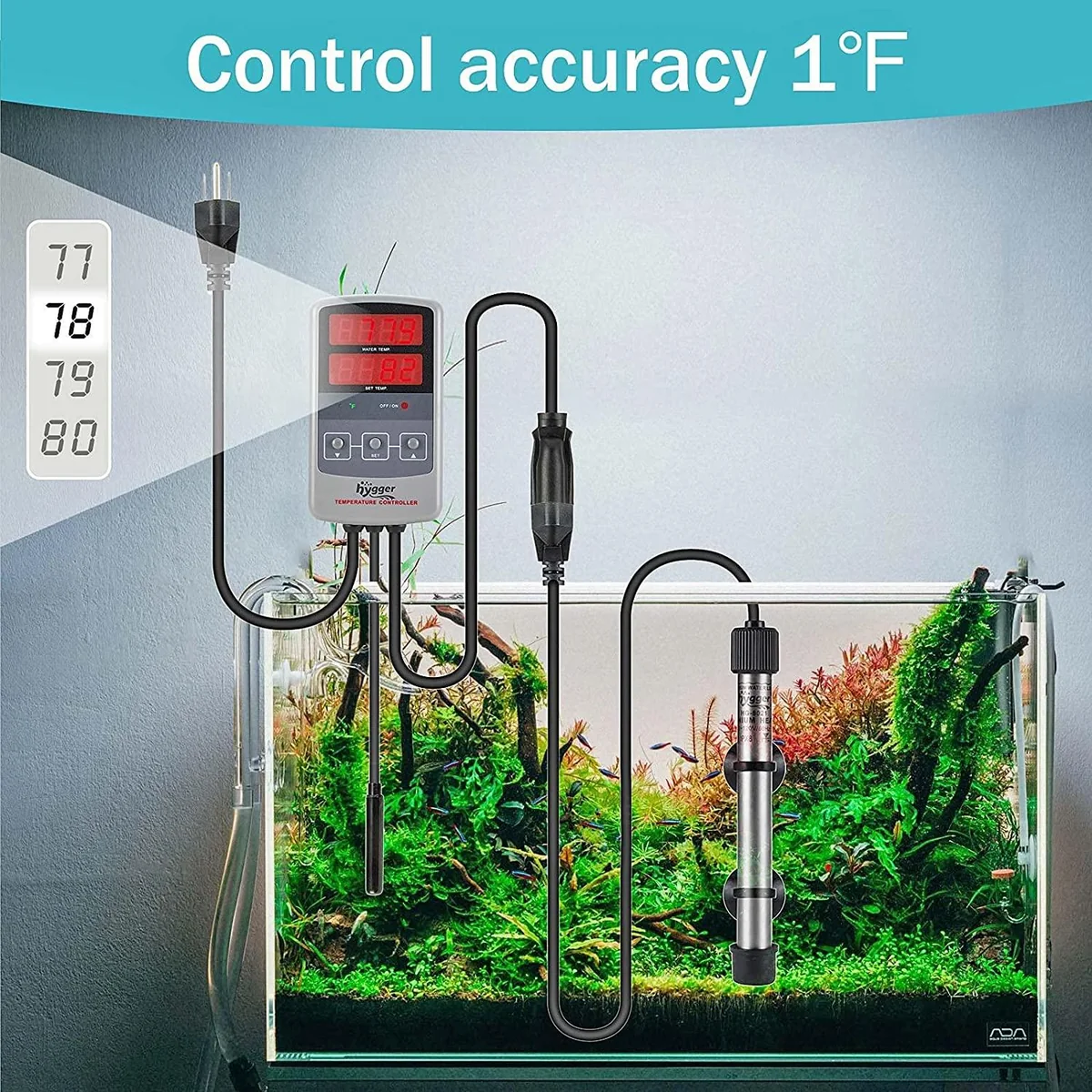
Hygger offers several digital heater families with similar names. That makes the controller and wattage check part of the buying process. A visible display is handy on a 55-gallon tank where the heater may sit behind plants, but it does not replace a second thermometer. Pros: clear setpoint; digital control; often competitively priced. Cons: model names can be confusing; confirm the manual and voltage. The Hygger catalog is useful for matching a listing.
Aqueon Preset 200W
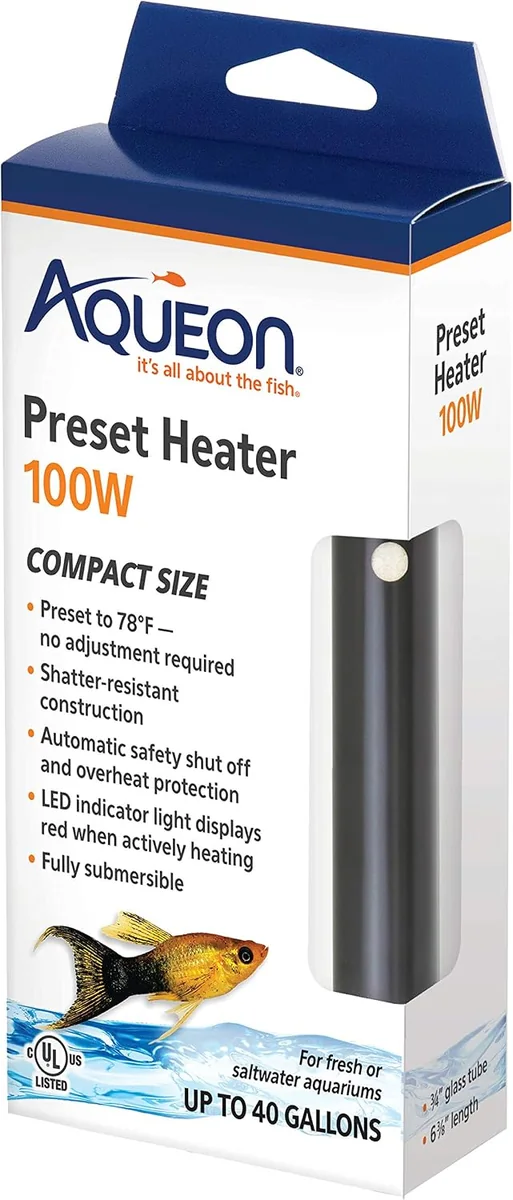
A preset heater removes one setup choice, which can be useful for a straightforward tropical community tank. It only makes sense when the fixed temperature suits your fish and plants. Do not use a preset model for livestock that needs cooler water or a carefully tuned range. Pros: simple installation; no adjustment error; common format. Cons: fixed setpoint; less flexible across species. Read the Aqueon preset specifications and confirm the exact temperature.
Two 100W adjustable heaters
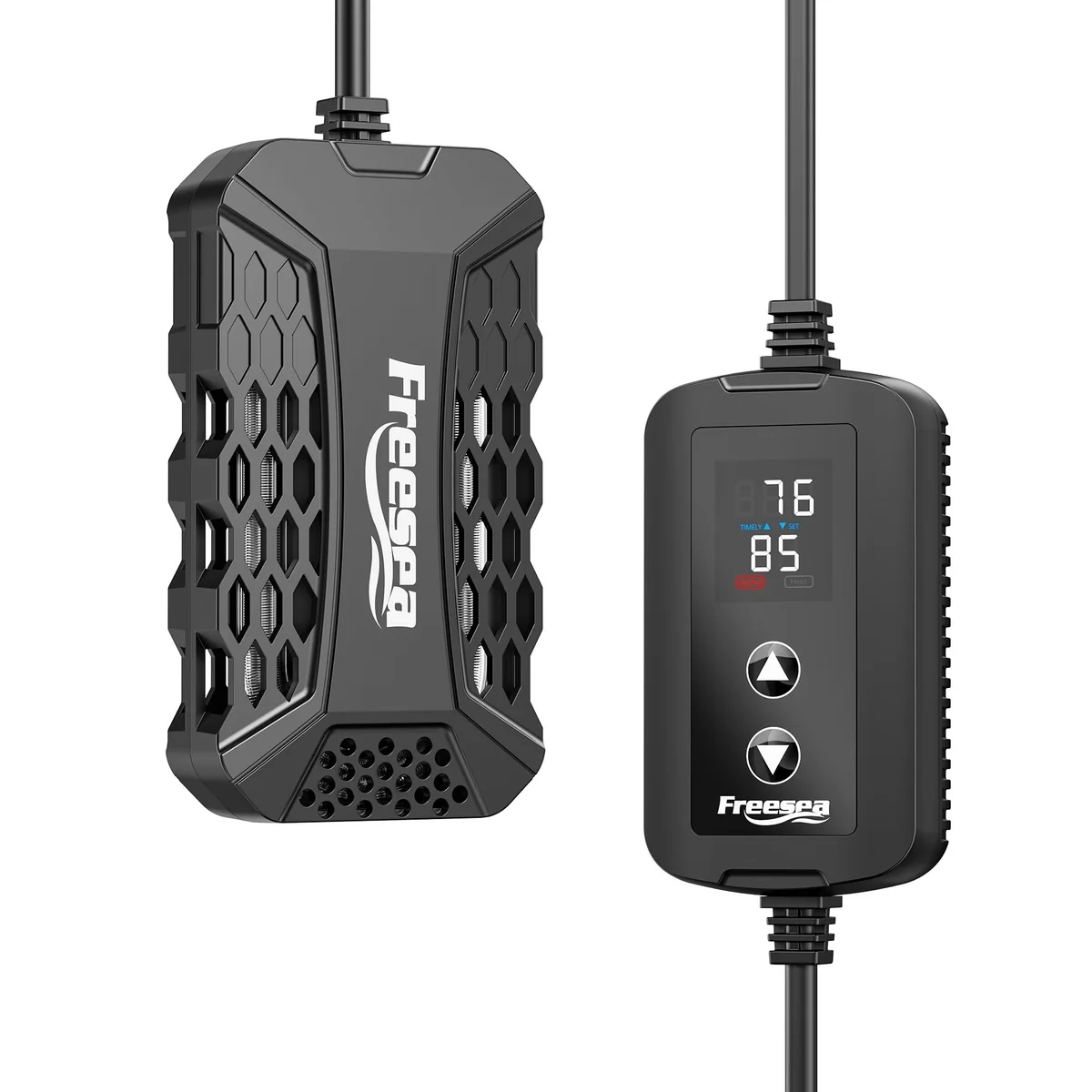
Two 100W heaters are a setup strategy rather than one model. They can distribute warmth along a long 55-gallon tank and reduce the sudden temperature drop if one unit stops working. Set both to the same target, place them at opposite ends near circulation, and use a thermometer at each end during setup. Two thermostats also mean twice as many cords, suction cups and failure points to inspect. Pros: even coverage; partial backup; easier replacement. Cons: more equipment; both units can overheat if thermostats fail. Choose models with clear manuals and reliable external temperature checks.
How much heater power does a 55-gallon tank need?
Start around 200W when the room is near the target temperature and the tank has a lid. A room that is several degrees colder, a drafty location or an open top increases heat loss. Manufacturer charts differ, so use the heater’s own tank-size guidance as a starting point rather than mixing charts. A split setup can be preferable to one oversized unit. Do not assume more watts is safer. A thermostat stuck on can heat a large volume for a long time before the problem is obvious.
Put the heater near the filter return or another gentle current. Flow moves warm water through the tank and reduces local hot spots. Keep the heater fully submerged as its manual requires, leave clearance from gravel and décor, and unplug it before water changes or putting hands in the aquarium. Let a glass heater cool before exposing it to air. Use a separate thermometer, and check temperature at the opposite end of a long tank.
Frequently asked questions
Is 200 watts enough for a 55-gallon tank?
Often, in an average room. A colder room or a large temperature gap may need more capacity, while a warm room may need less. Follow the model’s manual and monitor the actual water temperature.
Is two 100W heaters better than one 200W heater?
It can improve heat distribution and provide partial backup. It also adds another thermostat to maintain. Use matching settings, good flow and independent temperature checks.
Should I use an aquarium temperature controller?
A controller can add an independent high- or low-temperature safeguard, especially on valuable or sensitive livestock. It is not a substitute for correctly sized equipment and a thermometer.
Where should a heater sit?
Place it in an area with steady circulation, following the manufacturer’s placement rules. Avoid trapping it in substrate or pressing it against décor.
Recommendation
Pick the Fluval E200 when a visible electronic display is worth the extra cost. The EHEIM Jager 200W is the straightforward adjustable choice. For a long tank or a cooler room, two 100W adjustable heaters can spread heat more evenly, but only if you will monitor both ends of the aquarium.
Related guides: best aquarium heater for a 20-gallon tank, best aquarium heater for a 75-gallon tank and best aquarium filter for a 55-gallon tank.
Sources and methodology
We compared manufacturer information from EHEIM, Fluval, Aqueon, Cobalt and Hygger, then checked general heater-sizing guidance from aquarium care references. Product listings, voltage, ratings and prices can change, so verify the current model before ordering. The seven No hands-on testing was performed.