
Buying guide
Best aquarium filter for a 20-gallon tank
The Fluval AquaClear 50 is the safest starting point for most 20-gallon tanks because its media basket gives you room to tune filtration.
Quick comparison
| Product | Best for | Main drawback |
|---|---|---|
| Fluval AquaClear 50 Power Filter | Flexible media | Needs priming |
| Seachem Tidal 35 Power Filter | Self-priming HOB | Skimmer needs care |
| Fluval C3 Power Filter | Staged filtration | More parts to clean |
| Tetra Whisper EX 20 Filter | Simple setup | Cartridge media |
| Aqueon QuietFlow 20 LED PRO | Compact HOB | Less customization |
| Marineland Penguin 200 BIO-Wheel | Surface aeration | Wheel maintenance |
| AQUANEAT Double Sponge Filter | Gentle flow | Needs air pump |
This guide is based on manufacturer specifications and independent comparison material. We have not hands-on tested these filters. Check the current model, voltage, lid clearance, and retailer availability before ordering.
Our picks
Fluval AquaClear 50 Power Filter
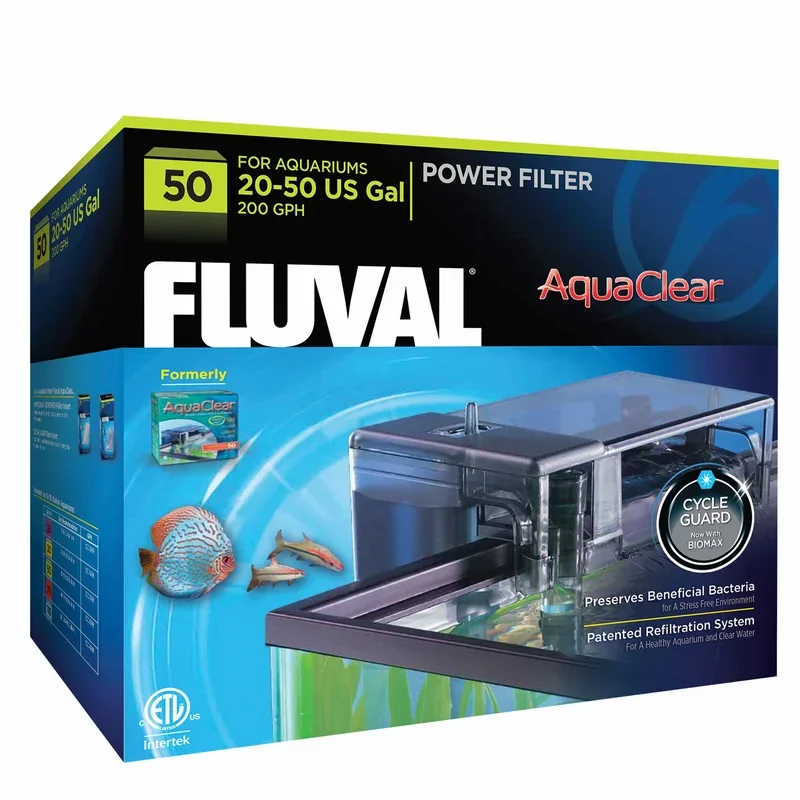 The 50-size AquaClear is a practical 20-gallon choice when you want to use foam, biological media, and optional chemical media separately. Its adjustable output helps with planted or lightly stocked tanks. The tradeoff is a manual prime and a waterfall that gets louder as the tank level falls. Pros: large reusable basket; adjustable flow. Cons: startup requires care; not the calmest unmodified return.
Seachem Tidal 35 Power Filter
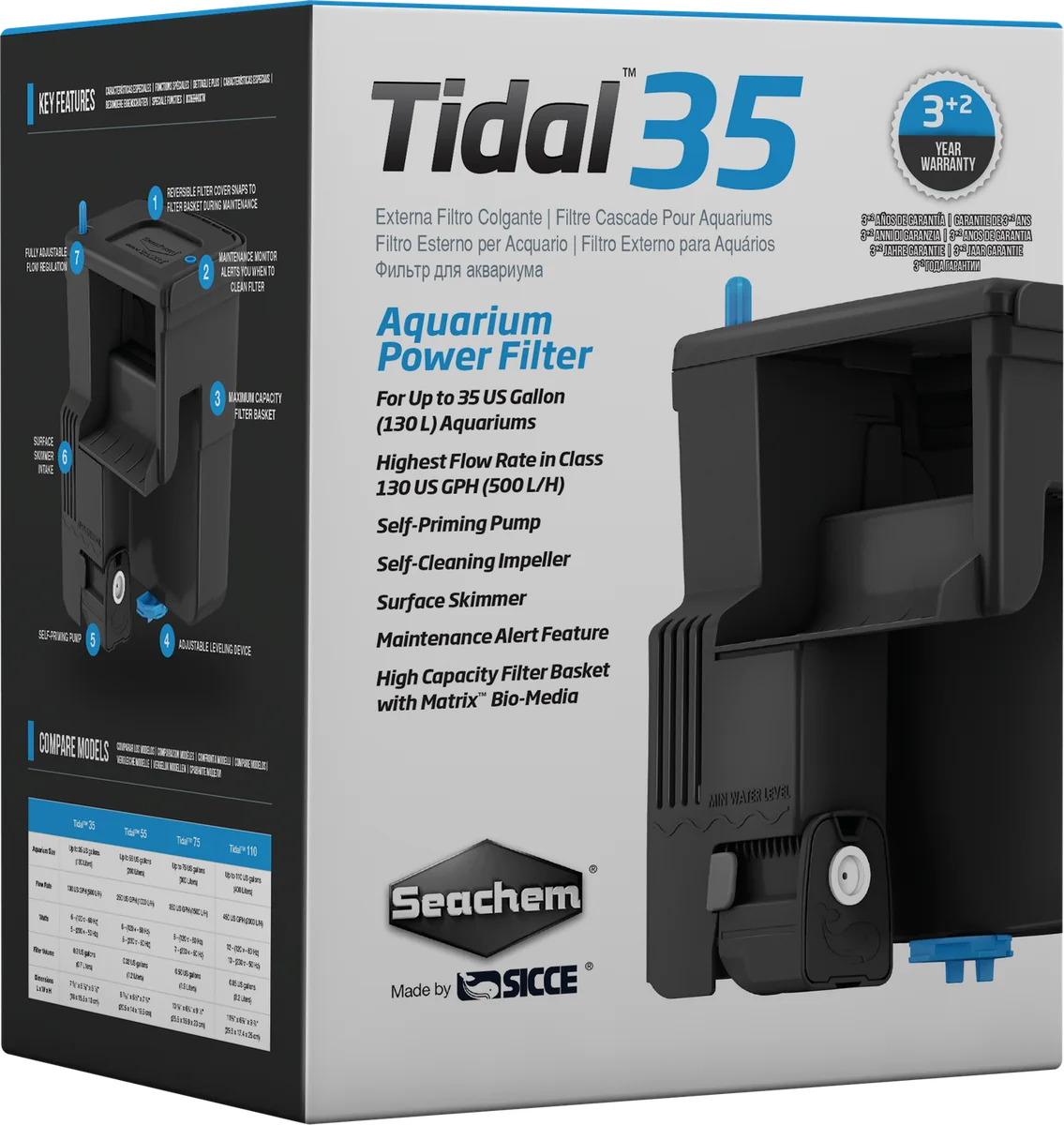 The Tidal 35 adds self-priming, a flow dial, and a surface skimmer. That combination is useful for a tank that may lose power or develop surface film. The skimmer can catch floating food, and the motor sound varies by installation. Pros: easy restart; adjustable flow. Cons: skimmer maintenance; higher footprint.
Fluval C3 Power Filter
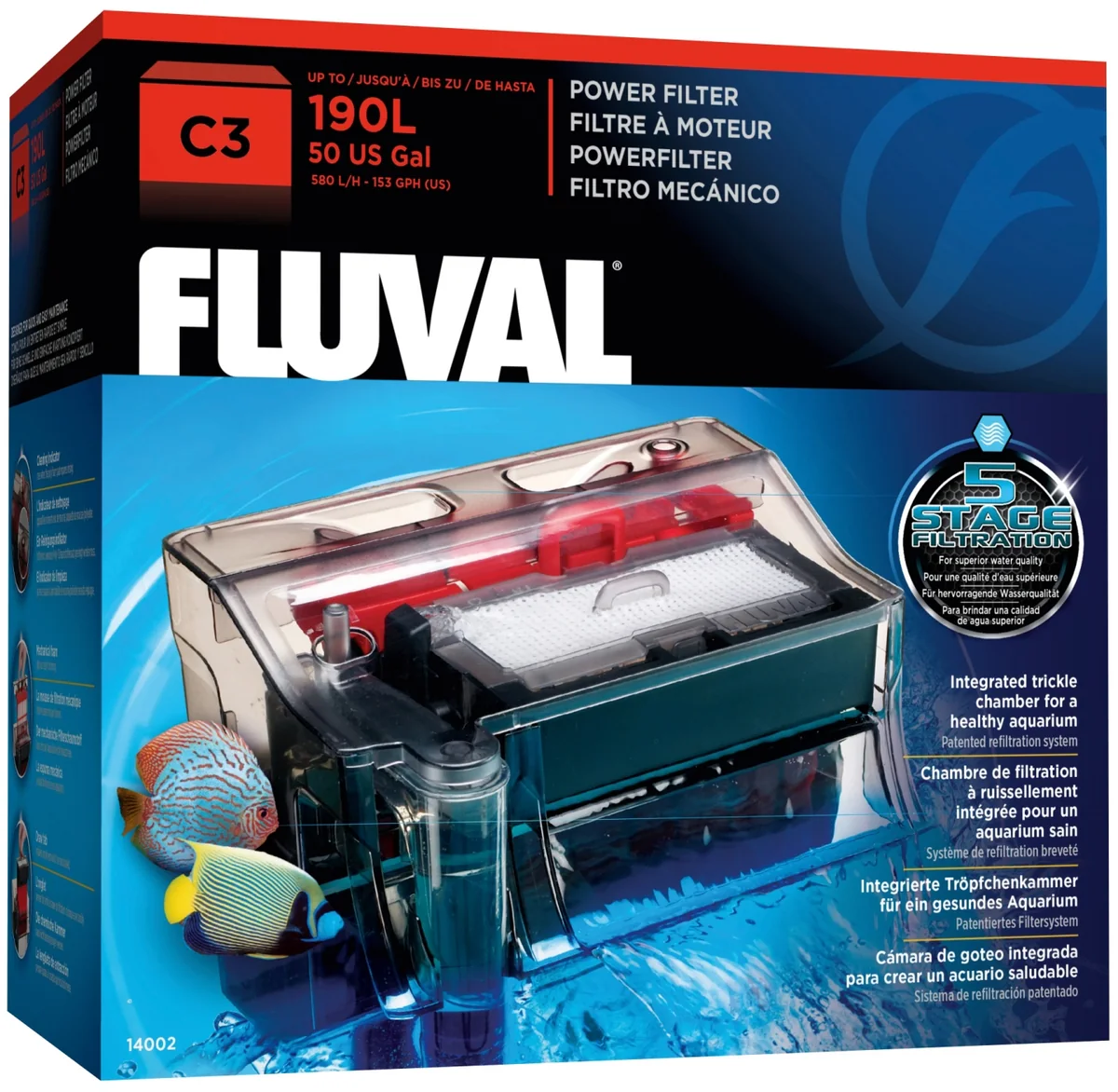 The C3 divides filtration into several stages, making it a good fit for owners who like a repeatable maintenance routine. More stages mean more pieces to rinse and replace. Pros: staged filtration; clear maintenance logic. Cons: more cleaning steps; verify lid clearance.
Tetra Whisper EX 20 Filter
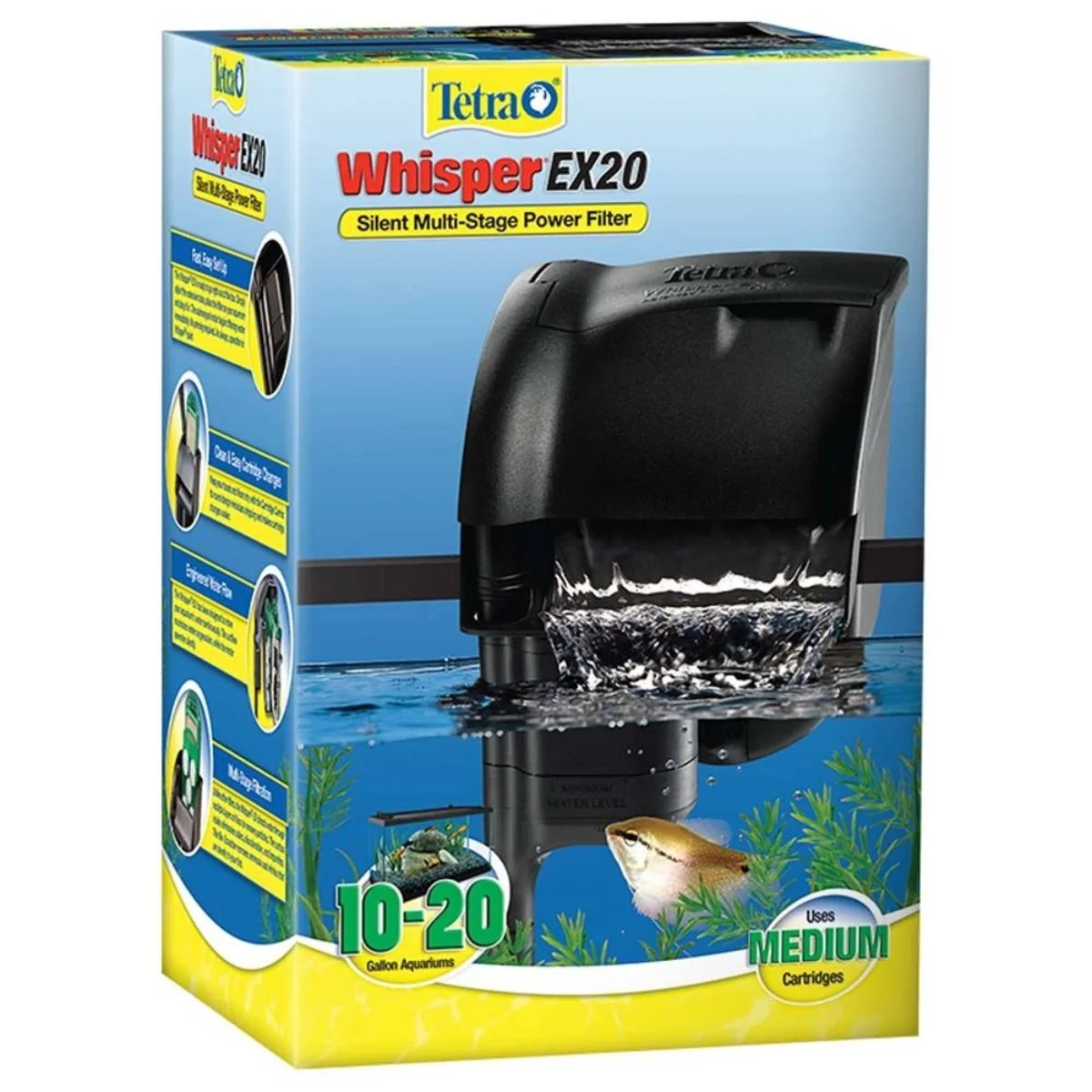 This is the straightforward cartridge HOB pick. It suits a lightly stocked tank where simple setup matters more than custom media. Pros: compact; accessible controls. Cons: recurring cartridge purchases; less media flexibility.
Aqueon QuietFlow 20 LED PRO
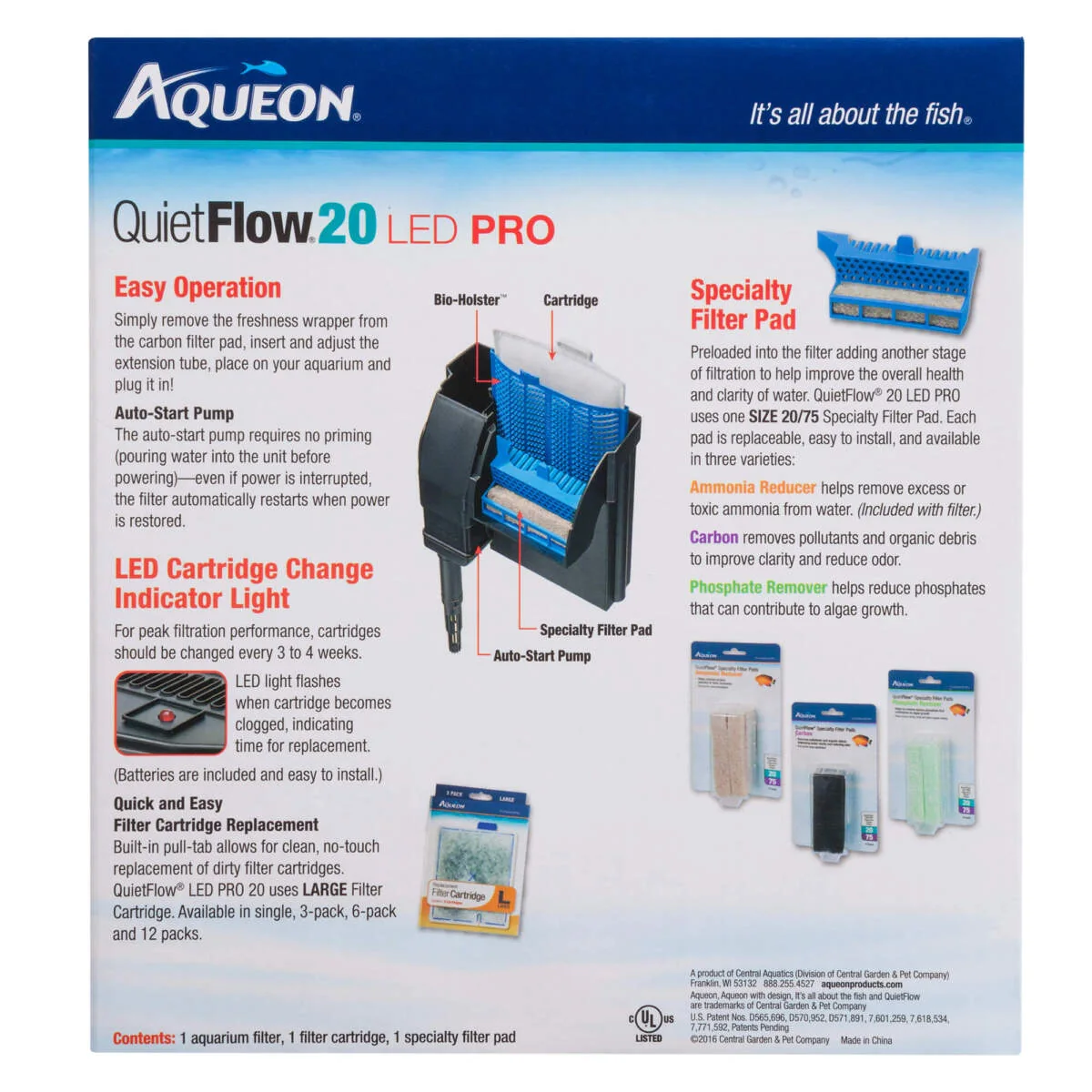 The QuietFlow is a compact beginner option with an indicator-oriented design. It is easy to understand, but its proprietary cartridge approach gives less control over long-term media choices. Pros: small footprint; simple installation. Cons: cartridge cost; indicator is not a water test.
Marineland Penguin 200 BIO-Wheel
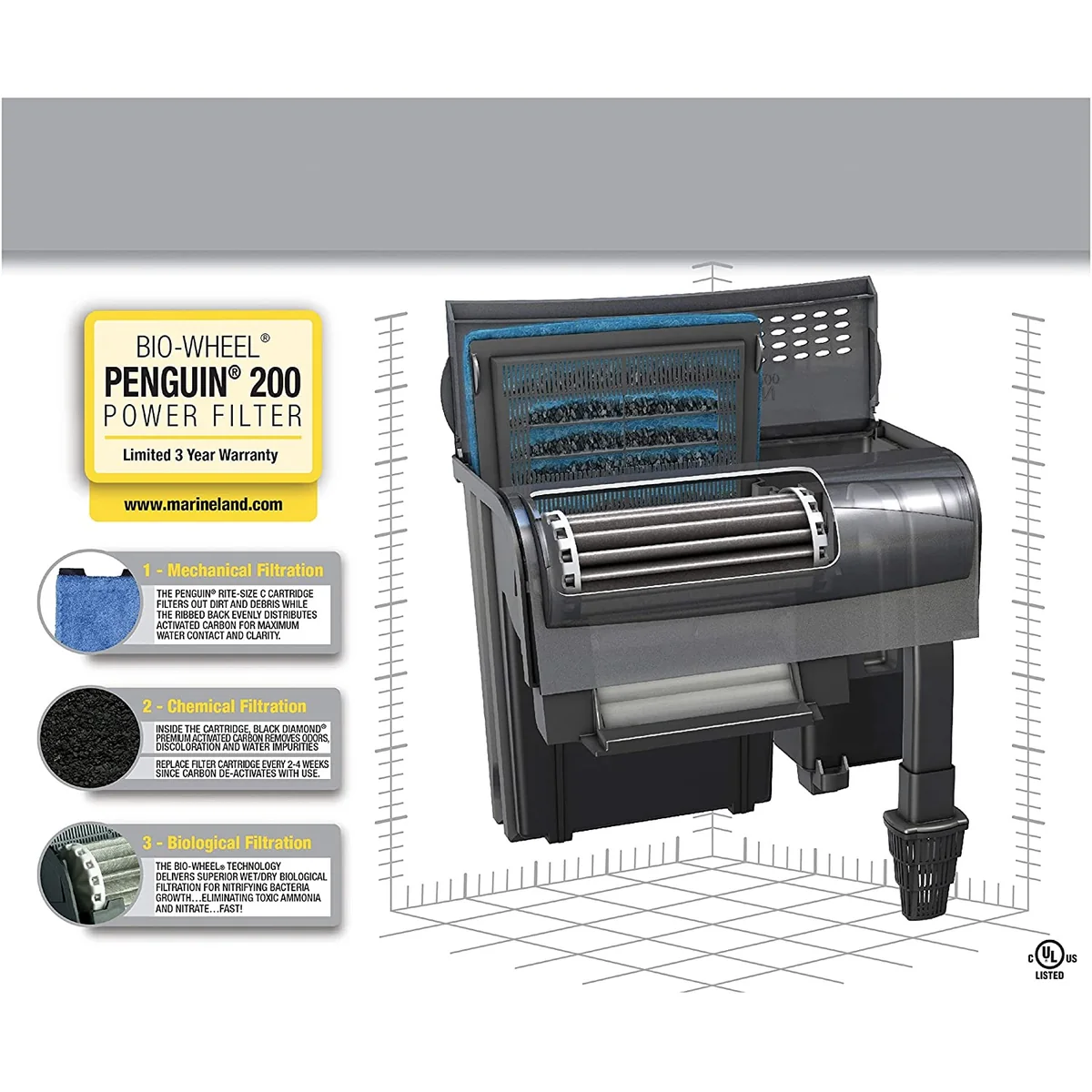 The Penguin’s BIO-Wheel design adds surface movement and biological media. It can suit community tanks that benefit from extra oxygen exchange. Pros: familiar design; good surface agitation. Cons: wheel and cartridge upkeep; flow is less gentle than a sponge.
AQUANEAT Double Sponge Filter
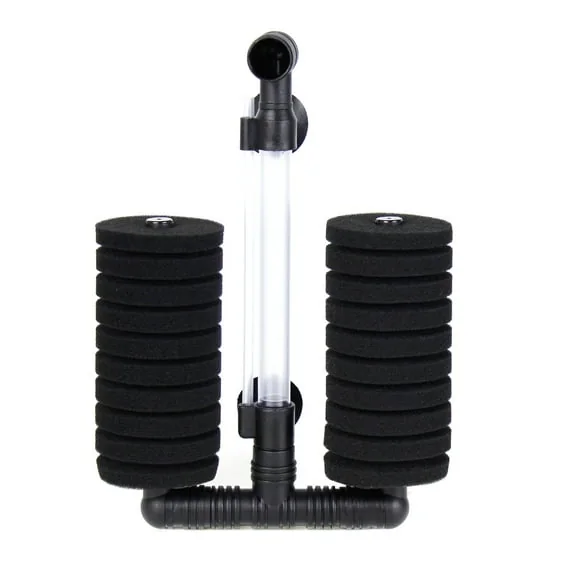 An air-driven sponge is the quiet-flow alternative. It is especially sensible with shrimp, fry, or fish that dislike a jet. It needs a separate pump, airline, and check valve, and it will not polish fine particles as quickly as a HOB. Pros: gentle intake; reusable sponge. Cons: visible equipment; separate pump required.
What matters in a 20-gallon tank
Choose a filter with spare capacity rather than running a model at its limit, but reduce the return if fish are being pushed around. Reusable media lowers waste and lets beneficial bacteria remain in the system. Check that the intake fits around plants and that the housing works with the aquarium lid. For messy fish, a pre-filter sponge reduces the chance of clogging and protects small animals.
Frequently asked questions
Is a filter rated for 20 gallons enough?
It can be, if stocking is light and maintenance is regular. A model rated above 20 gallons gives more headroom, but only when its flow can be reduced.
Is a sponge filter enough?
Yes for many lightly stocked freshwater tanks. Add an air pump and expect less fine-particle polishing than a HOB.
How often should media be cleaned?
Rinse mechanical media in removed aquarium water when flow falls. Do not replace every biological medium at once.
Recommendation
Start with the AquaClear 50 for flexible everyday filtration. Choose the Tidal 35 if self-priming matters, or the AQUANEAT sponge when gentle flow is the priority.
Sources and methodology
Manufacturer references: Fluval AquaClear, Seachem Tidal, Fluval care guide. Independent comparison: Starter Aquarium AquaClear review.
Related guides
The right choice also depends on how often you can service it. A smaller filter that is cleaned before flow collapses will outperform a nominally stronger model that is neglected. Leave room around the intake, keep replacement media available, and write the cleaning date on a calendar. That small habit prevents many “mystery” water-quality problems.
Setup and maintenance notes
Install the intake below the water line and leave enough clearance to remove the lid. Fill a new HOB with aquarium water before starting when the manufacturer calls for priming. During the first weeks, test ammonia and nitrite rather than assuming a new filter is cycled. Mechanical foam catches waste and should be rinsed when flow drops. Biological media should stay wet and should not all be replaced during one service. Activated carbon is optional for many freshwater tanks and is not a substitute for water changes.
Stocking changes the answer. A lightly stocked planted 20-gallon can run comfortably on a smaller adjustable filter. A busy community tank benefits from the larger basket of the AquaClear 50 or Tidal 35. If the return pushes floating plants across the tank, diffuse it with a sponge or lower the flow. If the filter clogs quickly, improve the pre-filter and feeding routine before simply buying a louder, faster pump.