
Buying guide
Best Aquarium Heater for a 20-Gallon Tank: 7 Reliable Picks
A 100W adjustable heater is the sensible starting point for most 20-gallon tropical tanks. The right choice depends on your room temperature, tank shape and how much control you want.
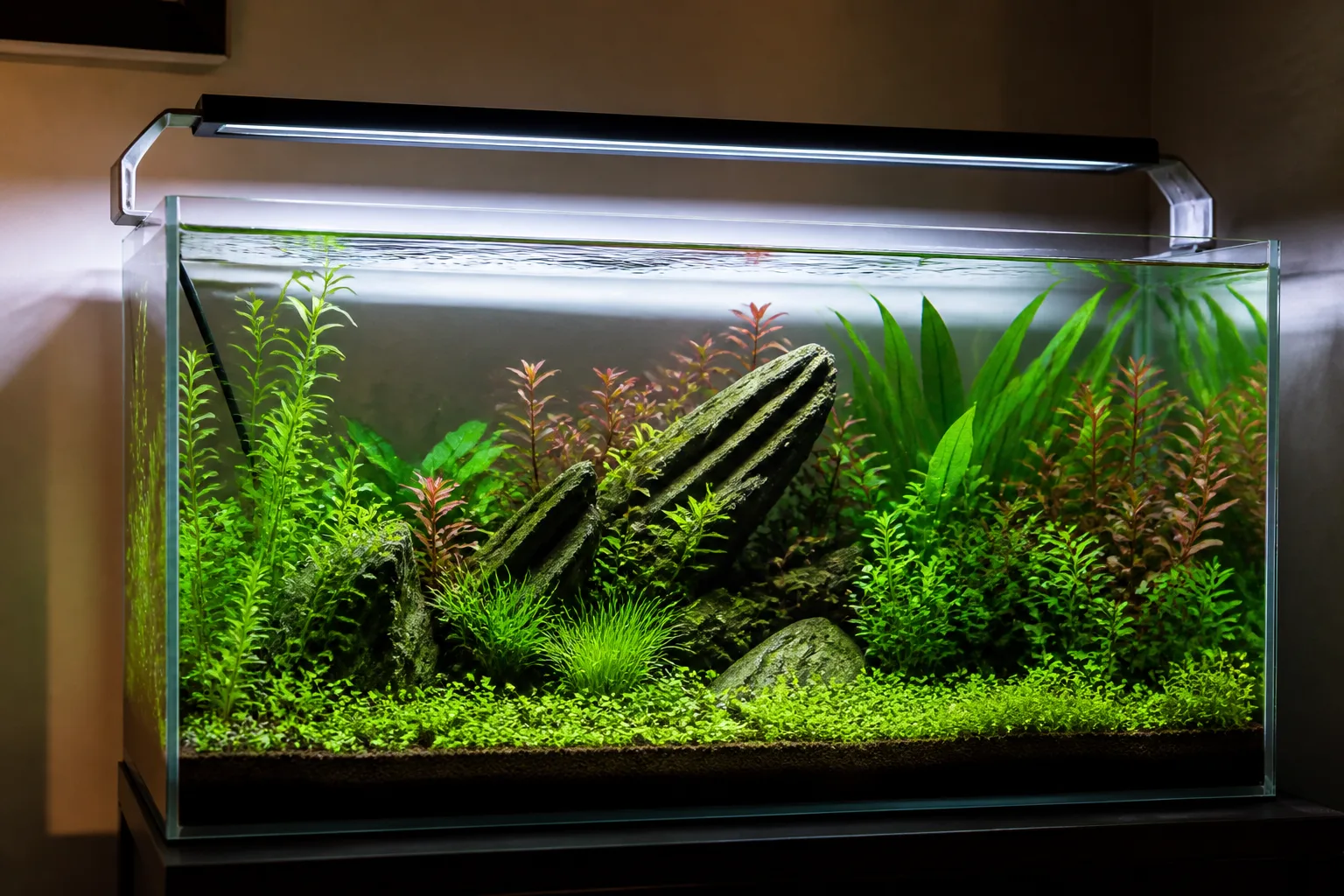
For most 20-gallon freshwater tanks, a controllable heater around 100W gives useful headroom without being excessive. That recommendation assumes a tropical target around 75 to 79°F and a room that does not regularly fall far below 65°F. A cold room, an open-top tank or a species with a narrower temperature range can change the calculation. This is a research-based guide, not a hands-on test. Confirm the current manual, voltage and tank rating before ordering.
Quick comparison
| Product | Best for | Main advantage | Main drawback |
|---|---|---|---|
| Fluval E100 | Clear electronic control | Readable display and alerts | Premium price |
| Fluval M100 | Simple adjustable setup | Compact conventional format | No independent display |
| Aqueon Pro Adjustable 100W | Easy replacement | Familiar dial and availability | Dial accuracy still needs checking |
| Cobalt Neo-Therm Pro 100W | Low visual bulk | Flat profile | Costs more |
| Eheim Jager 100W | Traditional adjustable heater | Detailed documentation | Long glass body |
| Hygger 100W Digital Heater | Budget digital controls | Separate controller display | Model revisions vary |
| Aqueon Preset 100W | Beginners who want simplicity | No dial to set | Less flexible for unusual species |
Best electronic control: Fluval E100
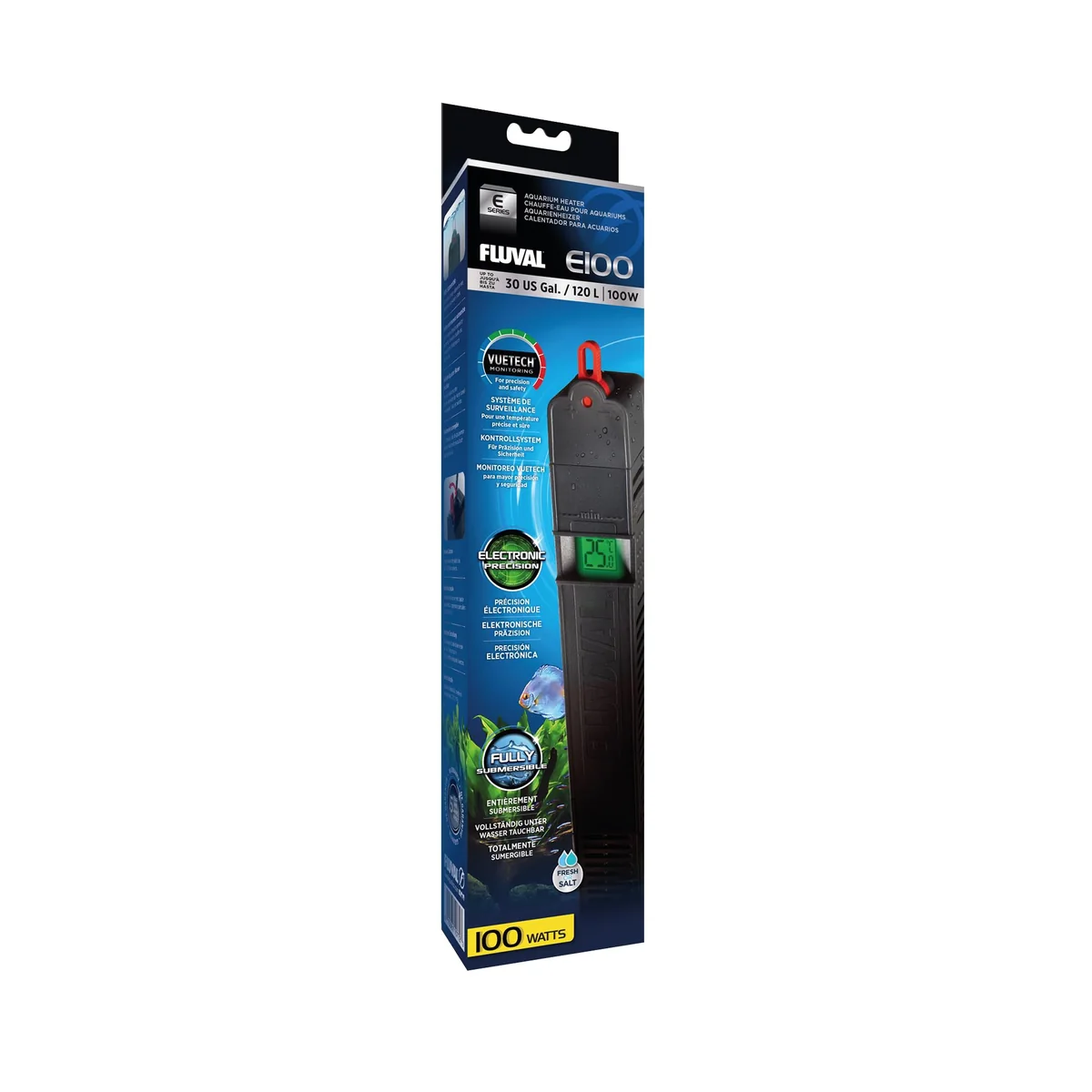
The Fluval E100 suits a 20-gallon owner who wants the set temperature and warning status easy to read. Electronic controls are convenient during water changes and seasonal room changes, but the display is not a substitute for an independent thermometer. Place the heater in moving water, allow the tank to circulate, then compare the displayed temperature with a thermometer at the opposite end. Pros include a clear interface, useful status information and a compact fit for many 20-gallon layouts. Cons are higher cost, more electronics and the need to verify the exact regional version. Fluval’s E-Series documentation is the best place to confirm current instructions.
Best compact adjustable choice: Fluval M100
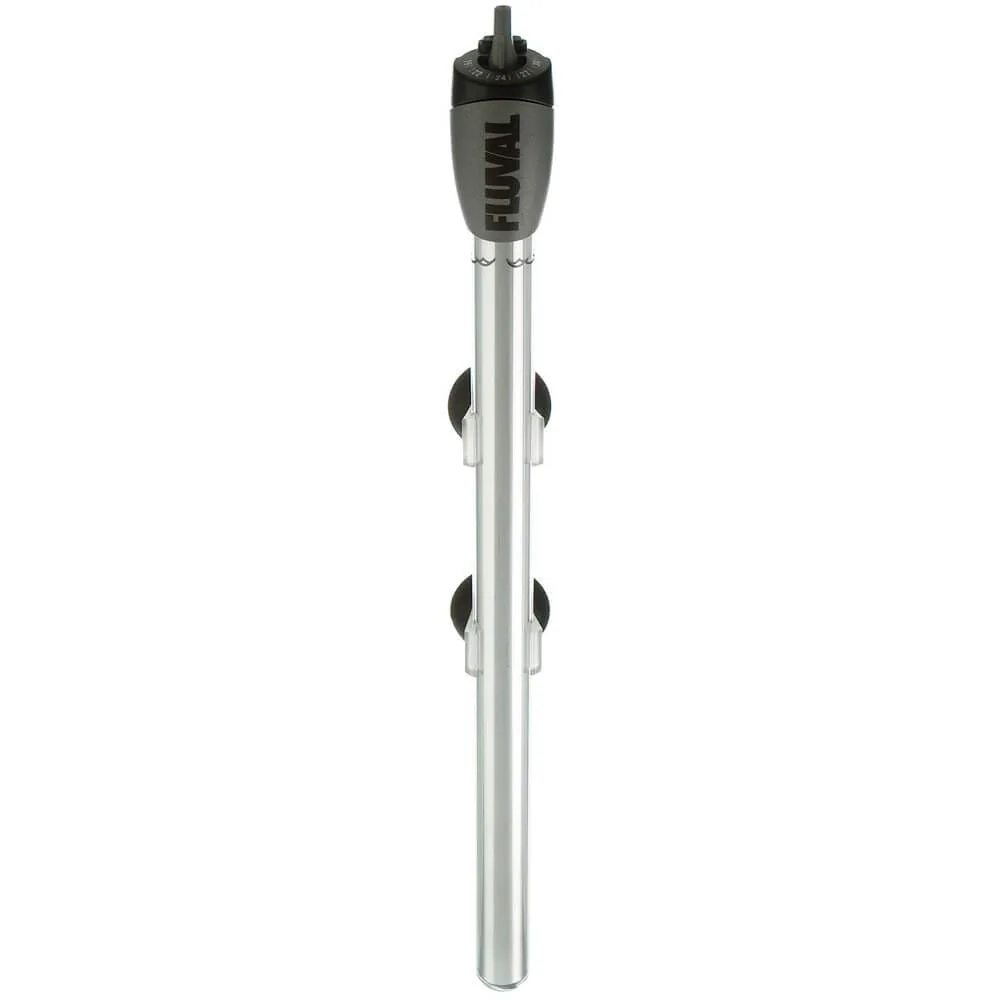
The M100 is a reasonable middle ground when you want adjustable heat without paying for a screen. Its 100W class matches the common 20-gallon use case, provided the temperature gap between room and water is moderate. It works best where a filter outlet keeps water moving past the heating element. Pros are a familiar format, a compact body and straightforward adjustment. Cons include no built-in independent readout, a visible cable and the usual risk of trusting a dial without checking actual water temperature. Read the current Fluval M-Series guide before installation.
Best widely available dial heater: Aqueon Pro Adjustable 100W
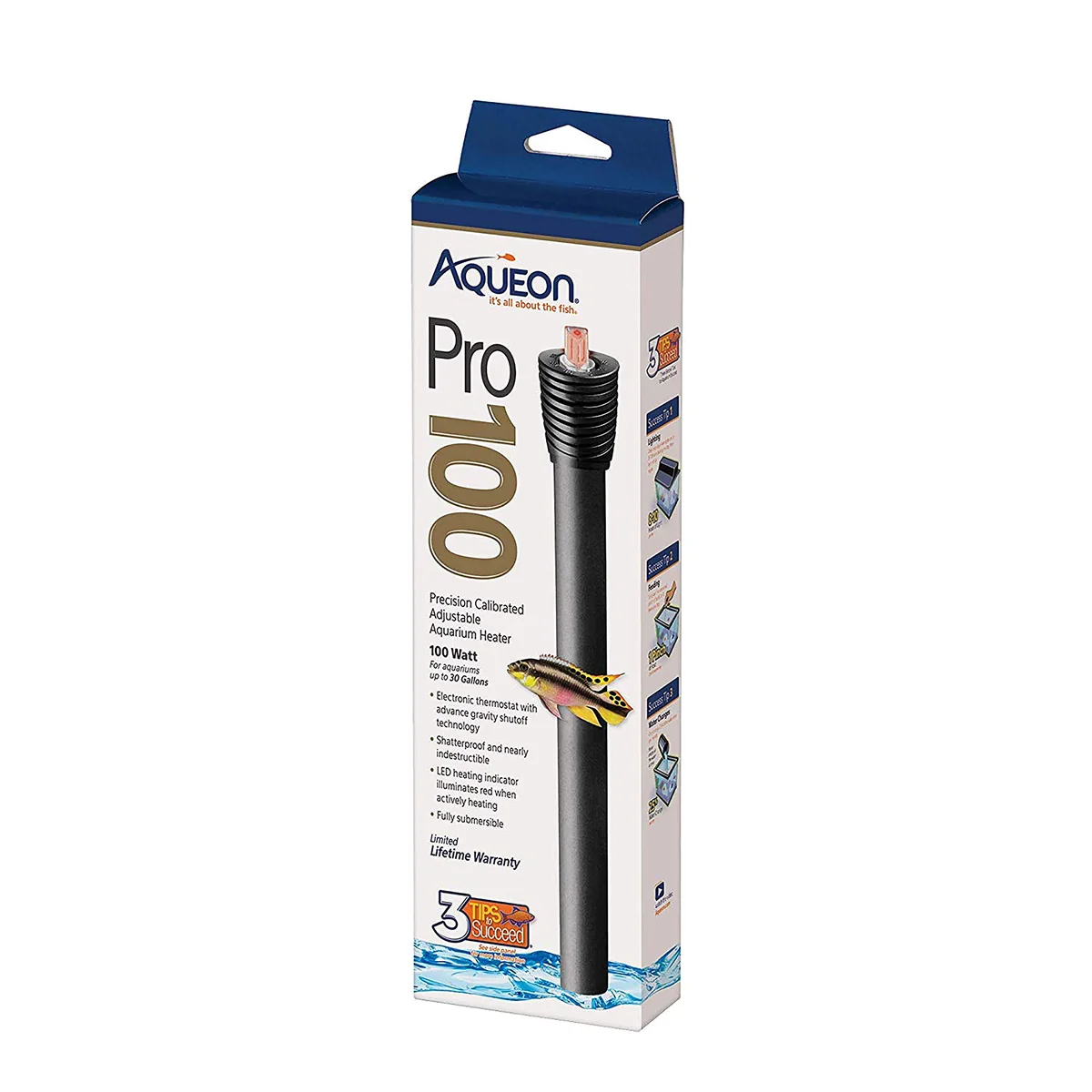
Aqueon’s Pro Adjustable 100W is aimed at owners who value a familiar control and easy replacement. The important question is not only the wattage. Check that the current listing matches your voltage and that its size leaves room for safe placement. A mechanical dial can be bumped while cleaning, so mark the intended setting and check it with a separate thermometer after maintenance. Pros are broad availability, adjustable temperature and a conventional design. Cons are the lack of a digital display, a glass body on many variants and possible differences between revisions. Aqueon’s heater guide covers installation and safe handling.
Best slim premium option: Cobalt Neo-Therm Pro 100W
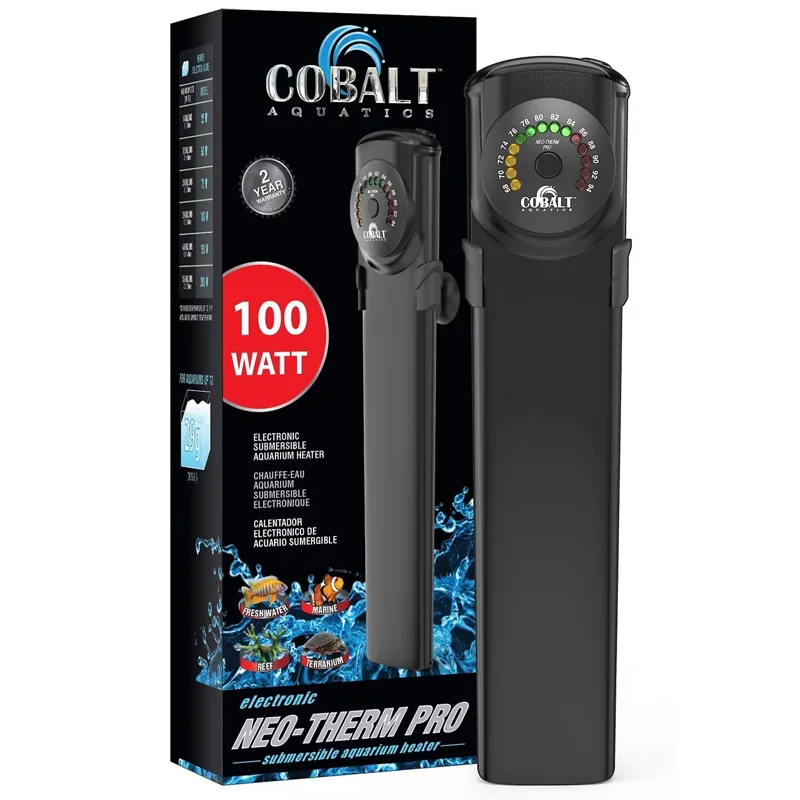
The Neo-Therm Pro makes sense when a flat heater is easier to hide behind plants or hardscape than a long glass tube. The low-profile shape does not change the basic rules. It needs circulation, a safe water level and a separate temperature check. Pros include a tidy profile, adjustable control and less visual clutter. Cons are premium pricing, availability that can vary by market and the temptation to hide it so well that maintenance gets forgotten. Confirm the exact 100W model in Cobalt’s Neo-Therm information before checkout.
Best traditional heater: Eheim Jager 100W
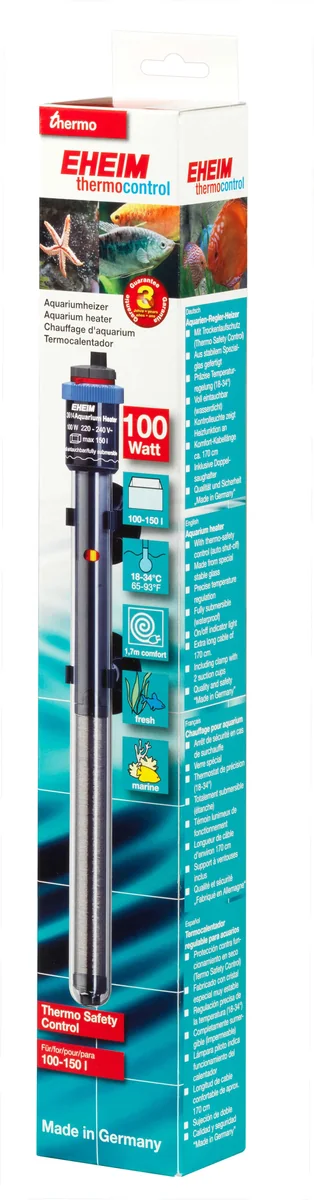
The Jager range is a good fit for a buyer who prefers a conventional adjustable heater and detailed manufacturer documentation. Its long body can be awkward in a tall or heavily decorated 20-gallon tank, so measure the usable height before ordering. Put it close to flow, keep it clear of gravel and follow the manual’s immersion instructions. Pros are a well-known format, a useful adjustment range and clear support material. Cons are the long glass body, calibration checks and market-specific voltage variants. See Eheim’s heater documentation for current details.
Best budget digital alternative: Hygger 100W Digital Heater
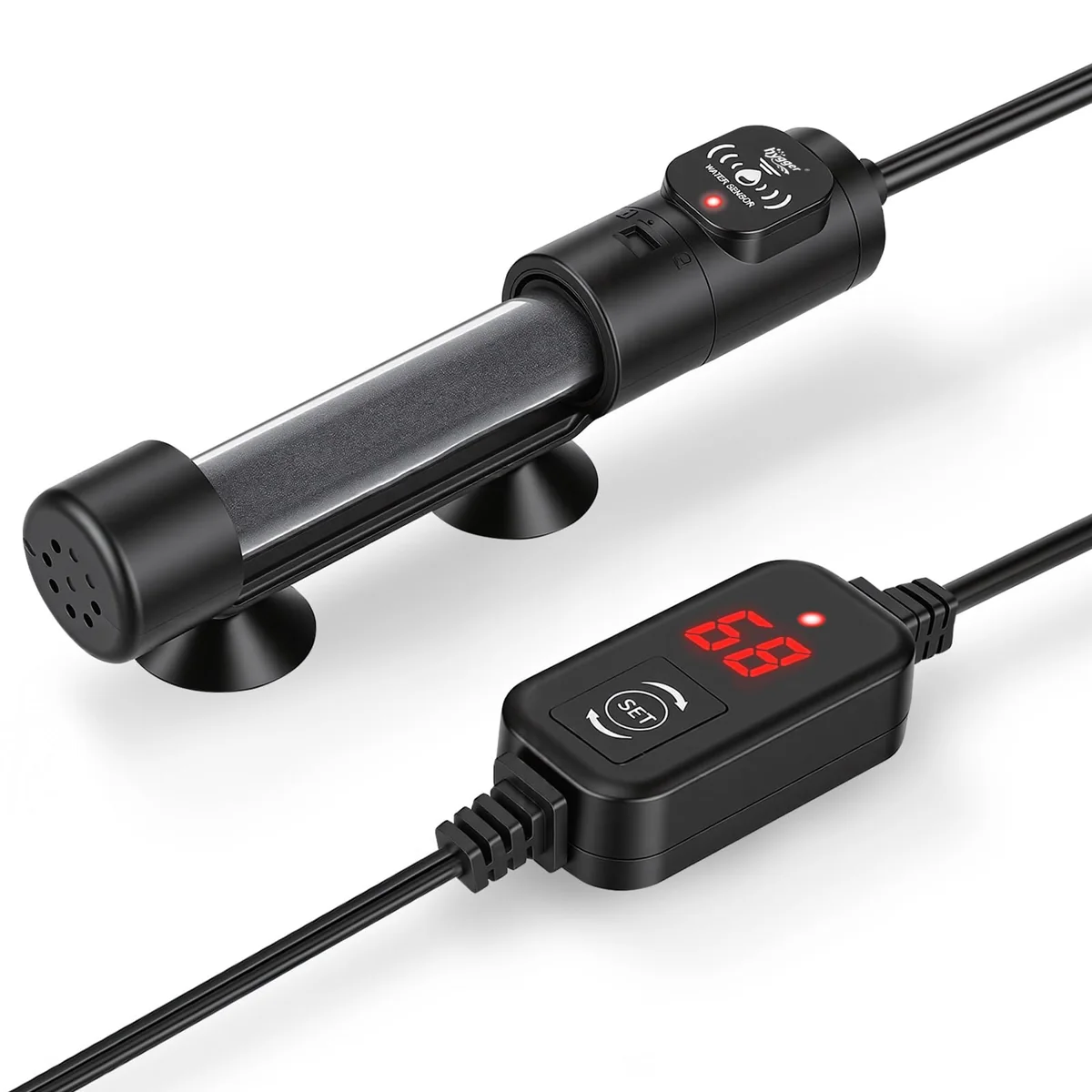
Hygger’s 100W digital models appeal when a readable controller matters but the budget is tight. Marketplace listings change, and similar names can describe different generations. Check the manual, minimum water line, controller placement and voltage before purchase. Pros include a readable set point, competitive listings and a controller that stays outside the water. Cons include model confusion, variable support and extra cable management. Treat the display as a setting, not proof of accuracy. Use Hygger’s support pages to verify the current model.
Best simple preset: Aqueon Preset 100W
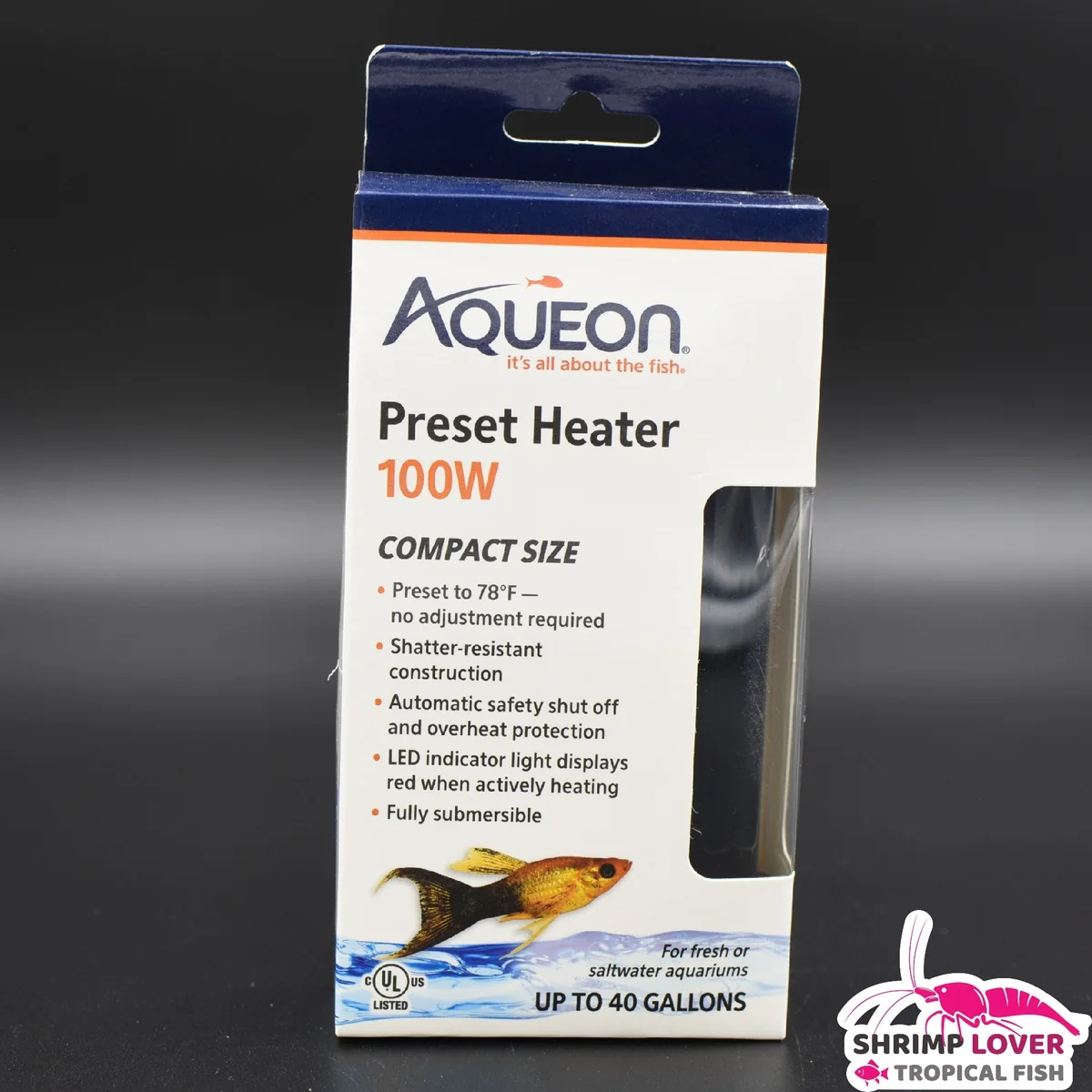
A preset heater is the least complicated option for a standard tropical community tank, as long as its fixed temperature matches the livestock and the product is rated for the tank. It is a poor fit for species that need a different target or for rooms with large seasonal swings. Pros are simple installation, no dial to bump and an easy recommendation for a stable home. Cons are limited control, less flexibility during acclimation and a greater need to verify actual water temperature. Follow Aqueon’s safety guidance, and unplug the heater before lowering the water level.
How to size and place a heater in a 20-gallon tank
Start with the coldest normal room temperature, not today’s afternoon reading. A modest 10 to 15°F gap between room and target water often points to 100W for 20 gallons, but manufacturer charts take priority. A basement, open-top aquarium or cold climate may need a carefully documented alternative, such as two smaller heaters. Do not buy the largest wattage simply because it heats faster. Oversizing raises the cost of a thermostat failure.
Install the heater where water moves steadily, often beside a filter return. Keep it away from gravel, decorations and stagnant corners. Respect its minimum water line. Use a separate thermometer at the opposite end of the tank, then check temperature again after a water change, a filter adjustment or a move of the heater. A controller can provide an extra cutoff, but it does not replace the heater’s own thermostat or a visible thermometer.
For a smaller setup, compare our 10-gallon heater guide. If the tank is for a betta, see the separate betta filter guide because gentle circulation matters as much as temperature.
Frequently asked questions
Is 100W enough for a 20-gallon tank?
It is often suitable for a moderate room-temperature gap, but the heater’s own chart and the coldest room temperature decide. A cold room may need a different plan.
Can I use a 50W heater instead?
Sometimes, in a warm room with a covered tank. A 50W unit has less reserve, so it may run continuously during winter. Check actual temperature with an independent thermometer.
Should a heater sit near the filter?
Usually yes. Moving water distributes warmed water and reduces hot spots. Keep the heater fully immersed and follow its manual.
Do I need a separate thermometer if the heater has a display?
Yes. A second thermometer gives you an independent reading and catches a display or sensor problem.
Sources and methodology
We compared current manufacturer information from Fluval, Aqueon, Cobalt Aquatics, Eheim and Hygger, focusing on wattage class, controls, installation, voltage and placement. The shortlist answers the 20-gallon modifier and separates adjustable, preset, electronic and slim-format choices. No hands-on testing was performed. Amazon links use btraqrm-20; confirm live price, availability, voltage and tank rating at checkout.