
Buying guide
Best Aquarium Heater for a 75-Gallon Tank: 7 Reliable Options
For a 75-gallon aquarium, stable heat matters more than chasing the biggest heater. These options cover 300W-class heating, redundancy and careful temperature control.
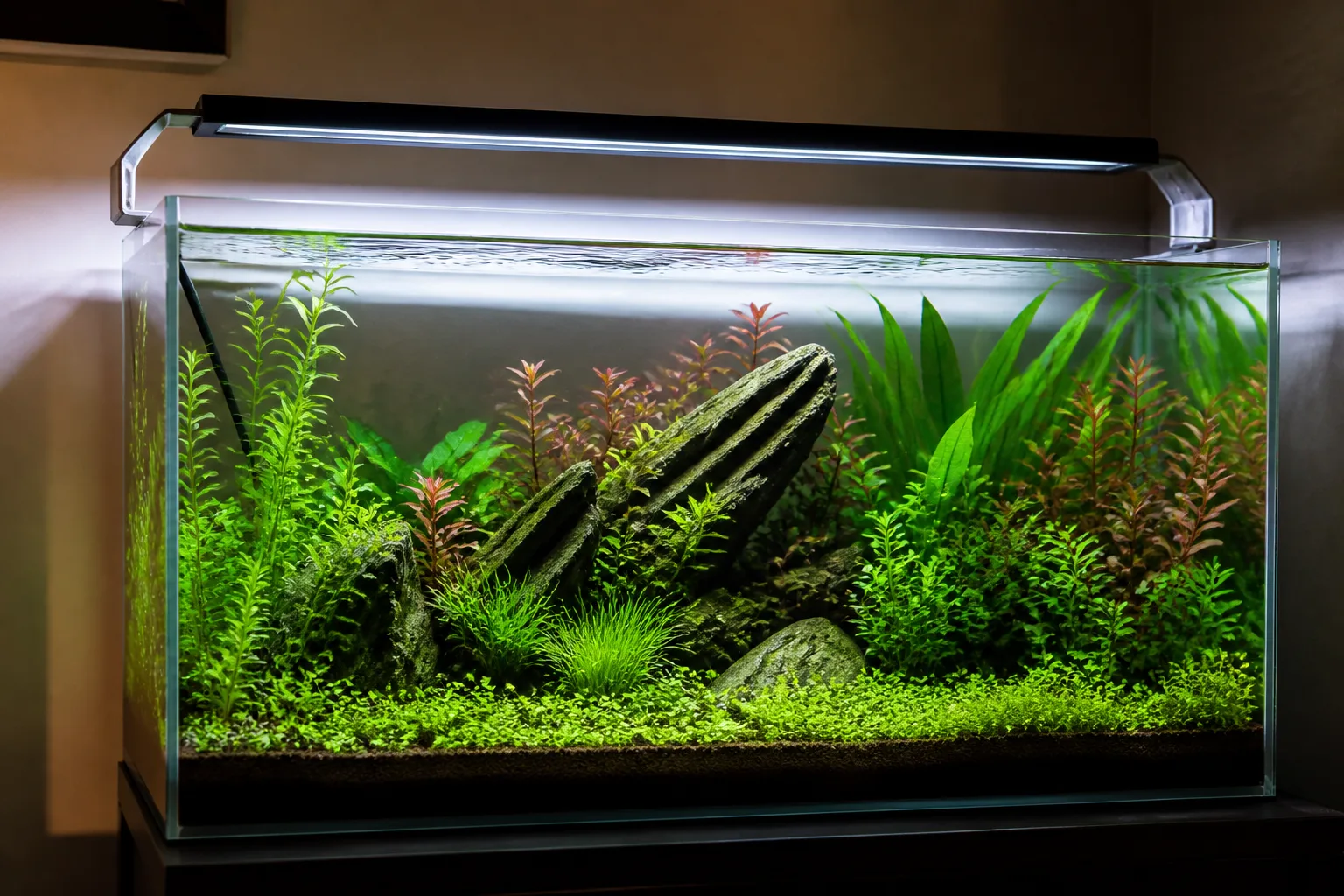
A 75-gallon tank loses heat more slowly than a nano aquarium, but it also holds enough water for a failed heater to cause serious damage. For most tropical freshwater tanks, a properly placed 300W adjustable heater is a practical starting point. A pair of 150W heaters can be safer in a cool room because either unit can maintain part of the load while the other is replaced. This is a specification-based guide, not a hands-on test. Check the current manual, voltage and warranty before ordering.
Quick comparison
| Product | Best for | Main advantage | Main drawback |
|---|---|---|---|
| Eheim Jager 300W | Adjustable primary heater | Clear calibration and broad range | Long glass body |
| Fluval E300 | Visible temperature control | Electronic display and alerts | Costs more than basic glass heaters |
| Aqueon Pro Adjustable 300W | Straightforward setups | Familiar dial and broad availability | Verify exact model revision |
| Cobalt Neo-Therm Pro 300W | Low-profile equipment | Slim flat format | Premium price |
| Hygger 300W Digital Heater | Digital set point | External controller display | Confirm current revision |
| Fluval M200 | Two-heater setups | Useful 200W building block | Not enough alone for every cool room |
| Aqueon Pro Adjustable 150W | Redundant pair | Two smaller heat sources | Needs two outlets and careful setup |
Best all-round adjustable heater: Eheim Jager 300W
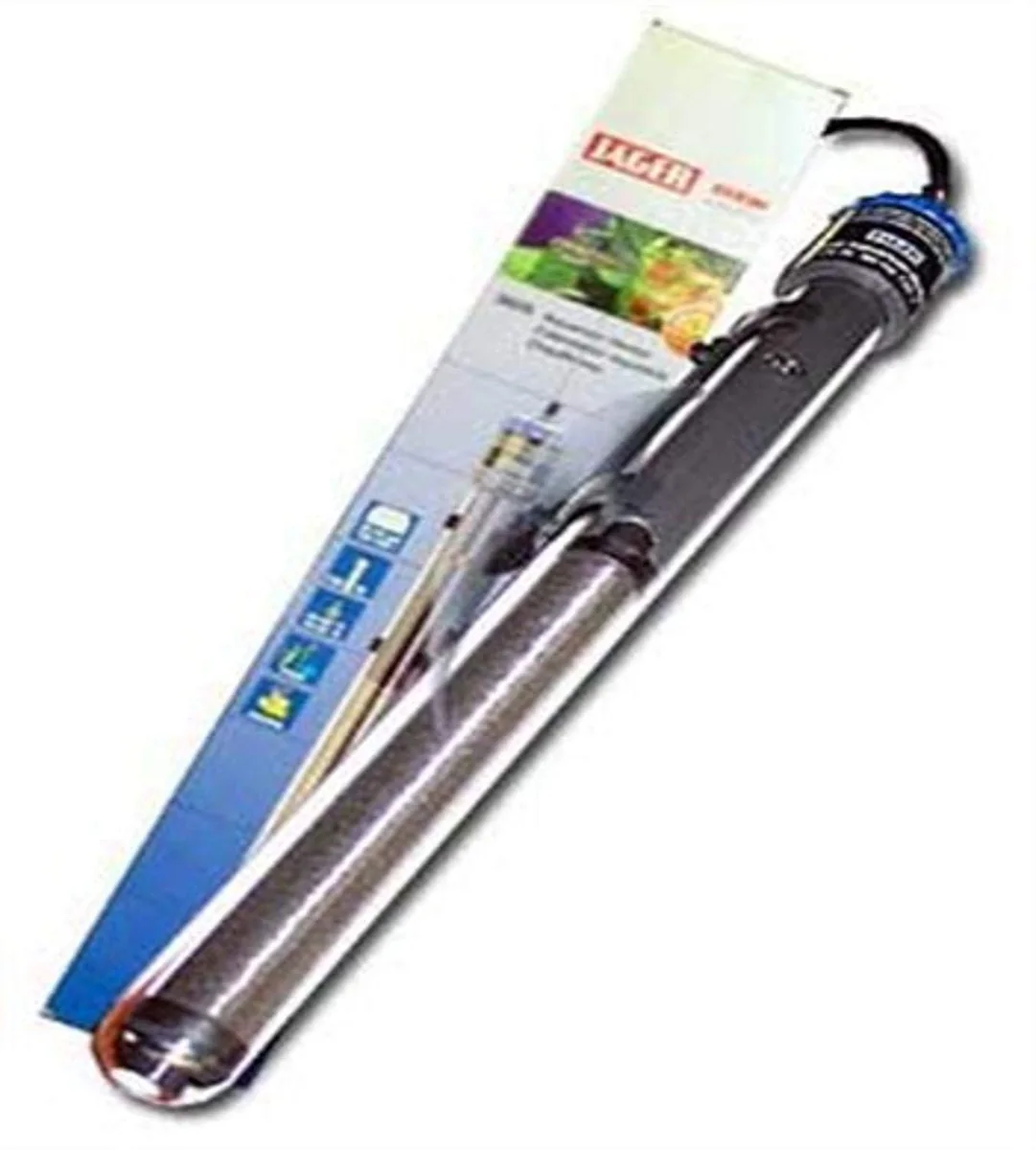
The Jager family is a sensible starting point when you want a conventional adjustable heater with a well-known sizing chart. A 300W version suits many 75-gallon tropical setups, provided the room is not unusually cold. The long glass body needs clearance from the substrate and decorations. Place it where the filter moves water past it, and calibrate against a separate thermometer rather than trusting the dial blindly. Pros: familiar adjustment format, strong documentation, useful 300W class. Cons: glass needs care, body length can limit placement, and exact voltage variants differ by market. See Eheim’s heater documentation before checkout.
Best temperature display: Fluval E300
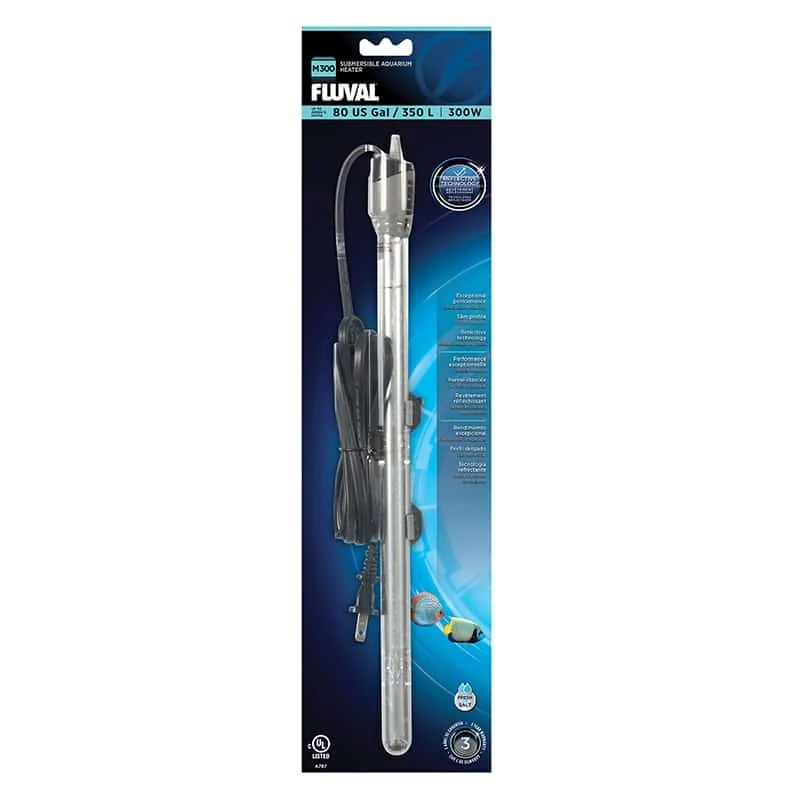
The Fluval E300 appeals when a visible readout and warning system are worth paying for. Its electronic controls make the target temperature easier to read than a small mechanical dial. That does not remove the need for a second thermometer. Use the display as one reference and put an independent thermometer at the opposite end of the tank. Pros: clear set point, useful status information, good fit for a large tropical tank. Cons: higher price, electronics add another failure point, and the heater still needs free circulation. Fluval’s E-series information has the current installation guidance.
Best widely available dial heater: Aqueon Pro Adjustable 300W
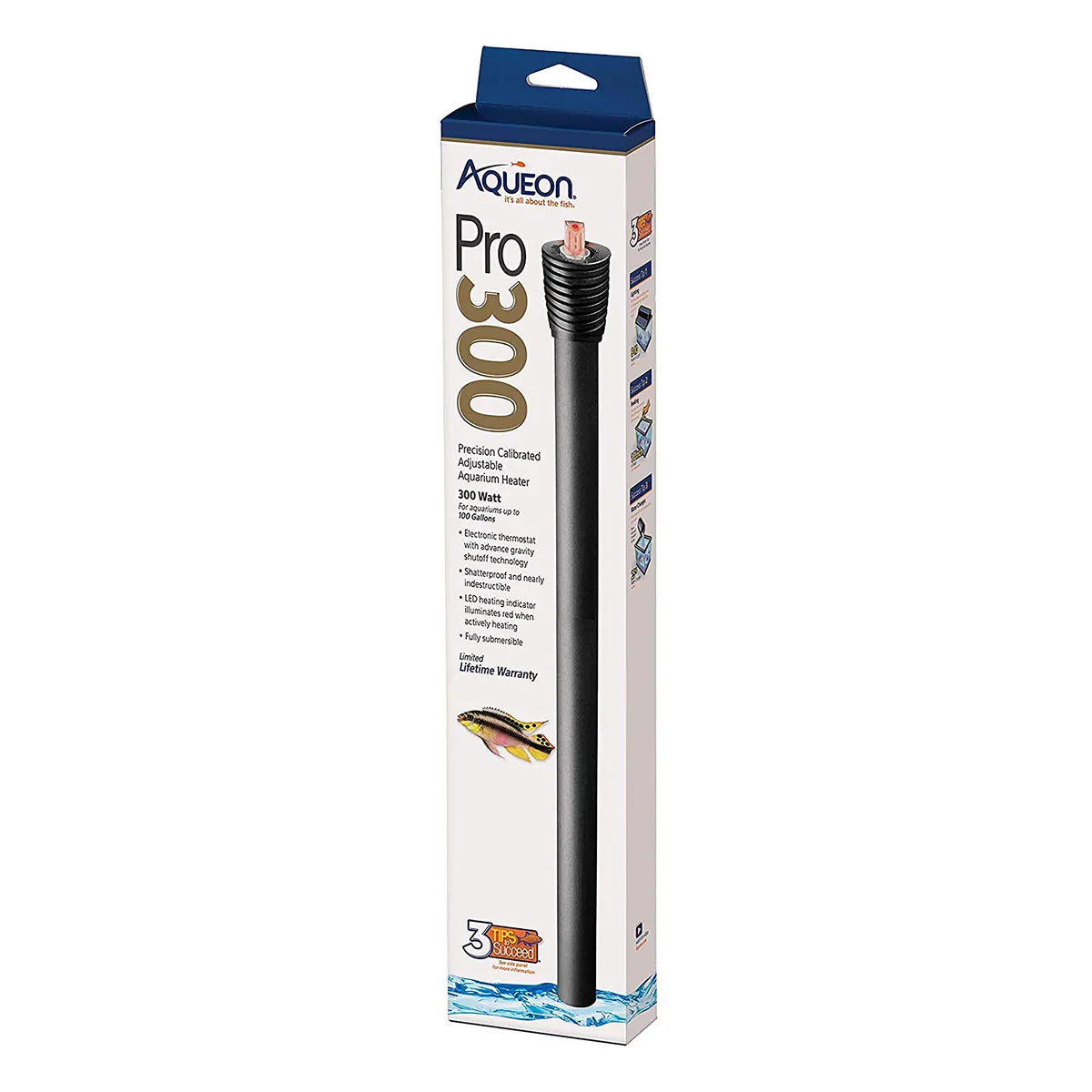
Aqueon’s Pro Adjustable 300W is a practical choice when replacement availability and a familiar control matter more than a display. It has enough capacity for many standard 75-gallon rooms, but sizing depends on the temperature difference between room and water. In a warm home, running a large heater at a modest duty cycle is different from trying to heat a basement in winter. Pros: common format, adjustable target, simple controls. Cons: verify the precise current revision, mechanical dials are easy to bump, and the glass body needs protection. Read Aqueon’s heater guide for placement and safety.
Best slim premium option: Cobalt Neo-Therm Pro 300W
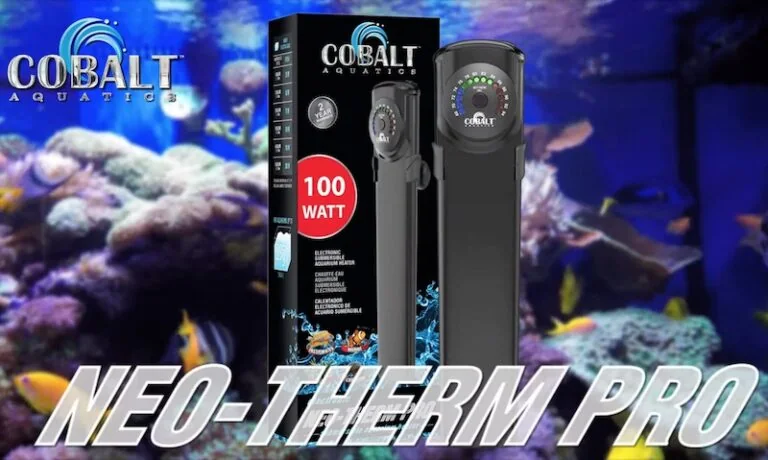
The Neo-Therm Pro is worth a look when a flat, low-visual-bulk heater is easier to hide than a long glass tube. Its 300W class is appropriate for many 75-gallon applications, but confirm the exact model’s tank rating. A slim body still needs open flow and should not be buried behind dense plants. Pros: tidy profile, adjustable control, useful capacity. Cons: premium pricing, replacement availability varies, and a compact shape does not make thermostat monitoring optional. Cobalt’s Neo-Therm information is the best source for current details.
Best digital budget alternative: Hygger 300W Digital Heater
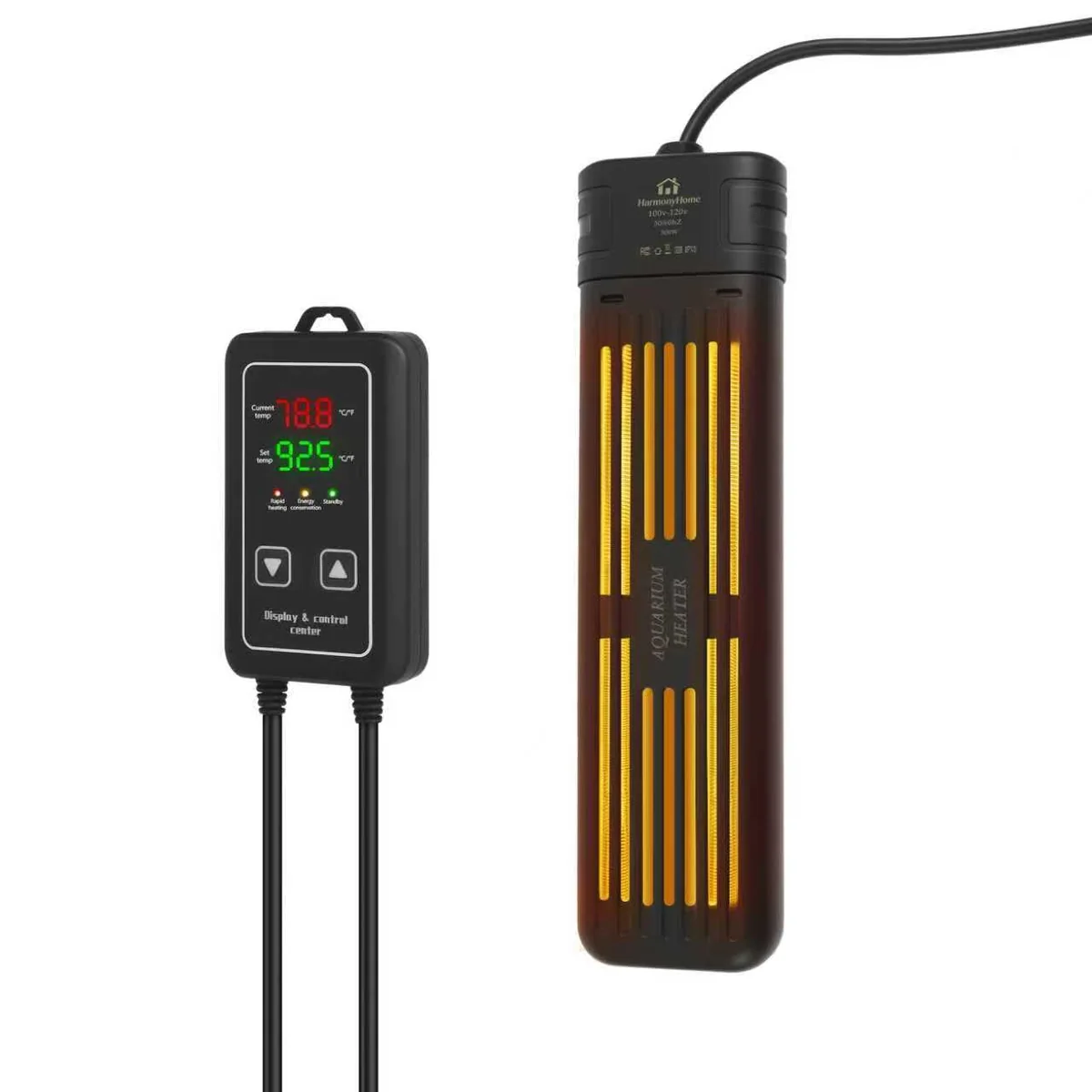
Hygger’s 300W digital models can suit a buyer who wants a readable controller without moving to a premium European or North American brand. Marketplace listings change, so check the manual, minimum water level, controller placement and exact voltage before buying. Treat the claimed temperature range as a setting range, not proof of accuracy. Pros: readable display, often competitive pricing, high-capacity variants. Cons: model revisions are easy to confuse, support may be less consistent, and the controller adds cable clutter. Use Hygger’s support pages to confirm the current manual.
Best 200W building block: Fluval M200
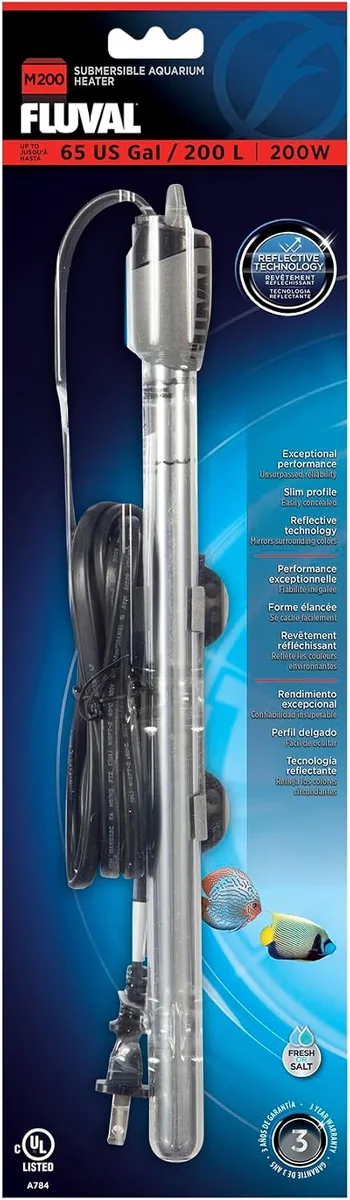
A 200W Fluval M200 is more useful as one half of a two-heater plan than as the only heater on a 75-gallon tank. Two units placed at opposite ends can spread heat and provide limited redundancy. Each heater should sit in filter circulation, with separate temperature checks. The pair is not automatically safer if both share one faulty controller or are oversized for the room. Pros: flexible dual-heater building block, compact body, adjustable format. Cons: two units cost more, require more cable management, and both thermostats need checking. Consult Fluval’s M-series guide for current sizing.
Best redundancy-first pick: Aqueon Pro Adjustable 150W
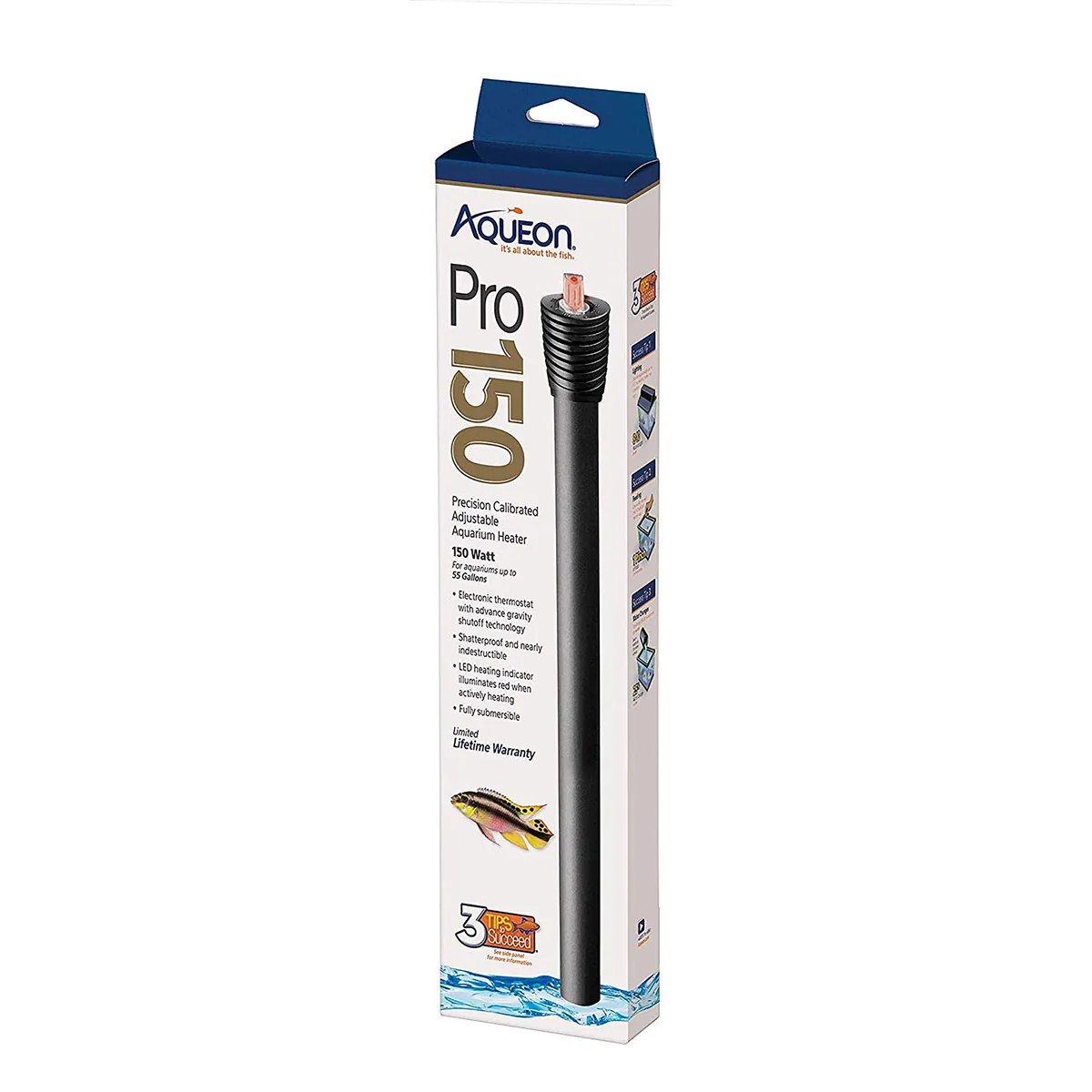
Two adjustable 150W heaters can be a calmer choice when you want the tank to keep gaining heat if one unit stops working. Put one near each end, keep both in moving water and set them to the same target. This approach may take longer to recover after a large water change, especially in a cold room, so monitor the actual temperature. Pros: distributed heat, partial backup, lower output per device. Cons: two thermostats can disagree, wiring is busier, and 300W total may be marginal in a cold basement. Aqueon’s heating guidance covers safe handling.
How to size a heater for 75 gallons
Start with the room’s coldest normal temperature and the species’ target. A 10 to 15°F difference often points toward a 300W class heater, but manufacturer charts remain the deciding source. In a cold room, use two appropriately sized units or a properly rated external controller. Do not solve a large temperature gap by buying the biggest heater available.
Put the heater close to a filter outlet or circulation pump, not in a stagnant corner. Leave the required clearance, respect the minimum water line and unplug the unit before draining water. Use two-point monitoring: one thermometer near the heater’s opposite end and another where livestock spends most of its time. A controller can add an independent cutoff, but it cannot compensate for incorrect placement or a missing thermometer.
For a 75-gallon planted setup, pair this guide with our planted-tank lighting picks. If the tank houses goldfish, compare the different flow needs in our goldfish filter guide.
Frequently asked questions
Is 300W enough for a 75-gallon tank?
Often, yes, when the room is moderately warm and the tank has a lid. A cold room, open-top tank or large temperature gap may call for two heaters or a different documented setup.
Is one large heater better than two smaller heaters?
Not always. Two smaller units spread heat and offer partial redundancy. One unit is simpler to install and troubleshoot. Choose based on room temperature, available outlets and the manufacturer’s sizing guidance.
Should both heaters use a controller?
An independent controller can reduce overheating risk, but it needs correct sensor placement and a suitable rating. Keep the heaters’ own thermostats active and verify temperatures with separate thermometers.
Where should heaters go in a 75-gallon aquarium?
Place them where water moves steadily, often near filter returns or intake circulation. Keep each heater away from gravel, decorations and stagnant corners, following its manual.
Sources and methodology
We compared current manufacturer guidance from Eheim, Fluval, Aqueon, Cobalt Aquatics and Hygger, focusing on wattage, adjustment, placement, electrical variants and support documentation. Recommendations match the 75-gallon modifier and include both 300W-class single-heater choices and smaller dual-heater strategies. No hands-on testing was performed. Amazon links use btraqrm-20; verify current price, availability, voltage and tank-size guidance at checkout.