
Buying guide
Best Aquarium Filter for a 55-Gallon Tank: 7 Practical Picks
A 55-gallon aquarium benefits from generous biological media and adjustable flow, but the right filter depends on livestock and room layout.
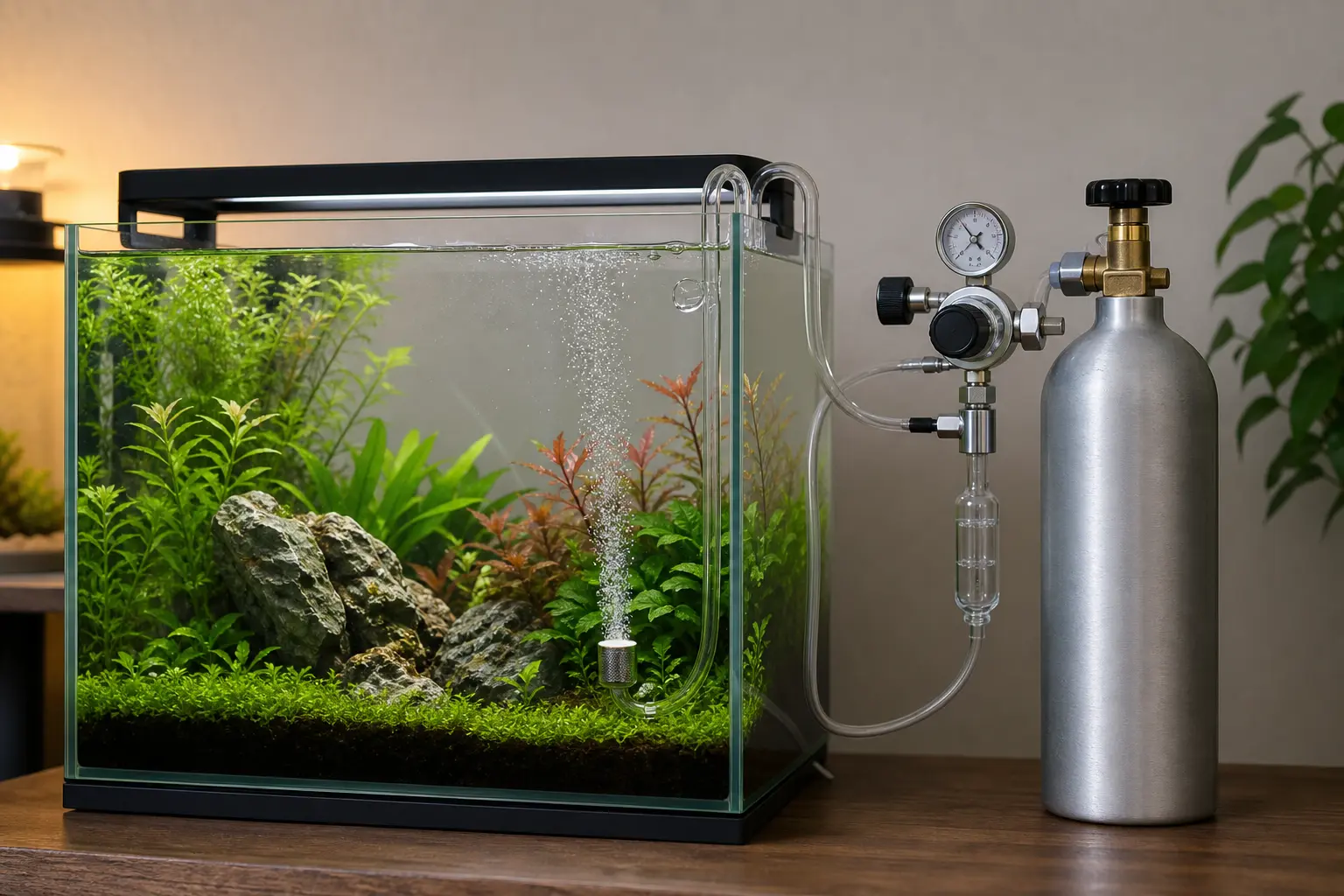
A 55-gallon aquarium holds enough water to dilute mistakes, but a heavily stocked tank can still overwhelm a small filter quickly. The useful question is not simply which model claims “55 gallons”; it is how much media you can service, how the outlet behaves after loading, and whether the filter fits the stand or rim. This is a specification-based buying guide, not a hands-on test. Check the current model, voltage, warranty and included media before ordering.
Quick comparison
| Product | Best for | Main advantage | Main drawback |
|---|---|---|---|
| Fluval AquaClear 70 | Flexible hang-on-back | Adjustable flow and media basket | HOB footprint |
| Seachem Tidal 75 | Easy maintenance | Surface skimmer and self-priming | Strong output for timid fish |
| Marineland Penguin 350 | Budget HOB setup | Simple cartridge format | Less media flexibility |
| Fluval 307 Canister Filter | Quiet display rooms | Large external media volume | More involved cleaning |
| Penn-Plax Cascade 1000 | Media capacity | Several media trays | Tubing takes space |
| OASE BioMaster Thermo 250 | Premium planted tanks | Pre-filter service design | High price |
| Aqueon QuietFlow 75 | Straightforward HOB | Familiar replacement parts | Cartridge dependence |
Best overall: Fluval AquaClear 70
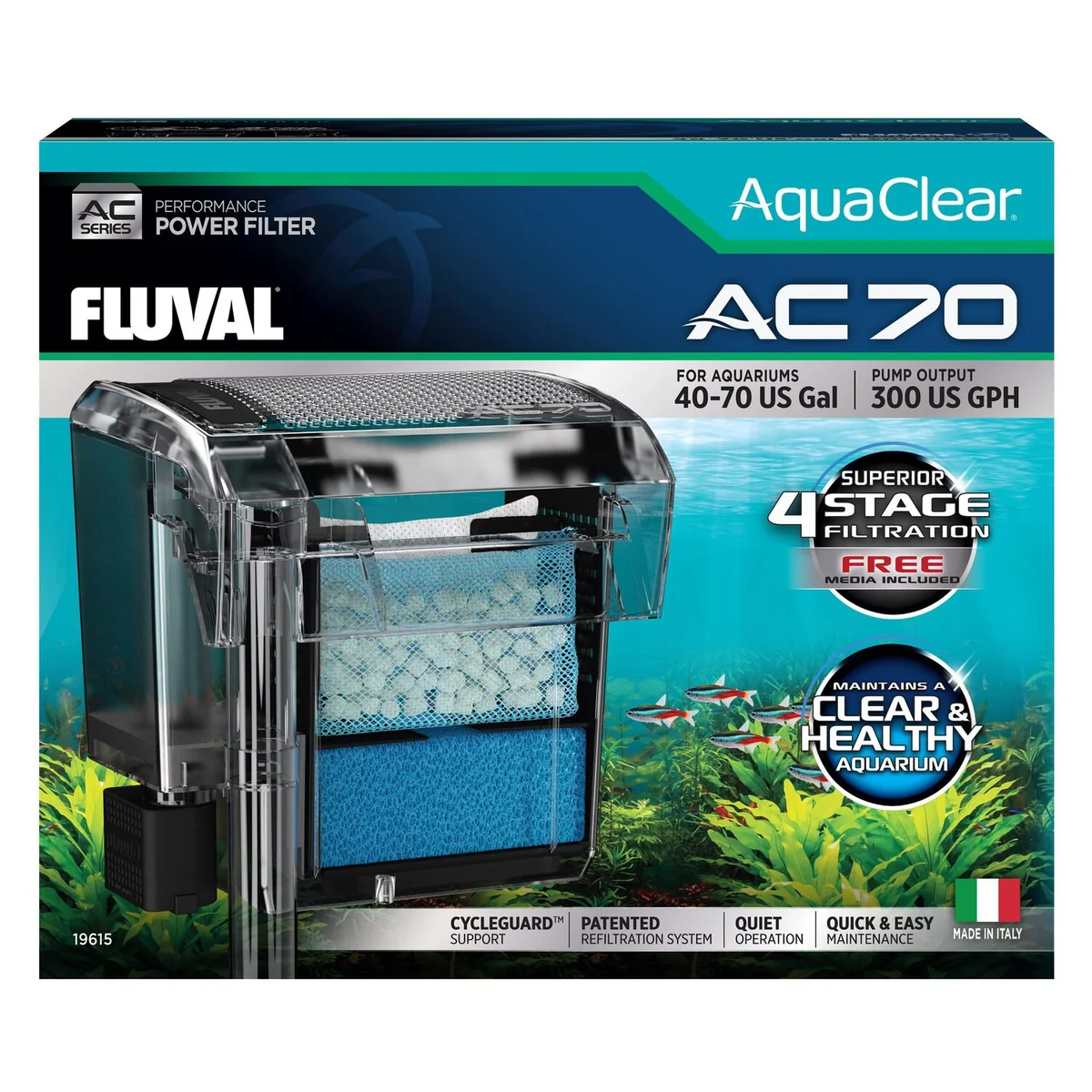
The AquaClear 70 is a useful default when you want a roomy media basket and adjustable return flow. For a normally stocked 55-gallon aquarium, its format leaves space to tailor sponge, biological media and optional polishing media. The waterfall return adds surface movement, so point it thoughtfully if fish prefer calmer water. Pros: configurable media; adjustable flow; easy access. Cons: motor and water level affect noise; measure rear clearance. Fluval’s AquaClear documentation explains the platform.
Seachem Tidal 75
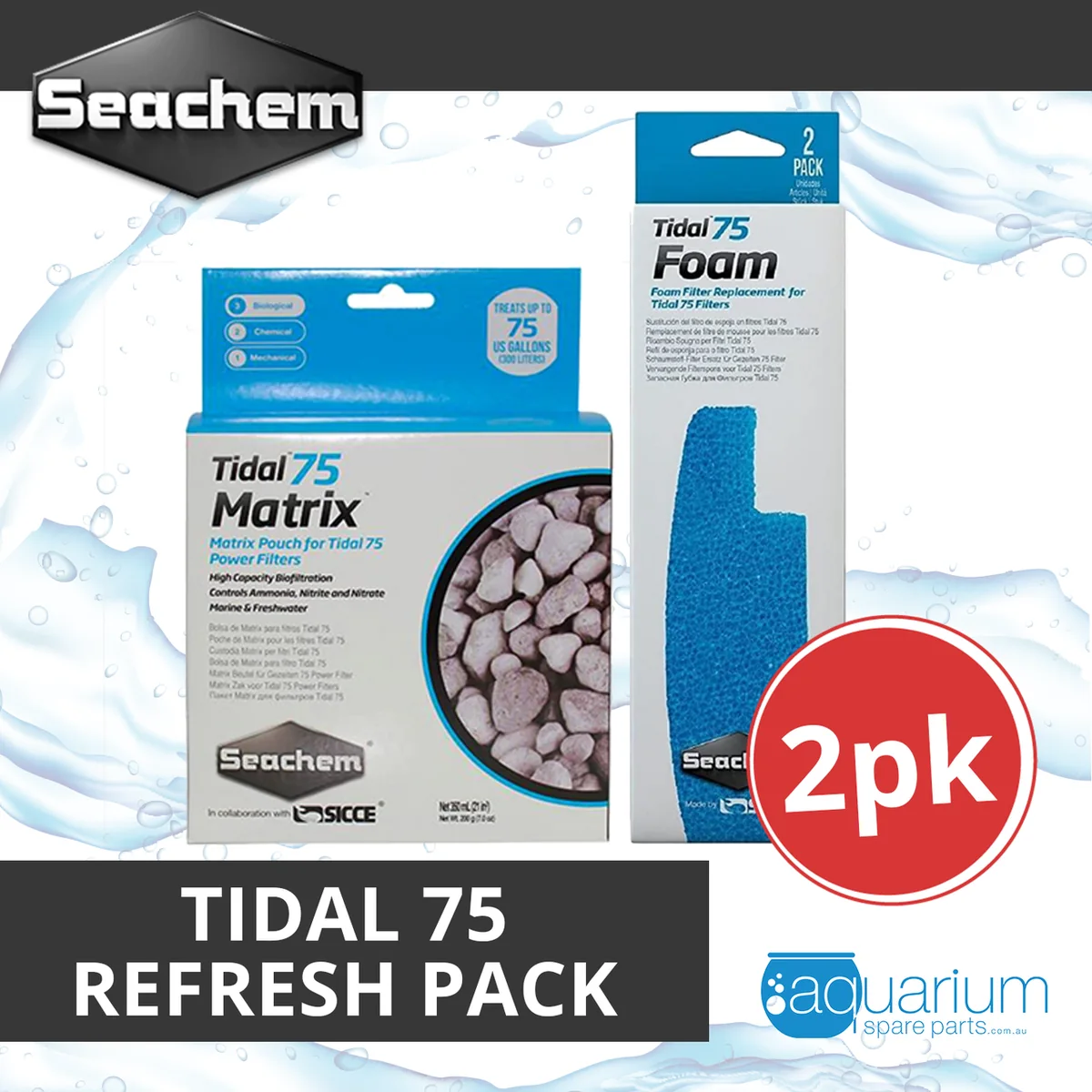
Tidal’s self-priming HOB design suits owners who dislike fiddly restarts after maintenance. Its surface-skimming feature can help collect film, while the adjustable intake and flow allow some tuning. The tradeoff is strong circulation in lightly stocked or long-finned communities. Pros: convenient restart; large basket; surface skimmer. Cons: output may need baffling; rear clearance matters. Read Seachem’s Tidal information and select the rating that matches your actual tank volume and bioload.
Marineland Penguin 350
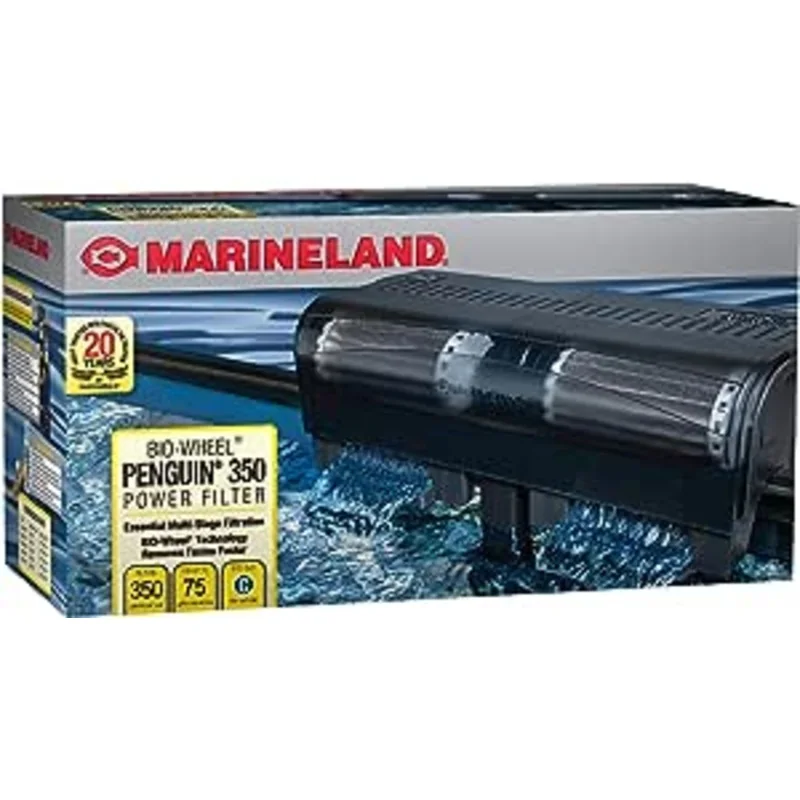
The Penguin 350 is aimed at a familiar, uncomplicated HOB routine. Its bio-wheel style approach provides a dedicated biological surface, and replacement cartridges are easy to locate. Cartridge costs and limited customization are the important counterweights. Pros: simple setup; visible surface agitation; accessible parts. Cons: recurring cartridge expense; noise rises if the water level falls. Follow Marineland support guidance and keep a reusable sponge available if you want to reduce disposable-media dependence.
Fluval 307 canister
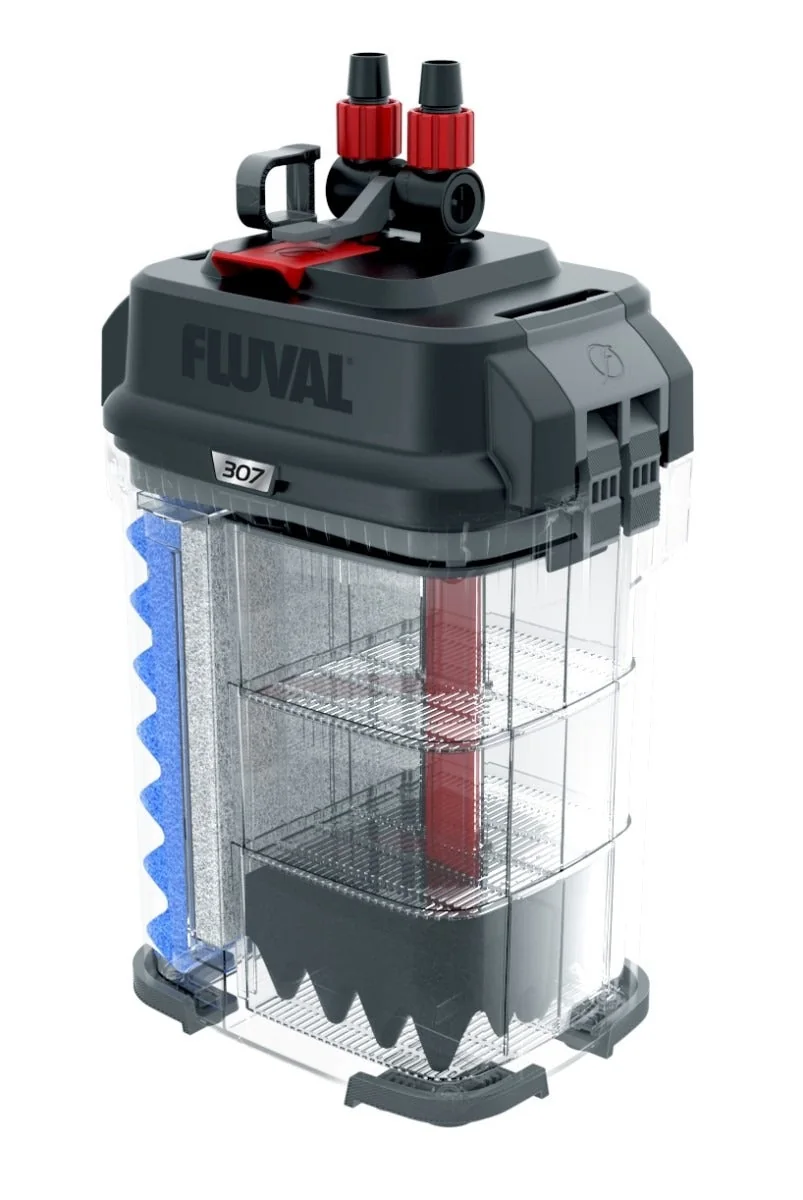
Choose a canister when you want equipment hidden below the stand and a cleaner display. The 307 format offers multiple media stages and can be quieter than a waterfall filter when installed correctly. It demands careful priming, hose routing and seal maintenance. Pros: concealed equipment; flexible stages; broad return. Cons: heavier service; leaks are possible if seals are neglected. Fluval’s canister support page is the authority for setup and media order.
Penn-Plax Cascade 1000
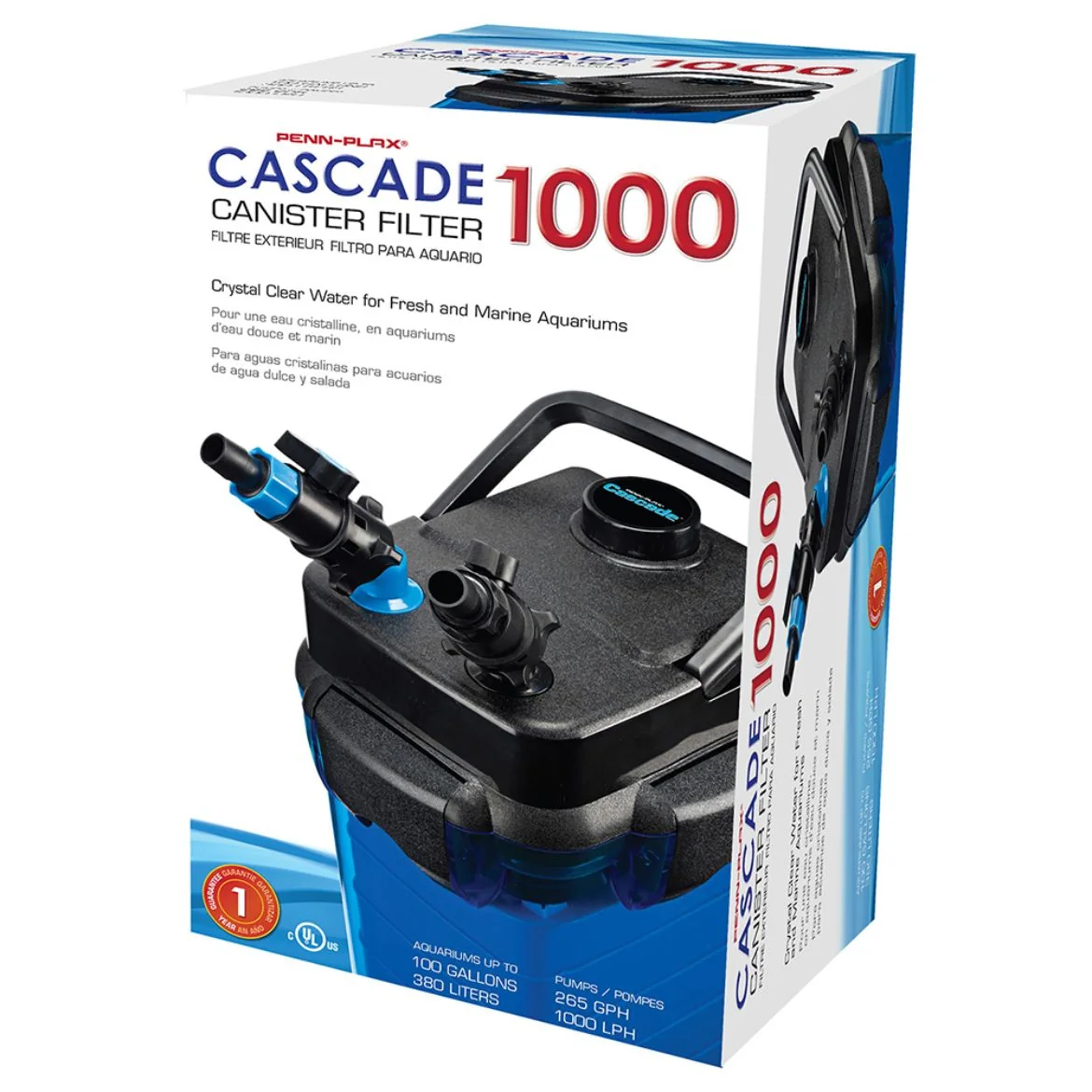
The Cascade 1000 appeals to keepers who prioritize tray capacity and a strong mechanical stage. Confirm that the cabinet can accept its body and that the supplied hose length works with your stand. Pros: spacious trays; adaptable media; good fit for a busy community. Cons: cabinet footprint; pump noise depends on installation. Use Penn-Plax product information to verify the current revision.
OASE BioMaster Thermo 250
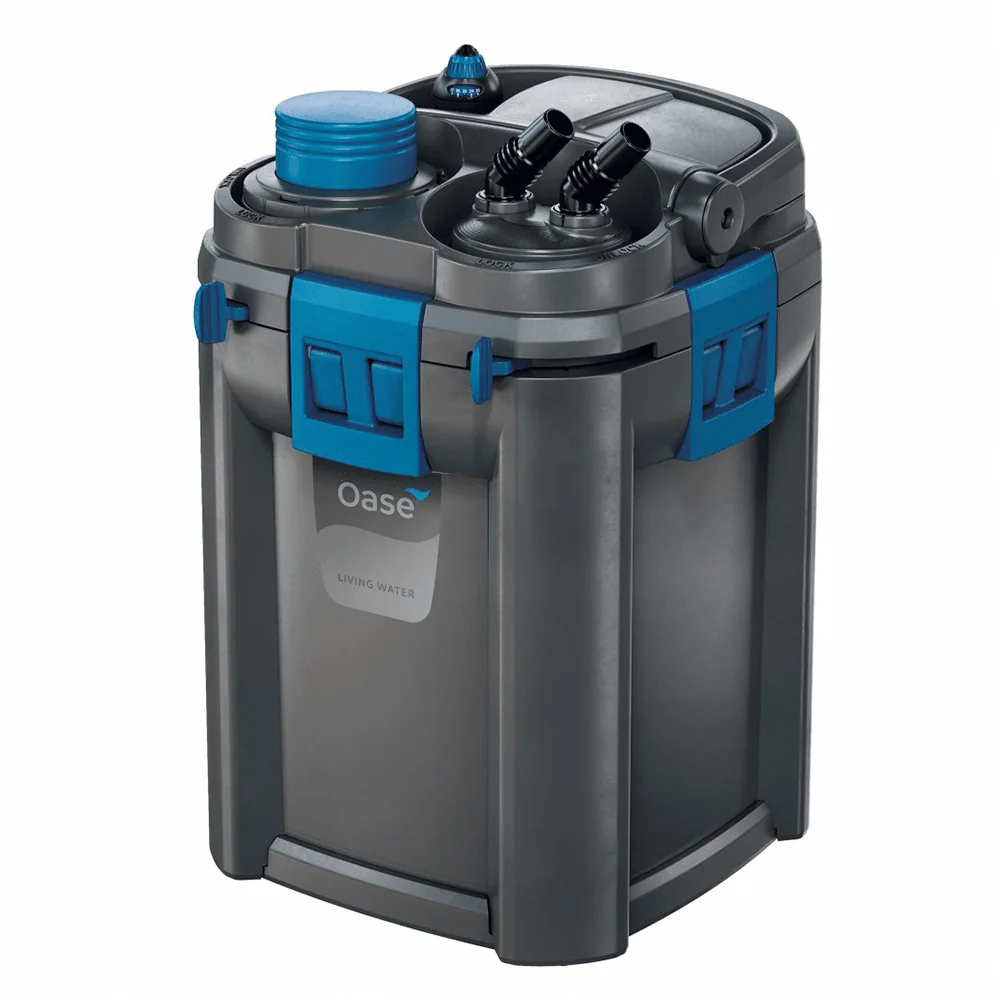
The BioMaster Thermo line is interesting for planted displays where an integrated heater can reduce visible equipment. Its removable pre-filter is designed to make frequent debris removal less disruptive. Premium pricing and replacement parts should be checked before committing. Pros: serviceable pre-filter; tidy cabinet; heater integration. Cons: expensive; integrated components add decisions. Consult OASE’s BioMaster information for the exact 250 configuration.
Aqueon QuietFlow 75
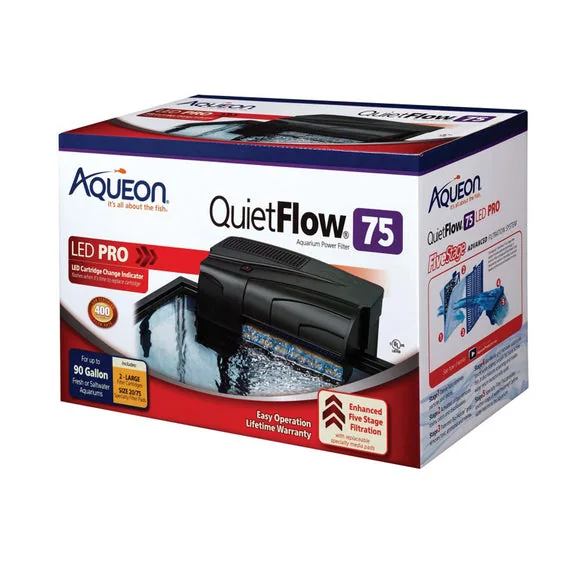
QuietFlow is a practical fit when local availability and familiar parts matter more than maximum media customization. Keep the intake clear, maintain the water level, and consider adding reusable media where the design allows. Pros: accessible support; straightforward installation; useful aeration. Cons: cartridge-led maintenance; exact flow varies by setup. Check Aqueon’s filter range for dimensions and replacement parts.
How to choose a 55-gallon filter
Start with bioload rather than the tank label. Goldfish, messy eaters and densely stocked communities need more mechanical capacity and more frequent cleaning than a lightly stocked planted tank. A filter rating is not a promise that every setup should run at maximum flow. Look for adjustable output, an intake guard and enough media volume to avoid replacing all biological material at once. Measure the stand, rear rim and hose route before ordering. Surface agitation supports gas exchange, but excessive turbulence can stress fish and drive off injected carbon dioxide. A pre-filter sponge protects shrimp and fry while extending service intervals. Never wash biological media in chlorinated tap water; swish it in removed aquarium water instead. Keep a spare impeller, sponge and seal where possible. During any service, unplug equipment before putting hands into the aquarium.
For a planted 55-gallon tank, a canister or large adjustable HOB usually makes the cleanest match. For a high-bioload tank, prioritize coarse-to-fine mechanical stages and easy access. For a bedroom, compare pump isolation, water-level sensitivity and cabinet vibration rather than trusting the word “quiet.”
Frequently asked questions
What flow rate does a 55-gallon aquarium need?
Use the manufacturer’s usable-flow guidance as a starting point, then adjust for livestock and media restriction. A nominal rating is measured under conditions that may not match a loaded filter.
Is one filter enough?
Often yes, if it has appropriate capacity and the tank is sensibly stocked. Two smaller filters can add redundancy and distribute flow, but they also add maintenance.
Can I use a 75-gallon filter on a 55-gallon tank?
Yes, when output can be reduced or diffused and the livestock accepts the current. Oversizing does not remove the need for maintenance.
How often should I clean it?
Inspect flow and mechanical media weekly. Clean when flow drops or debris accumulates, preserving biological media rather than replacing everything on a calendar.
Related guides: best aquarium filter for a 20-gallon tank and best aquarium filter for goldfish.
Sources and methodology
We compared manufacturer specifications from Fluval, Seachem, Marineland, Penn-Plax, OASE and Aqueon, focusing on media access, flow control, service design and fit for a 55-gallon aquarium. No hands-on testing was performed.