
Best CO2 Regulator for a Planted Aquarium: 7 Reliable Picks
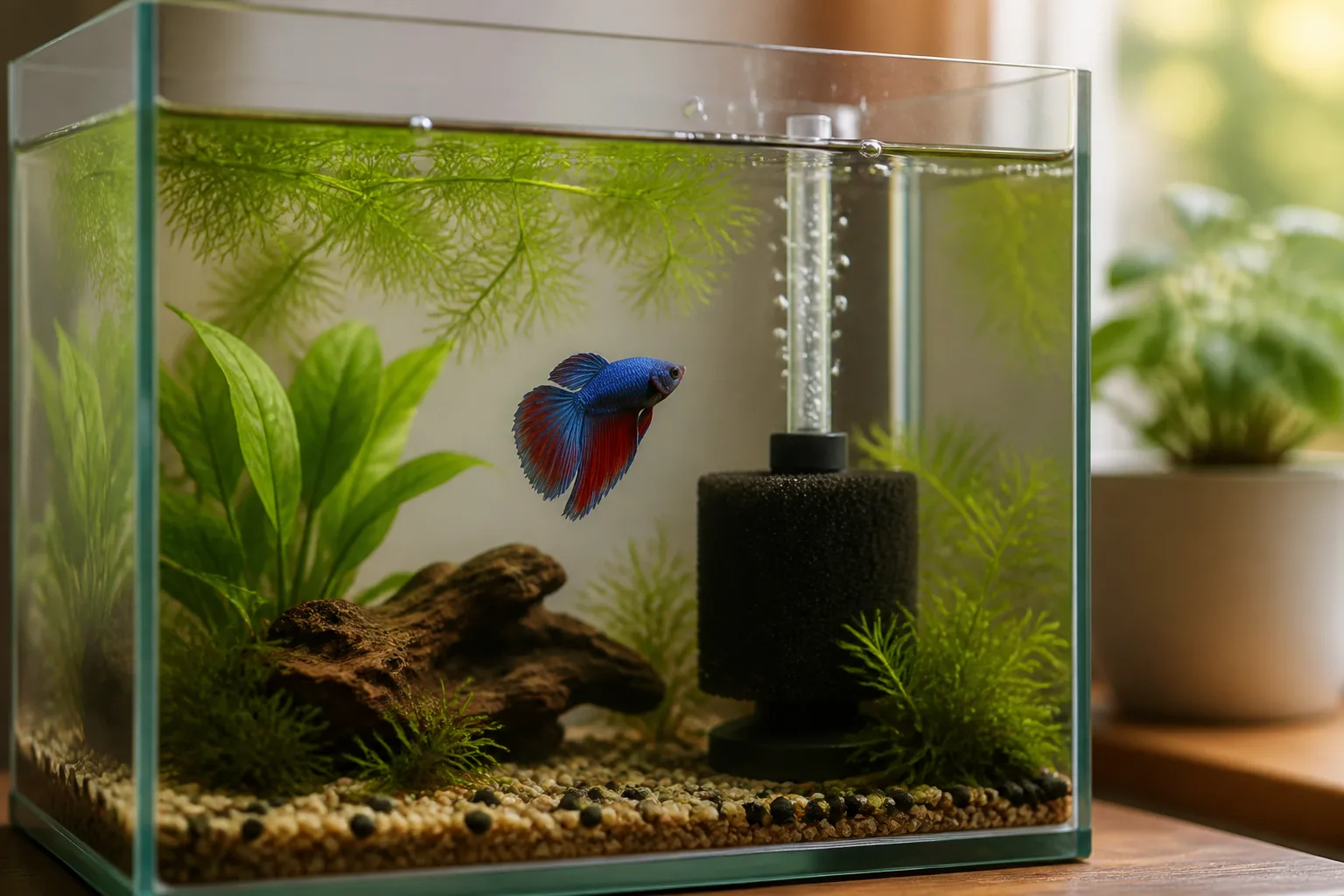
For most planted aquariums, the best CO2 regulator is a dual-stage unit with a stable needle valve, a 12V or 24V solenoid, and the correct cylinder connection for your country. My practical starting point is the CO2Art Pro-SE, while the FZONE is a sensible lower-cost option for a single tank. Larger planted displays benefit from the GLA GRO, and a manifold-ready regulator makes sense when one cylinder will feed several aquariums.
This is a research-based buyer guide, not a hands-on test. Models, fittings, and Amazon stock change, so confirm the current connector, warranty, and included parts before ordering.
Quick comparison
| Regulator | Best for | Stages | Solenoid | Notable tradeoff |
|---|---|---|---|---|
| CO2Art Pro-SE | Stable single-tank control | Dual | Yes | Higher price |
| FZONE Aquarium CO2 Regulator | Beginners | Single | Yes | Less pressure reserve |
| GLA GRO Regulator | High-demand planted tanks | Dual | Yes | Bulky build |
| UNS Mini Dual Stage | Nano and small tanks | Dual | Yes | Narrower output range |
| Green Leaf Aquariums Mini | Compact setups | Dual | Yes | Check regional fitting |
| Milwaukee Instruments MA957 | Budget replacement | Single | Yes | Needs careful tuning |
| KegLand Mini 360 | Multi-outlet systems | Dual | Yes | More parts to configure |
The seven regulators worth considering
CO2Art Pro-SE
The Pro-SE is the safest default for a planted aquarium where stable output matters more than the lowest purchase price. Its dual-stage design is intended to reduce output creep as cylinder pressure falls. The solenoid can follow a timer, so gas stops while the lights are off. Its fine needle valve suits small bubble rates, but the exact bubble counter and cylinder adapter vary by package.
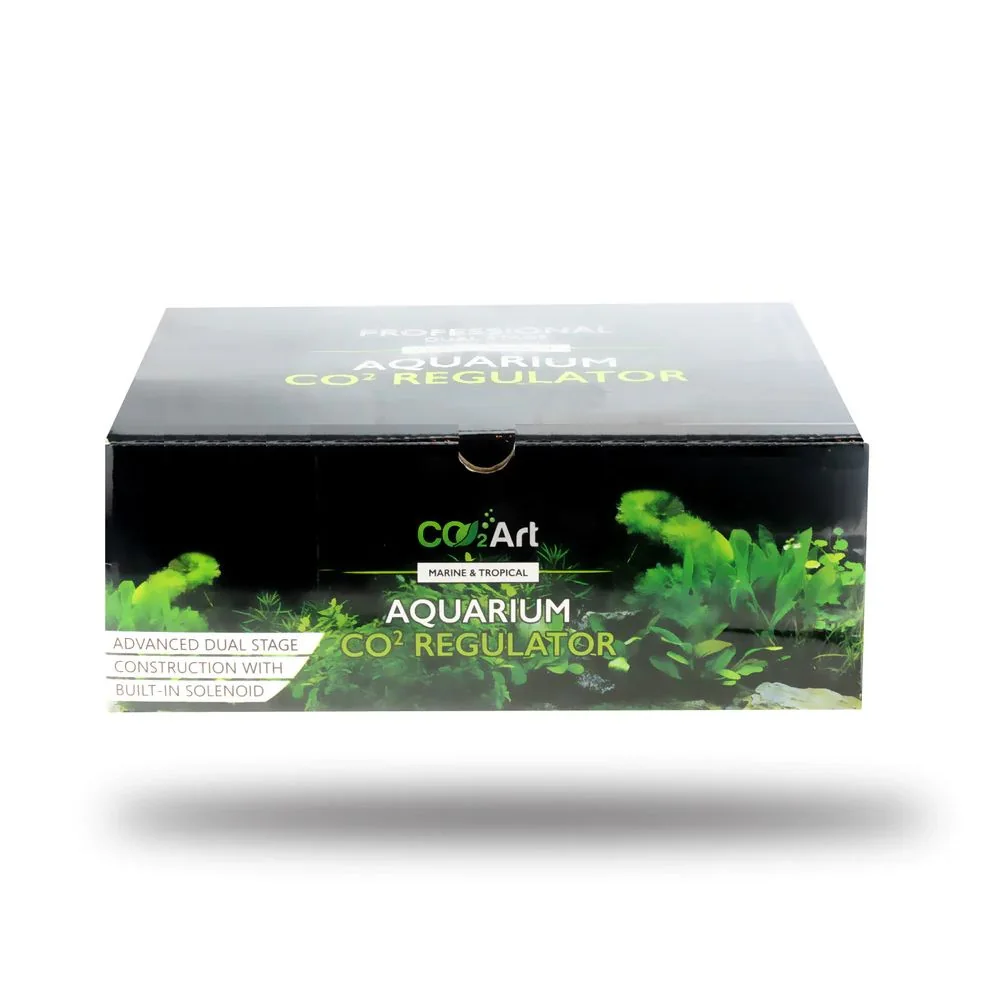
Pros: dual-stage control, timer-friendly solenoid, good adjustment range. Cons: costs more, and you must match the regulator inlet to your cylinder.
FZONE Aquarium CO2 Regulator
FZONE offers a compact route into pressurized CO2. Look for the version with a solenoid, bubble counter, and a metal needle valve rather than a bare regulator. It fits a single planted tank well when you can watch the drop checker and make gradual adjustments. A single-stage regulator can become less predictable near an empty cylinder, so it rewards regular observation.
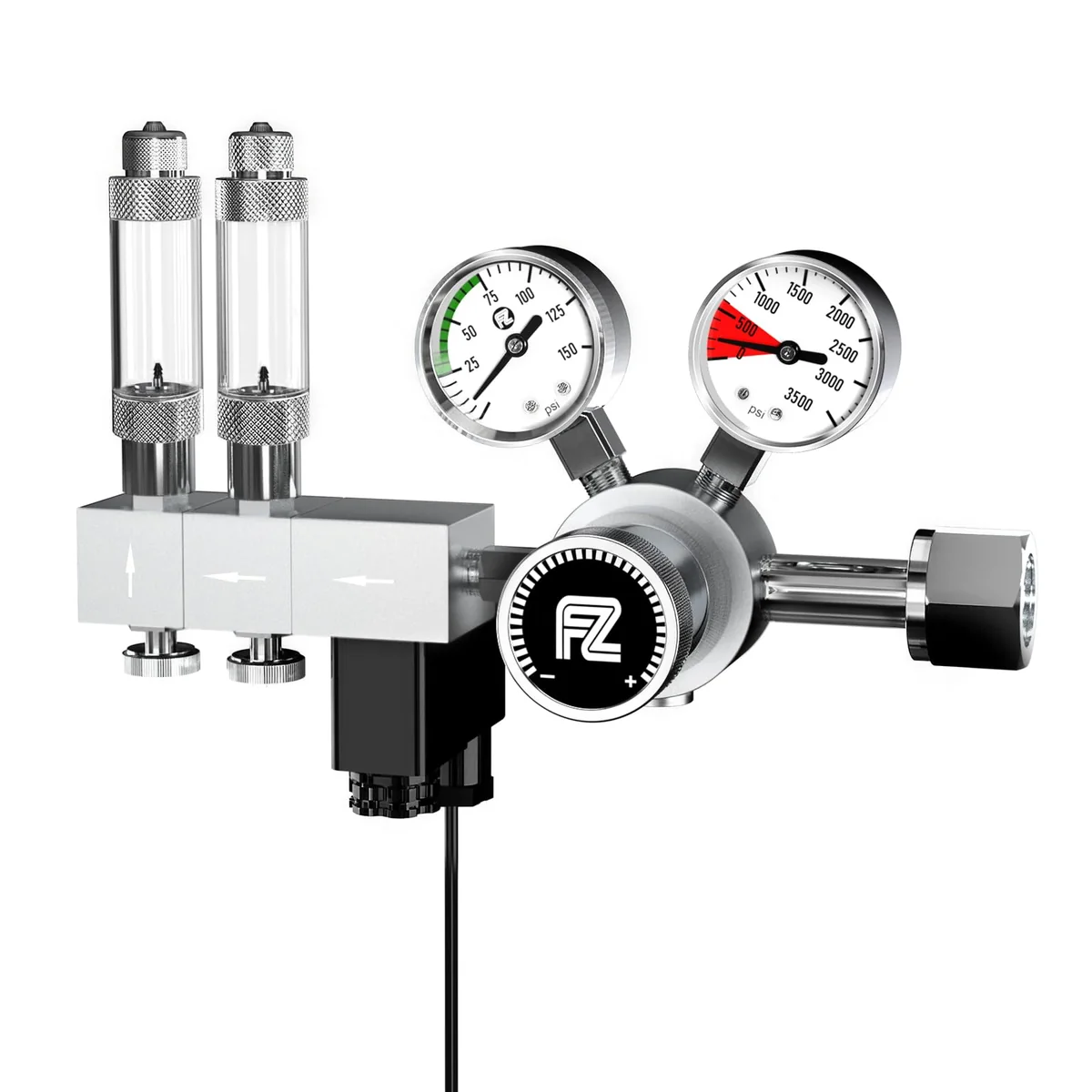
Pros: accessible price, compact format, common accessories. Cons: inspect seals and fittings, and do not assume every listing is dual-stage.
GLA GRO Regulator
The GLA GRO is aimed at aquarists who want more output headroom for a large planted aquarium or a reactor. Its dual gauges make cylinder pressure and working pressure easier to read, while a dependable solenoid supports a timed photoperiod. Check the outlet configuration if you plan to add a manifold. One outlet is not the same as a regulator designed for several independent bubble rates.
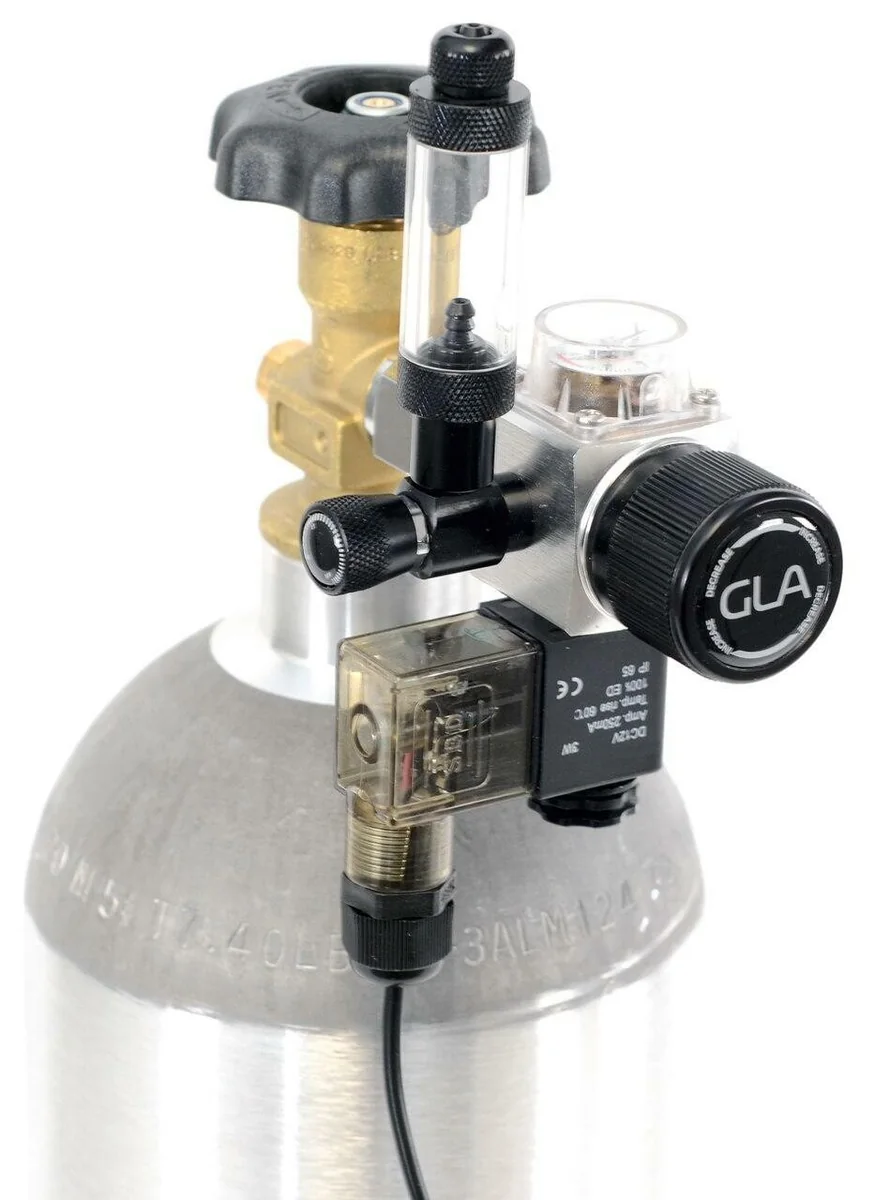
Pros: strong fit for larger tanks, dual-stage options, clear gauges. Cons: takes more cabinet space and may need a separate diffuser or reactor.
UNS Mini Dual Stage
The UNS Mini Dual Stage makes sense when a nano aquarium needs the steadier behavior of a dual-stage regulator without a large body. Its small scale does not remove the need for a proper needle valve. Nano tanks change quickly, so start with very little gas and use a drop checker as a slow trend indicator. Confirm that your cylinder has the matching thread before purchase.
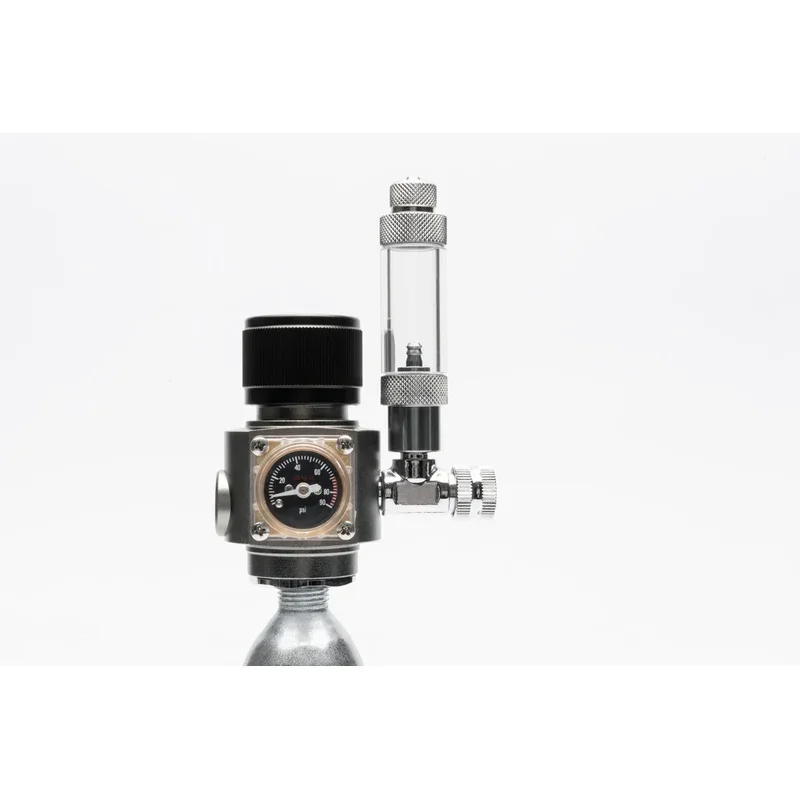
Pros: compact dual-stage format, tidy for small tanks, good low-flow use. Cons: less convenient for high-output reactors and multi-tank manifolds.
Green Leaf Aquariums Mini
GLA’s Mini regulator is another compact choice for a planted aquarium with limited cabinet space. It is most useful when you already know the cylinder standard used by your local supplier. A US CGA-320 connection, a European W21.8 connection, and disposable-cartridge threads are not interchangeable. Buy the correct version, not just the cheapest listing.
Pros: small footprint, planted-tank focus, dual-stage variants available. Cons: regional fittings need checking and replacement parts may be less local.
Milwaukee Instruments MA957
The MA957 is a familiar single-stage option for a budget replacement or a simple aquarium setup. Its solenoid and working-pressure adjustment can control one diffuser, but the operator must watch for output changes as the cylinder empties. It is a reasonable choice for a lightly planted tank when you already have a compatible cylinder and do not need a manifold.
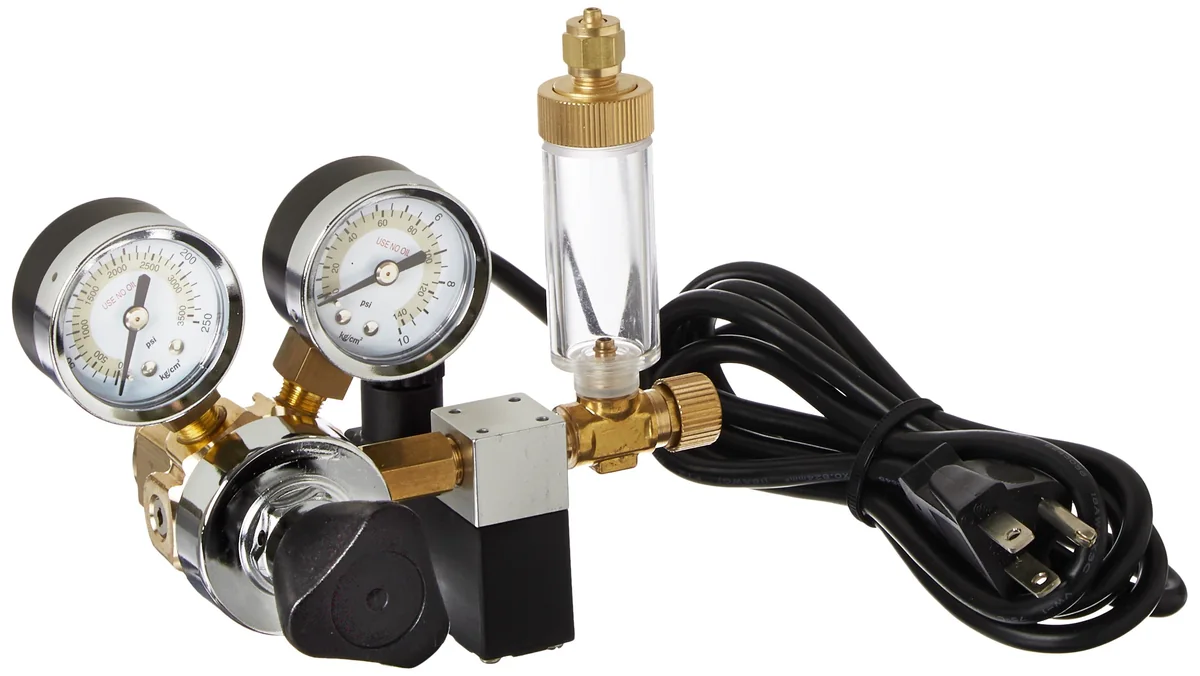
Pros: simple controls, commonly available, suitable for one outlet. Cons: single-stage behavior needs closer monitoring and fittings are not universal.
KegLand Mini 360
The KegLand Mini 360 is worth considering when a regulator may become part of a more flexible gas setup. Its modular approach can work with a manifold, but every added outlet needs its own fine adjustment and leak check. For one aquarium it may be more hardware than you need. For several tanks, it can save a cylinder change if the outlet plan matches your bubble rates.
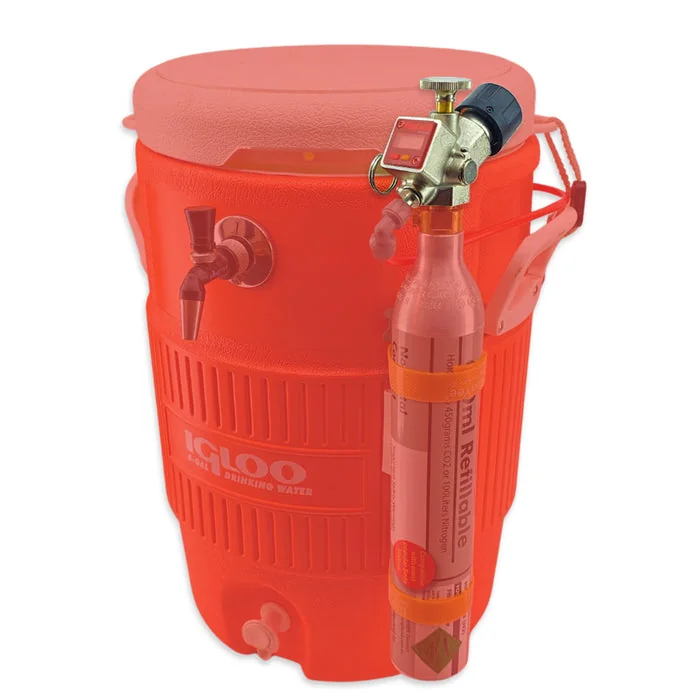
Pros: useful expansion path, dual-stage variants, good for shared cylinders. Cons: more fittings mean more leak points and setup work.
How to choose a regulator for planted tanks
Dual-stage regulators are preferable when the tank matters and you want less output change near cylinder depletion. Single-stage units can work, especially on simple setups, but check the drop checker and fish behavior whenever the cylinder pressure falls. A solenoid should shut gas off with the aquarium light schedule. A needle valve controls the low flow. A working-pressure gauge tells you what the regulator is sending downstream, while the cylinder gauge shows remaining pressure only approximately.
Thread standards are the easy detail to miss. Disposable cartridges, paintball cylinders, and refillable welding cylinders use different connections. Regional standards also differ. Ask the gas supplier which valve is on your cylinder and select the matching regulator or an explicitly approved adapter. Never force a thread or use an improvised washer.
For most planted tanks, a working pressure around 15 to 30 PSI is enough, but the diffuser or reactor sets the real requirement. Follow its instructions. A manifold is useful only if the regulator can supply the combined flow and each outlet has independent fine control. Secure the cylinder upright, keep it away from heat, use CO2-rated tubing, and check every connection with soapy water before introducing gas to the aquarium. Open the cylinder valve slowly. Add gas in small steps, and allow the tank time to respond.
If you are also choosing filtration, compare it with our best aquarium filter for a planted tank guide. CO2 is easier to distribute with gentle circulation, not a jet aimed at the surface.
FAQ
Do I need a dual-stage regulator?
No, but it is the better long-term choice for a valuable planted aquarium. A single-stage model can work if you monitor it and replace the cylinder before it is empty.
Should CO2 run at night?
Usually no. Plants do not use light-driven CO2 at night, and continued dosing can lower oxygen. Use the solenoid on a timer so gas starts before lights-on and stops before lights-out.
What pressure should I set?
Use the diffuser or reactor maker’s range. Many aquarium setups begin around 15 to 30 PSI, then adjust only if the diffuser needs more pressure.
Can one regulator run several tanks?
Yes, if it has enough capacity and a suitable manifold. Each tank needs independent needle-valve control, a check valve, and its own diffuser or reactor.
Is a drop checker enough for safety?
No. It reacts slowly and is only a rough indicator. Watch livestock, surface agitation, and a reliable pH or CO2 routine as well. If fish gasp, stop CO2 and increase aeration.
Methodology and sources
I compared the regulator features that change a planted-aquarium purchase: stage count, solenoid control, low-flow adjustment, cylinder compatibility, expansion options, and serviceability. I used manufacturer product documentation from CO2Art, Green Leaf Aquariums, UNS, and KegLand. For safety and cylinder handling, consult the Compressed Gas Association and your local gas supplier. We have not hands-on tested these products. Verify specifications and local compatibility at checkout.
See also: best aquarium CO2 system for beginners and best aquarium light for a planted tank.