
Buying guide
Best aquarium filter for a planted tank
The best planted-tank filter gives plants circulation without stripping CO2 or blasting delicate stems across the aquarium.
Quick comparison
| Product | Best for | Main drawback |
|---|---|---|
| Fluval AquaClear 50 Power Filter | Flexible planted community tanks | Needs a softened return |
| Seachem Tidal 35 Power Filter | Easy priming and adjustable flow | Surface skimmer can disturb CO2 |
| Oase Biomaster Thermo 250 | Large planted displays | Expensive and bulky |
| SunSun HW-302 Canister Filter | Budget canister filtration | Instructions and fittings vary |
| Fluval 107 Performance Canister Filter | Quiet, tidy planted layouts | Smaller media volume |
| AQUANEAT Double Sponge Filter | Shrimp and low-flow tanks | Needs an air pump |
| Penn-Plax Cascade 700 Canister Filter | Extra media and lily-pipe layouts | Flow can be strong |
This is a research-based buying guide, not a hands-on test. We compared published specifications, filter architecture, and planted-aquarium setup considerations. Confirm current fittings, voltage, dimensions, and retailer stock before ordering.
Our picks
Fluval AquaClear 50 Power Filter
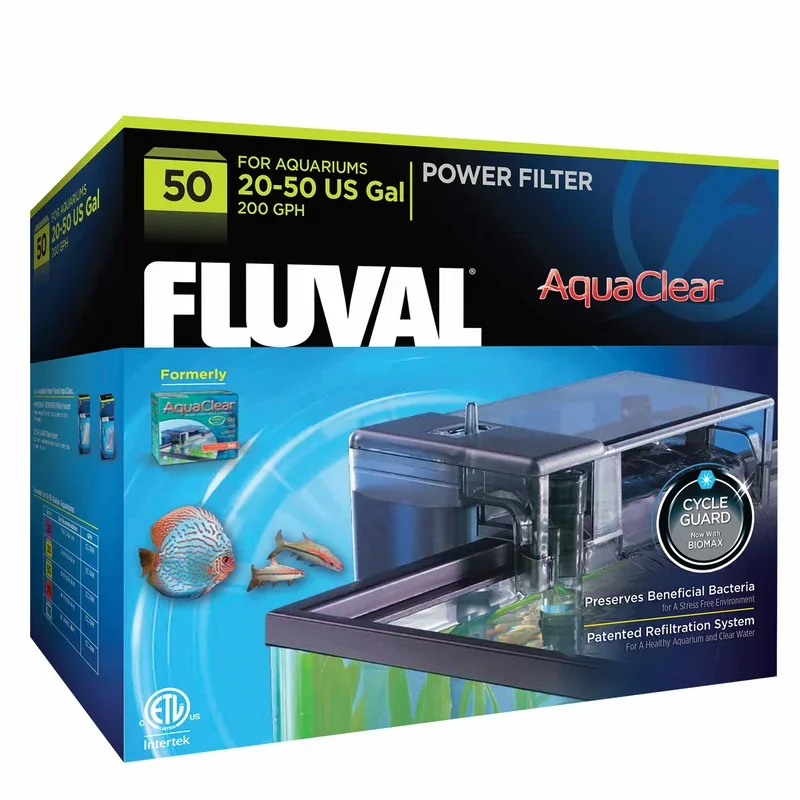 The AquaClear 50 is a sensible starting point for a planted community tank because its media basket can be rearranged. Keep the coarse foam for mechanical capture, reserve space for biological media, and skip unnecessary carbon unless you have a specific reason to use it. The adjustable flow is useful when a full-rated return would flatten carpeting plants or push floating plants into one corner. A sponge on the intake protects shrimp and reduces the chance of leaves entering the impeller. The main compromise is the open waterfall return: with a low water line it increases surface agitation and can drive off dissolved CO2. A short baffle, higher water level, or gentle outlet attachment helps. Pros: adaptable media; accessible maintenance; adjustable output. Cons: manual priming; return needs tuning in injected-CO2 tanks.
Seachem Tidal 35 Power Filter
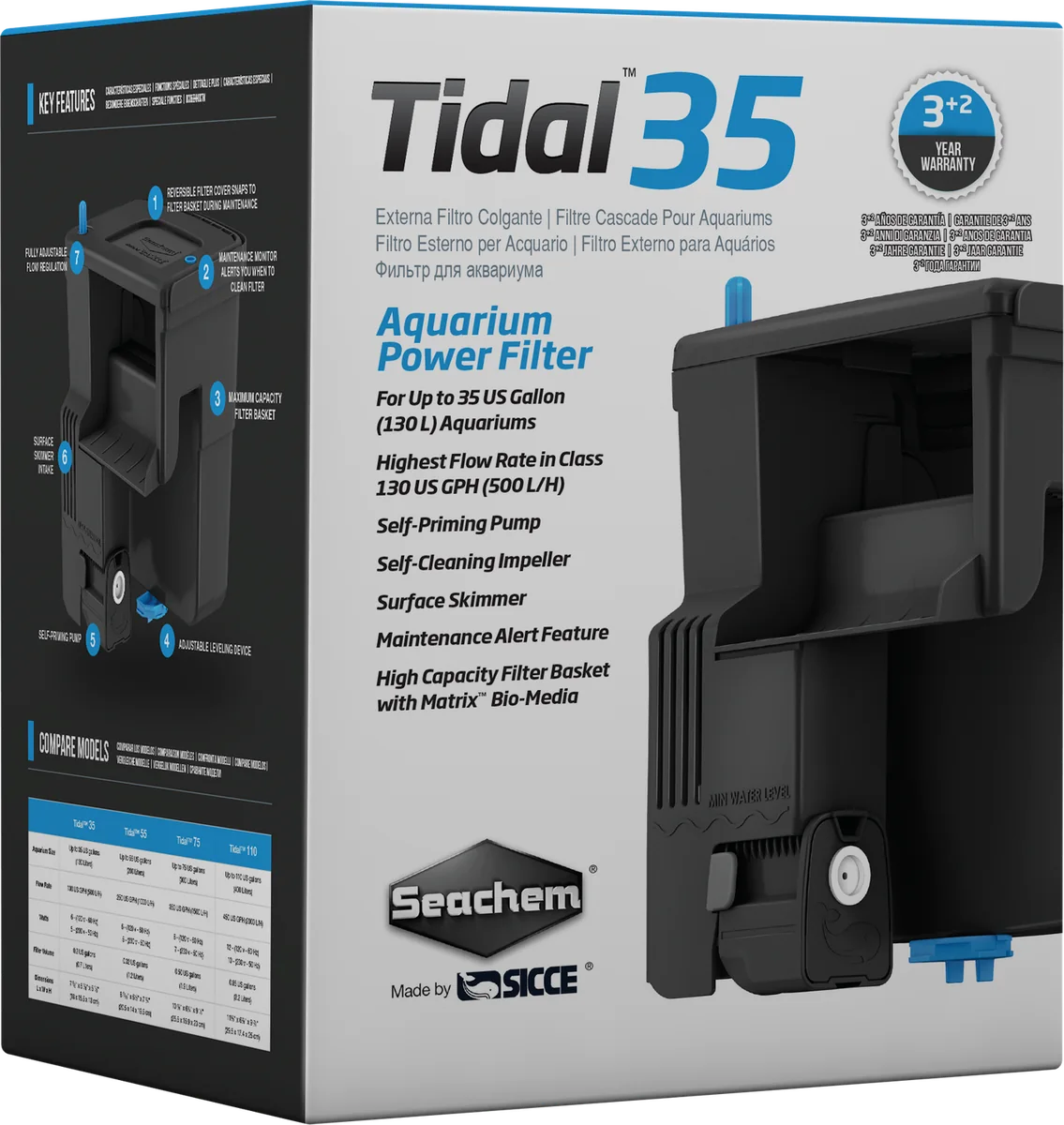 The Tidal 35 suits aquascapers who value a self-priming HOB and a flow control. Its basket gives more flexibility than a sealed cartridge, and the surface skimmer can help with film in an open-top aquarium. That skimmer is also the reason to watch a CO2-injected setup: vigorous surface draw and a visible ripple can increase gas exchange. Keep the water level stable and use a prefilter if the intake is near moss, shrimp, or fine-leaved stems. This model is a good match for a lightly to moderately stocked planted tank where easy restart matters. Pros: self-priming design; adjustable flow; reusable media potential. Cons: skimmer needs cleaning; larger body than a compact HOB.
Oase Biomaster Thermo 250
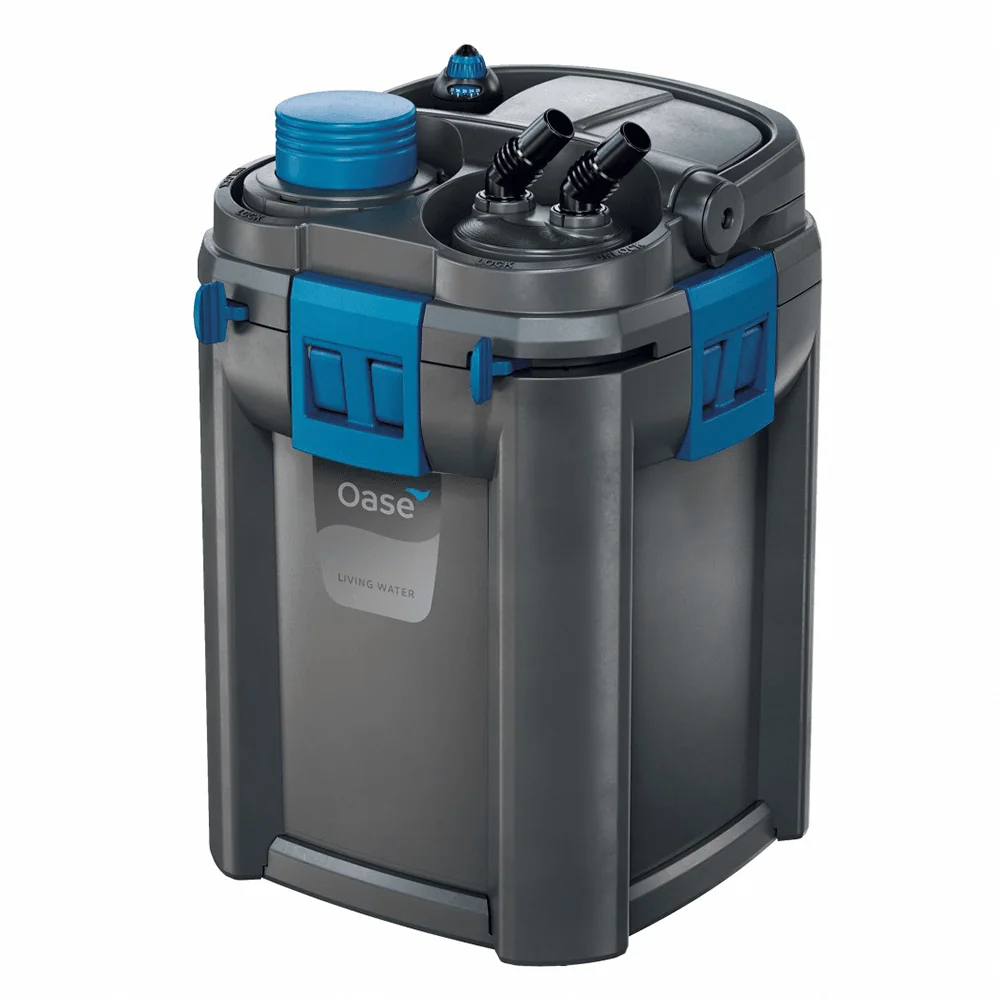 The Biomaster Thermo 250 is aimed at larger planted displays where hiding equipment and keeping a generous media reserve are priorities. An integrated heater can reduce glass clutter, although it also means you should check replacement and service access before installation. External filtration works well with lily pipes: a broad outlet can distribute flow around hardscape instead of creating one harsh jet. Use an intake guard and plan hose routing so pruning or substrate work does not pull on fittings. It is overkill for a small nano aquarium, but the extra capacity is useful when plant mass and fish load will grow. Pros: high-capacity external format; tidy heater integration; suitable for distributed flow. Cons: costly; cabinet space and hose maintenance required.
SunSun HW-302 Canister Filter
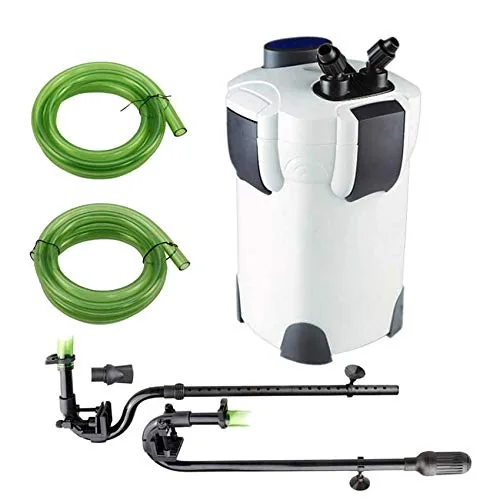 The HW-302 is a budget-oriented canister option for aquarists who want external media volume without moving to premium pricing. Treat published flow as a starting point rather than a promise at the aquarium: hose length, media, bends, and a prefilter all reduce actual circulation. Fill the baskets with a sensible mechanical-to-biological sequence and leave room for water to pass around the media. For injected CO2, pair the return with a diffuser or lily pipe that creates circulation but not a constant breaking surface. Pros: external footprint; configurable baskets; comparatively accessible price. Cons: inspect seals and fittings carefully; included flow may be strong for delicate plants.
Fluval 107 Performance Canister Filter
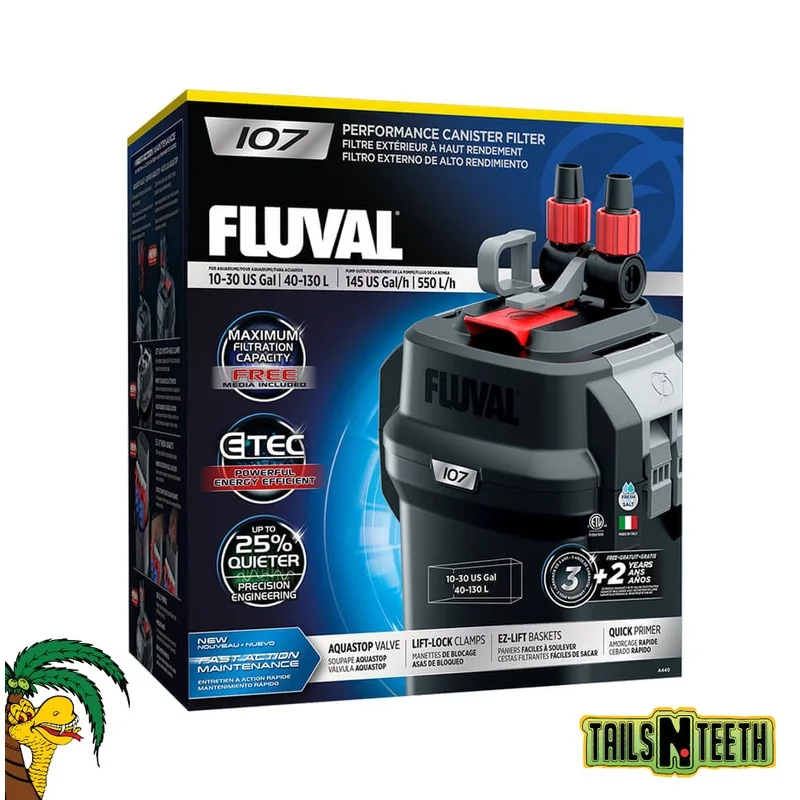 The Fluval 107 fits planted tanks where quiet, concealed filtration matters more than maximum basket capacity. Its compact footprint can leave more cabinet room for a CO2 cylinder or dosing supplies. Position the intake away from a dense stem thicket so it does not create a dead zone behind the plants, then use a spray bar or broad outlet to distribute water. A prefilter makes maintenance gentler on shrimp and prevents plant fragments from reaching the impeller. Pros: compact external format; tidy hoses; useful for smaller aquascapes. Cons: less capacity than a larger canister; check cabinet clearance before buying.
AQUANEAT Double Sponge Filter
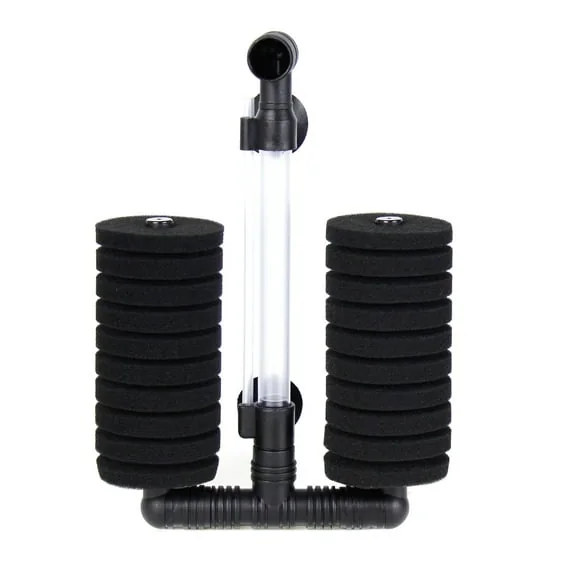 An air-driven double sponge is the safest flow choice for shrimp, fry, and plants that do poorly in a strong current. The broad sponge surface supports biological filtration while the intake is naturally guarded. It needs an air pump, airline, and check valve, and the bubbles create surface movement that may not suit a high-CO2 aquascape. Run it with a gentle pump, keep the sponge clear of dense roots, and rinse it in removed aquarium water when flow falls. Pros: gentle circulation; inexpensive; safe intake. Cons: visible equipment; limited fine-particle polishing; air exchange can reduce CO2.
Penn-Plax Cascade 700 Canister Filter
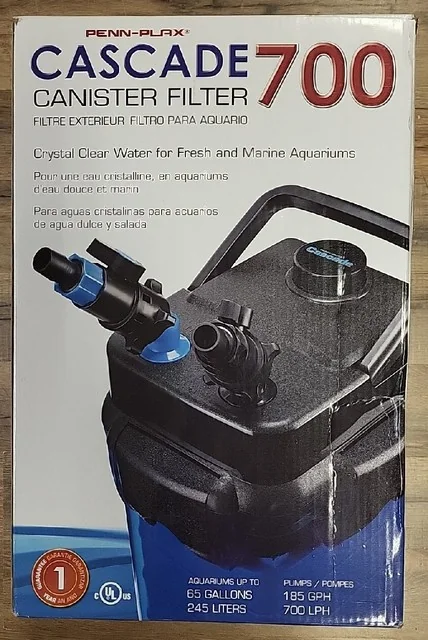 The Cascade 700 gives a planted display extra media room and is best considered for larger tanks or heavier stocking. The flow can be more than delicate stems need, so a spray bar, lily pipe, or adjustable valve is important. Do not throttle a pump blindly without checking the manufacturer’s guidance; changing the outlet is often the cleaner way to spread circulation. Keep the intake below the substrate line but away from sand that can be drawn into the system. Pros: generous media space; external equipment stays hidden. Cons: cabinet footprint; strong return may require diffusion.
How to choose a planted-tank filter
Flow should move water through the plant canopy without making leaves constantly bend. Look for adjustable output, a spray bar, lily pipe, or another broad return. A faster pump is not automatically better: circulation has to reach behind hardscape and through dense stems, yet fish and shrimp still need calm areas.
Media capacity matters because planted tanks still produce waste. Mechanical foam catches debris, while biological media provides surface area for the nitrogen cycle. Keep those roles separate enough that you can rinse dirty foam without replacing every biological surface. A prefilter on the intake is especially useful with shrimp, fry, carpeting plants, and tanks that receive frequent trimming.
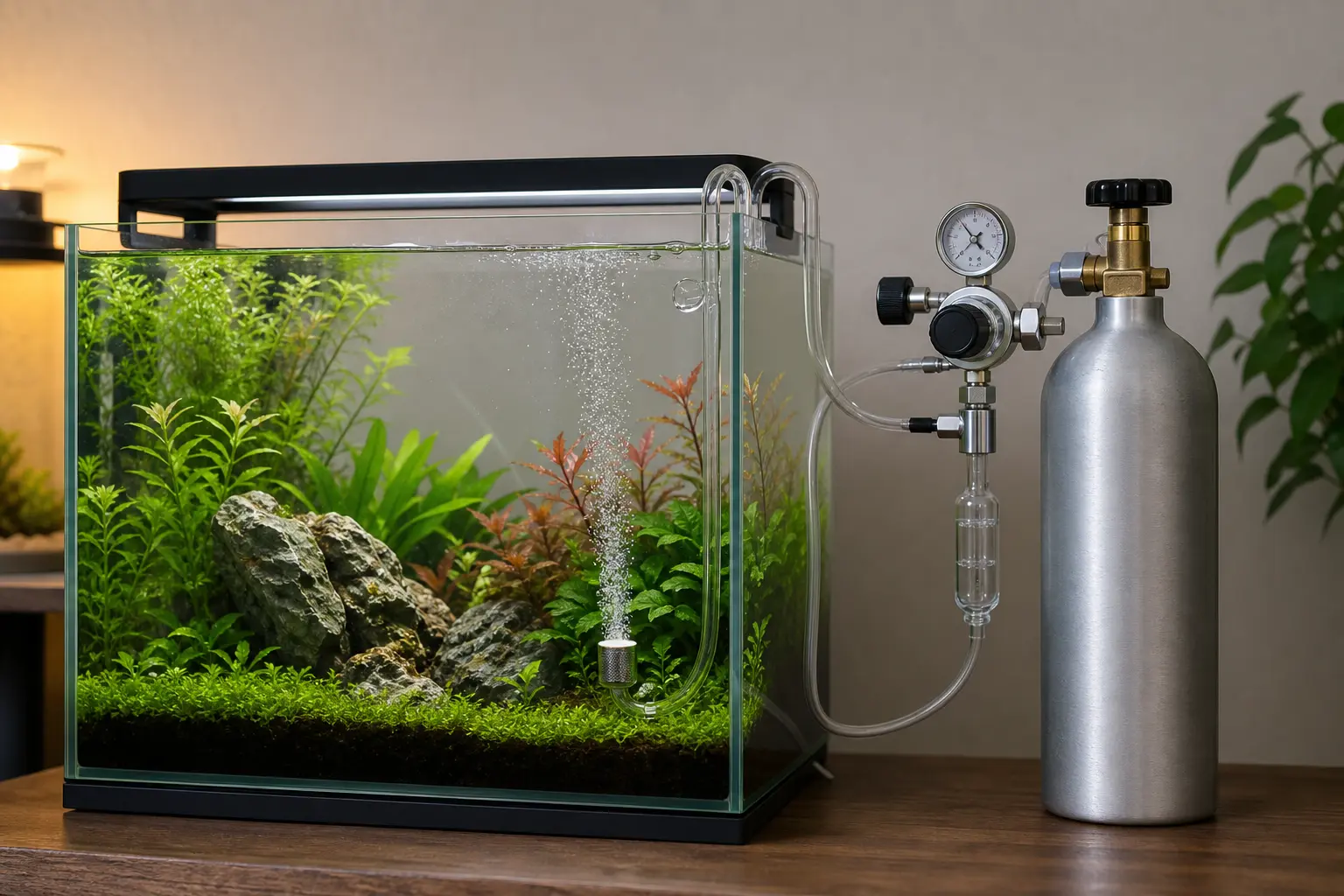
CO2 changes the decision. Surface agitation improves oxygen exchange but can also release dissolved carbon dioxide. If you inject CO2, keep the return just below the waterline, avoid a loud waterfall, and run circulation on a schedule that distributes gas before lights-on. If you do not inject CO2, modest rippling is generally less of a concern and may help oxygenate the aquarium.
Finally, measure the cabinet, lid opening, hose route, and intake clearance. A filter that fits the tank rating but cannot be serviced safely is a poor long-term choice. Rinse mechanical media in removed aquarium water, never replace all biological media at once, and test ammonia and nitrite after major maintenance.
Frequently asked questions
Is a canister filter better for planted tanks?
Not automatically. Canisters hide equipment and offer broad media capacity, while a controllable HOB is easier to access. Choose based on flow control, maintenance space, and the layout you are building.
Does filtration remove CO2?
Surface agitation and air-driven bubbles increase gas exchange, which can reduce dissolved CO2. Keep the return calm and below the surface when using injected CO2, while maintaining adequate oxygenation.
Do planted tanks need a prefilter?
A prefilter is useful when the aquarium contains shrimp, fry, moss, or loose plant matter. It protects animals and reduces impeller debris, though it adds a cleaning step.
How much filter flow is enough?
Use the manufacturer rating as a comparison, not a guaranteed in-tank result. Media, hoses, and prefilters reduce flow. Aim for even circulation and adjust the outlet if plants or fish are pushed around.
Recommendation
For most planted community aquariums, start with the AquaClear 50 and soften its return if needed. Choose a canister such as the Fluval 107 when a tidy cabinet installation matters, or the AQUANEAT sponge when shrimp-safe, gentle flow is the priority.
Sources and methodology
We compared manufacturer product information from Fluval, Seachem, Oase, Penn-Plax, and Fluval’s aquarium care guide. Independent context came from Aquarium Co-Op’s filter guidance. We scored media flexibility, controllable circulation, intake safety, serviceability, and fit for planted layouts. No hands-on testing was performed.