
Buying guide
Best aquarium heater for cold rooms
A cold room changes the sizing decision. Choose a heater with a usable control, enough capacity for the temperature gap, and room to place it in flowing water.
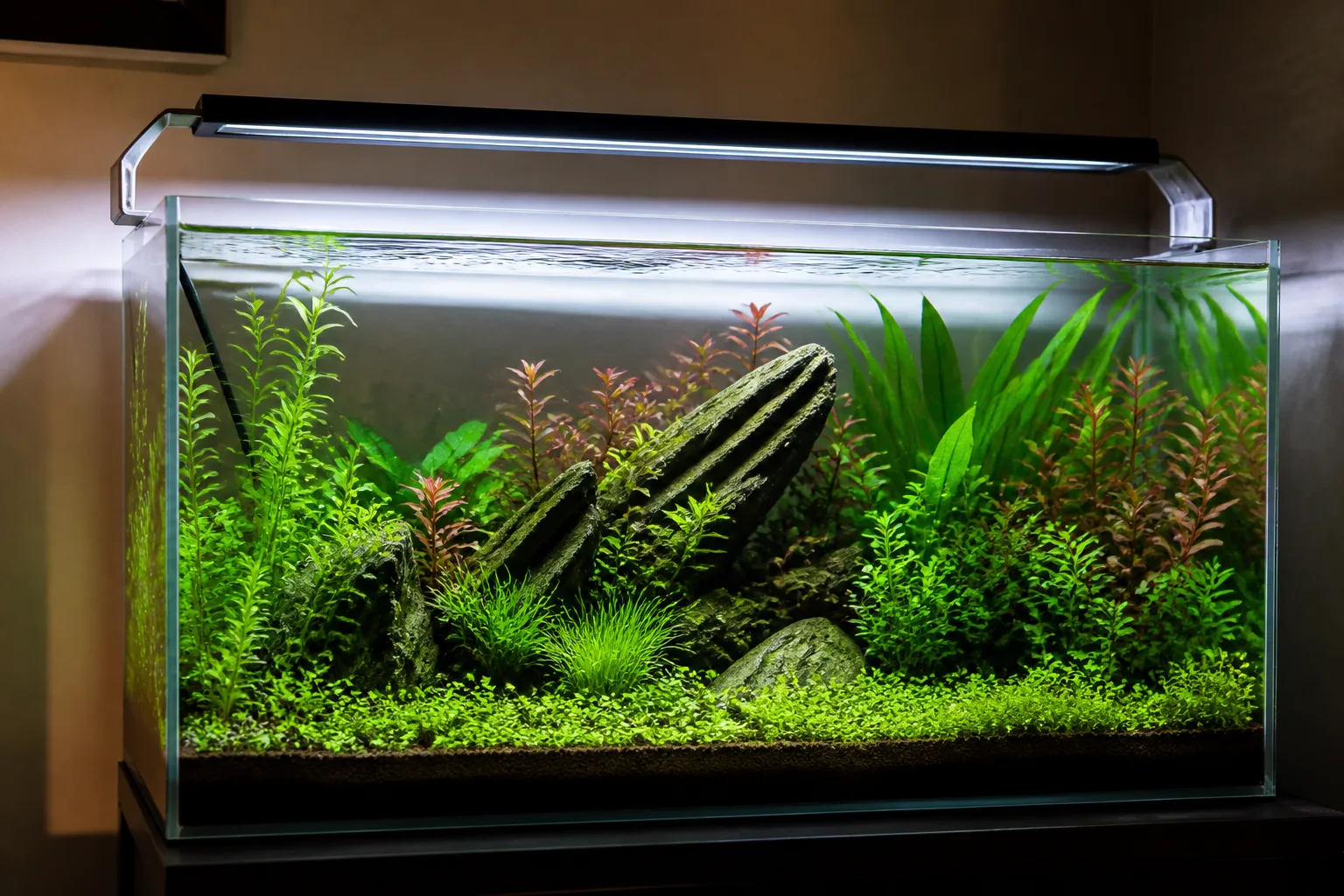
Best aquarium heater for cold rooms
A room that drops several degrees after dark puts more work on an aquarium heater. The right choice depends on water volume, the lowest room temperature, heater placement, and how much confidence you want in the control. This is a research-based guide, not a hands-on test. Check the current manual, voltage, dimensions, and retailer stock before ordering.
Quick comparison
| Product | Best for | Main drawback |
|---|---|---|
| Fluval E 100 Electronic Heater | Visible electronic temperature feedback | Needs room around its display and guard |
| Fluval M 100 Submersible Heater | A conventional adjustable heater | Dial setting still needs thermometer checks |
| Aqueon Pro Adjustable Heater | Simple manual temperature changes | Choose wattage and length carefully |
| Aqueon Preset Heater | Set-and-leave installations | Fixed setting gives little cold-room flexibility |
| EHEIM JAGER Heater | Adjustable control with calibration | Long glass body can be awkward in small tanks |
| Cobalt Neo-Therm Heater | A slim electronic control format | Confirm the selected version and mounting space |
| hygger Adjustable Aquarium Heater | Budget adjustable setups | Manual and controller details vary by model |
Our picks
Fluval E 100 Electronic Heater
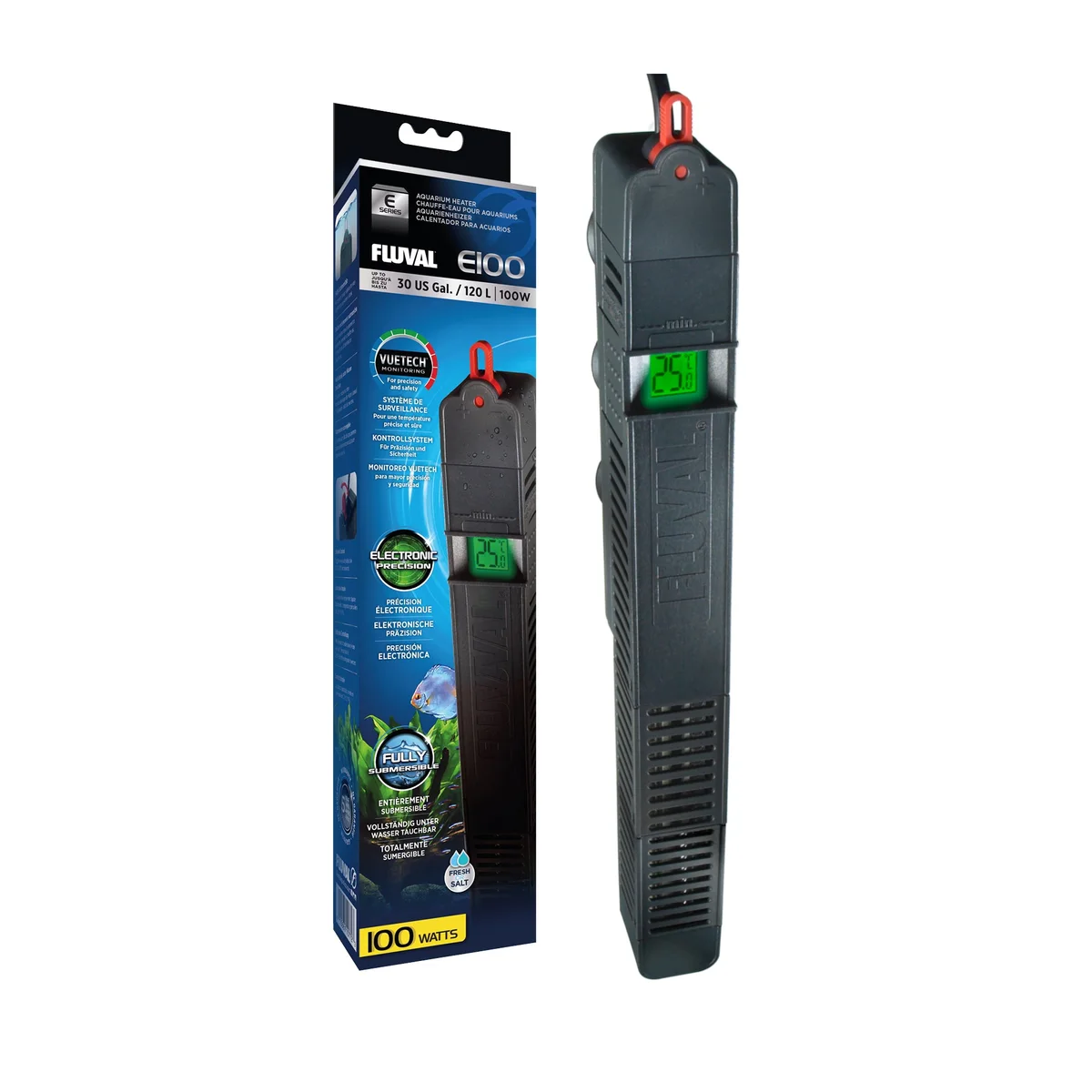 The E series is the pick here when you want the setting and the measured temperature to be easy to read at a glance. Its electronic control format is useful in a chilly room where you may make small seasonal adjustments, but the display does not replace a separate thermometer. Put the heater where filter flow passes it, keep it submerged to the marked level, and leave enough clearance to read and clean it. Check the exact E 100 capacity against your filled water volume. Pros: readable electronic interface. Cons: a larger display and guard need thoughtful placement.
Fluval M 100 Submersible Heater
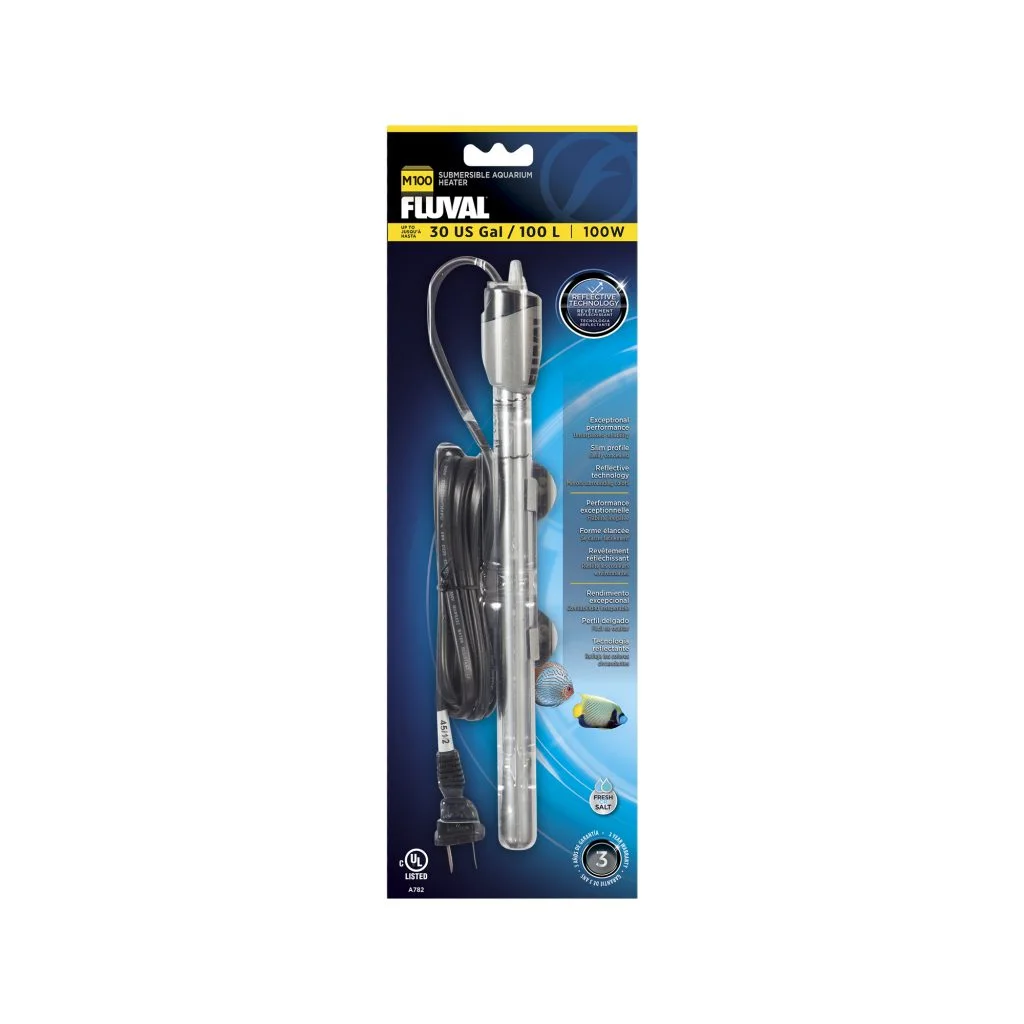 The M series suits an aquarist who prefers a familiar adjustable heater without an electronic readout. In a cold room, set it with a separate thermometer after the tank has had time to settle, then recheck when the room reaches its overnight low. Mount it near circulation rather than in a quiet corner where warm water can collect. Confirm that the M 100 length fits behind plants or equipment, and unplug before moving it. Pros: conventional control and submersible format. Cons: the dial is not a live temperature display.
Aqueon Pro Adjustable Heater
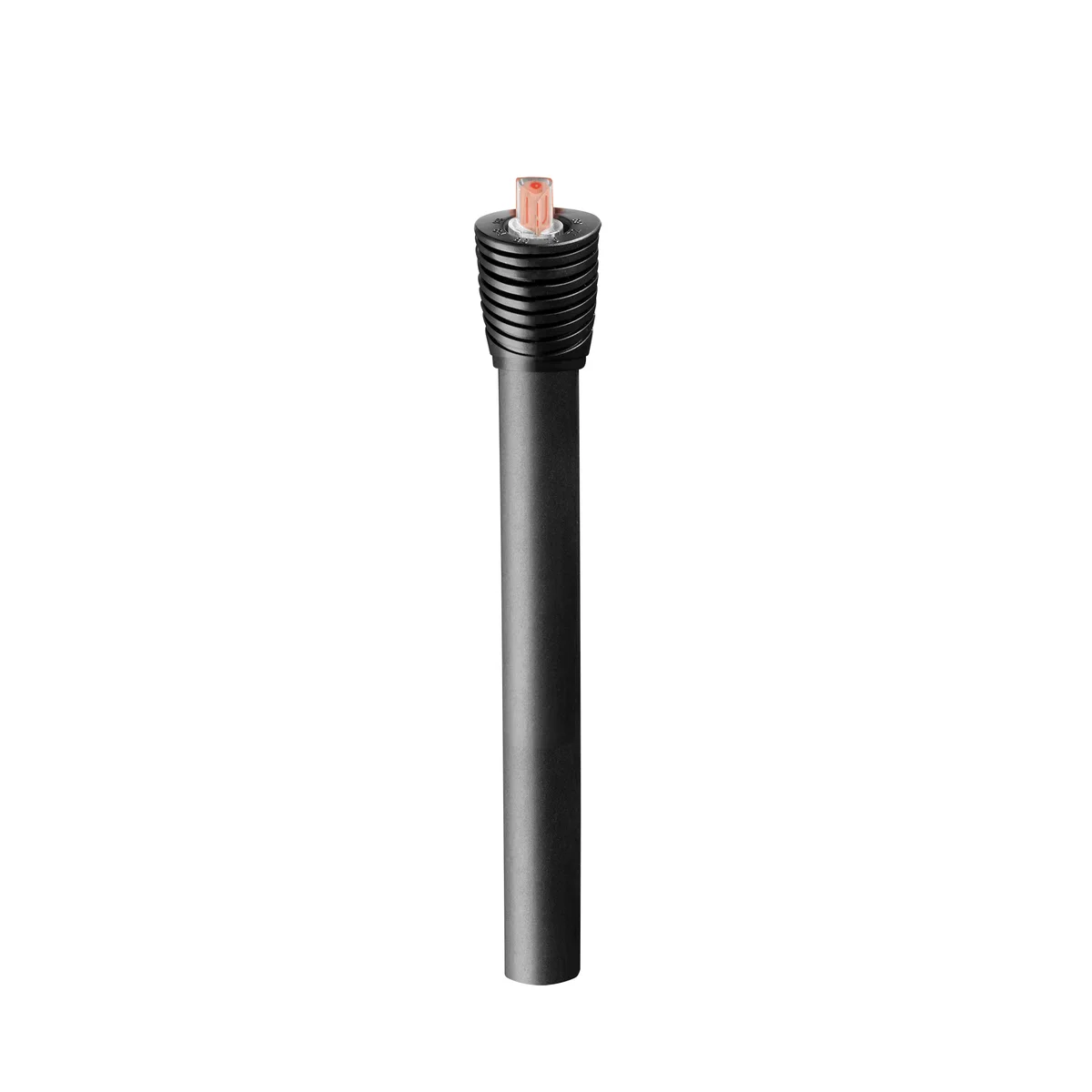 An adjustable Aqueon Pro makes sense when the room temperature changes through the year and a preset unit would leave you stuck with one target. Select the version whose stated tank range covers your actual water volume, not the tank label alone. Keep the heater fully submerged and position it where the filter returns water. The adjustment dial is a starting point, so use an independent thermometer to confirm the water rather than trusting the printed scale. Pros: flexible manual setting. Cons: poor sizing can mean constant operation or overshoot.
Aqueon Preset Heater
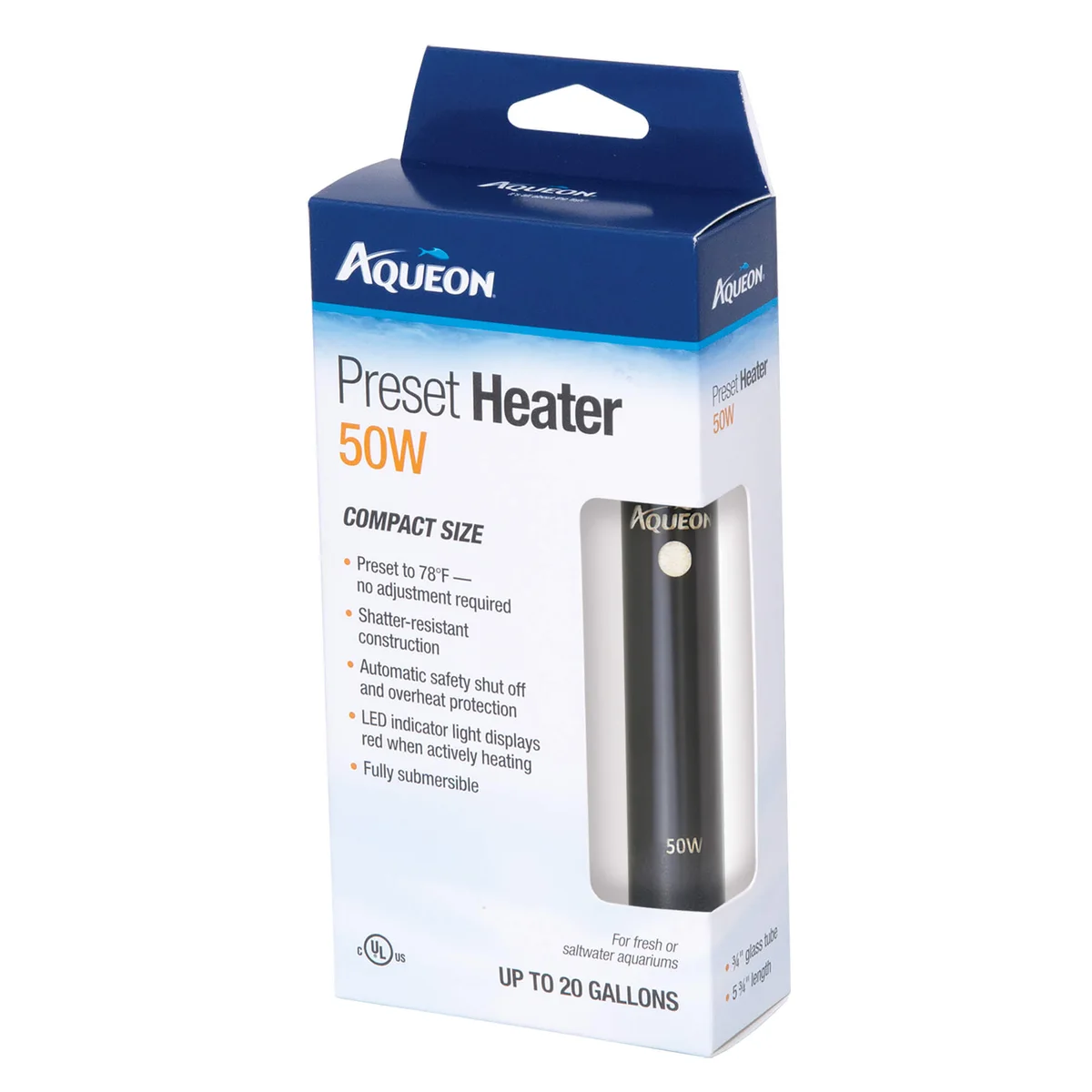 The preset Aqueon is for a tank where its fixed target matches the livestock and the room does not swing beyond the heater’s intended range. That simplicity is appealing, yet it is also the main tradeoff for a cold room. You cannot compensate with a dial if winter makes the water lag. Verify the preset temperature with a separate thermometer and make sure the model’s stated capacity fits. Pros: no adjustment routine. Cons: the fixed set point may be the wrong match when the room is unusually cold.
EHEIM JAGER Heater
 The JAGER is worth considering when calibration matters to you. EHEIM describes an adjustable heater with a calibration feature, so you can compare its indicated setting with an independent thermometer and correct the dial within the model’s instructions. Its glass body needs a secure mount, full submersion, and enough open water around it. Measure the available vertical space before buying, especially under a lid. A cold-room setup benefits from checking that calibration again after the first overnight temperature drop. Pros: adjustable control with a calibration step. Cons: its traditional glass construction asks for careful handling during maintenance.
Cobalt Neo-Therm Heater
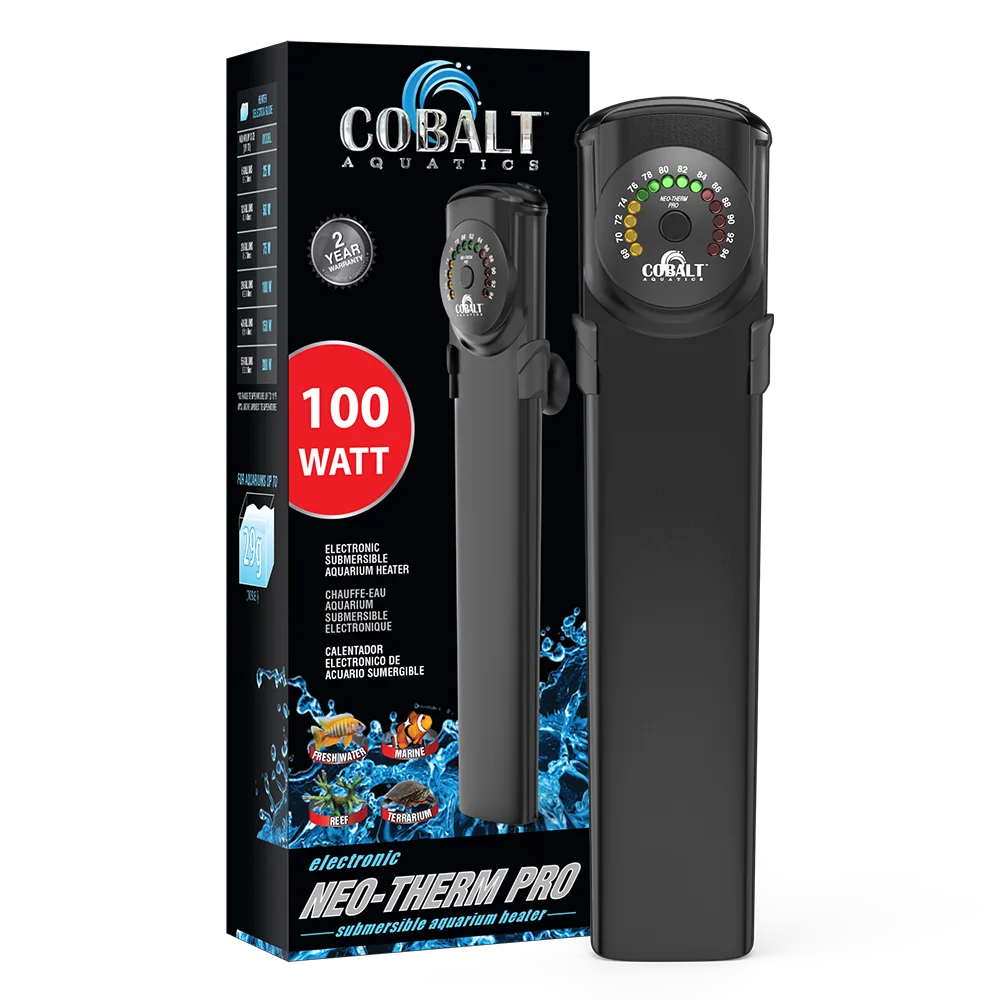 The Neo-Therm appeals to buyers who want a slim, modern heater body and an electronic-style temperature control. That format can be easier to position in a planted aquarium than a bulky unit, but the tank still needs moving water around the heater. Confirm the exact wattage and dimensions of the listing because Neo-Therm variants differ. Use a separate thermometer during setup and after a cold night. Keep the control end accessible instead of burying it behind hardscape. Pros: compact control format. Cons: the thinner profile does not remove the need for correct sizing or safe placement.
hygger Adjustable Aquarium Heater
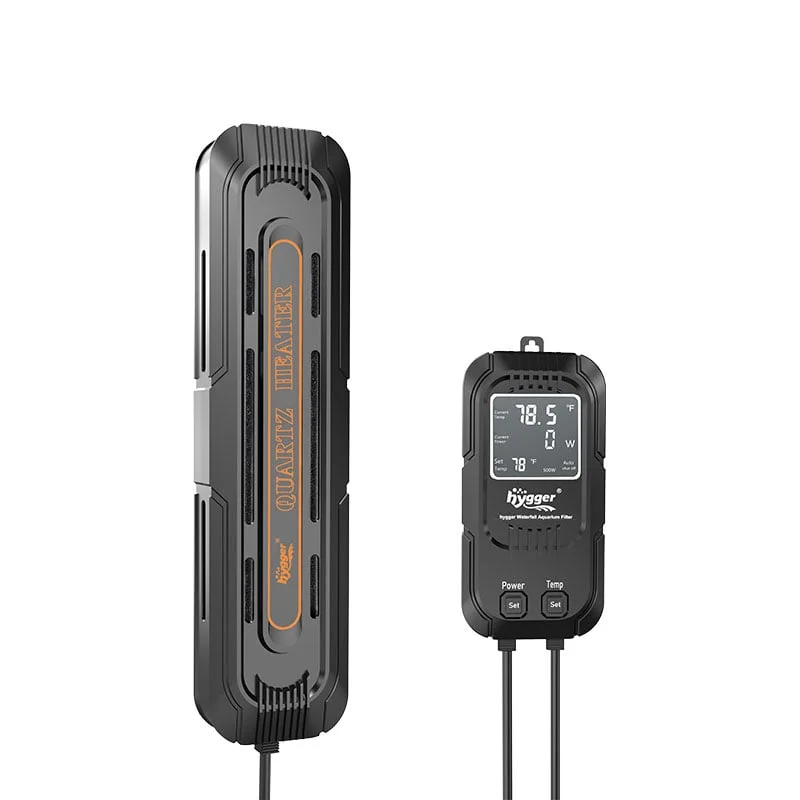 The hygger adjustable line is a practical option when you want a digital control or display at a lower-cost tier, but treat the product page as model-specific. Confirm whether the selected version includes the controller style, guard, and mounting hardware you expect. In a cold room, place the sensor and heater as the instructions show, keep the element submerged, and watch an independent thermometer for the first full day. Pros: adjustable format and accessible controls. Cons: details vary between hygger heater listings, so the exact variant matters.
Buying criteria
Cold-room sizing starts with the lowest room temperature, not the daytime average. Use the manufacturer’s tank-range guidance as a screening tool, then account for open tops, drafts, insulation, and strong surface agitation. A heater that is too small may run for long periods without catching up. A much larger heater can add risk if its control fails, so do not solve every cold-room problem by buying the biggest element.
Place the heater in water movement from a filter or circulation pump. Keep it fully submerged at the marked level and unplug it before a water change or removal. Use a separate thermometer on the opposite side of the aquarium. A drip loop protects the outlet from water running along the cord. Insulating the back and sides can reduce heat loss, but never block ventilation around electrical equipment.
Frequently asked questions
Can an aquarium heater work in a cold room?
Yes, if the selected model covers the water volume and temperature gap. Measure the water at the coldest part of the day and check it against the target rather than relying on the room thermostat.
Is an adjustable heater better than a preset model for winter?
Usually, because an adjustable unit lets you set the target for the livestock and season. A preset heater can be the simpler choice when its fixed setting matches your aquarium and the model is correctly sized.
Where should a heater sit?
Put it near steady water movement, fully submerged and away from gravel, decorations, or anything that can trap heat against the element. Leave space to remove it safely.
Should I add an external temperature controller?
It can provide a second temperature check, but it does not correct poor sizing or unsafe placement. Follow both devices’ instructions and continue using an independent thermometer.
Recommendation
For a cold room, start with an adjustable heater whose capacity matches the filled tank and whose control you will actually check. Fluval E and EHEIM JAGER are the more calibration-friendly formats here. Aqueon’s preset model is the simplest only when its fixed target is a confirmed match.
Sources and methodology
We compared manufacturer information from Fluval, Aqueon, EHEIM, Cobalt Aquatics, and hygger. We used each maker’s product format and installation guidance where available, then matched control type and placement concerns to the cold-room query. No hands-on testing was performed. Product photos depict the named models or stated variants.