
Buying guide
Best Aquarium Air Pump for a Sponge Filter: 7 Quiet, Practical Picks
The best air pump for a sponge filter has enough pressure for your tank depth, a controllable outlet and a check valve that keeps water out during outages.
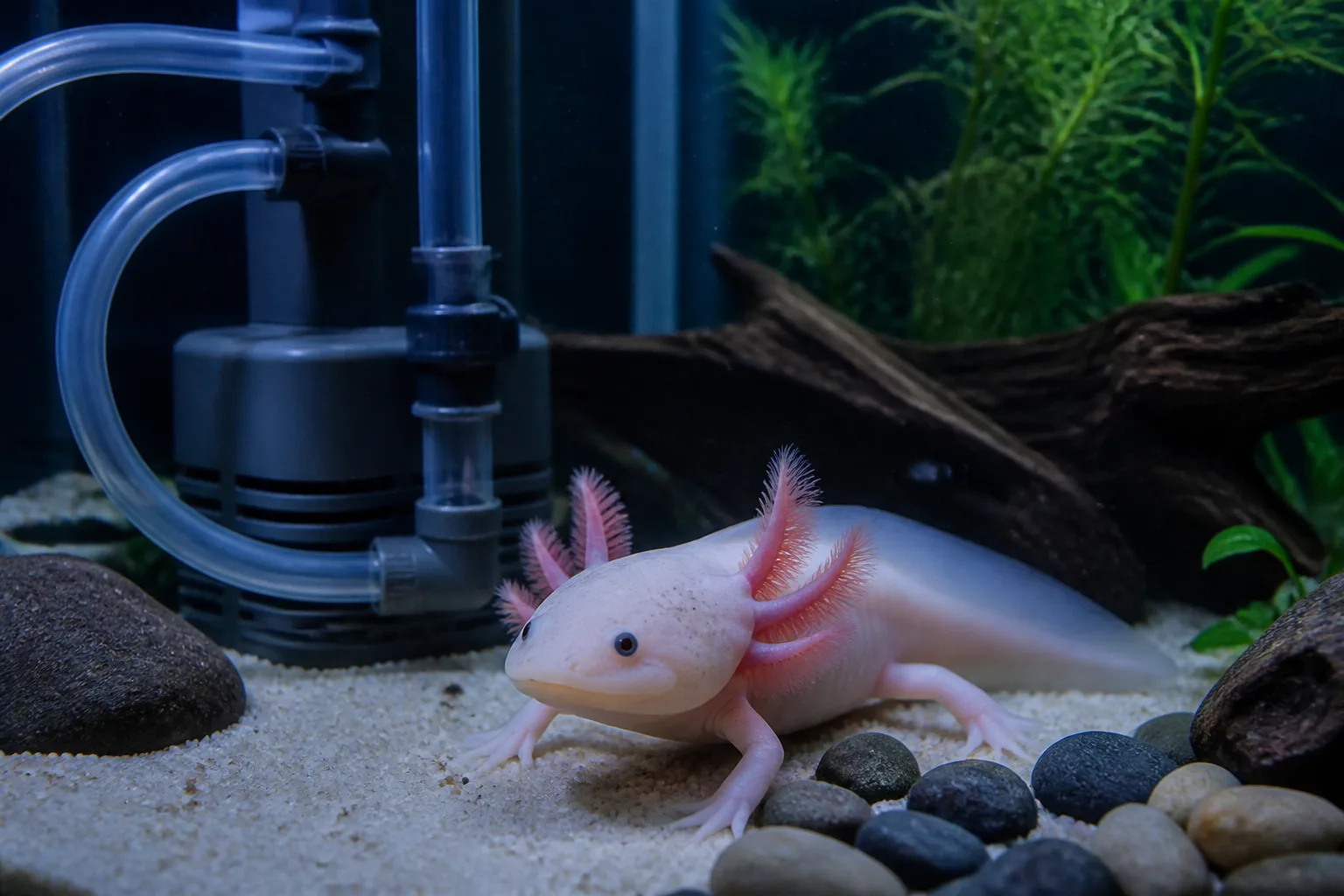
An air pump does not filter water by itself. It pushes air through the lift tube, which draws water through a sponge and returns it to the tank. For that job, pressure at the required depth matters more than a large gallons-per-hour claim. A pump that is quiet on a desk but cannot overcome a deep sponge filter will produce weak circulation. This guide compares specification-based options. We have not hands-on tested these pumps, so confirm the current model, voltage, warranty and included fittings before ordering.
Quick comparison
| Product | Best for | Main advantage | Main drawback |
|---|---|---|---|
| Tetra Whisper 20 | Small community tanks | Familiar, compact design | Output is limited for deep filters |
| Aqueon QuietFlow Air 20 | One small sponge filter | Simple single-outlet setup | No built-in battery backup |
| Hygger Quiet Aquarium Air Pump | Adjustable flow | Fine control for sensitive fish | Verify included adapters |
| NICREW Nano Silent Aquarium Air Pump | Nano tanks | Small footprint | Limited pressure reserve |
| Pawfly MA-60 Aquarium Air Pump | Two outlets | Runs two sponge filters | Needs a gang valve for balancing |
| Pawfly Air Pump with Battery Backup | Short outages | Keeps aeration during interruptions | Battery runtime varies |
| AquaNeat Aquarium Air Pump | Budget spare | Low-cost backup option | Fewer published specifications |
Best overall: Tetra Whisper 20
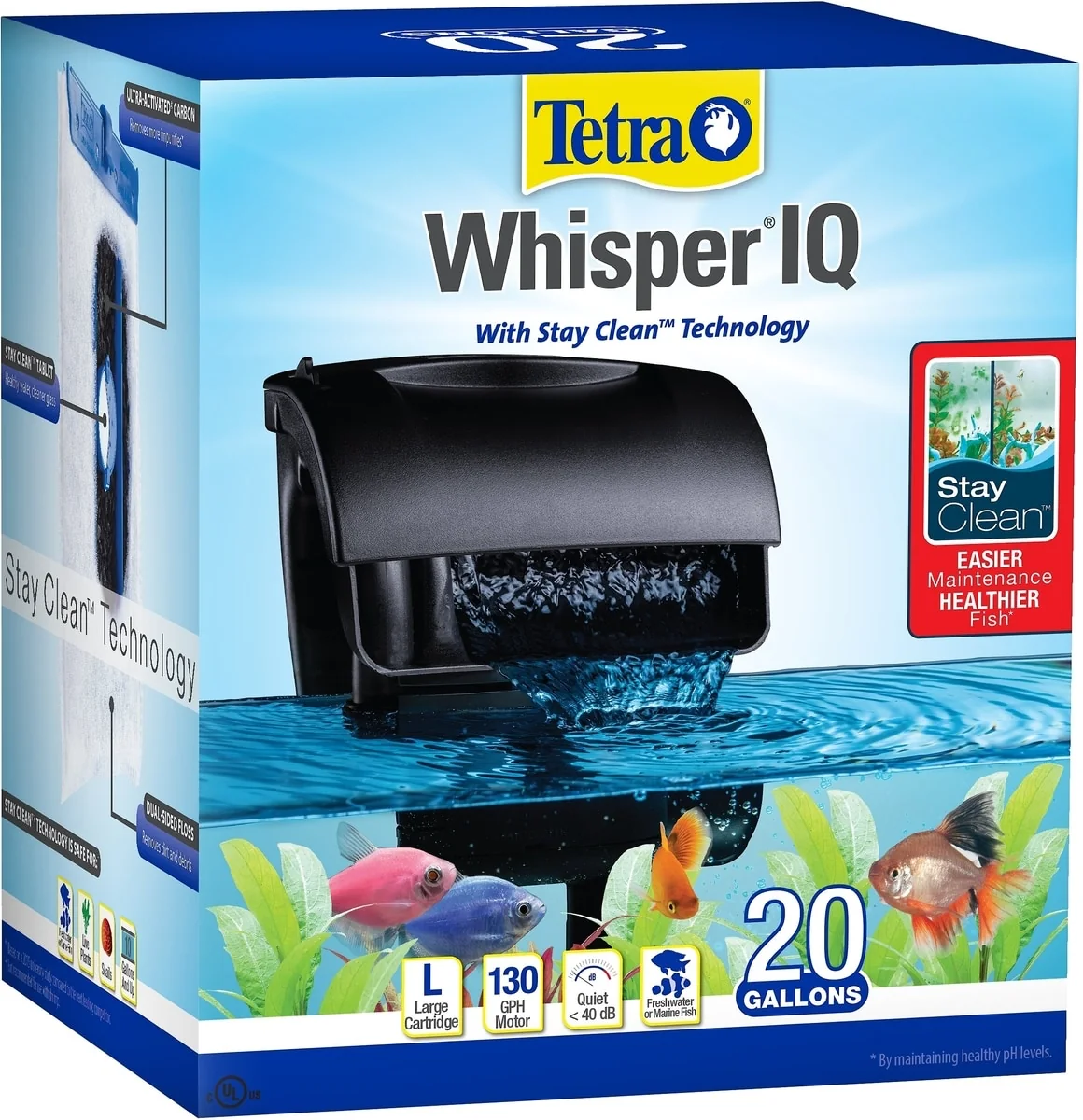
The Whisper 20 is a sensible starting point for a small sponge filter in a shallow or medium-depth aquarium. Its single-outlet format keeps setup simple, and the familiar diaphragm design makes replacement airline, valves and tubing easy to find. Match it to a sponge filter whose lift tube is within the pump’s stated range. Pros: compact; widely available; easy to connect. Cons: limited reserve for deep tanks; vibration depends on the surface. Tetra’s air pump guidance explains the range.
Aqueon QuietFlow Air 20
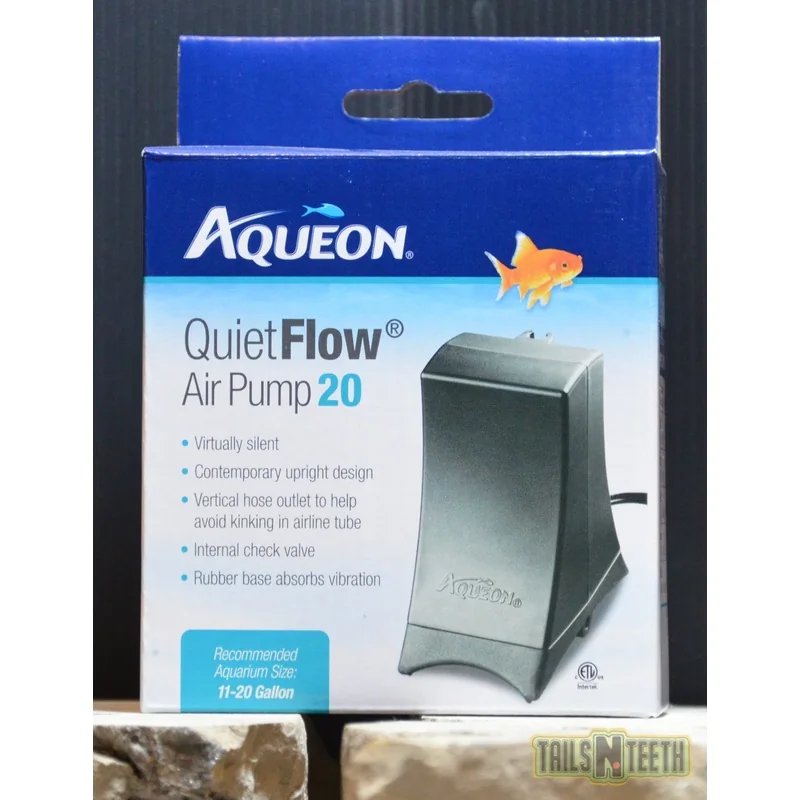
QuietFlow Air 20 fits an owner who wants one pump for one modest sponge filter. Use an inline check valve below the tank rim and a small bleed valve if the bubble stream is stronger than the fish prefer. It is a practical match for quarantine tanks, betta setups with gentle flow and small community aquariums. Pros: uncomplicated installation; useful for low-flow filtration; accessible accessories. Cons: single outlet; no outage battery. Aqueon’s air pump support information is the place to confirm the current revision and voltage.
Hygger quiet aquarium air pump
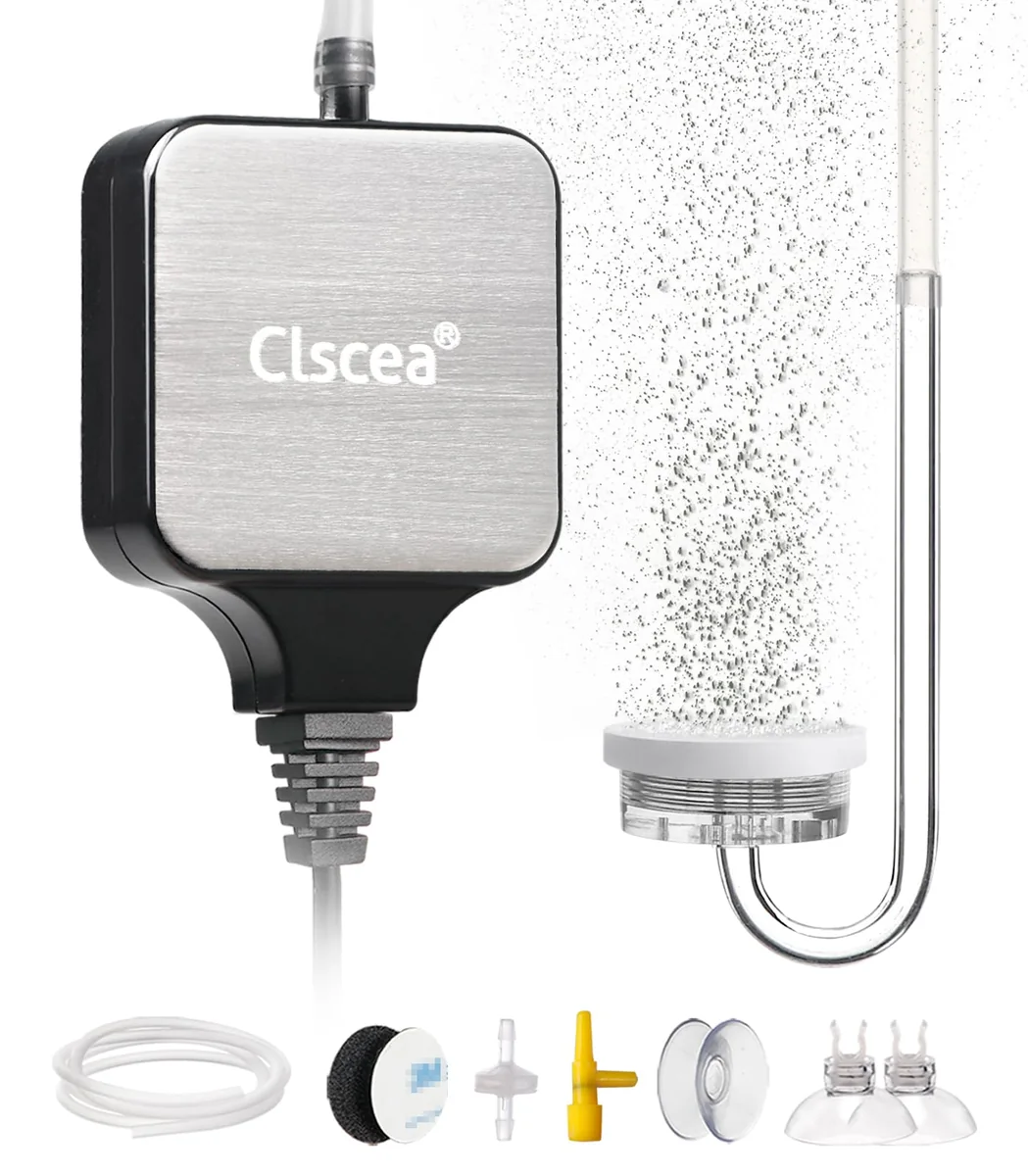
An adjustable Hygger pump is useful when a sponge filter needs steady bubbles rather than maximum aeration. Lower the output at the pump or with a valve, but do not close a single outlet completely because back pressure can shorten diaphragm life. Confirm whether the listing includes airline, check valves and power adapters. Pros: adjustable output; suitable for tuning; compact controls. Cons: accessory bundles vary; model names change. Check Hygger’s current product information before purchase.
NICREW Nano Silent
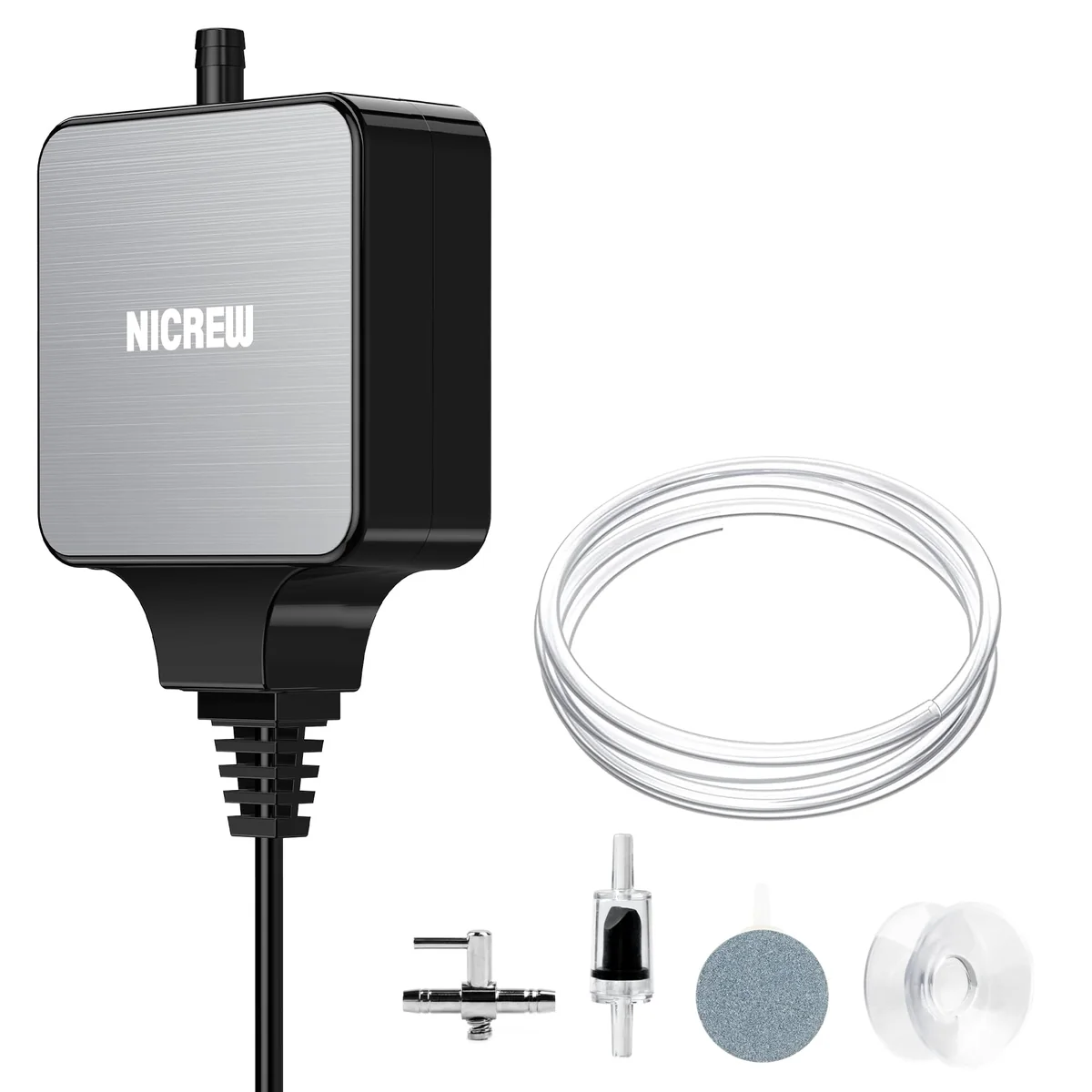
The NICREW Nano Silent makes sense when cabinet space and low bubble output matter more than pressure reserve. It suits a small sponge filter near the water surface. It is less convincing for a tall tank, a pair of large sponges or long runs of airline. Pros: small footprint; gentle setup; convenient for nano tanks. Cons: little headroom; check the outlet size. NICREW’s aquarium equipment range can help you verify the exact capacity.
Pawfly MA-60
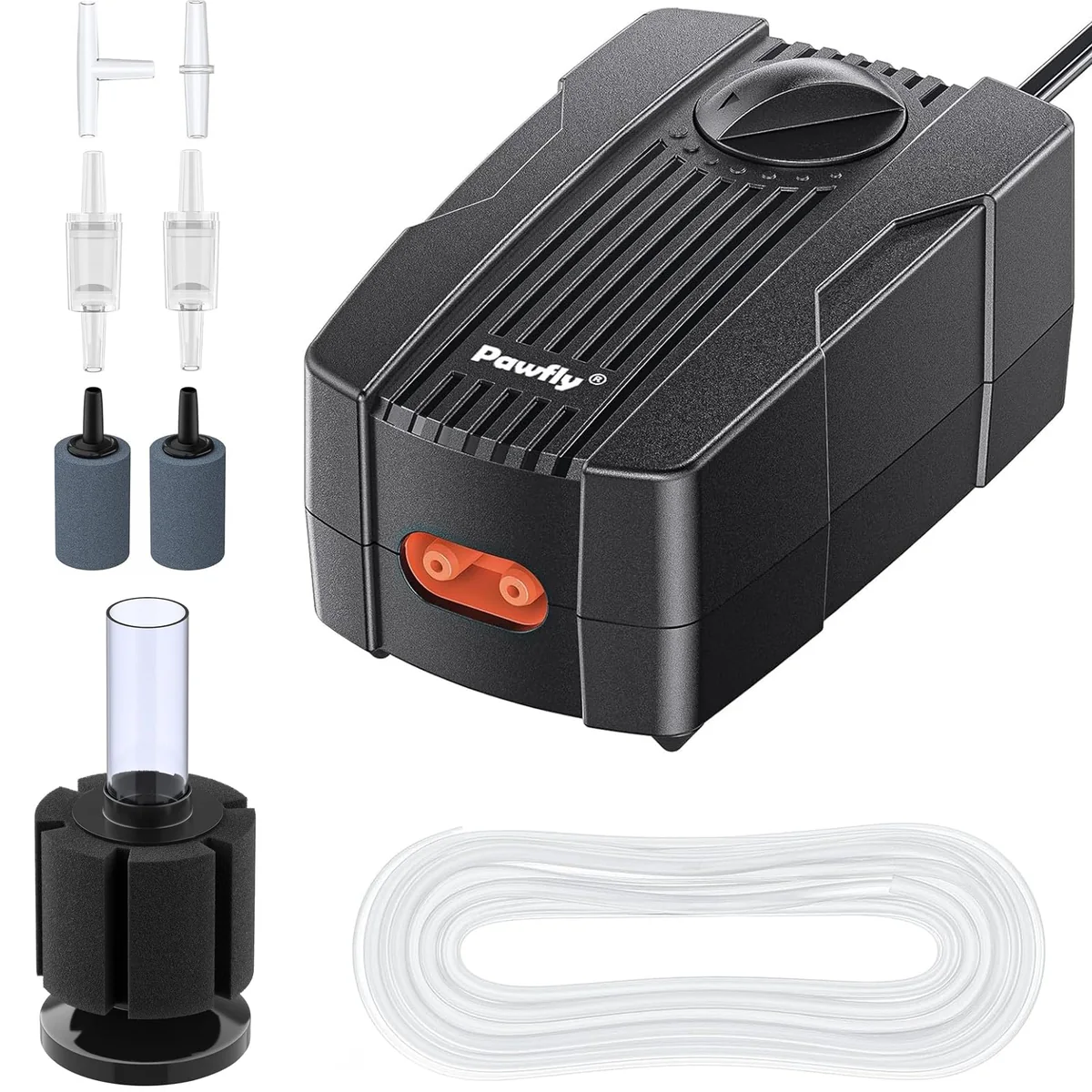
The MA-60 is a useful format for two small sponge filters or one filter plus an air stone. A gang valve lets you balance the outlets, while unused ports should stay regulated rather than sealed abruptly. Keep both airline runs similar in length when possible. Pros: two-outlet flexibility; useful for divided tanks; easy redundancy. Cons: more tubing to organize; balancing takes time. Pawfly’s aquarium pump listings should be checked for current outlet and voltage details.
Pawfly pump with battery backup
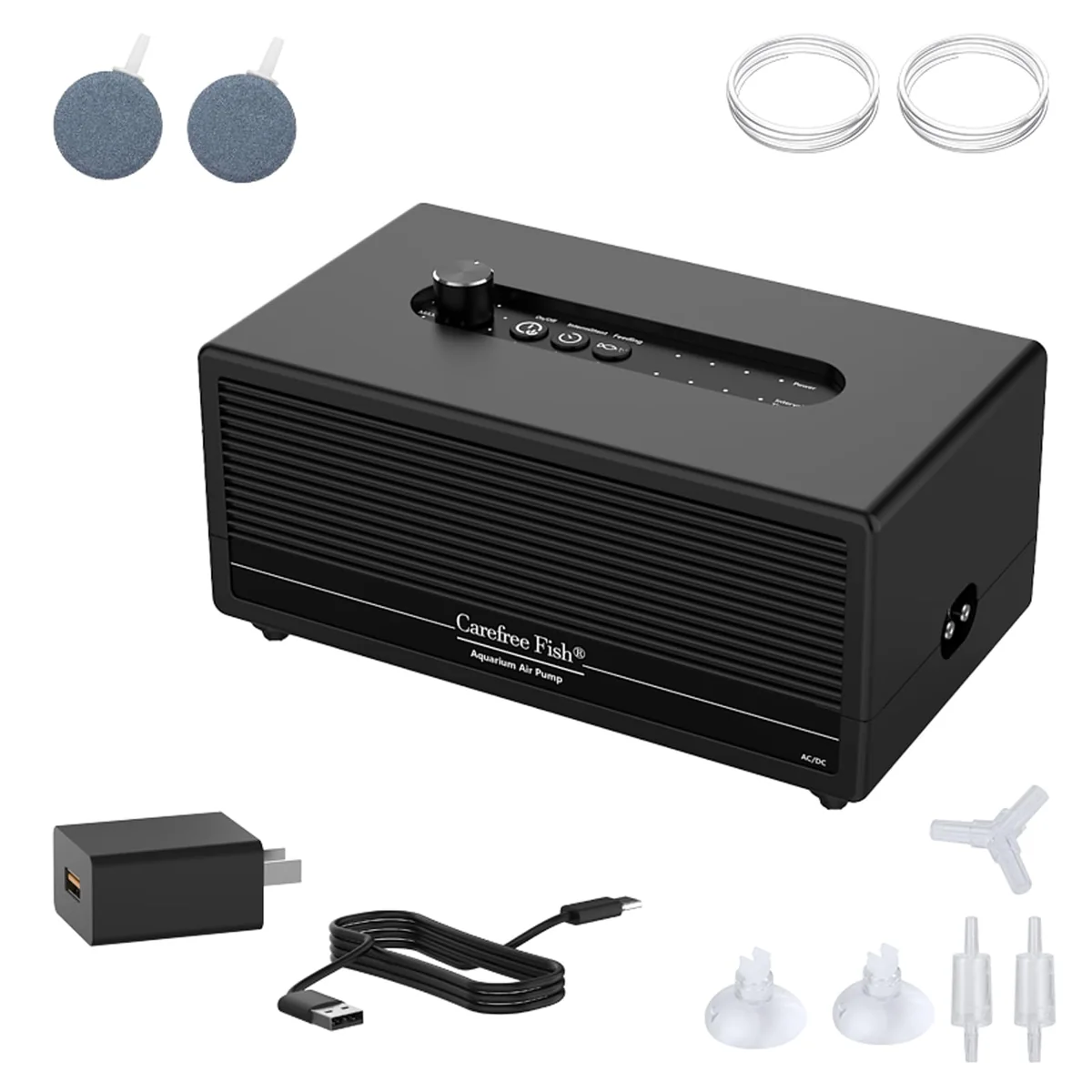
Battery-backed pumps are worth considering where short power interruptions are common. Treat them as an aeration bridge, not a guarantee for a full day. Test the switch-over with your check valve and keep fresh batteries available. A backup pump may run a single small sponge more reliably than a large model at maximum depth. Pros: outage protection; useful quarantine backup; quick to store. Cons: runtime depends on batteries; added switching hardware. Verify the current battery type and runtime in the listing before buying.
AquaNeat aquarium air pump
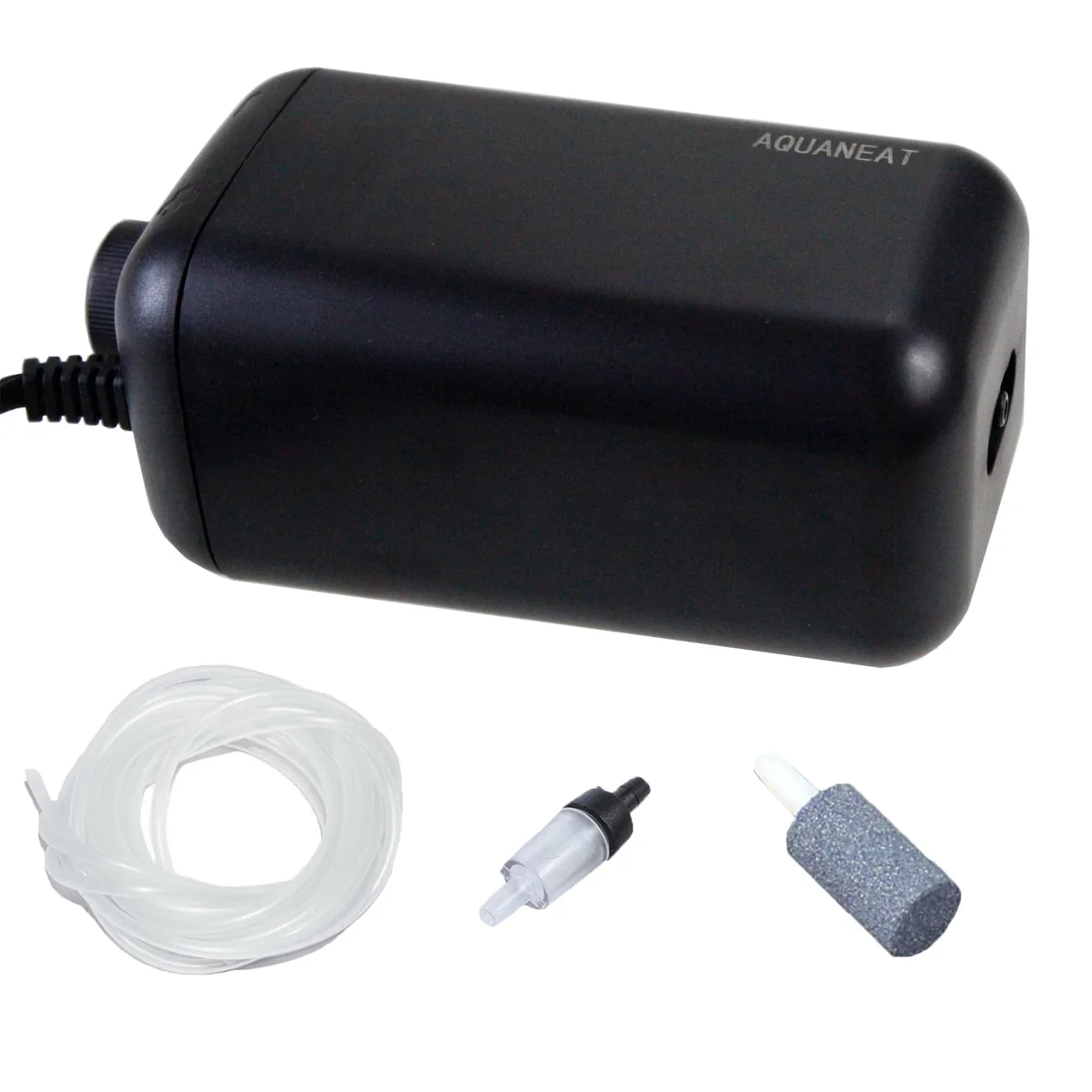
AquaNeat is best treated as a budget or spare pump after you verify the listing’s pressure, outlet and voltage information. It can suit a shallow quarantine setup, but the absence of clear specifications is a reason to avoid guessing on a deep sponge filter. Pros: inexpensive backup; simple single-outlet format; easy storage. Cons: less documented performance; inspect included parts. Keep a known-good check valve and spare airline with it.
How to match an air pump to a sponge filter
Measure the water depth from the pump’s intended position to the sponge filter’s air inlet. Deeper water creates more back pressure, and a tall lift tube needs more pressure than a shallow one. Use the manufacturer’s maximum depth as a ceiling, not a target. A dual-outlet pump is helpful when you want two filters, but its total output is shared. A gang valve can bleed excess air safely and make two outlets easier to balance. It is normal for a fine-pore sponge to need more pressure than a coarse air stone.
Always install a check valve in each airline with the arrow pointing toward the aquarium. Put the pump above the tank if possible. If it must sit below the waterline, the check valve is essential protection against a siphon during a blackout. Keep a drip loop in the power cord, and unplug the pump before moving the sponge or working in the tank. Never place the pump on a resonant glass shelf without a rubber pad. Airline vibration can be louder than the diaphragm itself.
USB pumps are convenient for travel and small tanks, but check the adapter’s output and whether the unit can restart after power returns. Battery pumps are valuable during outages, yet runtime claims depend on battery capacity and load. Test your exact sponge filter before relying on one. For a planted aquarium, extra surface movement can remove injected carbon dioxide, so adjust bubbles to the livestock and gas-exchange needs rather than maximizing them.
Frequently asked questions
Can any air pump run a sponge filter?
No. The pump must produce enough pressure at the filter’s depth. Compare maximum lift or pressure information, then leave reserve for a dirty sponge and long tubing.
Do I need a check valve?
Yes, it is a cheap safeguard against back-siphoning when the pump stops. Use one per airline and install it in the correct direction.
Is a stronger pump better?
Only if you can regulate it. Excess bubbles can create unwanted turbulence and noise. A bleed valve or adjustable pump gives you room to tune the flow.
Can one pump run two sponge filters?
It can when the pump’s total output and pressure support both filters. Use a gang valve and keep each outlet open enough to avoid excessive back pressure.
Related guides: best aquarium filter for a 20-gallon tank and best aquarium filter for a betta fish.
Sources and methodology
We compared manufacturer product information from Tetra, Aqueon, NICREW, Hygger and Pawfly, focusing on pressure, outlet count, adjustability, outage behavior and fit for sponge-filter setups. No hands-on testing was performed. Verify live specifications, compatibility and checkout pricing before ordering.