
Best Aquarium Heater for Betta Fish: 7 Compact, Stable Picks
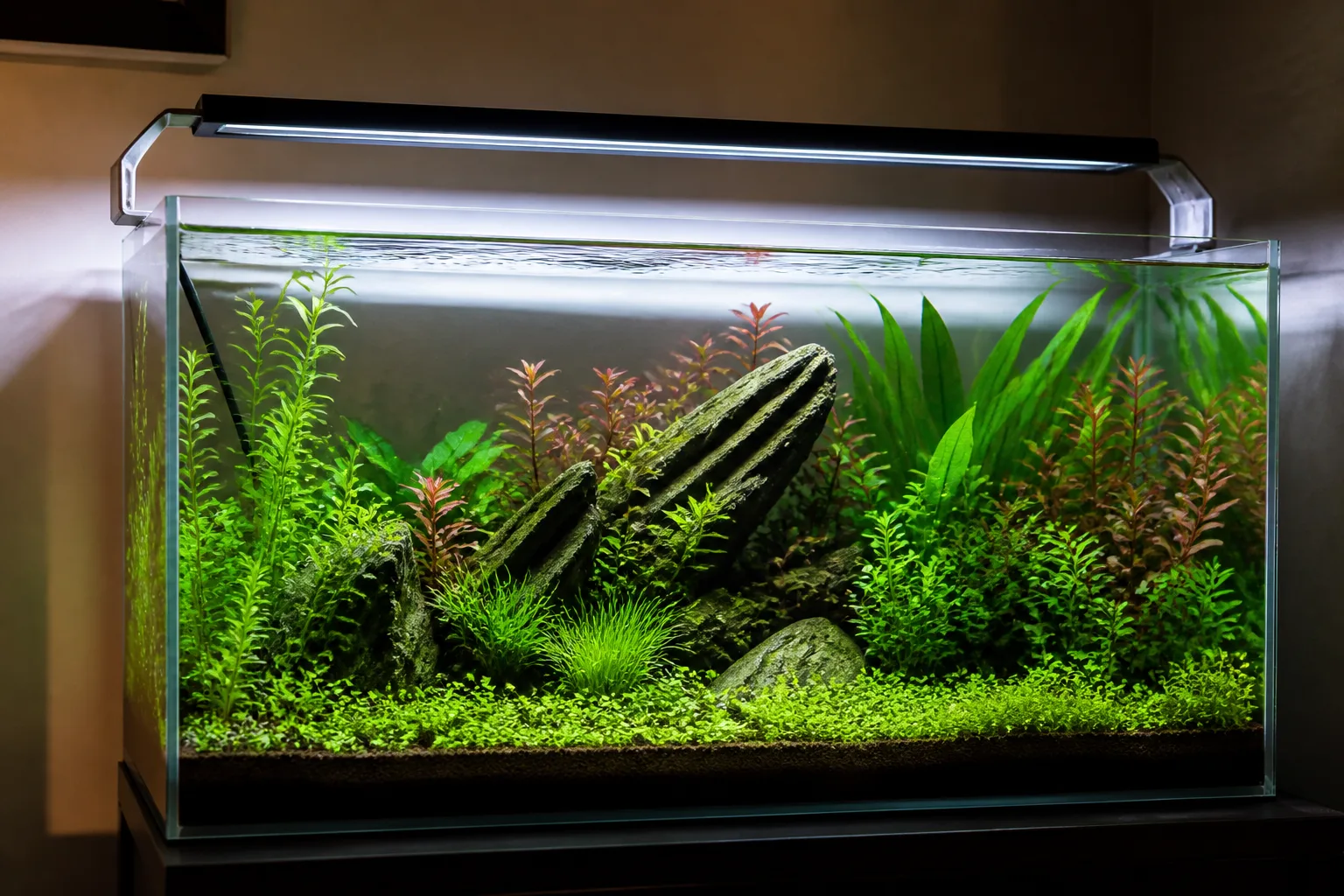
The best aquarium heater for a betta fish is a small, reliable heater that holds a stable tropical temperature without taking over a 5 or 10 gallon tank. My practical default is an adjustable 25 to 50 watt model with a separate thermometer. A preset heater can work in a genuinely small, stable room, but adjustment gives you more control when winter arrives or your room runs warm.
This is a research-based guide, not a hands-on test. Always check the current wattage, dimensions, and Amazon listing before ordering.
Quick comparison
| Pick | Best for | Type | Typical small-tank fit |
|---|---|---|---|
| Eheim Jager 25W | Proven adjustable control | Adjustable | 5 gallon |
| Fluval M50 | A tidy 10 gallon setup | Adjustable | Up to 15 gallon |
| Aqueon Adjustable Pro 50W | Visible temperature setting | Adjustable | 5 to 10 gallon |
| Hygger Mini 50W | Budget-friendly compact control | Adjustable | 5 to 10 gallon |
| Cobalt Neo-Therm 25W | Slim tanks and clean layouts | Adjustable | 5 gallon |
| Marina C10 | Small tanks with simple setup | Preset | Nano to 5 gallon |
| Tetra HT10 | A compact preset option | Preset | Nano to 5 gallon |
Our picks
Eheim Jager 25W
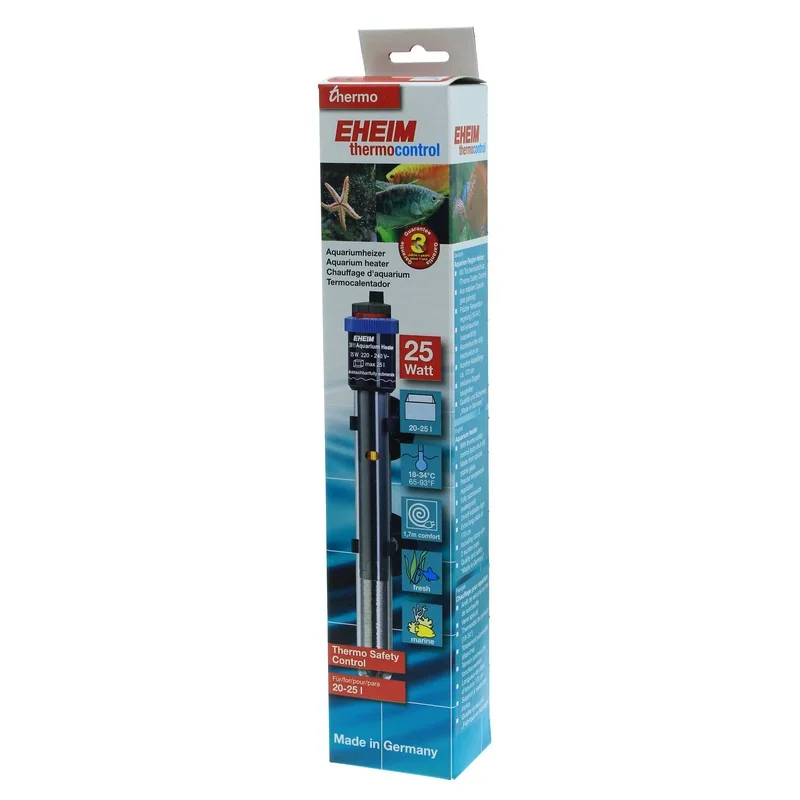
The Eheim Jager is a sensible choice when you want a real temperature dial rather than a fixed factory setting. The 25W size is better suited to a 5 gallon betta aquarium than an oversized heater. Its longer body needs a clear vertical or horizontal mounting area, so measure around plants, hides, and the filter intake first.
Pros: adjustable control, established aquarium-heater design, useful for a small tank. Cons: the glass body needs careful handling, and the dial is not a substitute for a thermometer. Check the current Eheim Jager listing.
Fluval M50
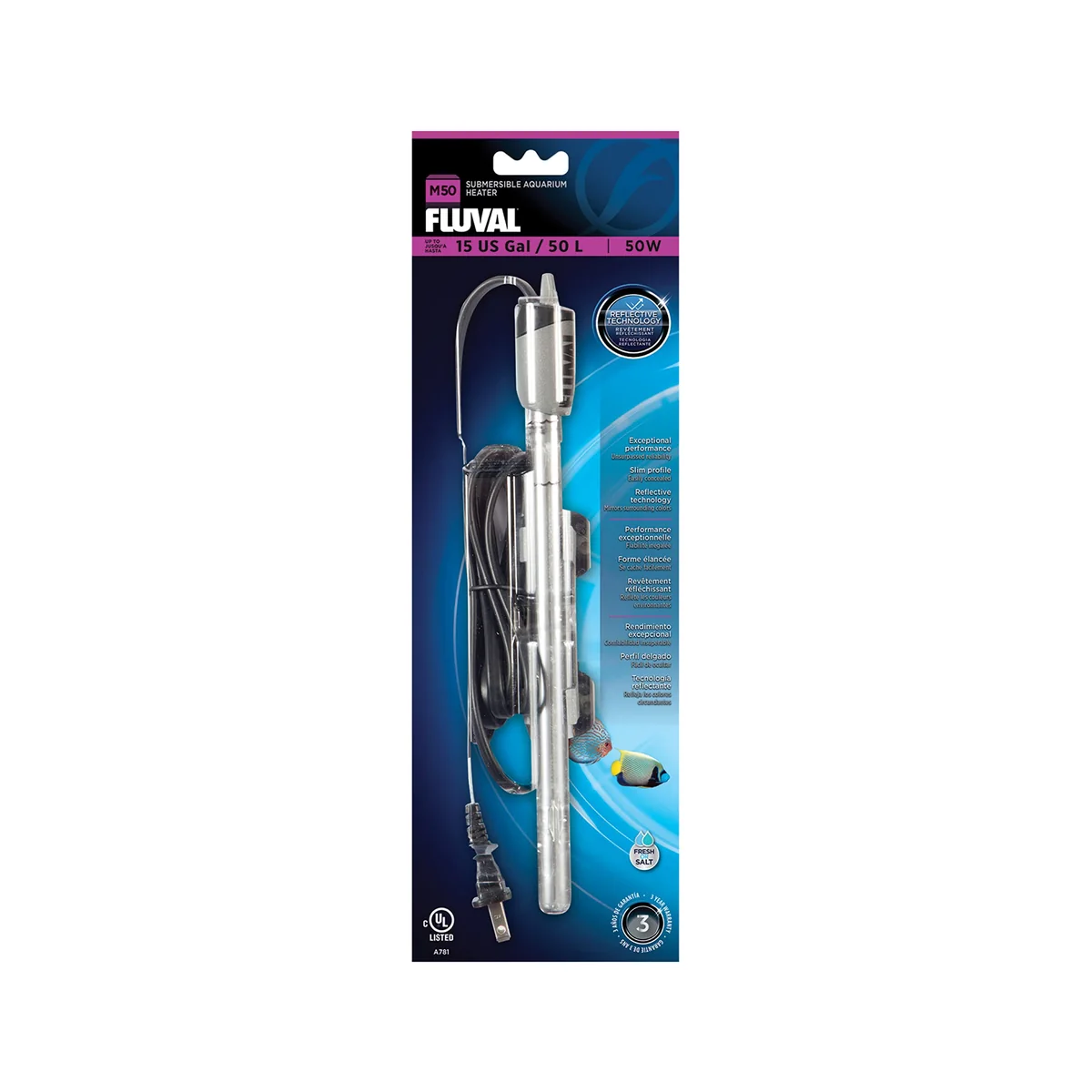
The Fluval M50 makes sense for a 10 gallon betta tank where a compact body and an adjustable setting matter. Its nominal capacity leaves some headroom for a cooler room, but do not treat the capacity label as a promise. Room temperature, lid fit, water movement, and the temperature you choose all change the heat load.
Pros: compact format, adjustable target, widely available. Cons: 50W is more than a tiny bowl needs, and every wattage claim should be matched to your actual water volume. Check the current Fluval M50 listing.
Aqueon Adjustable Pro 50W
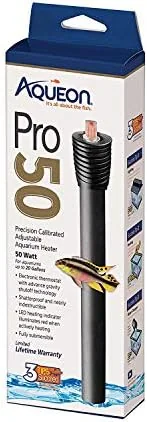
Choose this style when you want an easy-to-read setting and a common replacement size. A 50W adjustable heater can suit a 10 gallon aquarium, particularly in a cool room, but it should be paired with a guard in a betta setup. A guard reduces the chance of a curious fish resting against a hot surface and helps protect the heater from hardscape.
Pros: flexible setting, familiar controls, useful for a 10 gallon tank. Cons: it may be too powerful for a very small volume, and the control still needs independent verification. Check the current Aqueon listing.
Hygger Mini 50W
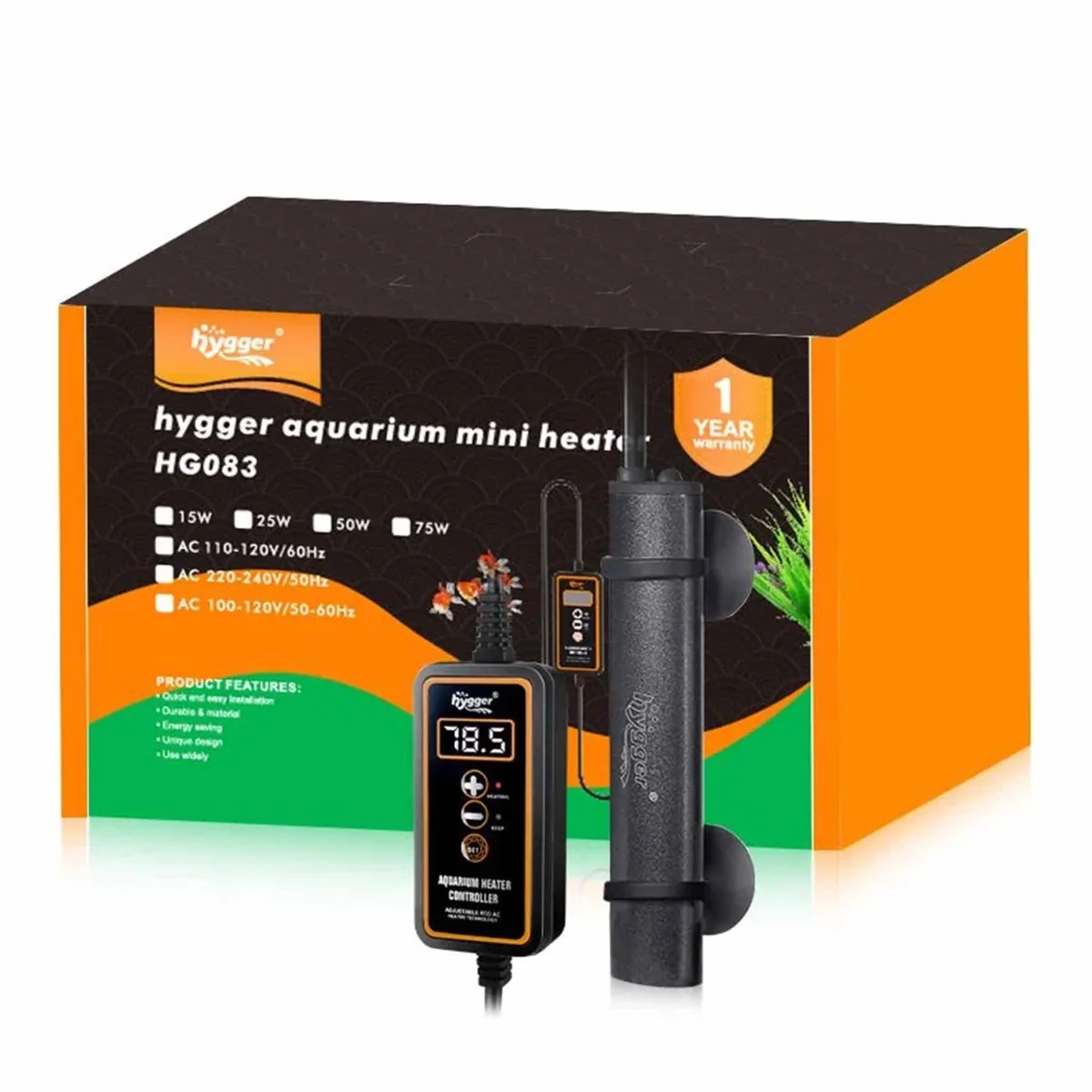
The Hygger Mini is worth considering when cabinet space and price matter. Its compact form can leave more usable swimming room in a planted 5 or 10 gallon tank. The important check is not the brand name. Confirm that the version in your cart has the wattage and control method you expect, because listings can group several variants together.
Pros: compact shape, adjustable versions are available, often competitively priced. Cons: variant listings can be confusing, and the thermostat must be checked with a separate thermometer. Check the current Hygger Mini listing.
Cobalt Neo-Therm 25W
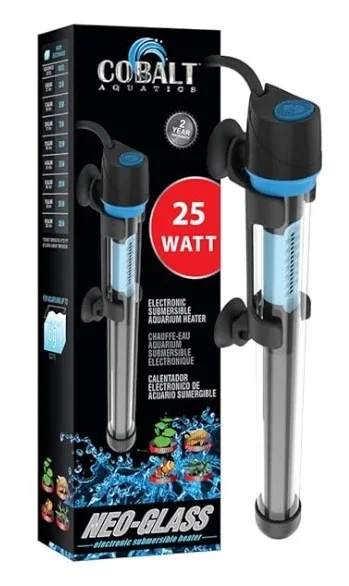
The Neo-Therm is a good fit for a neat 5 gallon layout where a broad glass tube would interfere with plants or a hide. The 25W class is easier to match to a small water volume than a high-output unit. Its slim profile is useful, but it still needs clearance and safe placement where the betta cannot wedge behind it.
Pros: slim profile, adjustable style, appropriate output class for a 5 gallon aquarium. Cons: premium pricing is common, and the exact model size matters. Check the current Cobalt listing.
Marina C10
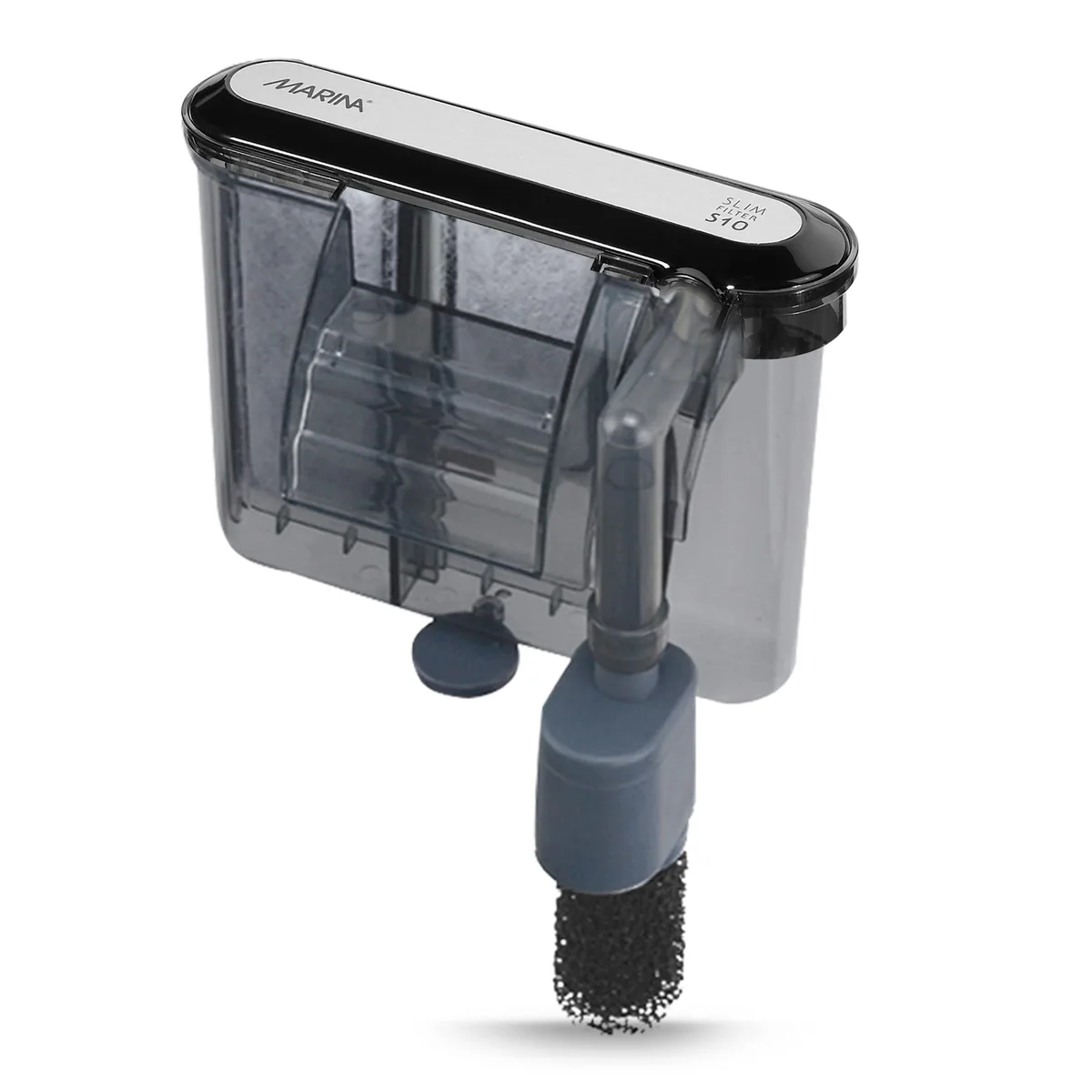
The Marina C10 suits a buyer who wants a small preset heater and does not need to tune the target manually. That simplicity can be useful in a nano aquarium, but it removes one way to correct for an unusually cool or warm room. Use it only when the listed tank range matches your actual water volume, and verify the result with a thermometer.
Pros: simple setup, small output, no dial to bump accidentally. Cons: limited adjustment, less useful for changing room conditions. Check the current Marina listing.
Tetra HT10
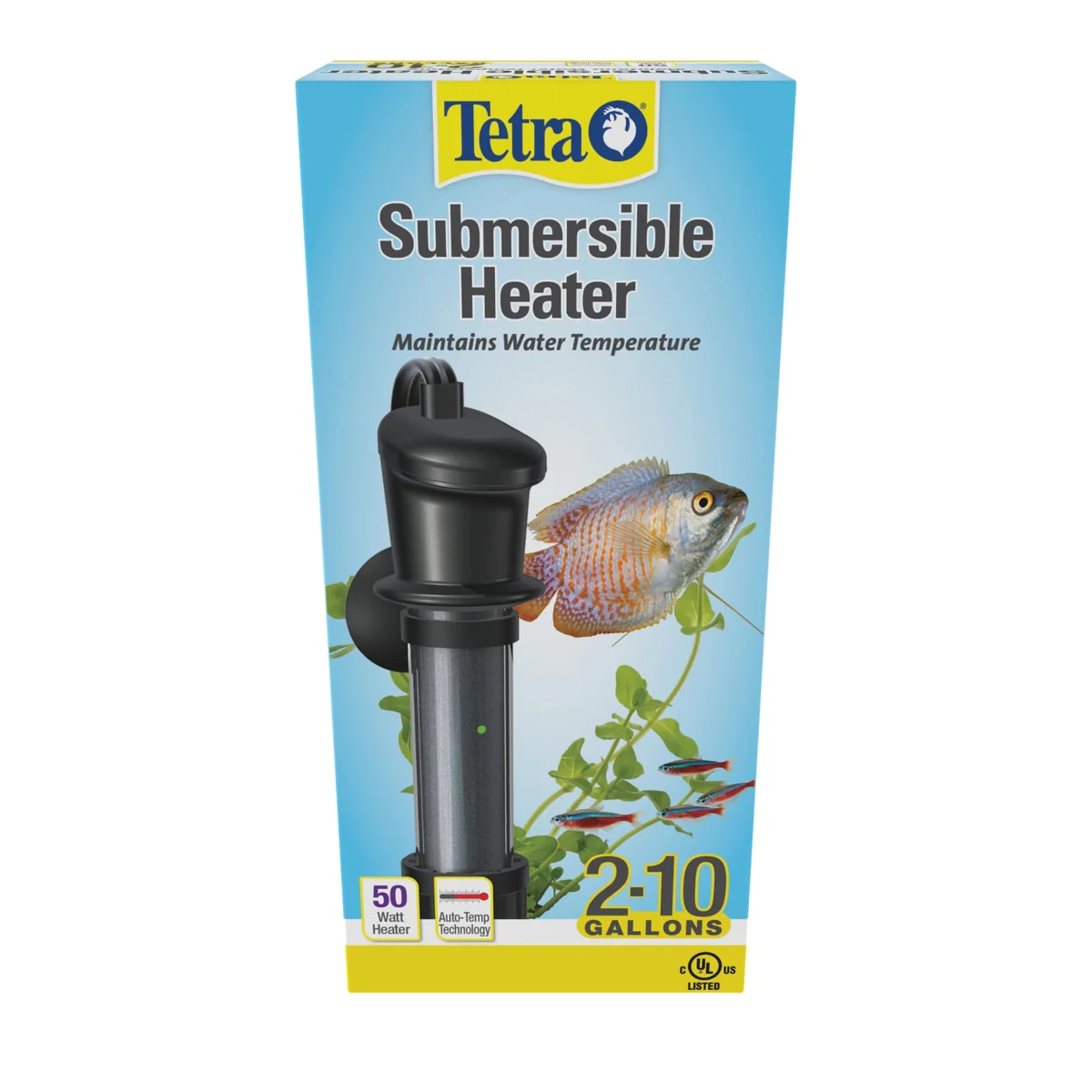
The Tetra HT10 is another preset option for a very small betta aquarium. It keeps the decision narrow: confirm the exact tank-size rating, install it fully submerged as the instructions require, and watch the independent thermometer for the first few days. A preset heater is not automatically safer. It is simply less adjustable.
Pros: compact, straightforward, suited to small volumes when correctly sized. Cons: no user temperature dial, and a larger room-temperature swing can expose its limits. Check the current Tetra listing.
How to choose a betta heater
Start with actual water volume, not the aquarium’s outside dimensions. A 5 gallon tank may hold less after gravel, wood, and decor. Small tanks also change temperature faster, so stability matters more than chasing the highest wattage. A rough 25W class often fits 5 gallons, while 50W is more practical around 10 gallons or in a cold room. Treat that as a starting point and follow the model’s own rating.
Adjustable heaters give you a useful correction if your thermometer shows a mismatch. Preset heaters are simpler, but you cannot compensate for a cool bedroom. Put the heater near gentle water movement, leave it clear of plastic and decor, and use a heater guard if the model supports one. Never switch a submerged heater on while it is out of water, and let it cool before removing it.
Use an independent digital thermometer on the opposite side of the tank. The heater dial is a control, not a measurement. Watch for a stable reading in the tropical range recommended by a reputable betta-care source, with no sudden swings. A lid helps reduce heat loss and evaporation, but it does not replace a correctly sized heater.
For more equipment decisions, compare the best aquarium filter for betta fish and the best aquarium heater for a 10 gallon tank. The heater and filter should leave calm areas for a betta rather than blasting the whole tank.
FAQ
What temperature should a betta tank be?
Aim for a stable tropical temperature within the range recommended by a trusted care guide, rather than allowing the water to follow room temperature. A thermometer tells you whether the installed heater is actually holding that target.
Is a 50W heater too much for a betta?
It can be too much for a small 2.5 or 5 gallon tank, especially in a warm room. It can make sense for 10 gallons or a cool room when the model is properly controlled. Size by water volume and verify with a separate thermometer.
Do betta tanks need a heater and a filter?
Most indoor betta aquariums benefit from both. The heater controls temperature. A gentle, adjustable filter supports water quality without creating exhausting current. A filter does not provide dependable heating.
Should I use a heater guard?
A guard is a worthwhile extra when the heater can be touched by the fish or bumped by decor. Follow the heater and guard instructions, and leave enough water movement around the heating element.
Sources and methodology
I compared current manufacturer product information and aquarium-care guidance from Fluval’s heater resources, EHEIM’s Jager documentation, Aqueon’s heater guidance, and PetMD’s betta care overview. Product names and variants can change, so confirm the live listing, wattage, dimensions, and tank rating before buying. This guide uses research and product specifications. We did not perform hands-on testing.
Amazon links on this page are affiliate links. If you buy through one, BetterAquarium may earn a commission at no extra cost to you.