
Buying guide
Best Aquarium Heater for a 5-Gallon Tank: 7 Safe Small-Tank Picks
A 5-gallon tank needs gentle, controllable heat. These compact heaters fit small volumes while leaving room for an independent thermometer and safe circulation.
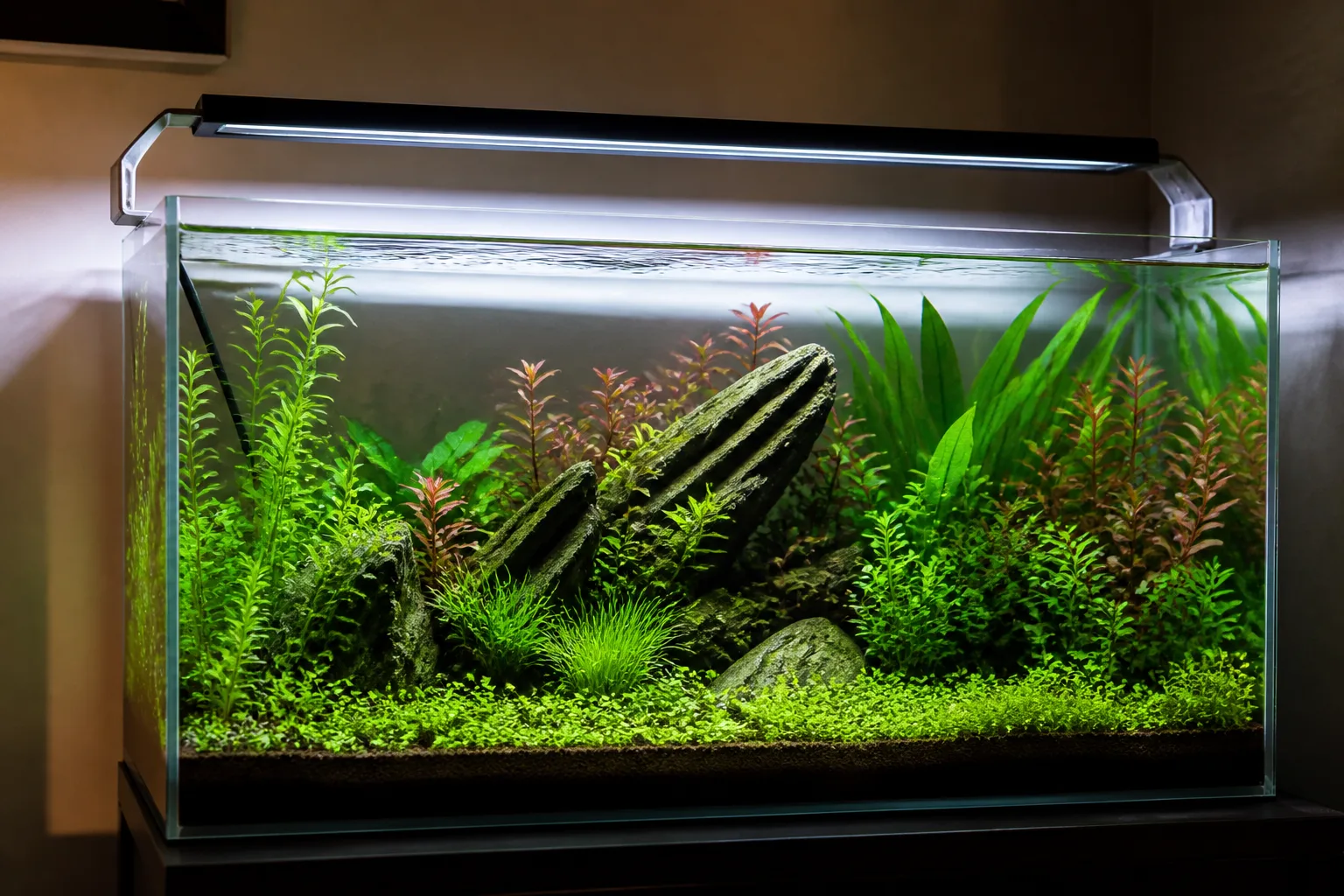
A small aquarium changes temperature faster than a large one, so heater choice is mostly about control, not maximum wattage. For many tropical 5-gallon setups, a dependable 25W heater is a sensible starting point, but room temperature, lid use and water movement still matter. This is a specification-based guide, not a hands-on test. Confirm the current wattage, voltage, minimum water level and warranty before ordering, then use a separate thermometer to check the result.
Quick comparison
| Product | Best for | Main advantage | Main drawback |
|---|---|---|---|
| Fluval M50 | Adjustable compact heating | Small footprint and dial control | Rated above many 5-gallon needs |
| Aqueon Pro Adjustable 50W | Cool rooms | Adjustable set point | 50W requires careful monitoring |
| Aqueon Preset 50W | Simple tropical setups | No calibration dial | Less flexible for unusual temperatures |
| Eheim Jager 25W | Precise adjustment | Broad adjustment range | Long body needs clearance |
| Cobalt Neo-Therm 25W | Tidy nano displays | Slim, low-profile design | Premium price |
| Hygger Mini 25W Aquarium Heater | Small planted tanks | Compact digital controls | Verify the exact revision |
| Fluval T50 | Set-and-check operation | Preset tropical temperature | Not suitable for every species |
Best compact adjustable option: Fluval M50
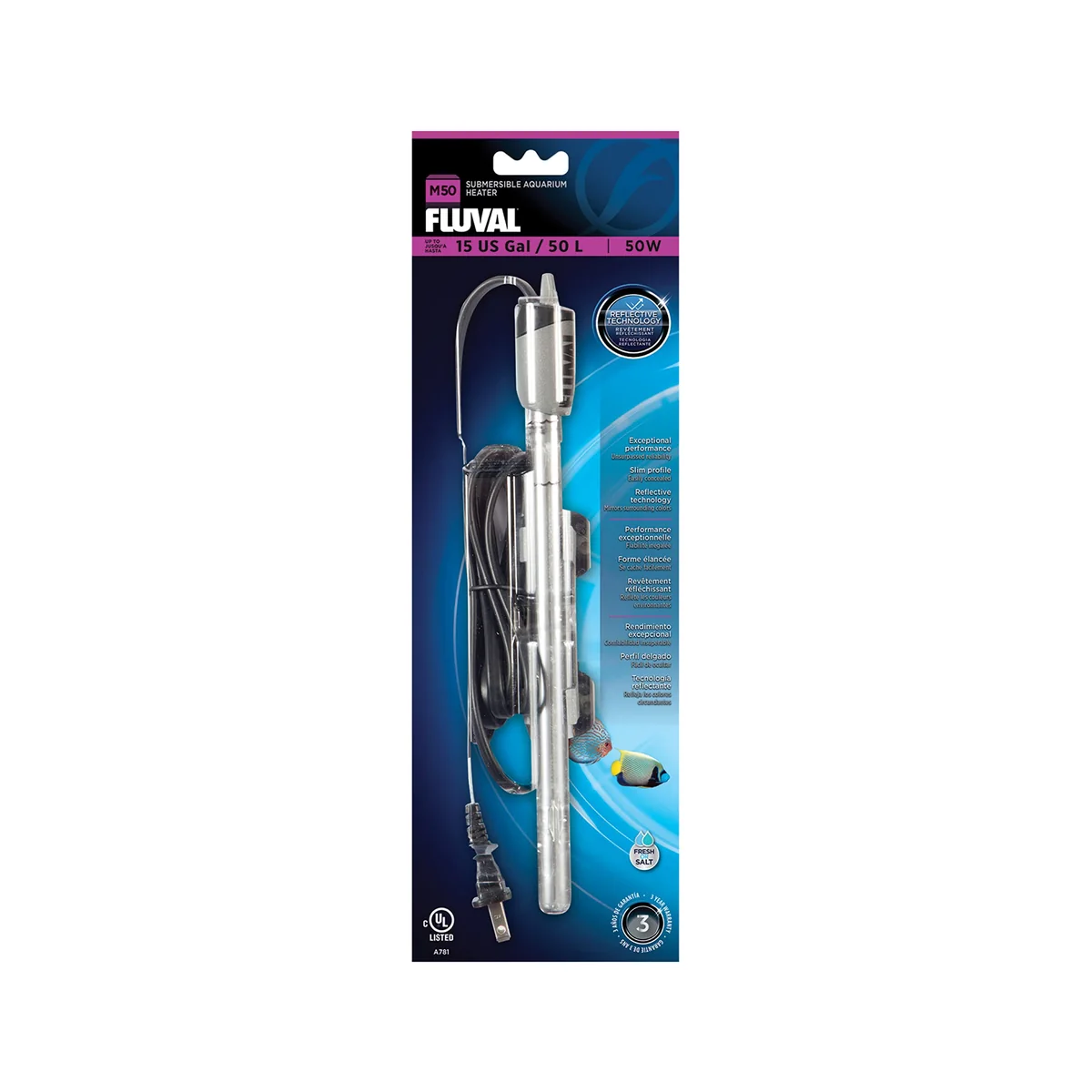
The Fluval M50 is a reasonable fit when you want an adjustable dial and a heater body that does not dominate a nano aquarium. Its compact shape leaves more room for plants, a sponge filter and a thermometer. The catch is sizing. A 50W unit can add heat quickly in five gallons, especially in a warm room, so use the adjustment conservatively and watch the thermometer after every change. Pros: compact format, adjustable setting, familiar brand support. Cons: more power than many 5-gallon tanks need, and the dial is not a substitute for a thermometer. See Fluval’s M-series information for current installation limits.
For a cold room: Aqueon Pro Adjustable 50W
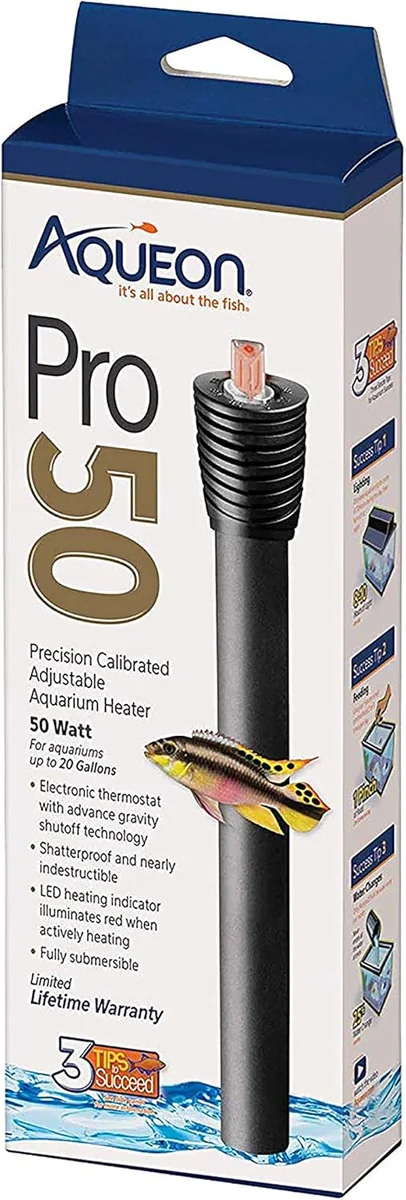
An adjustable 50W Aqueon can make sense when the room regularly falls well below tropical temperatures, but it needs a cautious setup in a five-gallon volume. The adjustable thermostat gives more control than a fixed preset, while the extra capacity can shorten recovery after a water change. Use it with steady water movement and check that the heater remains submerged at the manufacturer’s minimum line. Pros: adjustable target, useful cold-room headroom, widely available replacements. Cons: high wattage for the volume, and a stuck thermostat would have more impact. Aqueon’s heater guidance explains placement and safety. Do not buy this size simply because a listing calls it “for small tanks.”
Simplest preset choice: Aqueon Preset 50W
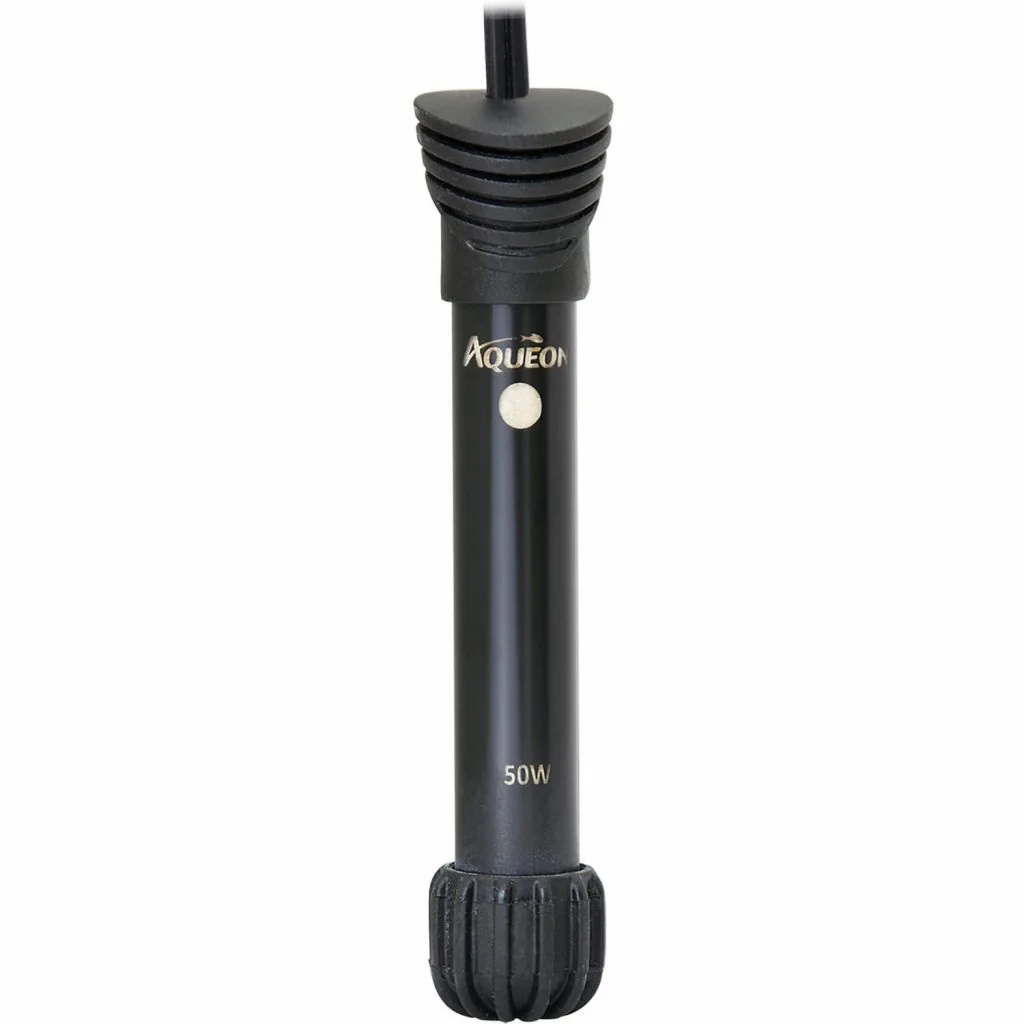
The preset format suits a beginner who wants fewer settings to adjust. It is designed around a tropical temperature, so it can work for common warm-water community or betta arrangements when the room is stable. Its limitation is just as important: you cannot tune it for cooler species, seasonal changes or a room that runs hot. Pros: straightforward installation, no confusing dial, low setup friction. Cons: fixed target, 50W is aggressive for five gallons, and preset temperature claims vary by model. Check Aqueon’s current product page and measure the actual water temperature rather than assuming the label is exact.
Best adjustment range: Eheim Jager 25W
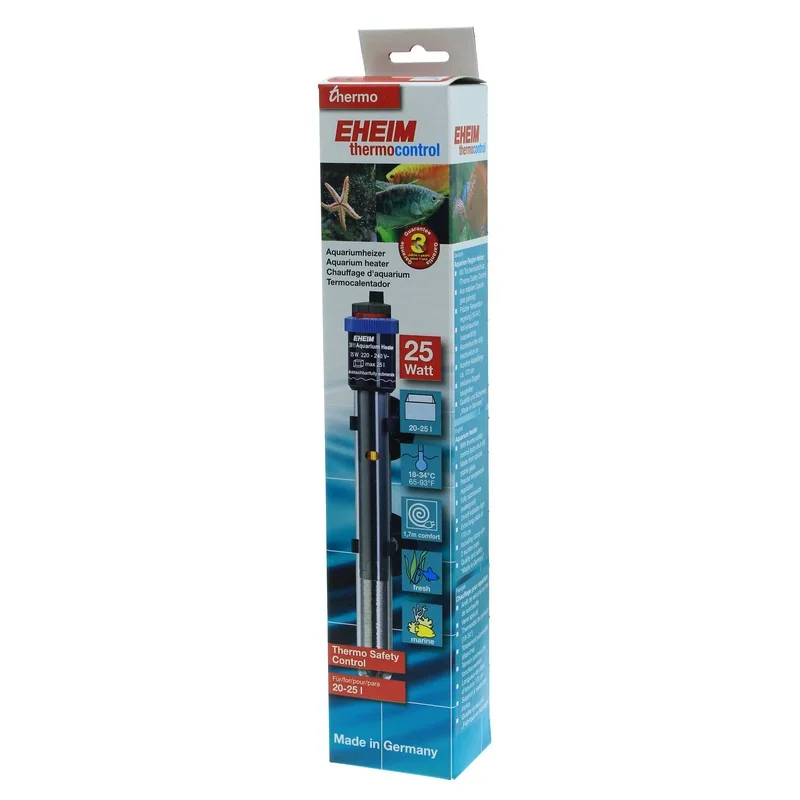
The 25W Jager variant is closer to the conservative power class many five-gallon tanks need. Its adjustable design is useful if your room temperature changes across the year. Measure the heater length before buying because a tall glass body can be awkward in a shallow tank. Pros: modest wattage, adjustable setting, long-running product family. Cons: glass needs careful handling, length may limit horizontal placement, and exact electrical versions differ by market. Eheim’s thermo control documentation is the right place to confirm the current model and voltage.
Slim premium option: Cobalt Neo-Therm 25W
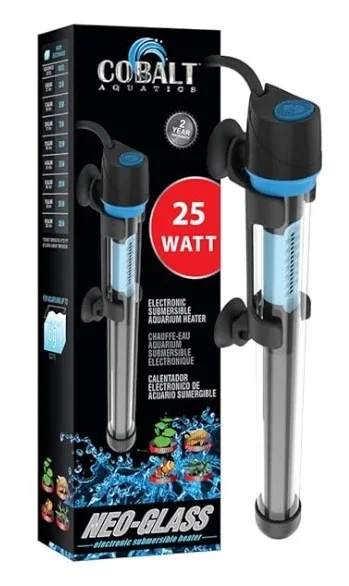
The Neo-Therm’s slim, flat presentation appeals when equipment visibility matters. A 25W version gives a small tank more gradual heating than a large unit, provided the room and livestock call for tropical temperatures. The premium price buys a tidy form factor, not immunity from thermostat failure. Pros: low visual bulk, adjustable control on the heater, sensible 25W class. Cons: costs more, replacement availability varies, and the flat body still needs clear water flow. Read Cobalt Aquatics’ heater information and verify the exact wattage before checkout.
Compact digital controls: Hygger Mini 25W
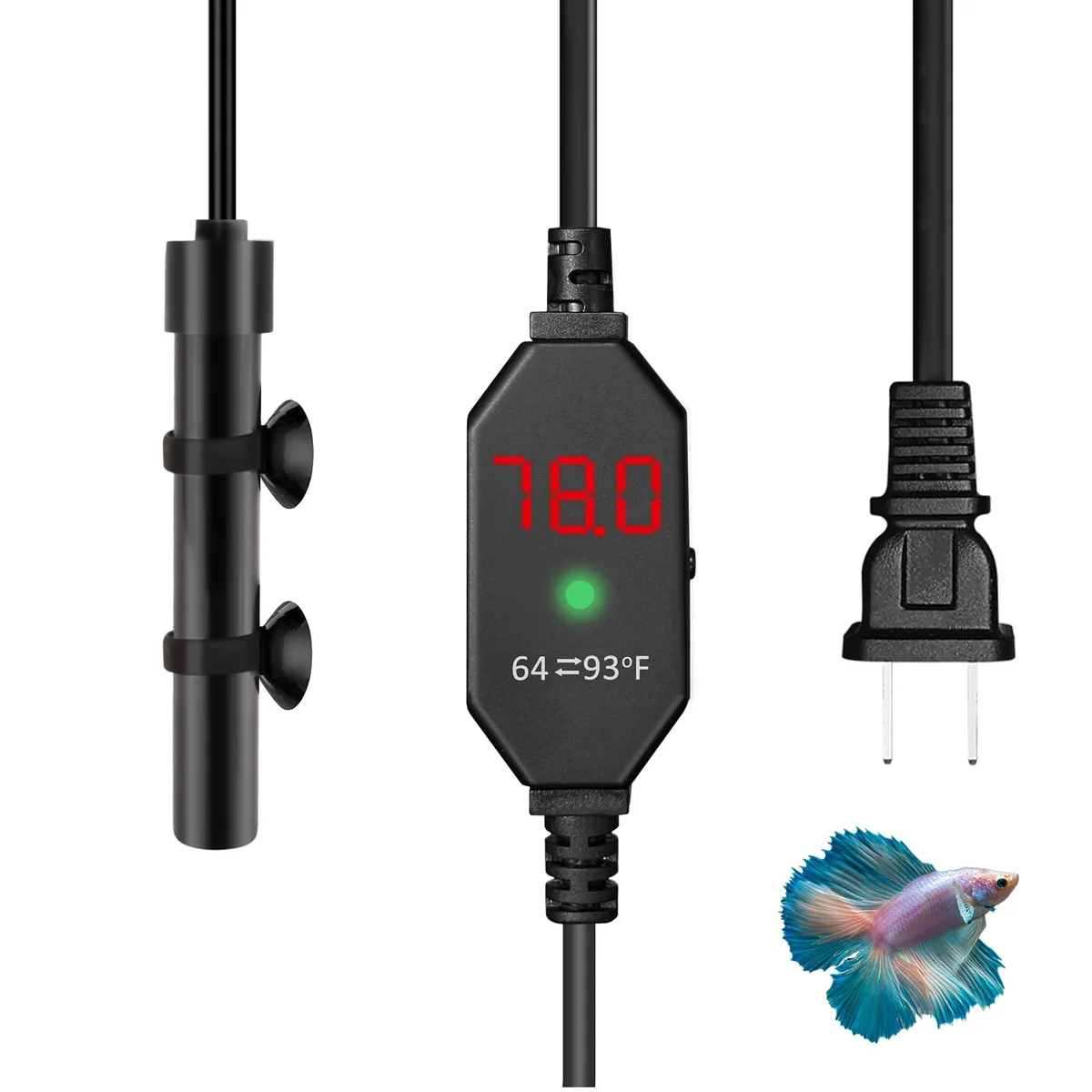
Hygger’s mini heater range is worth considering when a small controller and compact heater body are more useful than a traditional glass tube. A 25W variant matches the modest capacity of many nano aquariums. Marketplace listings can change revisions, so check the manual, minimum water depth and temperature range for the exact package. Pros: compact footprint, visible set point, low wattage option. Cons: model revisions can be confusing, long-term parts support is less predictable, and digital controls do not replace an independent thermometer. The Hygger support pages are useful for confirming the current manual.
Best preset check-and-go format: Fluval T50
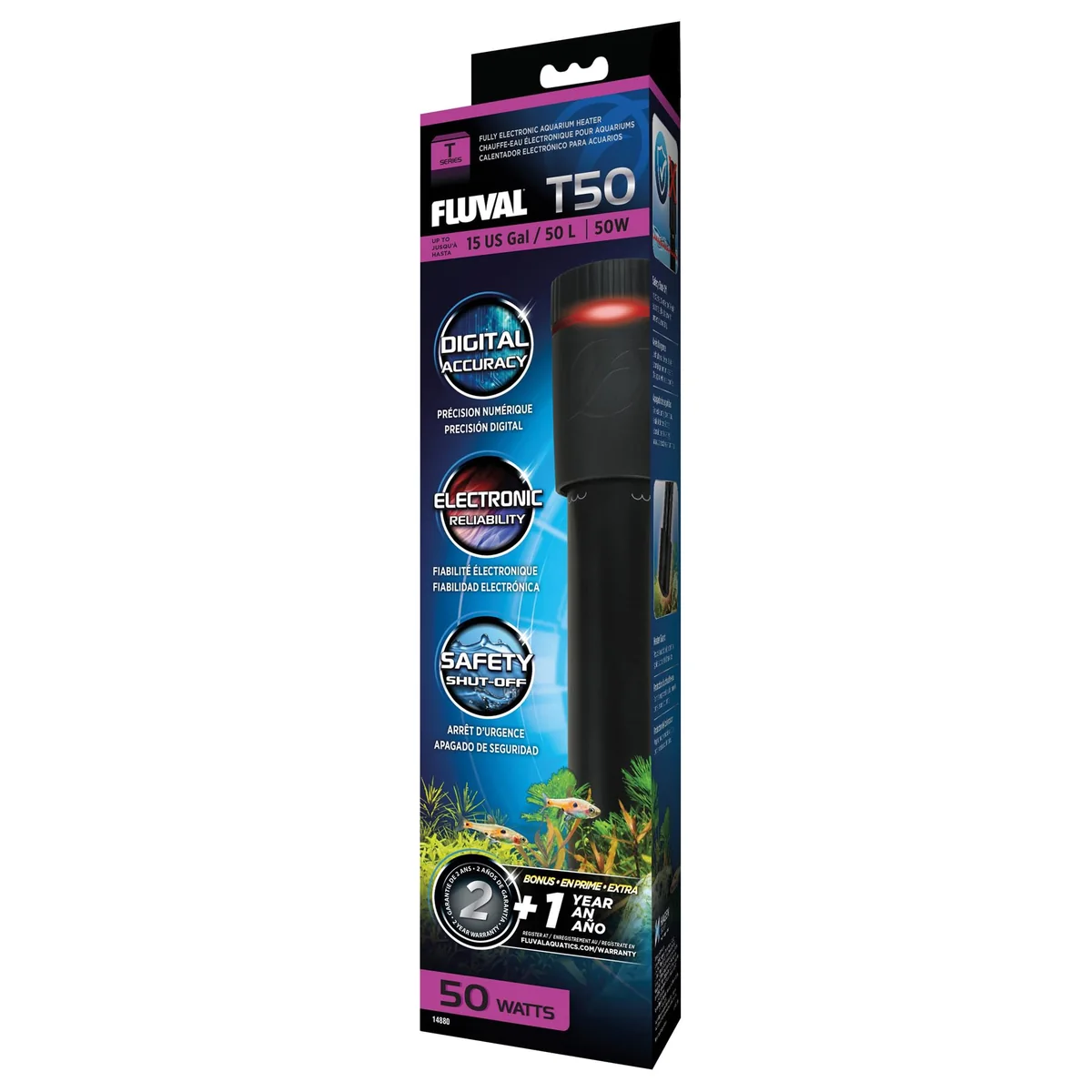
The Fluval T50 is a preset option for keepers who prefer to avoid repeated dial adjustments. It can suit tropical water when the ambient room temperature is reasonably stable. The tradeoff is a narrow use case. A preset tropical heater is wrong for cooler-water livestock and offers little correction if your room is unusually warm. Pros: simple operation, compact product family, easy-to-read status light. Cons: fixed temperature, verify the exact tank-size guidance, and the 50W class needs close observation in five gallons. Fluval’s T-series page lists current instructions.
What matters in a 5-gallon heater
Start with species temperature, room temperature and tank position. A heater beside a filter outlet gets even flow, while a heater hidden behind dense plants may create a hot pocket. Keep it fully submerged as directed, with space around the body. A lid reduces heat loss and evaporation, but it does not justify oversizing.
For a stable warm room, a 25W adjustable heater is often the least dramatic choice. A 50W unit can be useful in a cold room, but its higher output makes a thermostat fault more serious. An independent glass or digital thermometer should sit away from the heater, ideally where you can read the tank’s general temperature. Check it daily during the first week, after water changes and when seasons change. Never run a heater dry. Unplug it before removing water or putting a hand into the tank, and let it cool before lifting it out.
Do not rely on a heater’s sticker alone. Compare the manufacturer’s minimum water depth, dimensions, voltage and warranty. If a product listing does not make those details clear, choose a model with better documentation. A heater guard can protect against fish contact and cracked glass, but it cannot fix an unreliable thermostat. For a betta setup, pair gentle circulation with the right filter for a betta tank. For a ten-gallon setup, see our aquarium heater comparison.
Frequently asked questions
Is 25W enough for a 5-gallon aquarium?
Often, yes, when the room is moderately warm and the heater is correctly sized. The thermometer reading matters more than the wattage label. Cold rooms may need a different approach, but oversizing increases the consequence of a failed thermostat.
Can I use a 50W heater in five gallons?
You can if the manufacturer supports that volume and you monitor the tank closely. Choose an adjustable model, provide water movement and keep an independent thermometer away from the heater.
Where should a nano heater go?
Place it where water circulates, usually near the filter outlet, while keeping it clear of gravel and decorations. Follow the model’s vertical or horizontal mounting instructions.
How do I prevent overheating?
Use the smallest suitable wattage, inspect temperature changes after installation, and check the heater and thermometer regularly. A separate temperature controller can add protection, but it is not required for every simple setup.
Sources and methodology
We compared manufacturer information from Fluval, Aqueon, Eheim, Cobalt Aquatics and Hygger, focusing on wattage, adjustment, placement, dimensions and support documentation. Recommendations are for query fit, not hands-on rankings. No hands-on testing was performed. Amazon links are tagged with btraqrm-20; verify current price, availability, electrical version and temperature guidance at checkout.