
Buying guide
Best Aquarium Filter for a 75-Gallon Tank: 7 High-Capacity Picks
A 75-gallon tank rewards media volume, reliable circulation and a maintenance plan that matches its livestock.
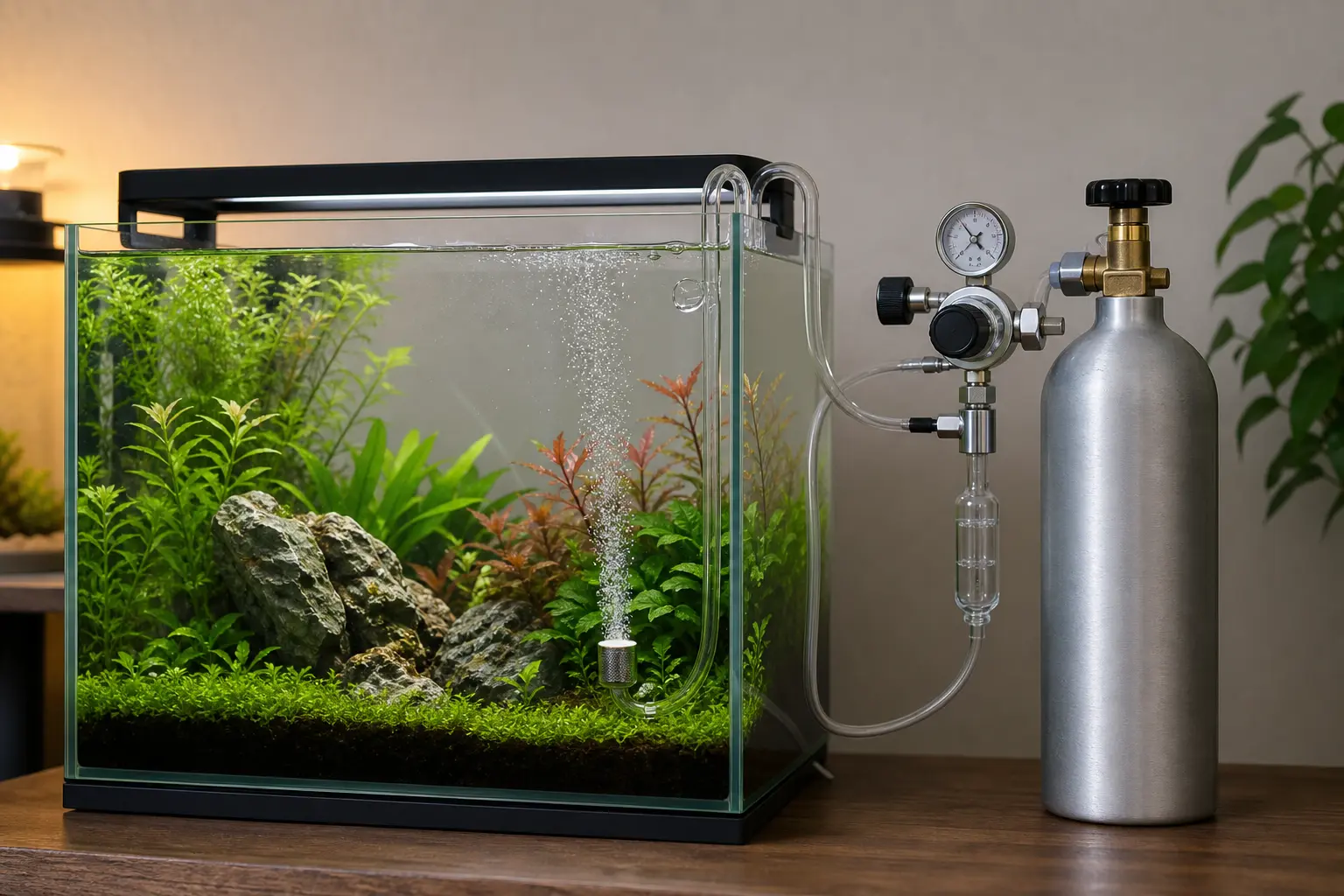
A 75-gallon aquarium is where filter capacity becomes a long-term husbandry decision. A lightly stocked planted display can use one well-sized canister, while messy fish or a crowded community may benefit from two independent filters. The goal is not the biggest label on the box. It is enough mechanical room to catch waste, enough biological media to stay stable, and an outlet you can tune for the livestock.
This is a specification-based guide, not a hands-on test. We compared media capacity, service access, flow control, redundancy options and cabinet fit. Confirm the current model, voltage, included media and manufacturer rating before ordering.
Quick comparison
| Product | Best fit | Main strength | Main compromise |
|---|---|---|---|
| Fluval FX4 | High-bioload freshwater | Large media volume | Large cabinet footprint |
| Fluval 407 | Quiet planted displays | Multi-stage media | Hose and seal care |
| Seachem Tidal 110 | Large HOB setup | Big basket and self-priming | Strong return |
| OASE BioMaster 600 | Premium planted tanks | Removable pre-filter | Premium parts |
| Eheim Classic 600 | Simple canister | Proven service design | Fewer conveniences |
| Penn-Plax Cascade 1500 | Maximum tray capacity | Roomy baskets | Priming and space |
| SunSun HW-304B | Budget redundancy | High nominal capacity | Parts vary by region |
Best overall: Fluval FX4
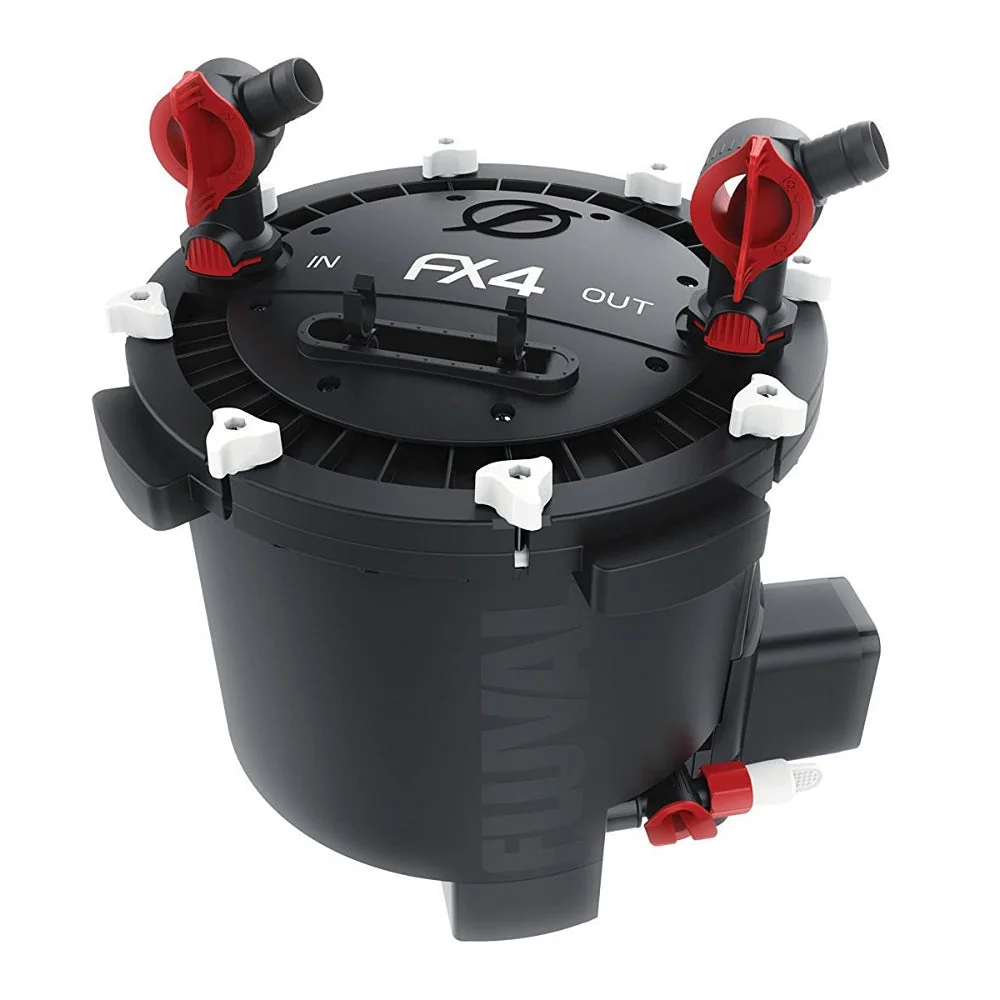
The FX4 is the strongest fit when a 75-gallon tank has substantial waste production or large fish. Its broad canister body leaves room for coarse-to-fine mechanical stages followed by biological media, and its return can be distributed through a spray bar or directional outlet. That capacity is useful only if the stand can hold it and you are willing to lift a heavy canister during service. Pros: generous media room, strong circulation and a layout suited to messy fish. Cons: large footprint, heavier maintenance and more flow than calm species may want. Read Fluval’s FX4 information.
Fluval 407
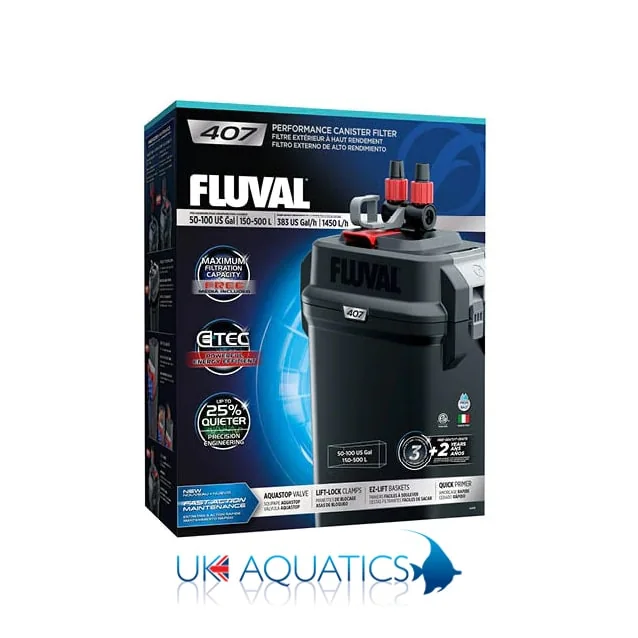
The 407 is a balanced option for a planted 75-gallon display where quiet, hidden filtration matters more than maximum bulk. Its multi-stage baskets separate debris capture from biological media, and a spray bar can spread return across a long tank. It is less imposing under a stand than an FX unit, but still needs hose routing and seal inspection. Pros: staged media, tidy installation and flexible return. Cons: cleaning takes planning, and loaded media reduces real flow. See Fluval’s 407 documentation.
Seachem Tidal 110
The Tidal 110 is the practical large-HOB option when a stand cannot accept a canister. Its large media basket is easy to reach, and self-priming behavior simplifies restart after a power interruption. The surface-skimming intake can help with film, but the energetic return may need a baffle or careful positioning for slow swimmers. Pros: accessible media, no cabinet hoses and convenient restart. Cons: rear-rim clearance, visible equipment and potentially forceful flow. Consult Seachem’s Tidal information.
OASE BioMaster 600
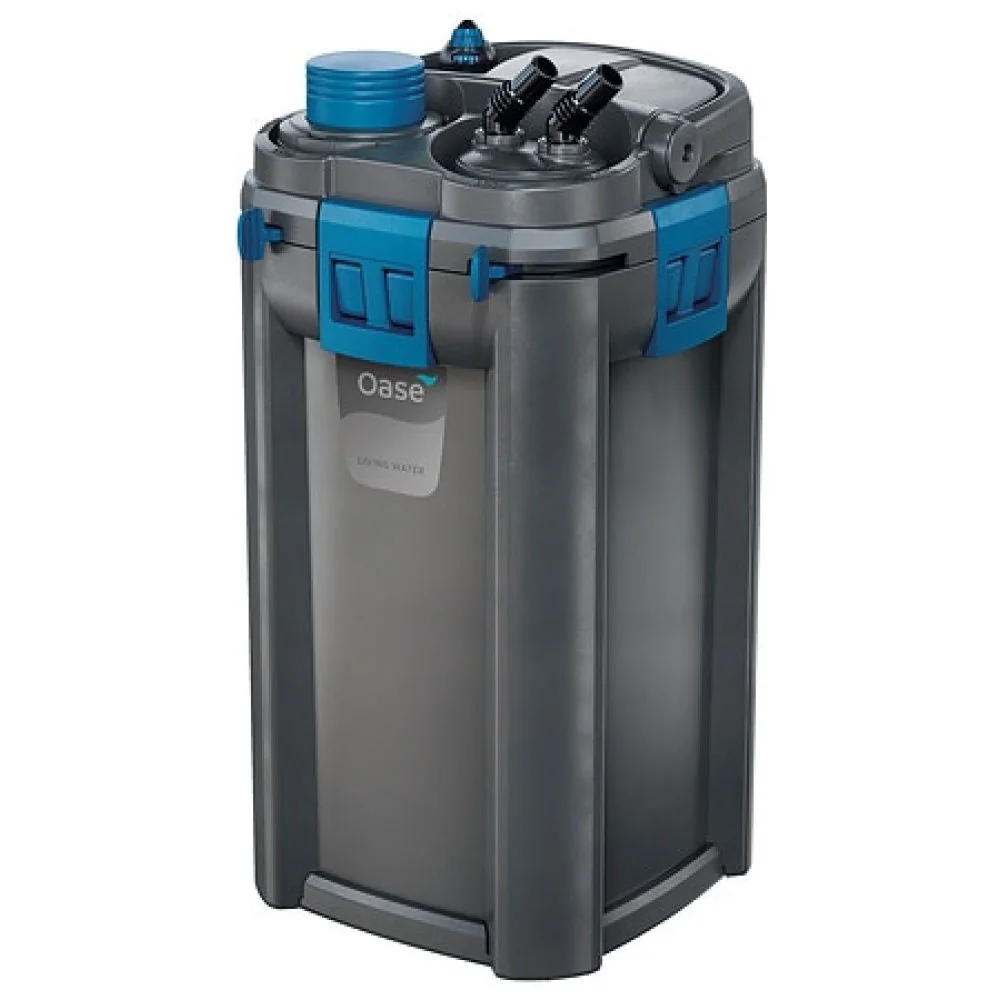
The BioMaster 600 suits keepers who want substantial canister capacity with a pre-filter removable before opening the main body. That is valuable when fine debris accumulates quickly but biological media should remain undisturbed. Premium pricing and proprietary replacement parts are the tradeoff. Pros: serviceable pre-filter, large media stages and clean installation. Cons: cost, cabinet height and specialized parts. Use OASE’s BioMaster information to verify the exact version and voltage.
Eheim Classic 600
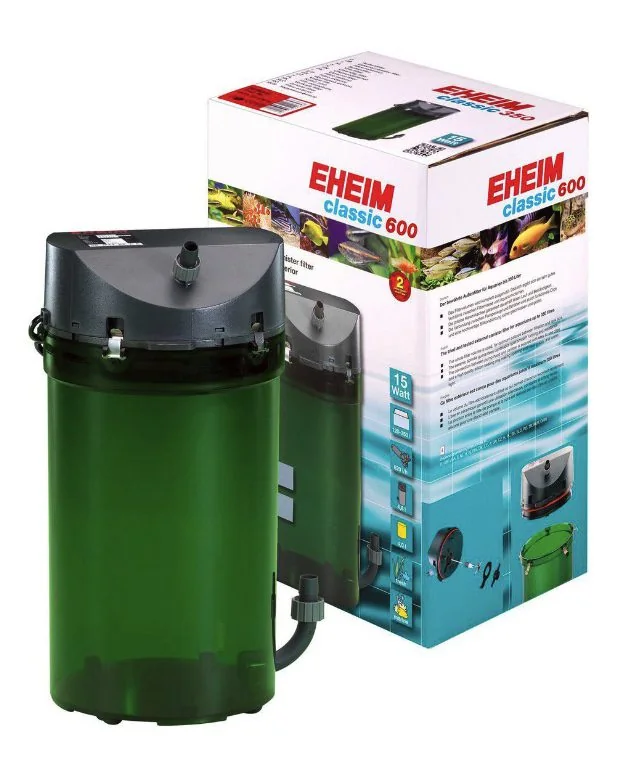
The Classic 600 suits aquarists who prefer a simple canister layout and an established maintenance routine. Its cylindrical design makes media loading predictable, while external placement keeps the display uncluttered. It does not offer every modern convenience, so plan hose shutoff, priming and mechanical-media cleaning. Pros: simple architecture, hidden equipment and recognized spare parts. Cons: manual service steps and less built-in flow convenience. Confirm current fittings through Eheim’s support.
Penn-Plax Cascade 1500
The Cascade 1500 is a capacity-first choice with several trays for coarse foam, finer polishing material and biological media. That separation helps with goldfish and other messy fish because the first stage can be rinsed without disturbing the biological core. Measure the stand for lid removal, tubing bends and spill control. Pros: roomy trays, adaptable media and strong heavy-waste fit. Cons: cabinet space, priming effort and installation-sensitive vibration. Verify the current revision at Penn-Plax.
SunSun HW-304B
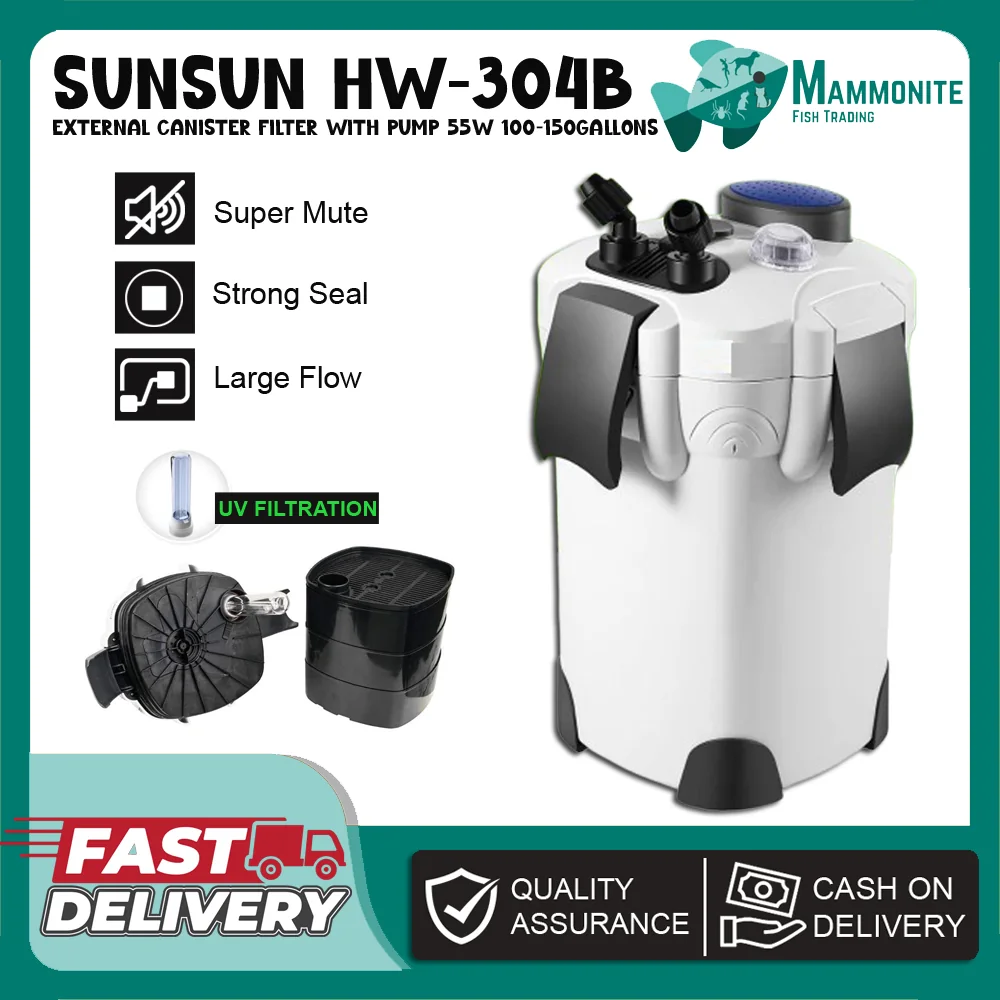
The HW-304B is worth considering when the budget is tight and the priority is adding capacity or a second filter. It can provide substantial media room for the money, but support, fittings and replacement parts may be less consistent by region. Check the seller, voltage and return policy before purchase. Pros: low entry cost, multiple chambers and useful redundancy potential. Cons: variable support, more setup checking and uncertain long-term parts access.
How to choose filtration for a 75-gallon tank
Start with bioload and maintenance access. Large cichlids, goldfish and overfed communities benefit from oversized mechanical stages and a pre-filter that can be rinsed often. A planted community may prioritize quiet cabinet installation, gentle distributed flow and room for biological media. Printed flow figures are ideal-condition numbers; loaded media, tubing bends and head height reduce actual circulation.
One large canister is a clean solution when the stand has room. Two independent filters are often safer for a high-bioload setup: they provide redundancy during cleaning and let you service one while the other circulates. Do not clean both on the same day, and do not replace all biological media at once. A large HOB plus a sponge or small internal filter can also spread surface movement without adding another large canister.
Measure the tank rim, stand interior, hose route and power-cable reach. Use a spray bar or outlet angle to avoid a single jet. Surface movement supports gas exchange, but excessive turbulence can stress fish and drive off injected carbon dioxide. Add a pre-filter sponge when fry or shrimp could enter the intake. Unplug equipment before putting hands in the aquarium, and rinse biological media in removed tank water rather than chlorinated tap water.
Frequently asked questions
Is one filter enough for a 75-gallon aquarium?
Often, yes, when usable media capacity matches the bioload. Two filters add redundancy and distribute flow, but also add cleaning points.
Should I use a canister or a large HOB?
Choose a canister for hidden equipment and staged media. Choose a large HOB when easy access and simple restart matter more than cabinet space.
Can I run two filters together?
Yes. Put intakes at different ends, service them on separate schedules and tune each return so circulation reaches the full tank without blasting fish.
How often should it be cleaned?
Inspect flow and intake weekly. Rinse mechanical media when debris builds up or flow drops. Preserve biological media and replace it only when it breaks down.
Related guides: best aquarium filter for a 55-gallon tank and best aquarium filter for goldfish.
Sources and methodology
We compared manufacturer information from Fluval, Seachem, OASE, Eheim and Penn-Plax, plus current retailer listings for model availability. Criteria were usable media volume, mechanical-media access, flow control, service design, cabinet fit and suitability for different 75-gallon stocking levels. No hands-on testing was performed.