
Buying guide
Best Aquarium Filter for a 30-Gallon Tank: 7 Sensible Picks
A 30-gallon tank gives you more stocking flexibility than a nano aquarium, but it still needs controlled flow and enough media for the livestock.
For most 30-gallon community aquariums, the Fluval AquaClear 50 is the easiest starting point. Its adjustable flow and reusable media basket let you tune the return for small fish while keeping room for coarse and biological media. A compact canister makes more sense when you want a quiet display with no equipment hanging on the back. Tanks with shrimp, fry or bettas need gentler circulation than the gallon label suggests.
This is a research-based buying guide, not a hands-on test. We compared filter format, media capacity, flow control, service access and fit for a typical 30-gallon aquarium. Confirm the current model, voltage and included media before ordering.
Quick comparison
| Product | Best fit | Main strength | Main compromise |
|---|---|---|---|
| Fluval AquaClear 50 | Most community tanks | Adjustable flow and media basket | Needs rear clearance |
| Seachem Tidal 55 | Easy HOB maintenance | Self-priming and surface skimmer | Can be forceful |
| Marineland Penguin 200 | Simple setup | Familiar cartridge system | Less media flexibility |
| Fluval 207 Canister Filter | Quiet planted displays | Hidden staged media | Longer service routine |
| Penn-Plax Cascade 700 | Extra media room | Several usable trays | Cabinet space required |
| Aqueon QuietFlow 30 | Available replacement parts | Straightforward HOB design | Flow changes as media clogs |
| Aquarium Co-Op Nano Sponge Filter | Shrimp and fry | Gentle biological filtration | Needs an air pump |
Best overall: Fluval AquaClear 50
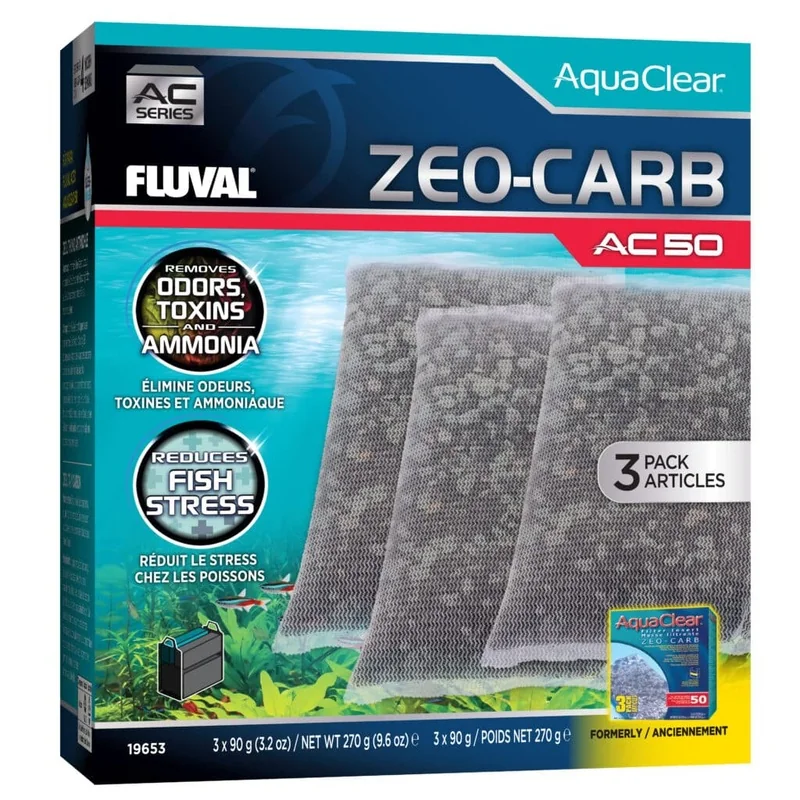
The AquaClear 50 fits the common 30-gallon use case because it leaves you room to tune both the water movement and the media. Start with coarse foam to catch debris, add biological media, and reserve space for polishing media only when you actually need it. The adjustable return helps with fish that dislike a hard waterfall. Keep the water level topped up because evaporation can make a HOB noisier. Fluval’s AquaClear documentation is the place to confirm the current configuration.
Pros: flexible media, adjustable output, easy access. Cons: rear clearance, water-level sensitivity and an exposed motor housing.
Seachem Tidal 55
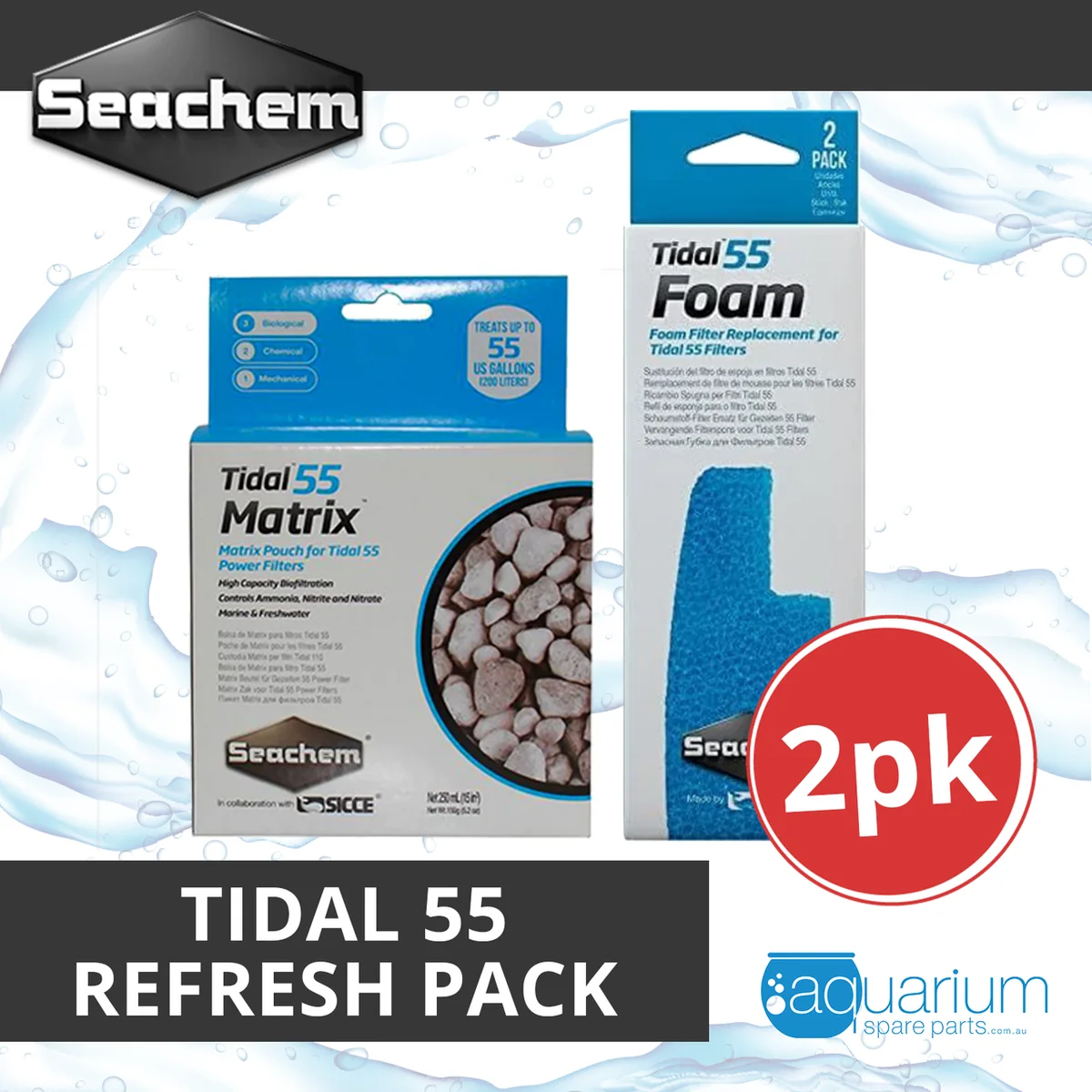
The Tidal 55 suits a 30-gallon tank where simple restarting and visible service access matter. Its basket accepts reusable media, and the surface skimmer can help collect floating film. Its return may feel lively in a shallow or lightly stocked tank. Aim the outlet at the glass, add a pre-filter sponge, or reduce the flow if a betta, shrimp or small schooling fish are being pushed around. Read Seachem’s Tidal information for current specifications.
Pros: self-priming design, accessible basket, surface skimmer. Cons: strong flow for delicate livestock and a noticeable rear footprint.
Marineland Penguin 200
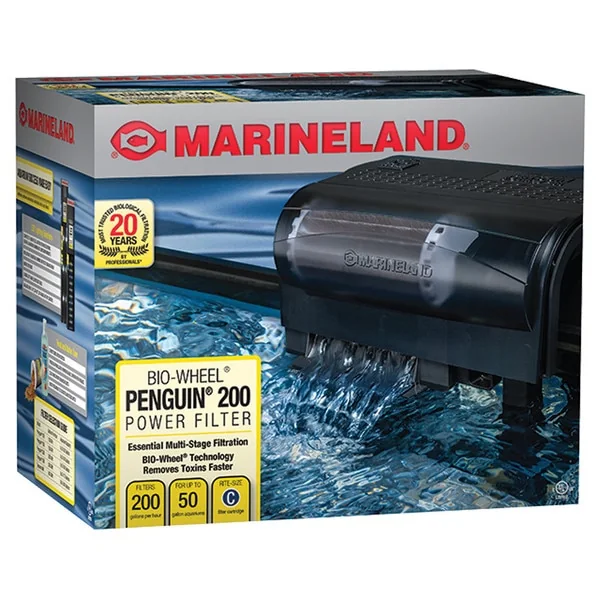
The Penguin 200 is a reasonable choice when you want a familiar HOB and easy-to-find replacement parts. Its bio-wheel format adds a dedicated wet surface, while the cartridge keeps the setup uncomplicated. The tradeoff is less freedom over media order. If you replace cartridges, avoid changing all biological support at once. Rinse mechanical material in removed tank water and follow Marineland’s support information for the current cartridge format.
Pros: simple installation, broad availability, useful surface movement. Cons: recurring cartridge expense and fewer reusable-media options.
Fluval 207 canister filter
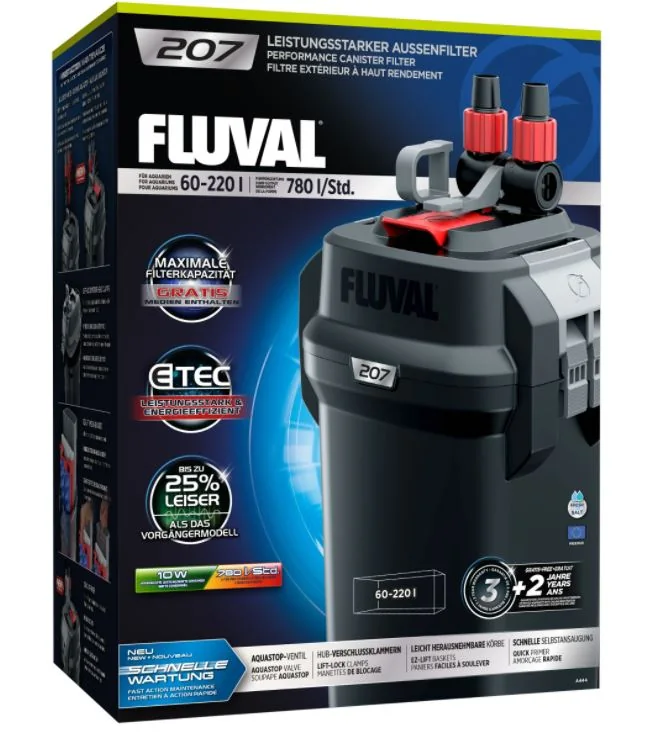
The Fluval 207 is the clean-looking option for a planted 30-gallon display, a bedroom aquarium or any setup where a HOB hanging over the rim would bother you. The canister hides below the tank and gives you staged media and a spray-bar style return. Installation takes more care, and you must check valves, hoses and seals after maintenance. A spray bar can distribute flow without creating one harsh jet. Verify details on Fluval’s 207 product page.
Pros: hidden equipment, staged media, spread-out return. Cons: more involved cleaning and cabinet space.
Penn-Plax Cascade 700
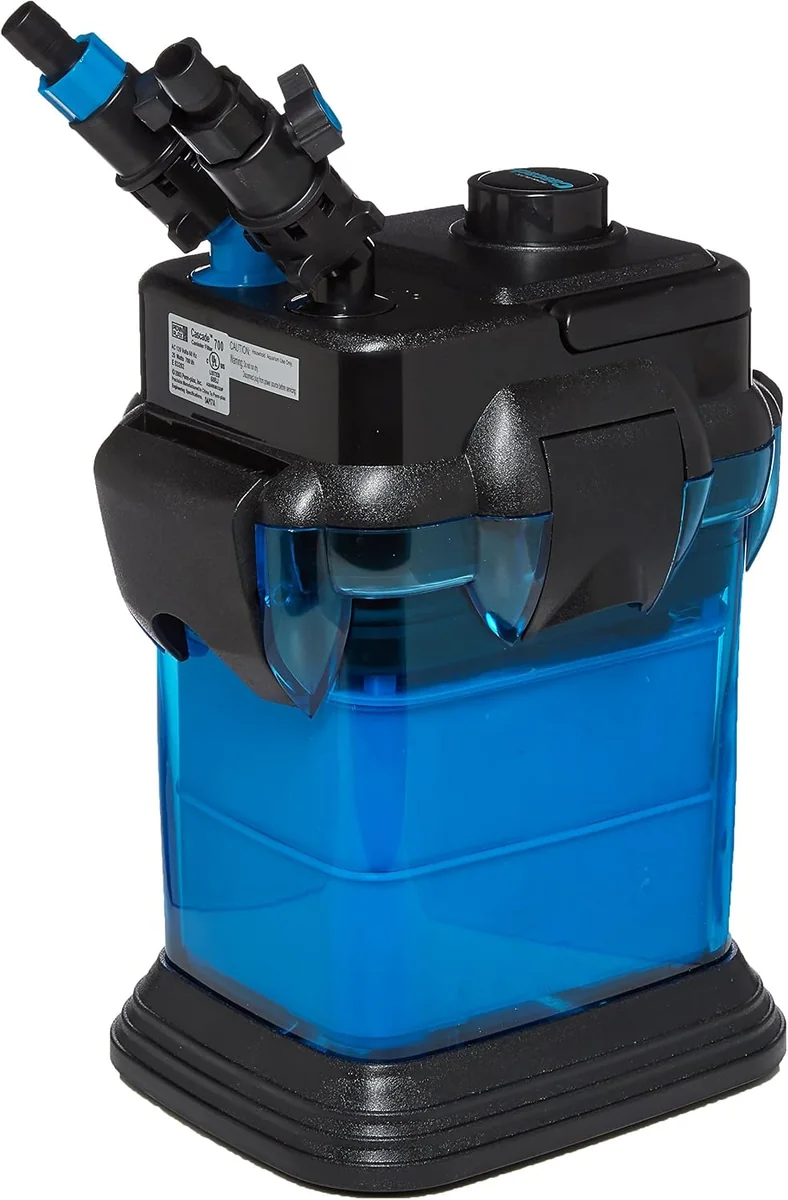
Choose the Cascade 700 when you prefer a canister with several trays and want to set the media order yourself. Put coarse mechanical material first, finer material after it, and biological media where water remains clear of large debris. Do not buy by the tank-rating label alone. Measure cabinet height and hose routing, then consider how often you will lift the canister for cleaning. The Penn-Plax product range helps confirm the current version.
Pros: roomy trays, adaptable media layout and a tidy display. Cons: cabinet footprint, hose clutter and a longer maintenance process.
Aqueon QuietFlow 30
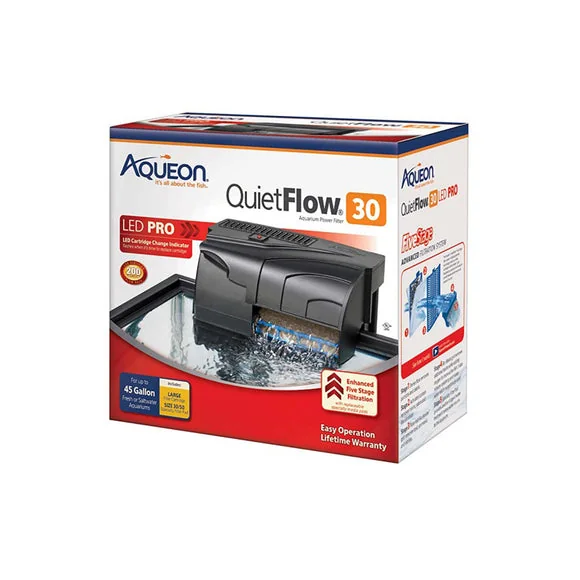
The QuietFlow 30 works for an owner who values a straightforward HOB and local replacement availability. Inspect its mechanical media often because a clogged pad reduces return flow and can change the sound. For a heavily stocked 30-gallon tank, easy access is more useful than a quiet name on the box. The exact included media can vary by package, so check Aqueon’s filter range before ordering.
Pros: accessible design, familiar setup, no cabinet required. Cons: cartridge-led upkeep and less control over the media layout.
Aquarium Co-Op Nano Sponge Filter
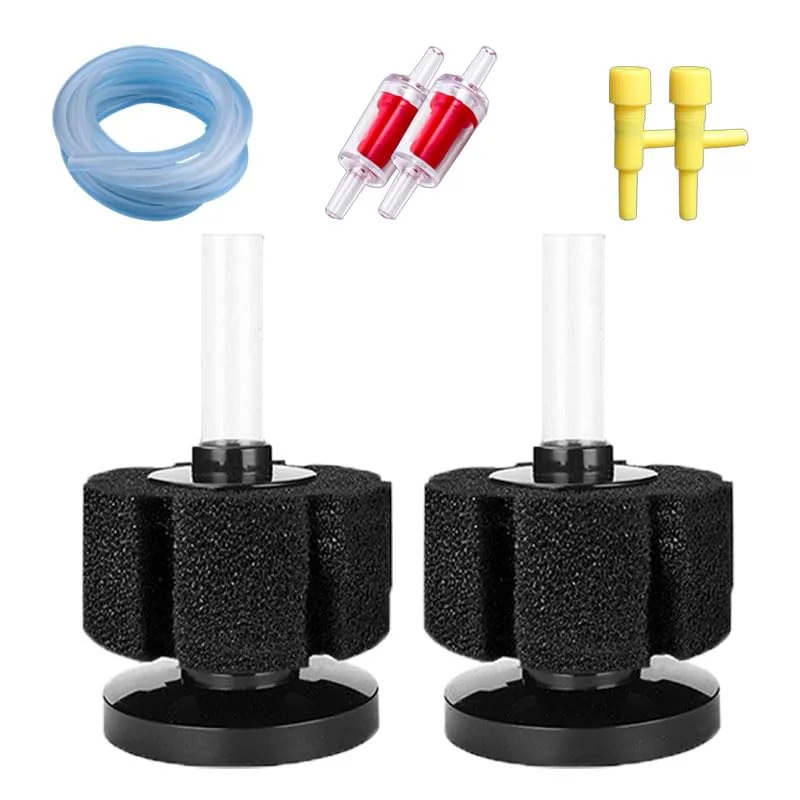
An air-driven sponge filter is the gentlest pick here. It suits shrimp, fry, a betta community with carefully chosen tank mates, or a quarantine tank where strong intake suction would be risky. You need an air pump, airline and check valve, and the sponge takes up visible space inside the aquarium. It does not remove fine particles as quickly as a HOB, but it is easy to rinse in old tank water and supports steady biological filtration. Browse Aquarium Co-Op’s sponge filter guidance for sizing details.
Pros: gentle intake, simple service, useful for small livestock. Cons: visible equipment, air-pump noise and modest polishing.
How to choose a filter for a 30-gallon tank
Start with the livestock and aquascape. A lightly stocked planted tank can prioritize quiet operation and a spread-out return. A tank with goldfish, cichlids or frequent feeding needs more mechanical capacity and a cleaning schedule. Small fish and shrimp need an intake guard, while bettas often need the outlet softened. A filter marketed for a larger tank is not automatically better if its flow cannot be reduced.
Measure the rim before buying a HOB. Check the rear gap, lid cutout and cable route. For a canister, measure inside the stand and leave room to close valves and lift the head. For an air-driven sponge, leave space around the sponge and plan where the pump will sit. Keep the intake away from a dense plant thicket that will clog it, but do not place the return so it blasts one corner.
Nominal gallons-per-hour figures are starting points, not a promise of circulation after media loads up. Look for adjustable output or use a spray bar, outlet baffle or pre-filter sponge. Surface movement helps gas exchange, while excessive turbulence can stress slow fish and drive carbon dioxide out of a planted aquarium. Clean mechanical media when flow drops. Rinse biological media in removed aquarium water, never chlorinated tap water, and unplug equipment before putting hands in the tank.
Frequently asked questions
What size filter do I need for a 30-gallon aquarium?
Choose a model with enough media room for the stocking level and flow you can diffuse or adjust. The printed tank rating is less useful than usable flow after media becomes dirty.
Is a canister filter better than a HOB for 30 gallons?
Neither format wins every setup. A canister keeps the display tidy and offers staged media. A HOB is easier to inspect and clean. Pick the format you will maintain on schedule.
Can a sponge filter handle a 30-gallon tank?
Yes for lightly stocked tanks, shrimp, fry or quarantine use when the sponge is sized appropriately and the air pump is reliable. Heavier stocking may need additional mechanical filtration.
How often should I clean a 30-gallon filter?
Inspect the intake and output weekly. Rinse mechanical media when flow drops or debris builds up. Clean one filter stage at a time and keep biological media wet in removed tank water.
Related guides: best aquarium filter for a 20-gallon tank, best aquarium filter for a 10-gallon tank and best aquarium filter for betta fish.
Sources and methodology
We compared manufacturer information from Fluval, Seachem, Marineland, Penn-Plax, Aqueon and Aquarium Co-Op. Criteria were usable media space, flow control, service access, noise considerations, rear or cabinet fit and suitability for different 30-gallon stocking levels. No hands-on testing was performed. Check live Amazon listings for the current model, price, stock and included accessories.