
Buying guide
Best reef light for soft corals
The right light for soft corals gives you control without making routine care harder.
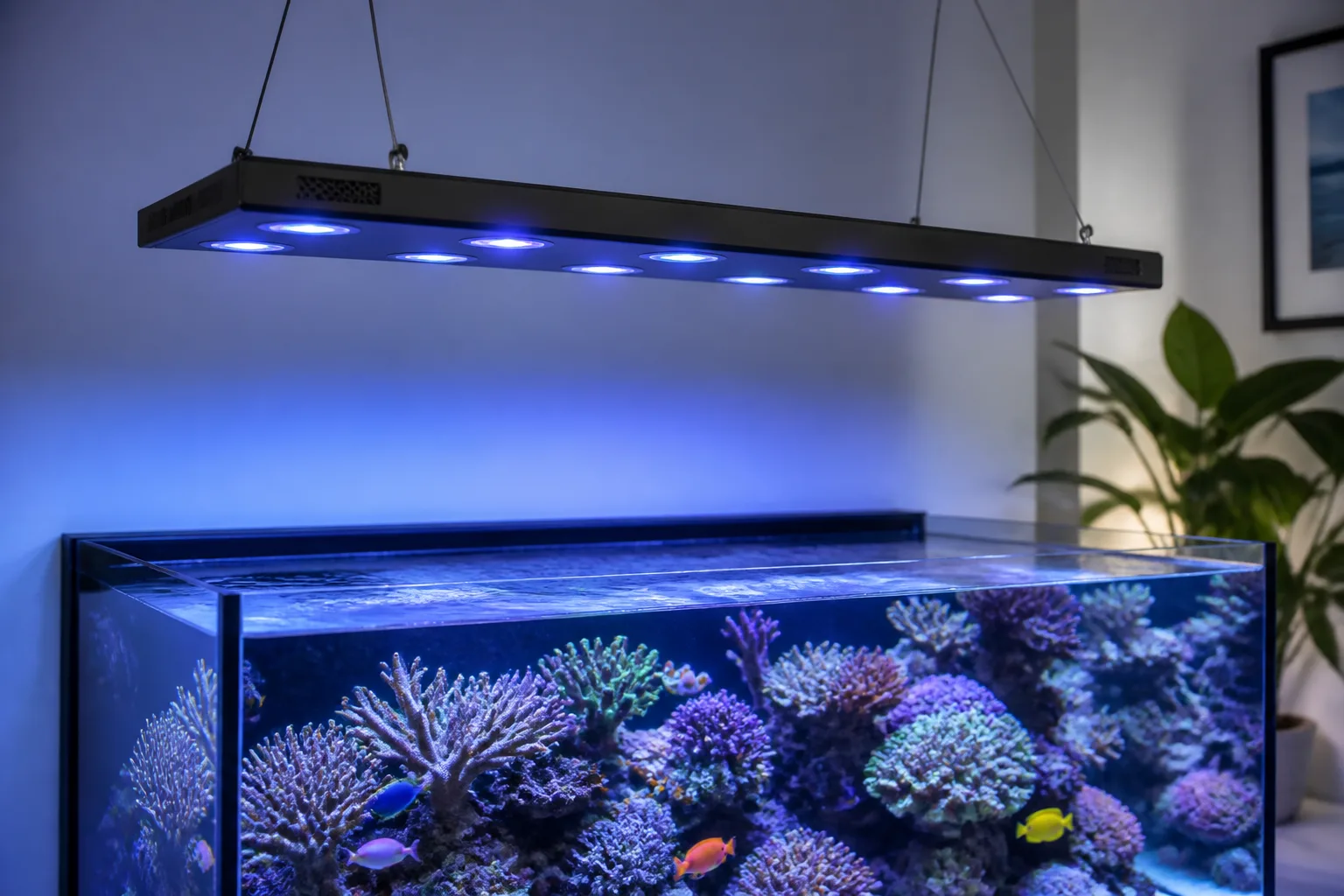
Quick comparison
| Product | Best for | Main drawback |
|---|---|---|
| AI Prime 16HD Reef LED | A small soft-coral island with adjustable output | A focused beam can miss mushrooms at the edges |
| Kessil A80 Tuna Blue | Nano reefs where shimmer and a pendant suit the room | Coverage is limited on wide rockwork |
| Red Sea ReefLED 50 | New keepers who want a guided schedule | Less appealing for a mixed-brand control cabinet |
| Noo-Psyche K7 Pro III | Channel control on a tighter equipment budget | Instructions and support take extra checking |
| NICREW HyperReef LED | Rimmed aquariums needing a low-profile light | The bar may not reach every coral shelf |
| Current USA Orbit Marine IC PRO | Fish and hardy soft corals under a timed routine | Fewer fine adjustments for coral placement |
| Fluval Marine 3.0 LED | Broad coverage over a mixed soft-coral display | Advanced reef layouts may need added light |
This is a research-based guide, not a hands-on test. Mushrooms, zoanthids, leathers, and other soft corals still need a stable schedule, suitable water conditions, and a place where they can expand without shading one another. Confirm the exact model, size, mounting hardware, electrical requirements, and current retailer listing before purchase. No retailer star rating tells you how evenly light reaches each coral.
Our picks
AI Prime 16HD Reef LED
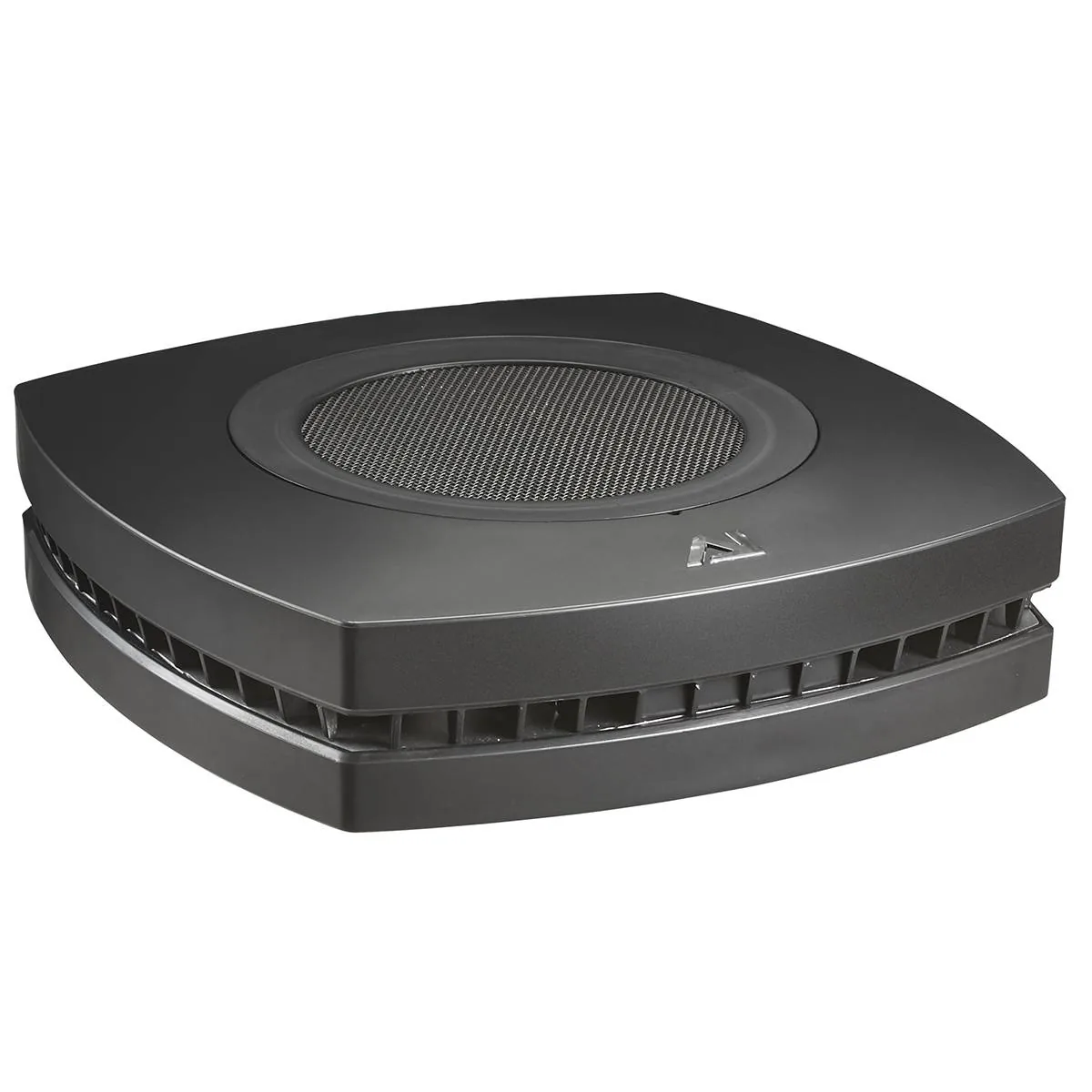 The AI Prime 16HD Reef LED is a good soft-coral choice when a nano tank has one main rock island and you want to tune the day from a phone. A small bracket or hanging mount keeps the fixture clear of the rim and lets you aim the brightest area at zoanthids or a leather placed higher on the rock. Mushrooms can occupy the dimmer perimeter. That arrangement makes the fixture’s focused pattern useful instead of a problem. The cost of that control is planning. A spread-out colony may need repositioning, a second light, or more modest expectations at the corners.
Kessil A80 Tuna Blue
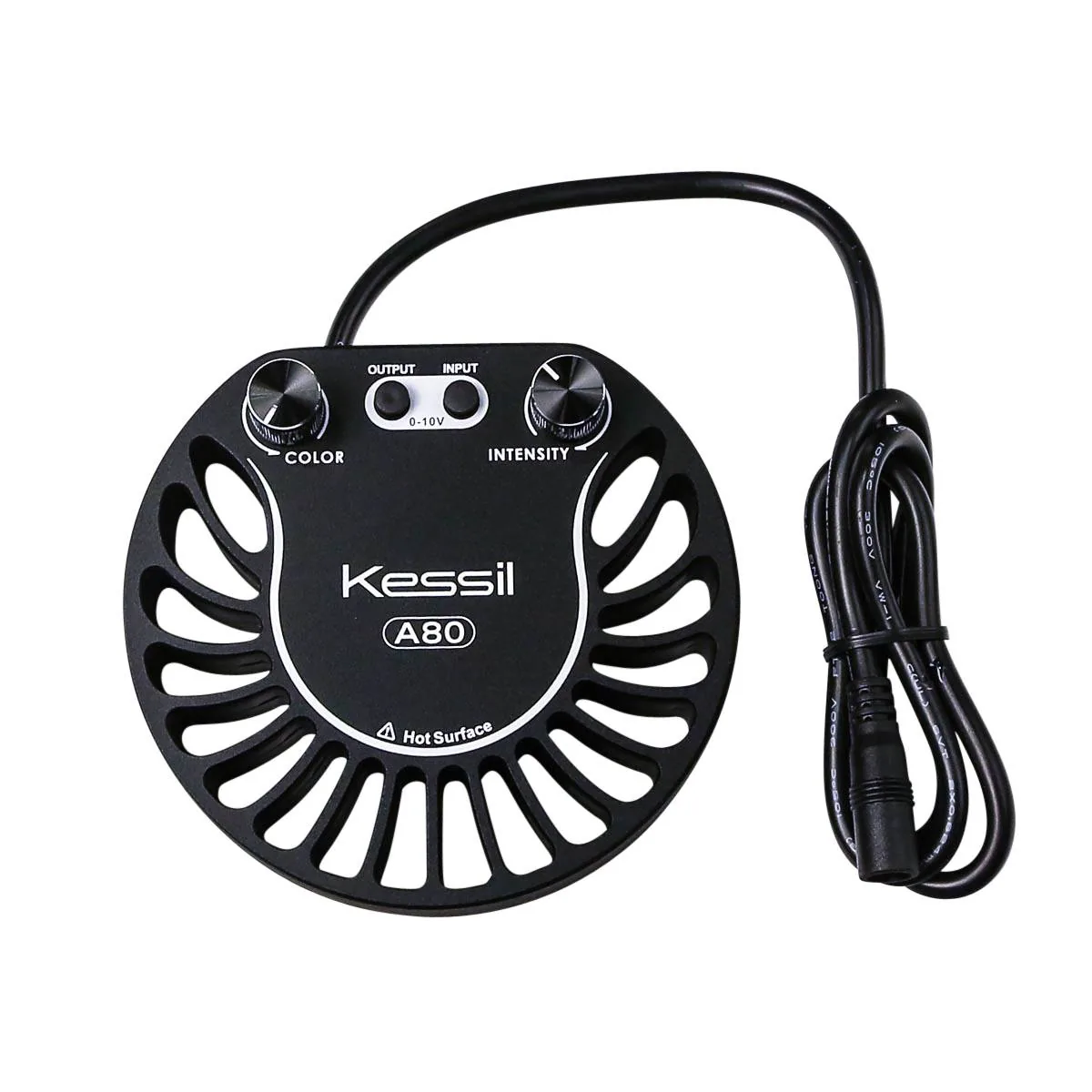 The Kessil A80 Tuna Blue suits a nano reef where the light should feel like a small pendant rather than a panel filling the top. Its simple onboard adjustment is enough for a soft-coral schedule, while optional control equipment can add repeatable timing. Hang or mount it over the central rock, and use the outer shadow for mushrooms that prefer less direct exposure. The open-top format also makes feeding and pruning easy. Its limit is physical reach. The compact source looks neat, but one unit will not illuminate a broad tank evenly, so the aquascape has to stay compact.
Red Sea ReefLED 50
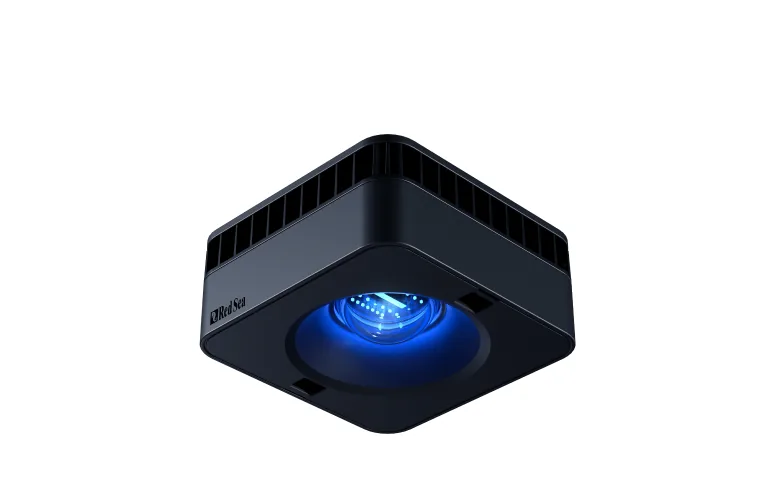 Red Sea ReefLED 50 is aimed at the keeper who wants a clear starting route for a small reef rather than a box of separate controllers. The app manages a daily program, and the arm mount leaves the tank rim open for cleaning and coral placement. That is helpful with leathers and zoanthids, which can respond badly to abrupt changes after a move. Begin with the lower part of the manufacturer’s guidance and keep a darker shelf available for mushrooms. The tradeoff is ecosystem lock-in. The setup is tidy, but it is less convenient if you plan to combine controls and brackets from several brands.
Noo-Psyche K7 Pro III
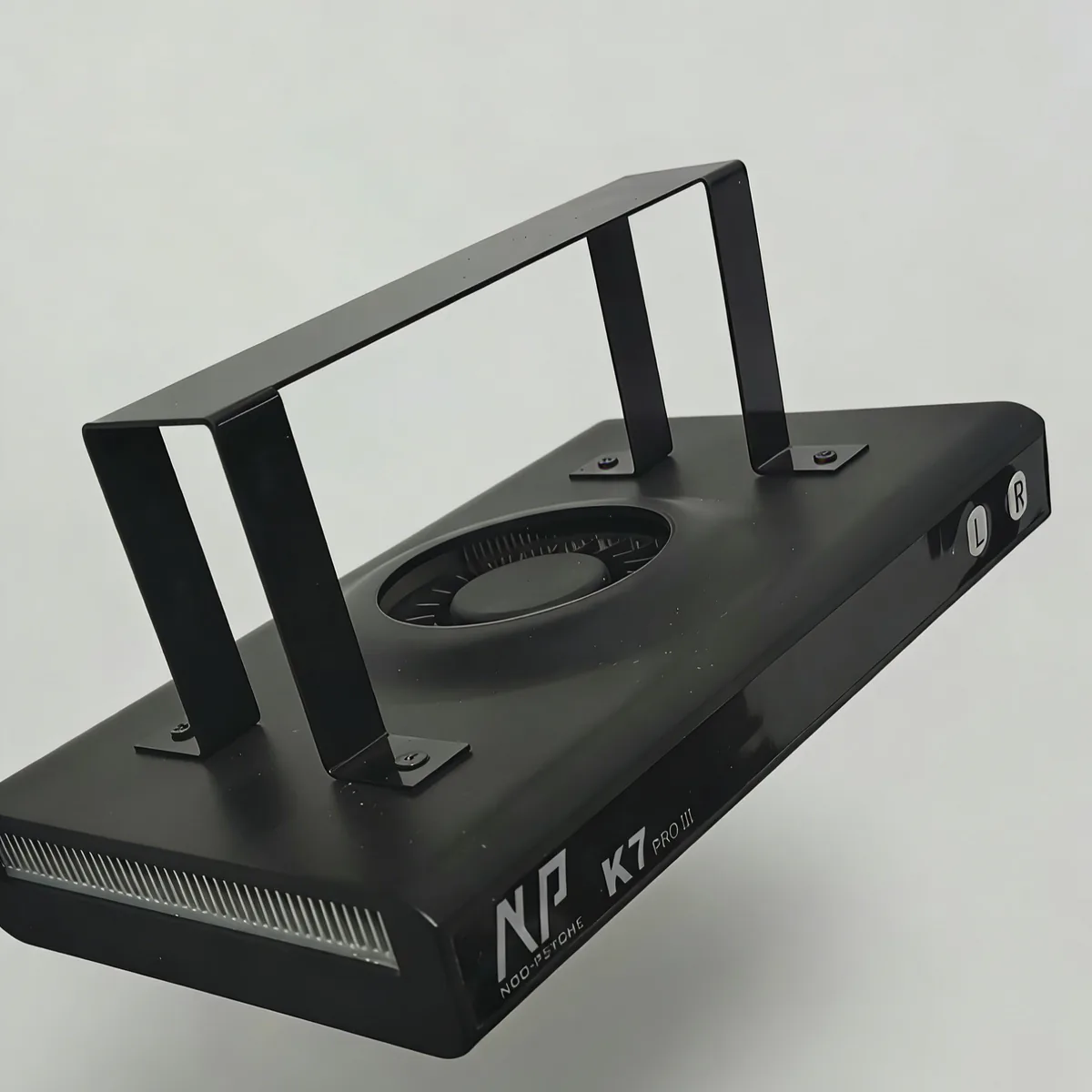 The Noo-Psyche K7 Pro III is for a soft-coral keeper who wants separate channels and is willing to confirm the setup details personally. Its small reef fixture can be hung or attached to a suitable support, giving you room to place the center over a zoanthid shelf and the edge over lower-light mushrooms. A channel-based schedule lets you make small changes instead of replacing the entire lighting pattern. Read the current manual and listing before committing to a controller or mount. The compromise is not coral fit but ownership effort: product-family variations and thinner documentation deserve careful checking.
NICREW HyperReef LED
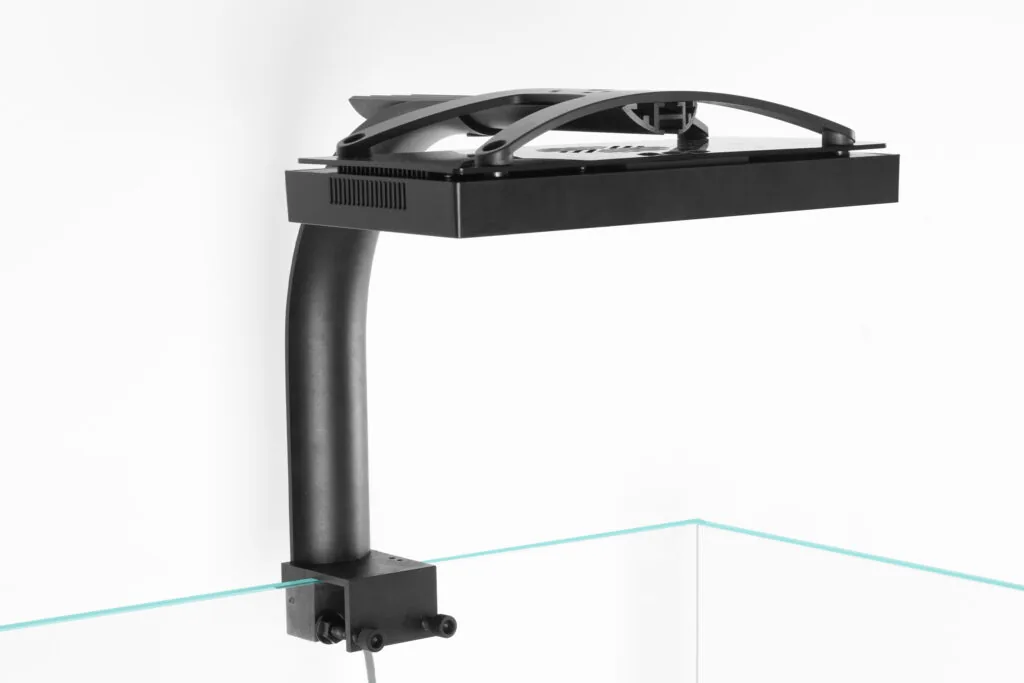 The NICREW HyperReef LED works well when a rimmed aquarium needs a tidy, low-profile light above a soft-coral layout. Its bar shape can leave the lid and feeding opening usable, and it spreads light differently from a single pendant. Put leathers and zoanthids under the more direct portion, with mushrooms on rock shelves that naturally fall away from the center. Check the fixture length, supports, and controller included with the exact listing. This is a practical uncomplicated option, but a tank with several overhangs may expose its weakness. The ends and shaded shelves can require a second source.
Current USA Orbit Marine IC PRO
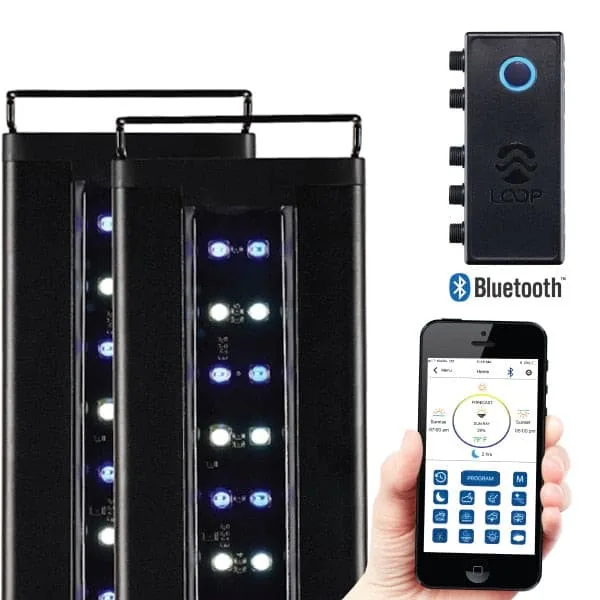 The Current USA Orbit Marine IC PRO fits a fish-led saltwater aquarium where soft corals are part of the display but do not dictate every lighting decision. Its long format can cover a rectangular tank, and the controller makes an unchanging day and evening routine easy to repeat. Place tolerant zoanthids or leathers in the brighter middle and keep the rock edges for mushrooms or resting fish. The mounting legs are convenient when they match the rim. The catch is adjustment depth. You get a friendly schedule, but fewer ways to tune separate coral zones than with a purpose-built reef light.
Fluval Marine 3.0 LED
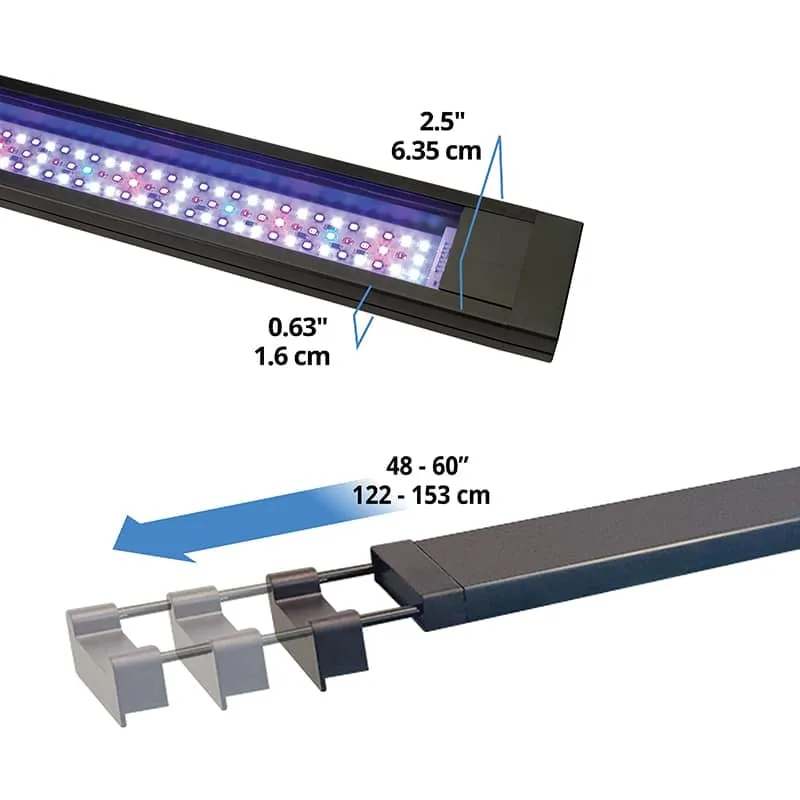 The Fluval Marine 3.0 LED suits a wider soft-coral display where a slim fixture can cover more of the surface than a lone pendant. App scheduling keeps the photoperiod consistent, and the low-profile body works neatly over a rim when its adjustable supports fit. Use the broad middle for zoanthids and leathers, then let rock overhangs provide the lower-light places that mushrooms often appreciate. This is an easy format for a mixed display, but it has a ceiling. If you later add light-hungry species or build a deep, crowded reef, you may need a more specialized fixture or supplemental coverage.
How to choose a reef light for soft corals
Soft corals are forgiving compared with many demanding reef animals, but “forgiving” does not mean any light will do. Start with tank length, water depth, rim and lid clearance, and the shelves where you plan to attach coral. A compact pendant can suit one island. A bar or several fixtures may be better for a long tank with colonies at both ends. Leave a shaded area so a newly moved coral has somewhere less intense to settle.
Control is more useful than a complicated menu. Choose a timer, manual controller, or app that you will set once and check regularly. Keep the schedule stable while you judge expansion, color, and nuisance algae. Raise intensity slowly after a move. If a coral stays closed, first check flow, temperature, salinity, and recent changes. Lowering the light for a while is cheaper and safer than immediately adding equipment.
Mounting and salt protection deserve equal attention. Use a drip loop and keep electrical connections above the outlet. Wipe salt creep from the fixture and supports before it reaches plugs or adjustment controls. Make sure the light can be lifted out without hitting the rockwork. Verify the model’s dimensions and included hardware, since the same product name may cover multiple sizes or revisions.
Frequently asked questions
What light is best for mushrooms and zoanthids?
Choose a reef-capable fixture with controllable intensity and enough spread for their placement. Put mushrooms in a lower-light zone and zoanthids where the schedule can be adjusted without moving the whole rock.
Do soft corals need blue reef lighting?
Blue-heavy viewing is common in reef aquariums, but the useful choice depends on the fixture, coral position, and your ability to keep a stable schedule. Follow the manufacturer’s guidance rather than copying another tank’s settings.
Can soft corals live under a freshwater LED?
Some may survive under general illumination, but a freshwater light may not give the spread or marine control you need. A reef fixture makes the schedule and intensity easier to manage as the tank changes.
Is an app worth having for a soft-coral tank?
It can be worthwhile if you want repeatable ramps and small adjustments from outside the room. It is optional. A dependable timer or manual controller works for a simple setup.
How much light should I start with?
Start conservatively and increase in small steps only after the corals and water parameters remain steady. Mounting height and depth change the result, so avoid treating a single percentage as a universal target.
Recommendation
For a nano soft-coral reef, compare the AI Prime 16HD Reef LED with the Kessil A80 Tuna Blue. The Red Sea ReefLED 50 is easier to follow for a guided setup. Choose the Noo-Psyche when channel control and cost matter more than polished support, and consider the bar-style NICREW or Fluval when your corals occupy a longer surface. Match the spread to the rockwork first, then keep the routine calm and consistent.
Sources and methodology
We consulted product and support information from AI, Kessil, Red Sea, NICREW, Current USA, and Fluval. We compared control methods, fixture shapes, mounting implications, maintenance access, and suitability for soft-coral layouts. Product photos depict the named models or stated variants. No hands-on testing was performed, so verify current specifications and accessories before purchase.