
Buying guide
Best reef light for a nano tank
A nano reef needs a light that can be adjusted and mounted neatly, not a fixture chosen by wattage alone.
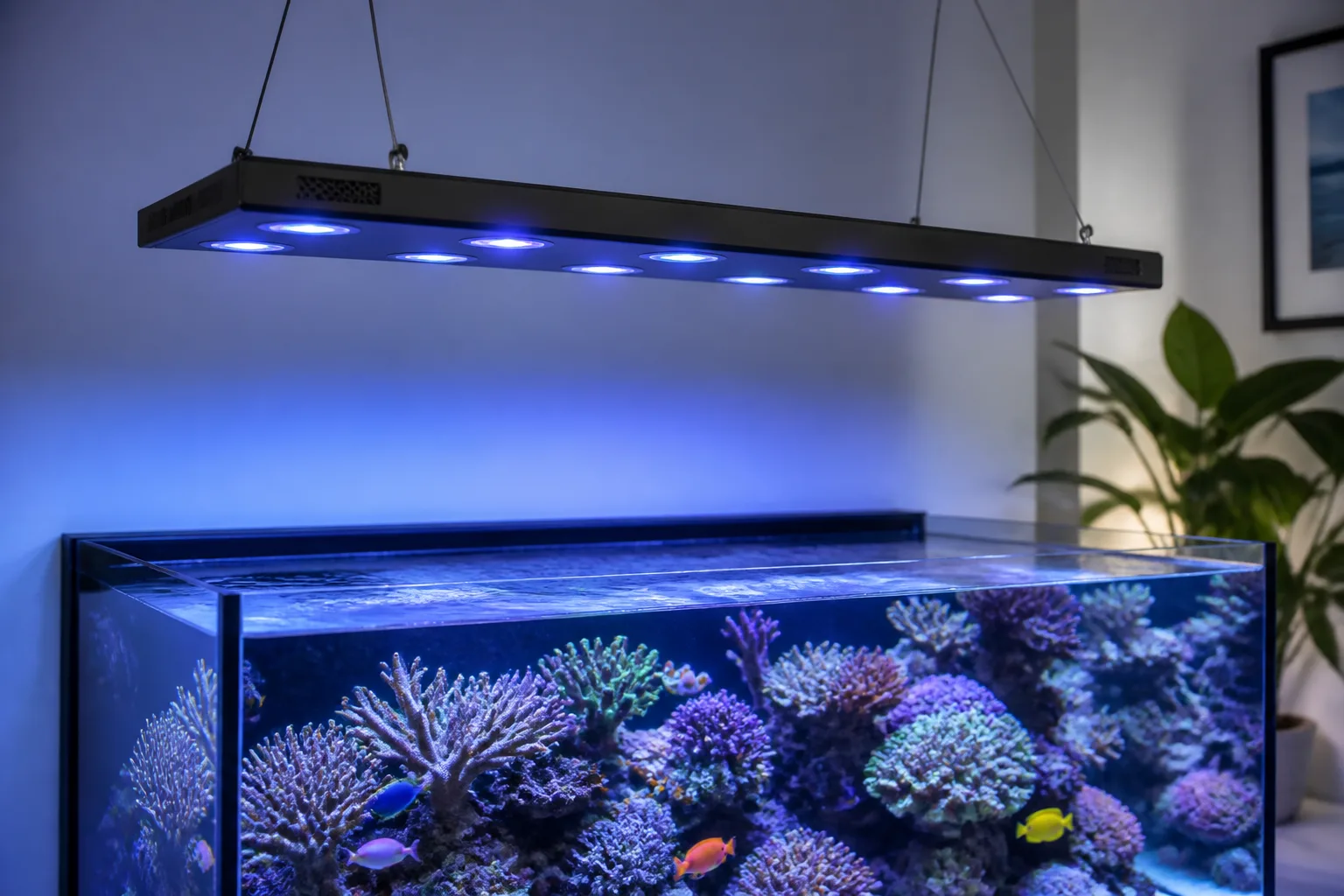
Quick comparison
| Product | Best for | Main drawback |
|---|---|---|
| AI Prime 16HD Reef LED | App control and flexible mounting | Mount is usually an extra purchase |
| Kessil A80 Tuna Blue | Small round fixture over a shallow reef | Coverage needs careful positioning |
| Red Sea ReefLED 50 | Reef-focused setup and guided exposure | Confirm whether the listing is the 50 or G2 60 |
| Noo-Psyche K7 Pro III | Budget LED panel comparison | Documentation and revisions vary |
| NICREW HyperReef LED | Compact bar-style installation | Check length and control kit |
| Current USA Orbit Marine IC PRO | Simple display schedule | Better suited to viewing than demanding coral placement |
| Fluval Marine 3.0 LED | App scheduling on a longer nano | Measure before choosing bar size |
This is a research-based guide, not a hands-on test. A light that suits a 10-gallon cube may be a poor choice over a long shallow aquarium. Check the exact model, revision, dimensions, voltage, mounting hardware, and current retailer listing before ordering. The same brand can sell fixtures with very different output and control systems.
Our picks
AI Prime 16HD Reef LED
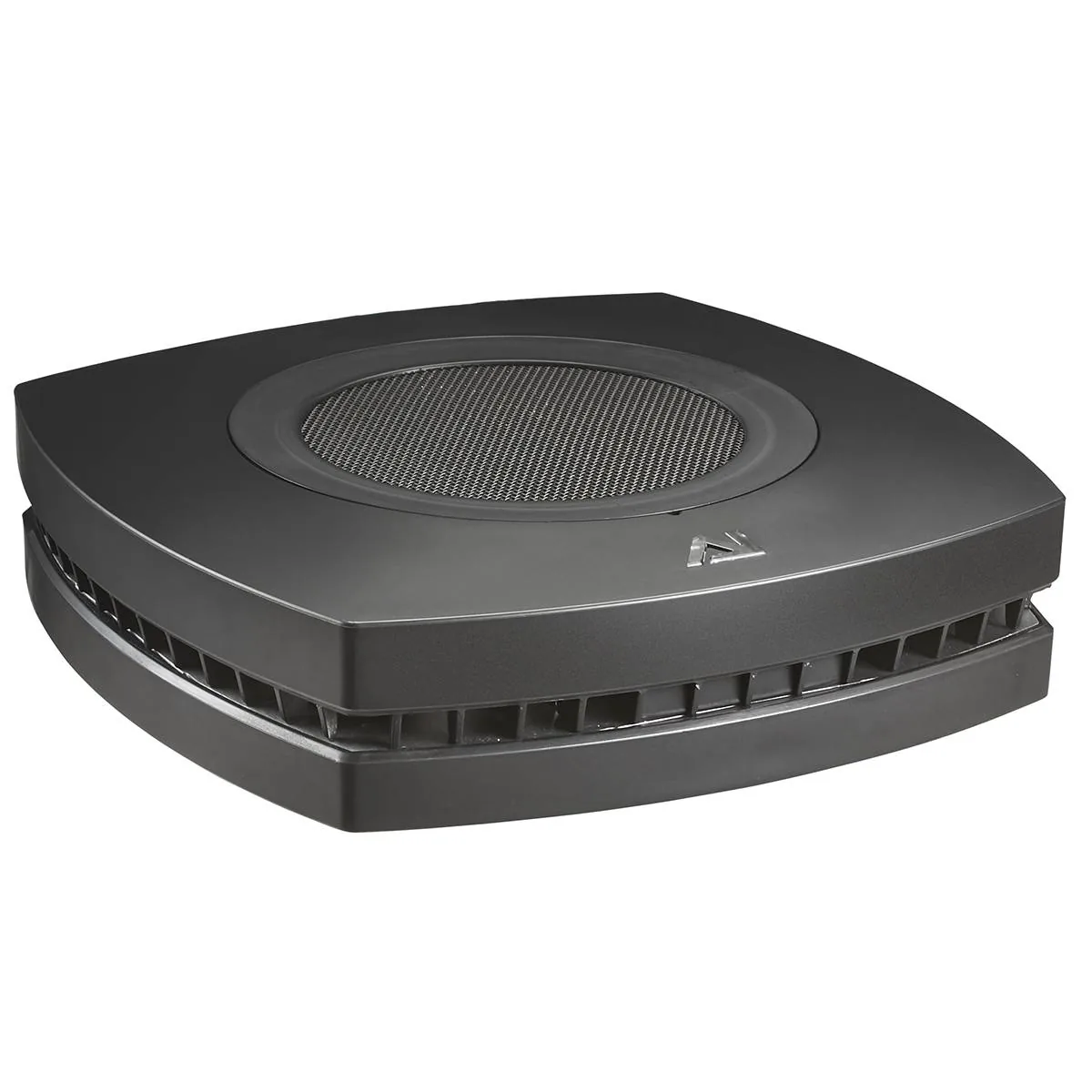 The AI Prime 16HD is the easiest starting point when you want phone scheduling in a compact square body. AquaIllumination describes HD control as moving available power between channels, and its product page lists Mobius control. The maker also sells a tank mount, hanging kit, and silicone-coated flex arm, so a rimmed or rimless nano has several installation paths. The catch is cost and setup complexity once the fixture and mount are separate items. Measure mount clearance first. This is my lead pick for a mixed nano reef where repeatable dimming matters more than the bare fixture price. Pros: flexible mounting; app programming; small footprint. Cons: accessories add cost; one fixture will not suit every depth.
Kessil A80 Tuna Blue
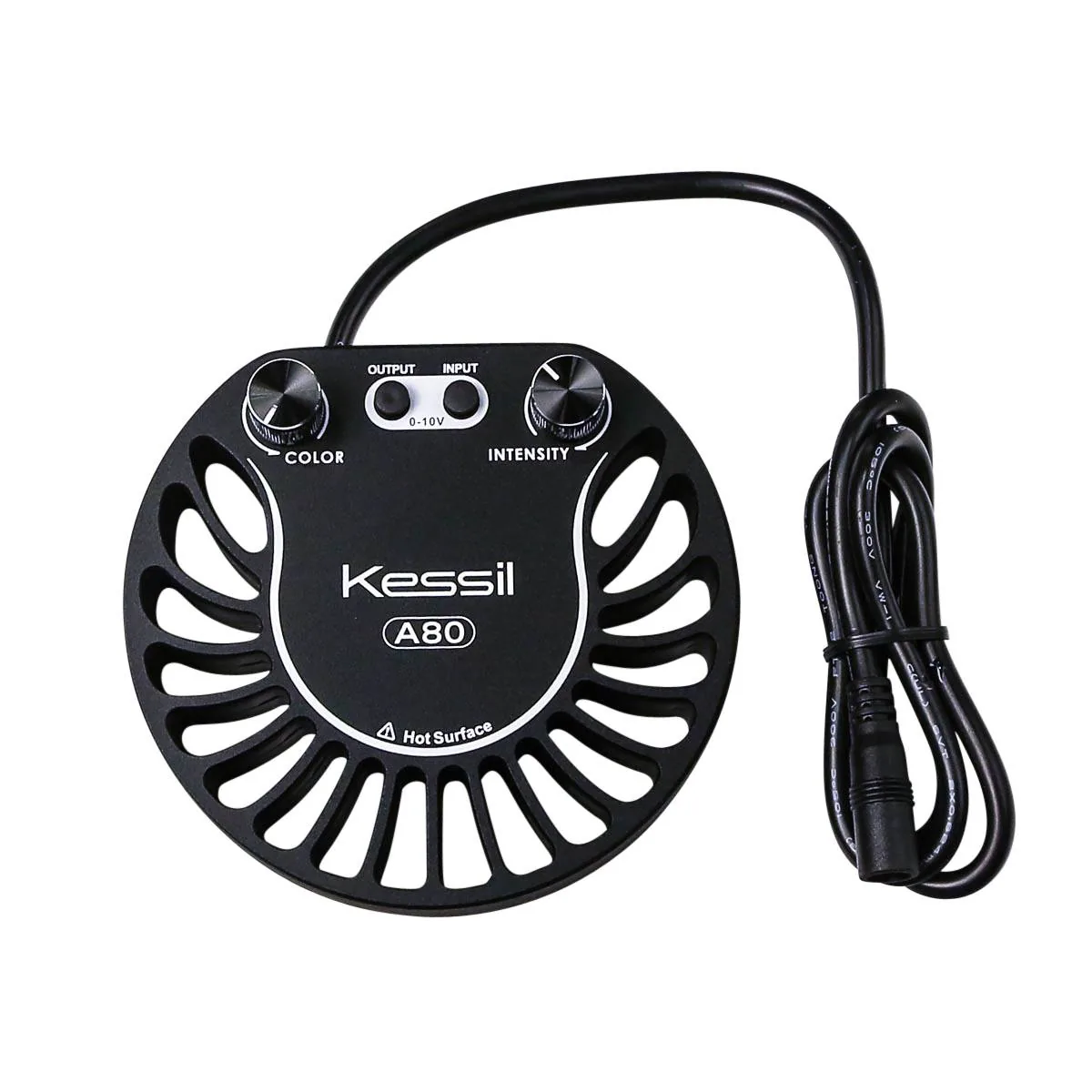 The A80 Tuna Blue makes sense when the tank is shallow and you prefer a small, round fixture above the water instead of a long light bar. That form leaves open space around the rim, which helps on a cube with a hang-on filter or rear chamber. Placement deserves attention. A single point-style fixture can leave the front or corners less useful if it sits too high or too far back. Confirm the current listing’s control and mounting accessories before checkout because the light may not be a complete kit. Pros: tidy round form; open rim; easy to center. Cons: narrow placement tolerance; accessory requirements can be unclear.
Red Sea ReefLED 50
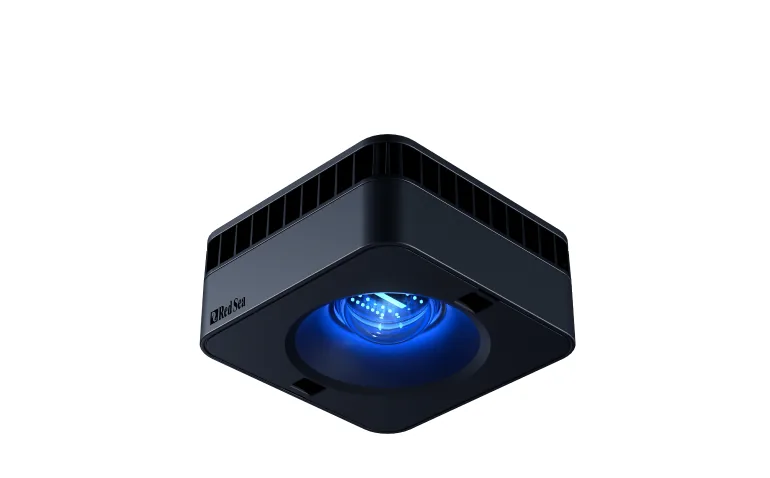 Red Sea’s ReefLED line suits an aquarist who wants reef-focused controls rather than a general white and blue lamp. Red Sea’s current ReefLED G2 page describes app exposure guidance, an anti-glare recessed lens, and a compact LED array. Amazon listings may still label a fixture ReefLED 50 while the current family uses G2 names, so check the model printed in the listing and included mount. The compact housing is attractive over a nano, but an app does not remove the need to acclimate coral slowly. Pros: reef-oriented schedule; recessed lens; clear model family. Cons: model names are easy to mix up; premium ecosystem commitment.
Noo-Psyche K7 Pro III
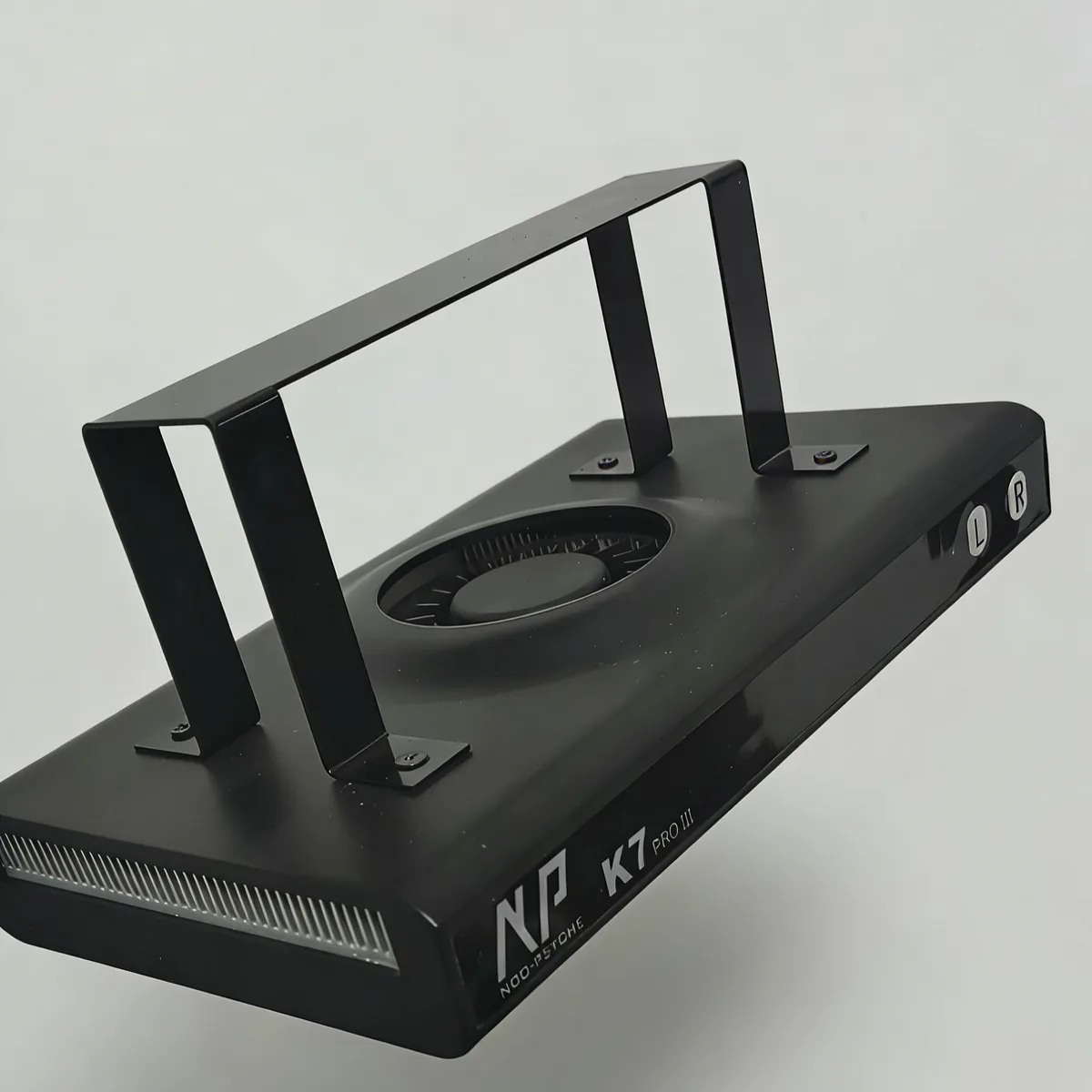 The K7 Pro III belongs on a shortlist when upfront cost matters and you are comfortable checking the seller’s current documentation. A panel can spread light across a nano more evenly than a tiny point source, especially when rockwork runs from front to back. That spread can brighten the room, so a shade or sensible mounting height may help. Treat the name as a model identifier, not a promise that every listing has identical controls or brackets. Read the current manual and confirm whether the package includes controller or arm. Pros: panel shape; budget comparison point; useful for a wider nano. Cons: revisions differ; support and instructions may be less consistent.
NICREW HyperReef LED
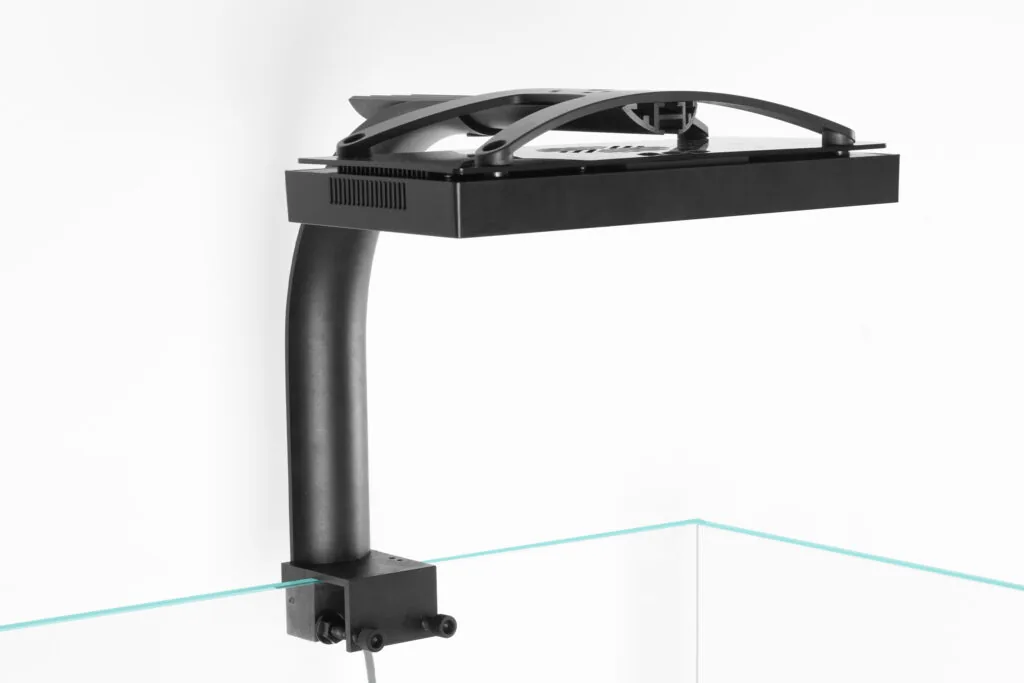 HyperReef is worth considering when a bar-style body matches the tank length and you want light distributed along the aquarium instead of concentrated at one point. That shape can work well with a long nano that has coral on both sides of the centerline. Check the exact bar length, brackets, and controller in the listing. A longer fixture over a tiny cube wastes space and may complicate the lid. This is a practical choice for a simple layout, with the warning that product photos do not establish intensity at your rockwork. Pros: lengthwise coverage; straightforward layout; compact profile. Cons: size must match the tank; control package varies.
Current USA Orbit Marine IC PRO
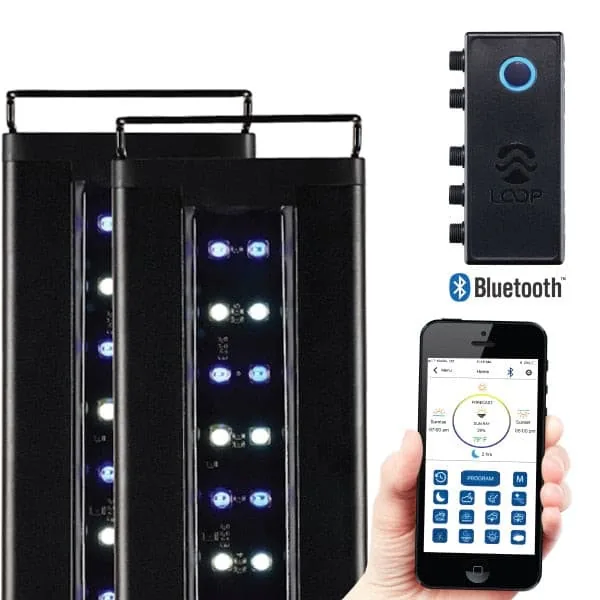 The Orbit Marine IC PRO fits a nano display where timed color changes and a clean daytime viewing schedule matter most. Its bar can sit across a rectangular tank, and alignment is easier than with a single puck when the layout runs front to back. I would reserve it for soft-coral plans unless the exact model documentation supports the intensity your livestock needs. Check mounting legs and available length, then leave room to remove the light during maintenance. Pros: display-friendly bar; simple schedule; easy alignment. Cons: may not suit demanding coral placement; length and controls need checking.
Fluval Marine 3.0 LED
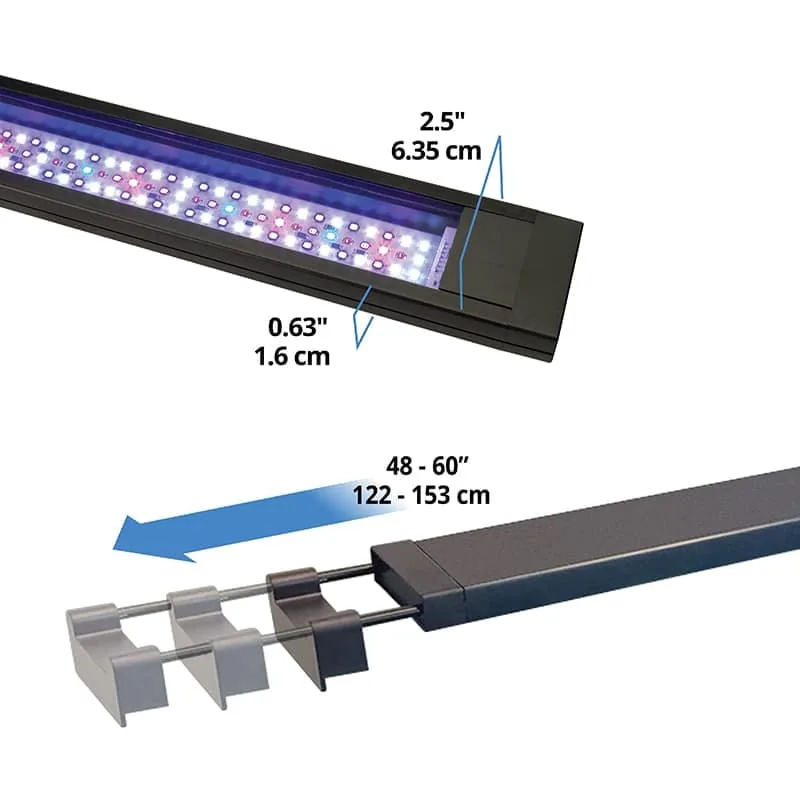 Fluval’s Marine 3.0 is a useful comparison when you want a familiar light-bar format with programmable timing and a tank longer than it is deep. Measure inside length and rim before choosing a size. A bar that overhangs the glass can interfere with a lid, while one that is too short leaves the ends dimmer. Use the app schedule only if you will keep it consistent, and start at a restrained setting while coral acclimates. Pros: bar format; useful for rectangular nanos; programmable routine. Cons: several sizes exist; a bar is awkward over a cube.
How to choose a reef light for a nano tank
Measure length, width, water depth, rim width, and distance from the water to the cabinet. A cube usually favors a centered puck or compact panel. A long shallow nano may benefit from a bar. Lids and rear filtration chambers can rule out a mount that looks fine in a product photo.
Choose controls you will use. App scheduling helps with gradual sunrise and repeatable changes. A simple controller is easier to troubleshoot. Start below maximum, keep a shaded area in the rockwork, and change one lighting variable at a time. Watch livestock and nuisance algae instead of treating advertised wattage as a target.
Keep the power supply dry with a drip loop. Salt spray can corrode plugs and connectors, so wipe salt creep during maintenance. Leave enough access to remove the fixture without putting wet hands near powered equipment.
Frequently asked questions
What is the best reef light for a nano tank?
The best match depends on tank shape and livestock. The AI Prime 16HD is the most flexible first comparison for app control and mounting. A bar such as the Fluval Marine 3.0 suits a longer shallow tank. Verify coverage before ordering.
Does a nano reef need a controllable light?
Control helps with repeatable schedules and gentle acclimation. It does not replace correct placement or a livestock plan. A timer can work for a simple setup if the light supports the needed output.
Is one light enough for a nano reef?
One fixture can be enough for a small tank, but coverage changes with depth, rockwork, and height. Avoid placing coral at an edge until you understand the light’s spread.
Should a reef light sit directly on the lid?
Follow the maker’s instructions. A lid may block light, trap heat, or leave too little clearance for a safe mount. Keep connections above splash level and make the fixture removable for cleaning.
How should I acclimate coral to a new light?
Begin with lower intensity or a shorter schedule, then make gradual changes while observing coral and water parameters. Do not change intensity, spectrum, and photoperiod together.
Recommendation
Start with the AI Prime 16HD if your nano has a rim or rimless mount point and you value adjustable scheduling. Pick a bar for a longer tank, and choose a compact puck only after checking edge coverage. The right fixture is one you can mount safely, adjust patiently, and service without splashing its power connections.
Sources and methodology
We checked manufacturer material from AquaIllumination, Kessil, Red Sea, NICREW, Current USA, and Fluval. AquaIllumination documents Prime control and mounting options. Red Sea documents ReefLED G2 control and lens design. We compared control, body form, mounting, nano-tank fit, and setup tradeoffs. Product photos depict the named models or stated variants. No hands-on testing was performed.