
Buying guide
Best Canister Filter for a Turtle Tank: 7 Strong Options
Turtles produce more waste than most community fish, so a useful filter needs oversized mechanical media, safe intake protection and easy cleaning.
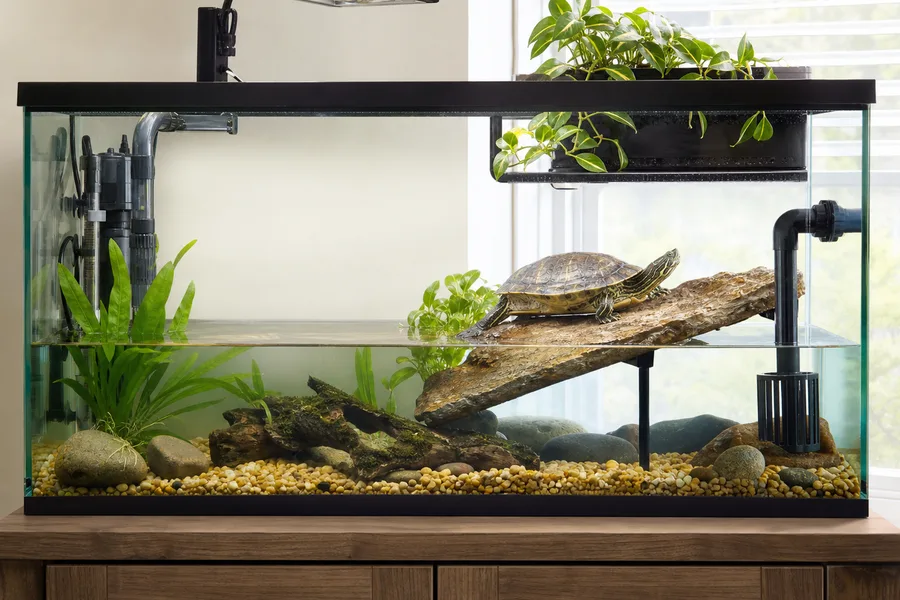
Turtles are messy eaters. Their waste load can clog a fine sponge long before a canister’s advertised tank rating looks excessive. For that reason, the best canister filter for a turtle tank is usually the model with generous mechanical capacity, a protected intake and a service routine you will actually follow. A large pump alone does not solve dirty water. This is a specification-based guide, not a hands-on test. Confirm the current model, voltage, hose size and included media before ordering.
Quick comparison
| Product | Best for | Main advantage | Main drawback |
|---|---|---|---|
| Fluval 407 Performance Canister Filter | Large turtle displays | Flexible multi-stage media | Takes cabinet space |
| Fluval FX6 Canister Filter | Heavy waste loads | Very large media volume | Strong flow and high cost |
| EHEIM Classic 600 2217 | Quiet, simple setups | Proven simple canister layout | Less convenient servicing |
| OASE BioMaster 600 | Frequent pre-filter cleaning | Removable pre-filter design | Premium price |
| Penn-Plax Cascade 1500 | Budget media capacity | Several roomy baskets | Bulky hoses |
| SunSun HW-304B Canister Filter | Large tanks on a budget | High nominal capacity | Support and parts vary |
| EHEIM Professionel 4+ 600 | Refined maintenance | Thoughtful media and flow design | Expensive replacement parts |
Best overall: Fluval 407
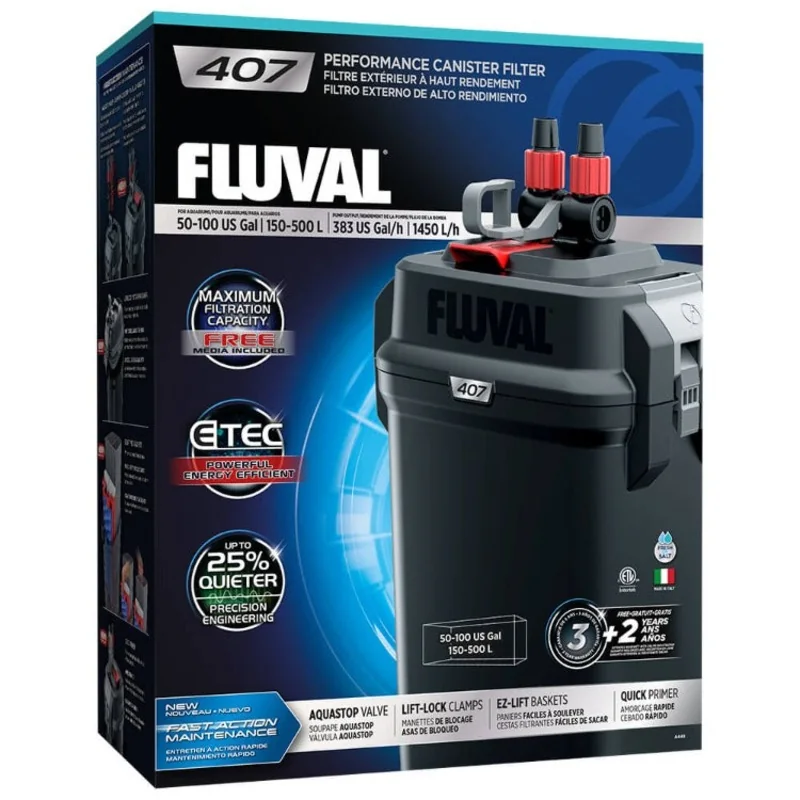
The Fluval 407 is a balanced choice for a medium or large turtle setup where you want separate mechanical and biological stages. Its media baskets let you put coarse foam first, then finer mechanical material, without making the whole system depend on disposable cartridges. Use a coarse intake guard because turtle food and plant debris can still block the strainer. Pros: adaptable baskets; broad availability; manageable footprint. Cons: hose routing needs planning; flow falls as media loads. Fluval’s 407 product information is the place to verify current media and capacity.
Fluval FX6
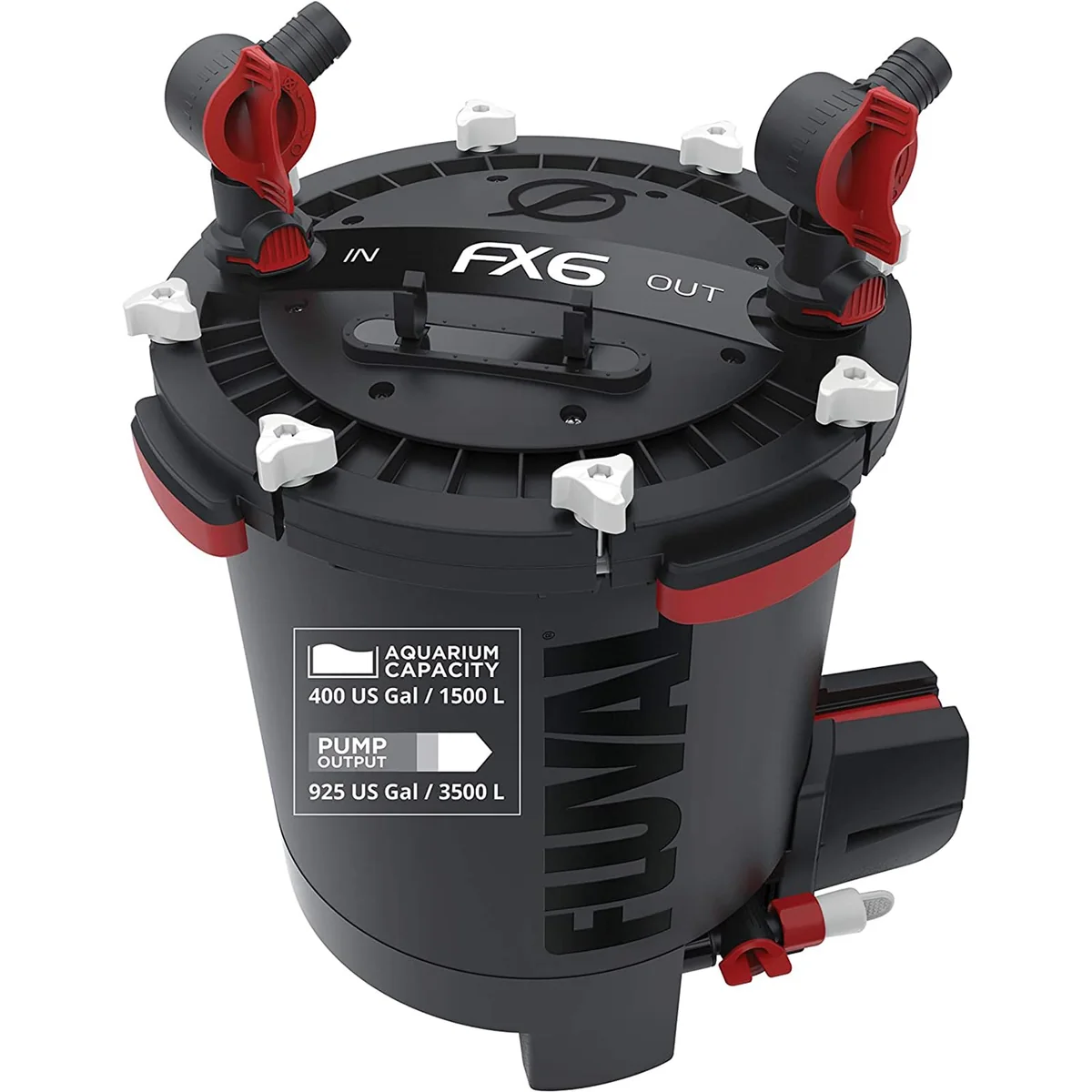
The FX6 makes sense when a large turtle, deep water column or high feeding rate creates a serious waste problem. Its large body gives you room for coarse and fine mechanical stages before biological media. That capacity is useful only if the cabinet can support it and you can lift the canister out for service. Reduce or diffuse the return if the turtle struggles against the current. Pros: substantial media room; suited to high bioloads; convenient drain design. Cons: expensive; heavy when full; oversized for small setups. Read Fluval’s FX6 documentation for clearance and maintenance requirements.
EHEIM Classic 600 2217
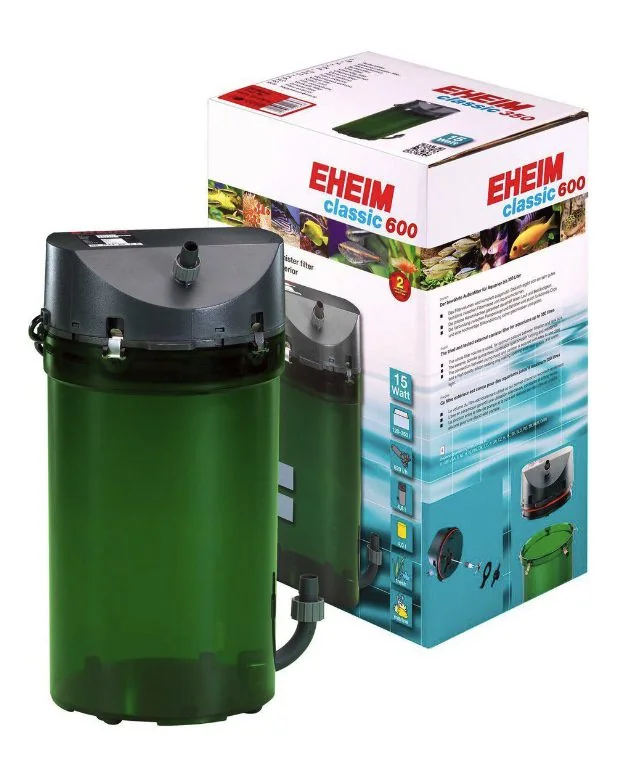
The Classic 600 is appealing when you prefer a plain canister with few controls to fail. Its simple format can hold plenty of media for a turtle aquarium, but you will need to plan the media order and service steps yourself. Place coarse foam where it catches food and plant fragments, then use finer material only after that stage. Pros: straightforward design; flexible media choice; quiet when installed well. Cons: no quick pre-filter shortcut; priming and hose service take more care. EHEIM’s Classic range documentation covers the current configuration.
OASE BioMaster 600
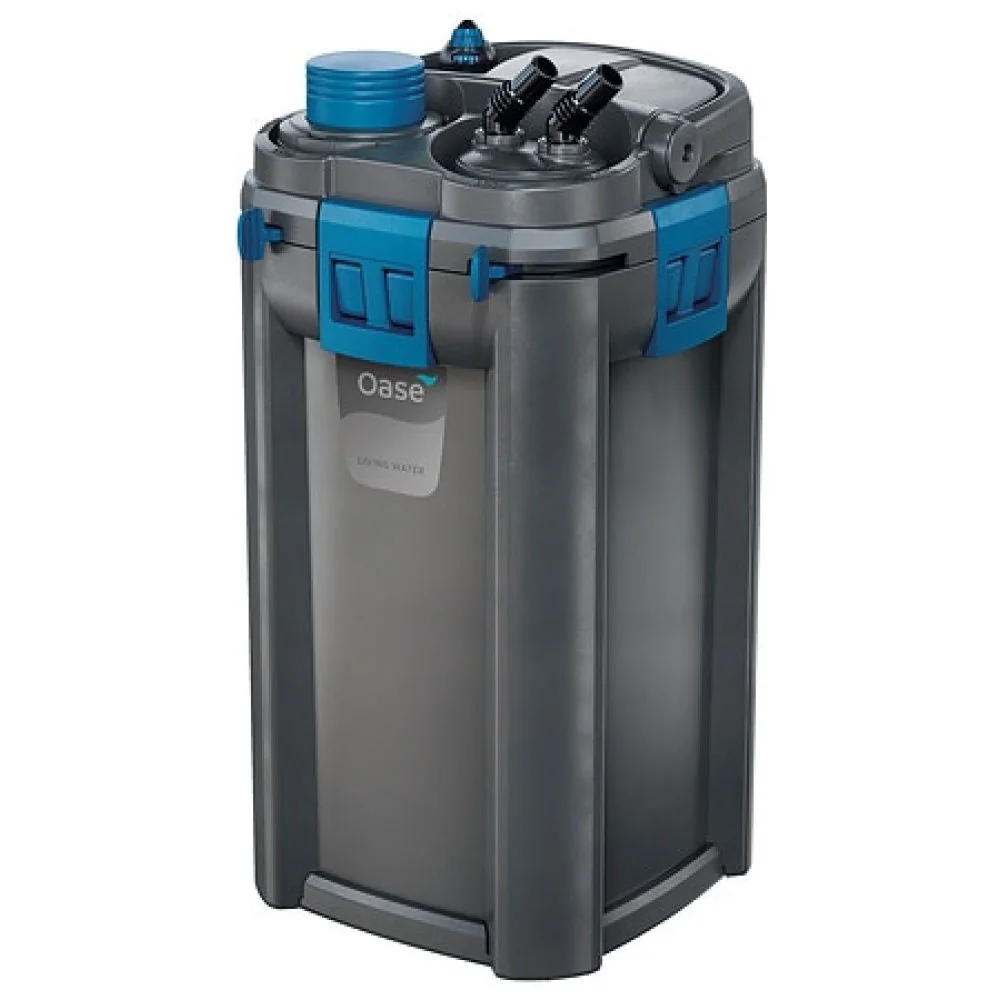
The BioMaster’s removable pre-filter is its strongest match for turtle keeping. You can remove the dirtiest mechanical section more often without disturbing every biological basket. That matters when uneaten pellets and shell fragments reach the intake. Check the exact 600 version, because OASE sells several sizes and regional variants. Pros: service-friendly pre-filter; roomy media stages; tidy cabinet installation. Cons: premium purchase price; replacement media costs more. OASE’s BioMaster information explains the filter family and service layout.
Penn-Plax Cascade 1500
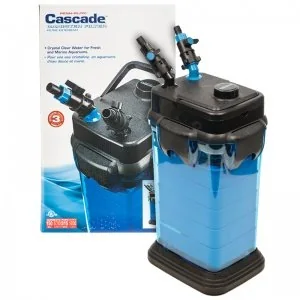
The Cascade 1500 offers a lot of basket space for owners who want to build a turtle-specific media stack. Start with coarse foam and reserve the final stage for finer polishing material. Do not pack every basket tightly, since restricted flow can make a nominally powerful filter disappointing. Pros: generous baskets; flexible media; often priced below premium rivals. Cons: bulky cabinet footprint; hose connections need checking; parts availability can depend on region. Verify current dimensions and contents on Penn-Plax’s product site.
SunSun HW-304B
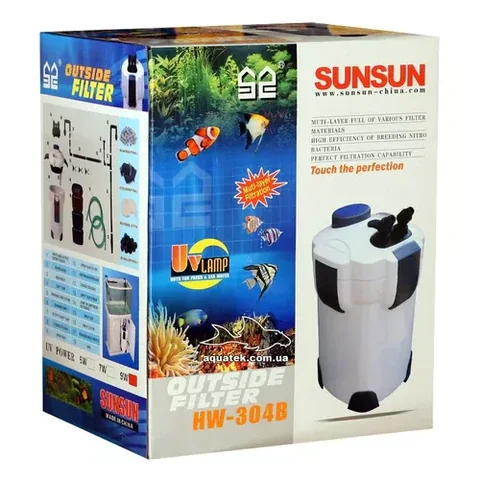
The HW-304B is a budget-oriented option for a keeper willing to inspect fittings and source replacement parts before installation. Its multiple stages can be arranged around high mechanical demand, but published flow figures are not the same as flow through dirty media and tubing. Add a secure intake guard and test every connection outside the stand before trusting it near flooring. Pros: low entry cost; multiple media chambers; useful for large volumes. Cons: quality consistency varies; documentation can be less clear. Confirm the seller, current revision and return policy before buying.
EHEIM Professionel 4+ 600
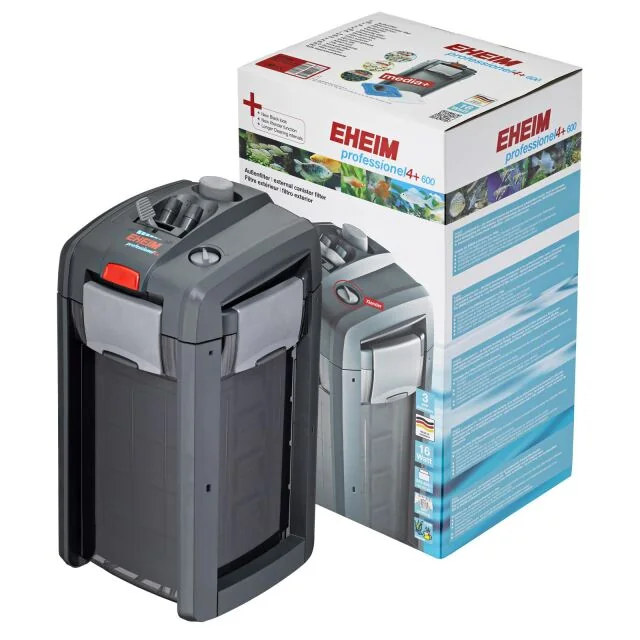
The Professionel 4+ 600 suits a large turtle display where controlled flow and repeatable service matter more than the lowest price. Its media layout and bypass-oriented design are intended to keep flow useful as debris accumulates, although no filter can avoid cleaning. Pros: polished service design; adjustable flow; large media capacity. Cons: premium price; proprietary parts deserve a cost check. Use EHEIM’s Professionel 4+ documentation to check the exact regional model.
How to size a turtle-tank canister filter
Treat the filter rating as a starting point, not a promise. Calculate actual water volume after accounting for gravel, décor, a basking platform and a lower fill line. A 100-gallon tank may contain far less water than its label suggests. Then consider the turtle’s size, feeding habits and how often it enters the water. A dirty turtle setup benefits from oversized mechanical media and a serviceable intake guard more than from an impressive empty-pump flow number.
Use a coarse sponge at the intake to catch large debris without starving the pump. Fine polishing pads belong after coarse media and should be easy to remove. Keep biological media wet in old tank water during service, and never rinse it under chlorinated tap water. Leave room above the canister to disconnect hoses. Put a tray or leak sensor under the unit if the cabinet is indoors. Return flow should circulate the tank without creating a constant treadmill for the turtle. A spray bar or diffuser can spread the current. Some keepers also use a second, smaller filter for redundancy, but two filters still need two maintenance routines.
Frequently asked questions
Do turtle tanks need a canister filter?
Not always, but a canister is useful when you need hidden equipment, generous media volume and a long intake path. A large hang-on-back filter can work when its mechanical media is easy to service.
Should a turtle filter be oversized?
Usually yes, within reason. Extra media capacity gives waste somewhere to collect, but the return must be diffused if it creates stressful current. Oversizing does not replace water changes.
How often should I clean the filter?
Inspect the intake and coarse sponge weekly at first. Clean when flow drops or debris builds up, then adjust the interval to your turtle’s feeding and waste pattern.
Can I use a fish-tank canister filter for a turtle?
Yes, if its usable capacity, intake protection and service access match the turtle’s actual water volume and waste load. Avoid relying on the tank-size label alone.
Related guides: best aquarium filter for a 20-gallon tank and best aquarium filter for goldfish.
Sources and methodology
We compared manufacturer information from Fluval, EHEIM, OASE and Penn-Plax, then evaluated each format against turtle-specific needs: coarse mechanical capacity, intake safety, real-world service access, flow control and cabinet fit. No hands-on testing was performed. Amazon links are tagged search links so readers can verify the current model and regional availability.