
Buying guide
Best battery air pump for aquarium power outages
For an outage, choose a pump you can power today, connect to an air stone or sponge filter, and test before the lights go out.
Quick comparison
| Product | Best for | Main drawback |
|---|---|---|
| Pawfly Battery Backup Air Pump | Automatic mains backup | Check battery and hose fit |
| Aquatop BREZA Battery Backup Air Pump | Familiar emergency setup | Battery runtime depends on cells |
| Marina Battery-Operated Air Pump | Portable battery kit | No rechargeable pack |
| Penn-Plax B11 Battery Operated Air Pump | Small emergency tanks | Output is for modest setups |
| Hygger USB Nano Aquarium Air Pump | USB power banks | Needs a separate power source |
| NICREW Nano Silent Aquarium Air Pump | Quiet portable aeration | USB cable adds another connection |
| AQQA Rechargeable Aquarium Air Pump | Ready-to-grab backup | Must be charged after use |
This is a research-based guide, not a hands-on test. Product names and features can vary by package and market, so check the current listing before buying. Keep the pump above the aquarium, add a check valve, and test the complete air line with the filter or stone you intend to use.
Our picks
Pawfly Battery Backup Air Pump
 Pawfly’s battery-backup format suits aquarists who want an emergency unit connected before an outage. The mains lead can handle normal operation while the battery side takes over when power disappears, so you are not standing beside the tank during a storm. It works best with a low-resistance air stone or an air-driven sponge filter. The weak point is preparation. You still need the right cells, tubing, and check valve, and a tired battery can make an automatic switchover less useful. Pros: automatic backup design; simple outage routine. Cons: verify the exact model and keep replacement batteries available.
Aquatop BREZA Battery Backup Air Pump
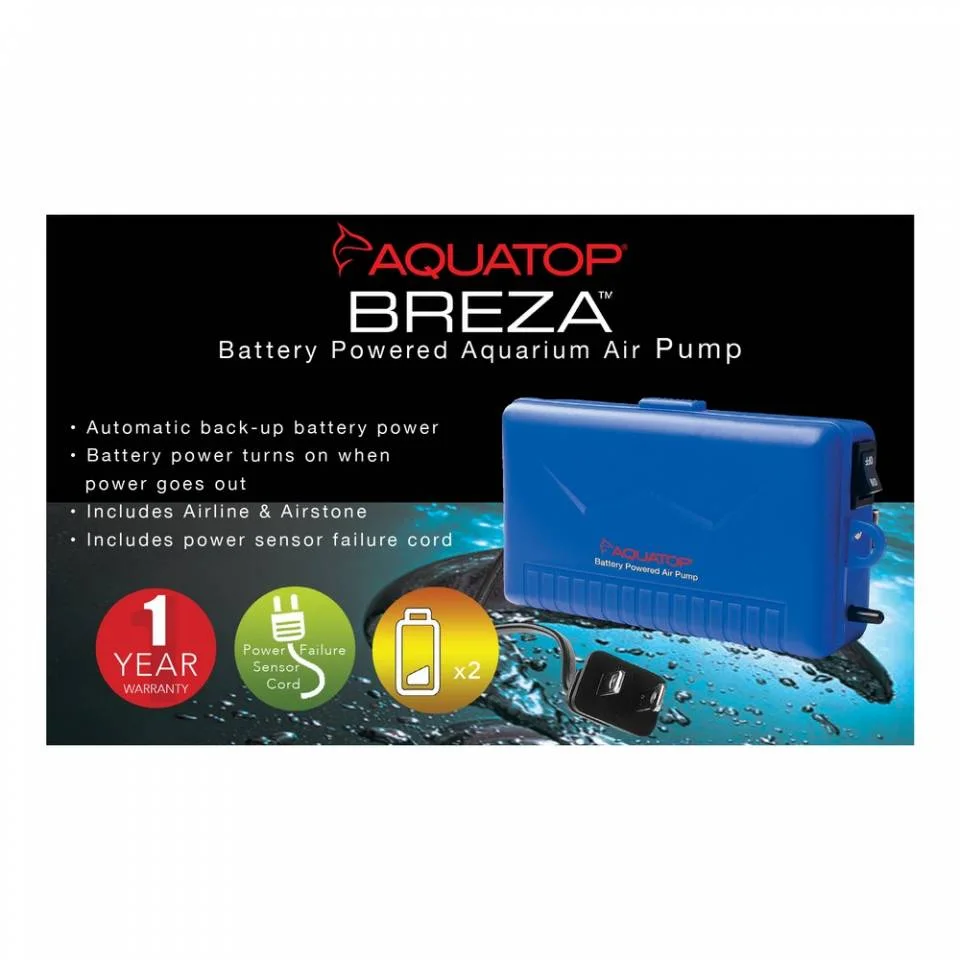 The Tetra Whisper battery-backup style is useful when you prefer a conventional air-line setup from a familiar aquarium brand. It suits keeping surface agitation going through an interruption, provided output matches the stone or sponge filter. Put fresh batteries in the unit as part of your outage checklist, rather than waiting for a storm. Its practical drawback is battery care. The pump can be ready while the cells are not. Pros: familiar controls; useful for a prepared emergency station. Cons: inspect current availability and battery requirements before ordering.
Marina Battery-Operated Air Pump
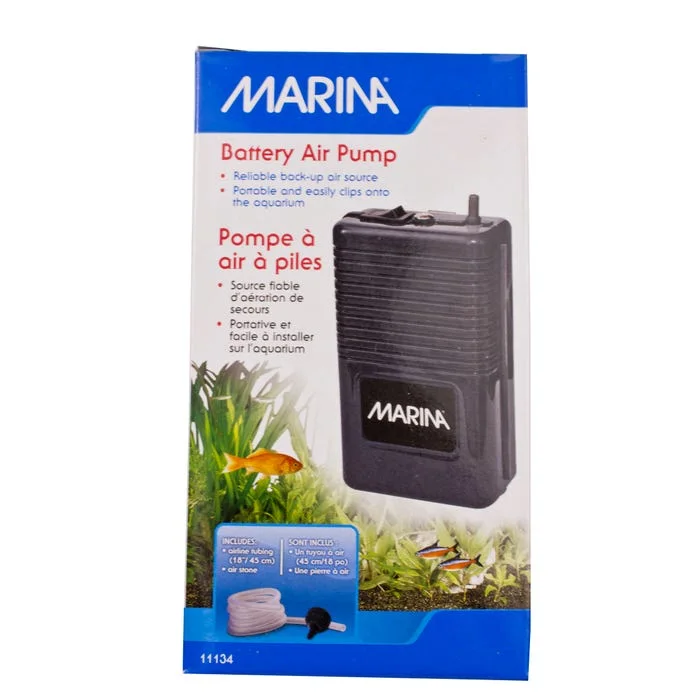 Marina’s battery-operated format makes sense for a spare kit kept in a cupboard, car, or fish room. It does not depend on a wall outlet or a charged USB bank, which helps when an outage also affects charging. Connect it to one well-matched air stone and keep the hose short to avoid needless bends. The tradeoff is battery management. Disposable cells need rotating, and the case should stay dry near the aquarium. Pros: independent battery power; straightforward emergency use. Cons: no rechargeable reserve, and output must suit your tank.
Penn-Plax B11 Battery Operated Air Pump
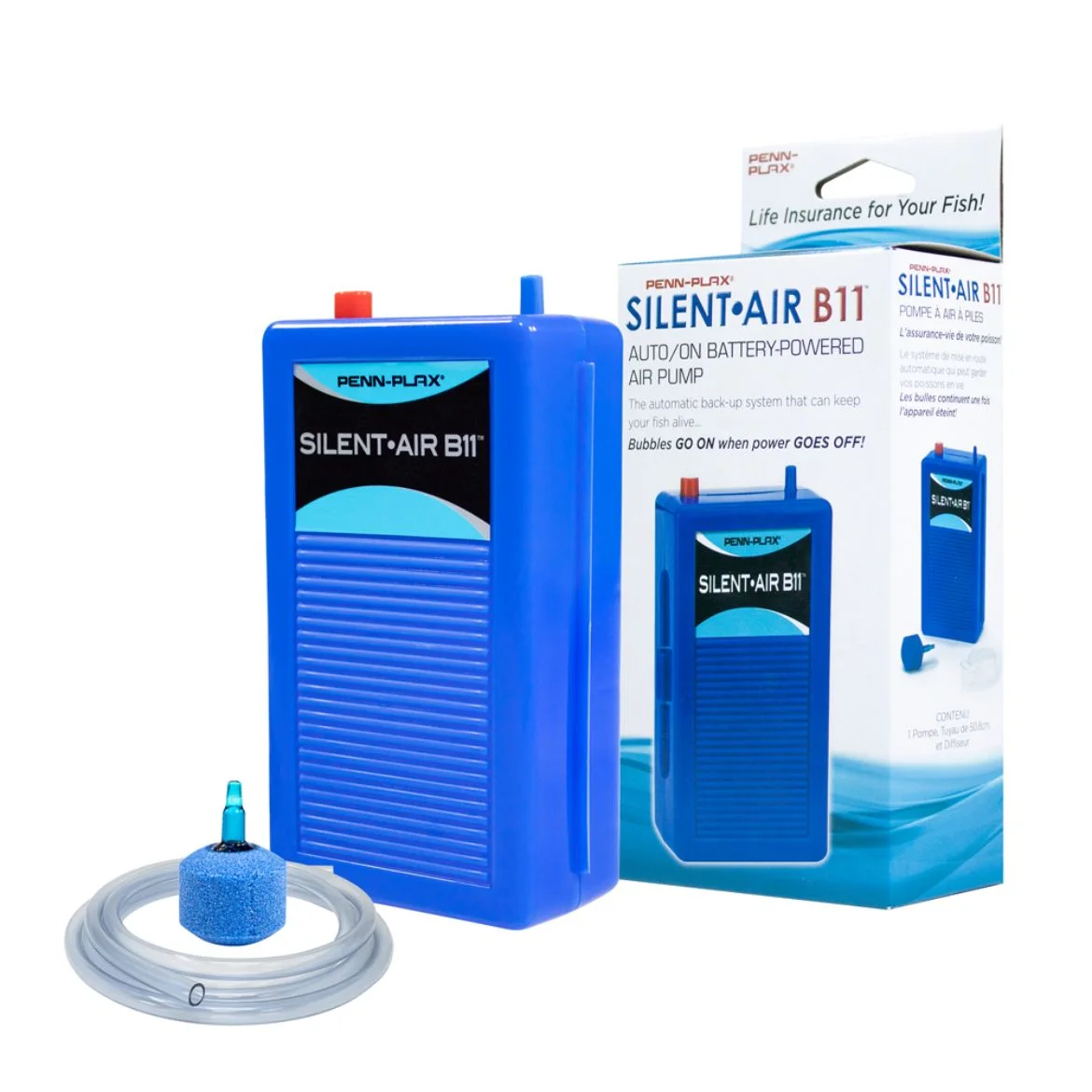 The Penn-Plax B11 sits at the portable end of emergency aeration. That makes it useful for a quarantine tank, transport container, or modest aquarium where you need bubbles and surface movement. It is easier to store than a large mains pump, but its compact format leaves less room for a demanding sponge filter or long airline. Set it up with the actual container and observe the bubbles before relying on it. Pros: portable battery operation; good fit for small emergency jobs. Cons: check capacity and connector compatibility for larger tanks.
Hygger USB Nano Aquarium Air Pump
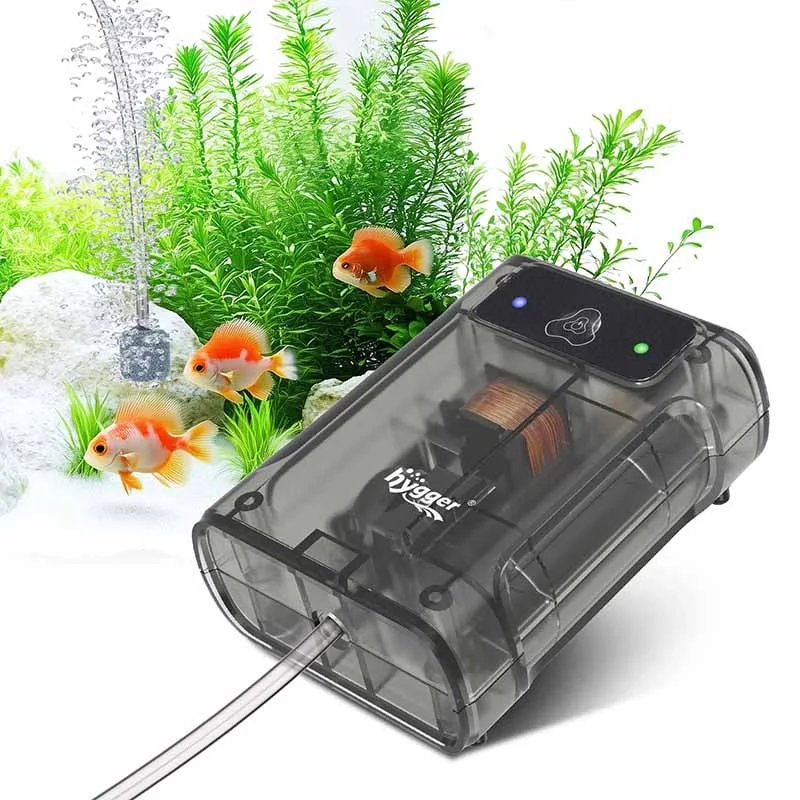 Hygger’s USB nano format is a good match for a charged power bank in your emergency supplies. Check that the bank can remain on while the pump draws power and that the USB lead reaches a dry, elevated position. It is convenient for short interruptions, with less battery swapping than a cell-powered box. The drawback is dependence on a separate bank and cable. Pros: rechargeable emergency arrangement; compact storage. Cons: charge both devices and protect the USB connection from splash.
NICREW Nano Silent Aquarium Air Pump
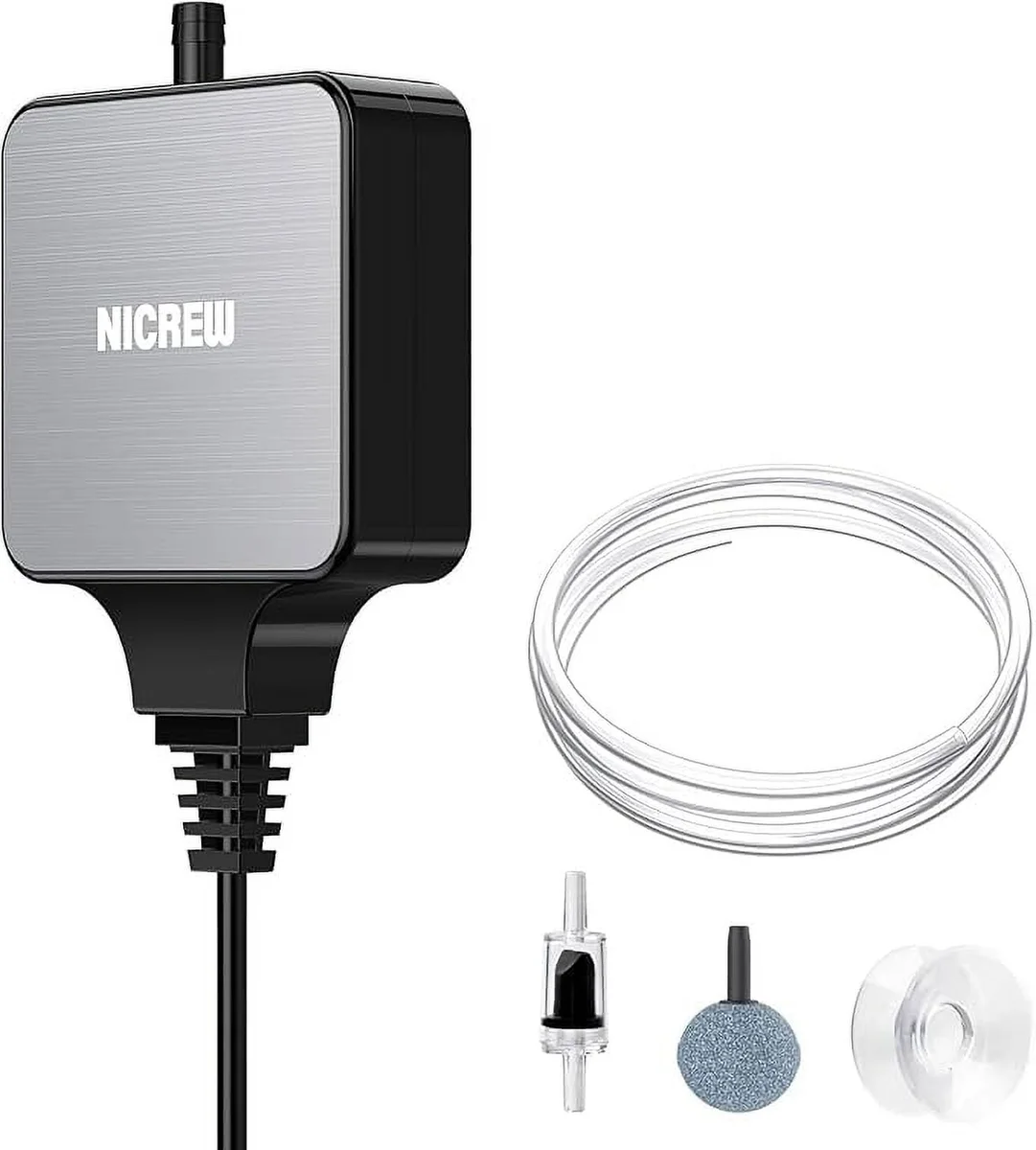 NICREW’s USB nano pump fits an outage plan built around a phone charger, laptop battery, or power bank. Its small housing is easy to keep beside a backup airline, and USB power lets you replace a depleted source without hunting for a particular battery size. Use a check valve and leave a drip loop in the cable. This type of pump is less self-contained than a battery-box design. Pros: flexible USB supply; small emergency footprint. Cons: the cable and power bank become extra failure points to check.
AQQA Rechargeable Aquarium Air Pump
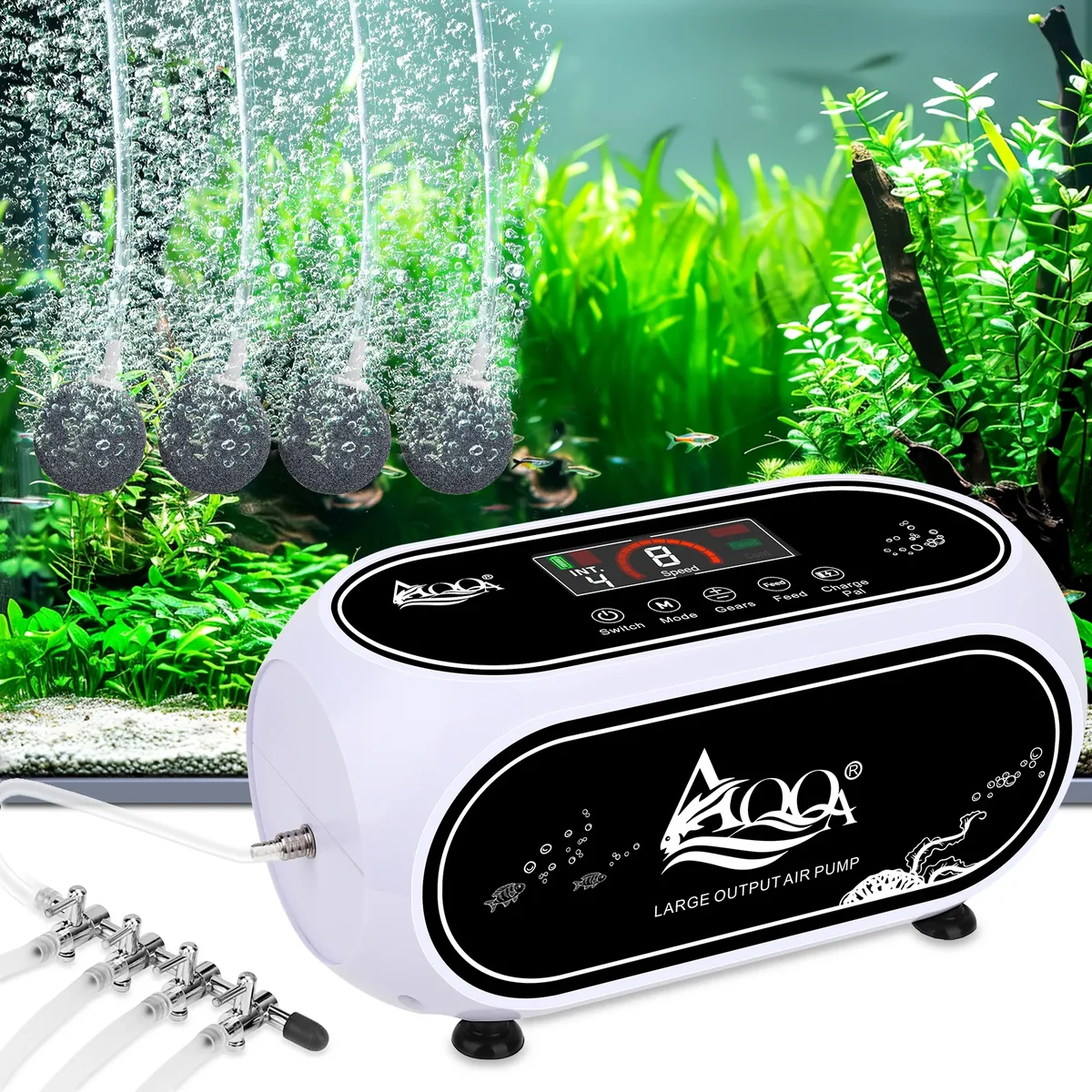 AQQA’s rechargeable format is useful when you want one grab-and-go unit rather than a pump, loose cells, and a separate bank. Charge it after every drill or real outage, then store the air line with the unit so the kit remains usable. Confirm its charge indicator and charging connector before leaving it unattended. Once the internal battery is empty, you cannot replace it instantly with spare cells. Pros: self-contained storage; quick deployment. Cons: charge discipline matters, and verify runtime for your setup.
How to choose an outage air pump
Start with the job, not the pump label. A tank with an air-driven sponge filter needs enough output to keep that filter working. A tank that only needs surface agitation can use a smaller emergency setup. Count the airline path, bends, check valve, and depth because each adds resistance.
Battery pumps are self-contained, but cells can leak, run down, or get misplaced. USB pumps pair easily with a power bank, yet the bank and cable need their own checks. Rechargeable pumps reduce loose parts and deploy quickly, but they punish forgetful charging. An automatic-backup model is the least stressful option when its mains connection and battery compartment are maintained.
Keep every pump above the waterline, use a check valve, and make a drip loop in any cable. Run a monthly outage drill. Watch the bubbles, listen for a stalled diaphragm, and confirm that the filter still moves water. Never put a wet pump or power bank directly on the aquarium lid.
Frequently asked questions
Can a battery air pump run a sponge filter?
Yes, if its output and fittings suit the filter. Test the complete airline, including the check valve, rather than judging from bubbles at the loose hose.
Is a USB pump better than a battery pump during an outage?
Neither is automatically better. USB works well when you maintain a charged power bank. A battery model is more self-contained. Pick the setup you will actually inspect.
Should I leave an emergency pump connected all the time?
An automatic-backup model can stay connected if its instructions allow it. Keep a separate portable pump ready, and inspect the battery and cable on a schedule.
Do fish need an air pump for the whole outage?
That depends on stocking, temperature, filtration, and how long power is off. Surface agitation helps gas exchange, but it does not replace a plan for heat, filtration, and water quality.
Where should the pump sit?
Place it on a dry surface above the aquarium waterline. Use a check valve and a drip loop so water cannot run down the airline or cable toward the pump.
Recommendation
For the least manual switching, start with Pawfly’s battery-backup format if the current model fits your airline and battery plan. Choose USB when you already maintain a dependable power bank. Test the setup with the real sponge filter, keep the kit dry, and replace or recharge the power source on a calendar.
Sources and methodology
We checked manufacturer information from Tetra, Marina, Penn-Plax, Hygger, NICREW, AQQA, and Pawfly. We compared power method, emergency setup, airline compatibility, and maintenance burden. No hands-on testing was performed. Product photos depict the named models or stated variants.