
Buying guide
Best Aquarium Air Pump for Multiple Tanks: 7 Practical Picks
The best air pump for multiple aquariums gives you enough usable airflow at depth, spare outlets and simple control without turning the fish room into a loud workshop.
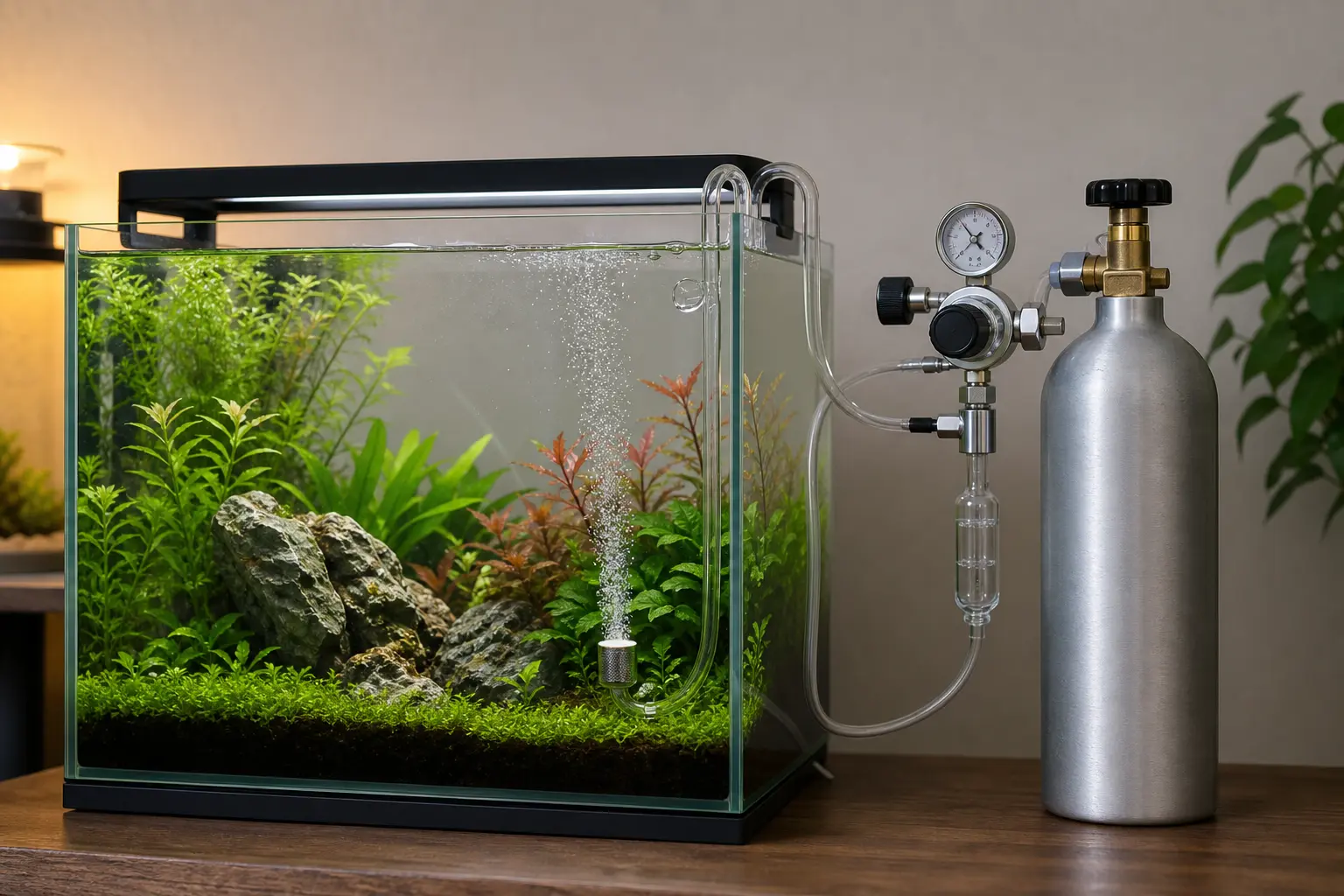
Running several aquariums from one air pump can save shelf space and simplify maintenance, but only if the pump has enough reserve capacity. A pump that looks powerful at the outlet may lose useful flow when it feeds deep tanks, long airline runs, restrictive check valves and several air stones. This guide compares seven multi-outlet or high-capacity pumps by the details that affect a shared setup. It is based on manufacturer information and product research, not hands-on testing. Confirm the current voltage, outlet kit and warranty before ordering.
Quick comparison
| Product | Best for | Main advantage | Main drawback |
|---|---|---|---|
| Eheim Air Pump 400 | Quiet multi-tank rooms | Four adjustable outlets | Modest output for very deep tanks |
| Tetra Whisper 300 | Familiar four-outlet setups | Widely available parts | Output is not ideal for heavy back pressure |
| Fluval Q2 Air Pump | Low-noise installations | Two-stage design and control | Only two pump outlets |
| Pawfly 4 Outlet Aquarium Air Pump | Budget racks | Four outlets and compact size | Accessories vary by bundle |
| Uniclife 64 GPH Aquarium Air Pump | Higher-demand racks | Strong advertised airflow | Vibration control matters |
| Marina 200 Air Pump | Several small tanks | Four-outlet format | Less headroom for deep stones |
| Hygger Quiet High Output Air Pump | Large air networks | Adjustable high output | Verify the exact outlet configuration |
Best overall: Eheim Air Pump 400
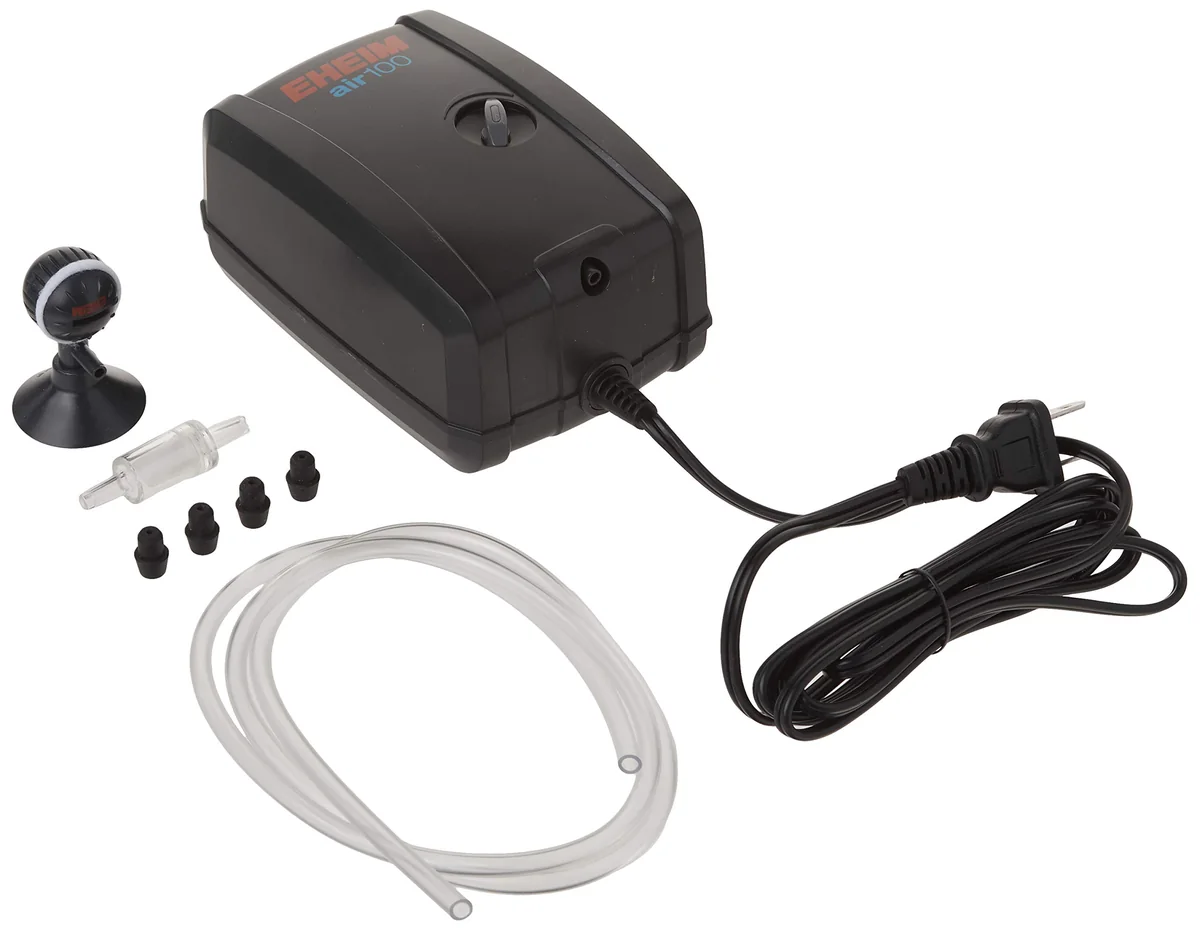
The Eheim Air Pump 400 is a sensible starting point for a rack of modest-depth freshwater tanks. Its four separately adjustable outlets let you balance a sponge filter in one aquarium against a smaller air stone in another. That matters more than a single large outlet when tank sizes and livestock differ. Keep the pump above the water line or use check valves on every branch. Pros: four controls; established replacement parts; compact layout. Cons: limited reserve for several deep tanks; airflow falls as back pressure rises. Read Eheim’s current air pump documentation for output and voltage details.
Tetra Whisper 300
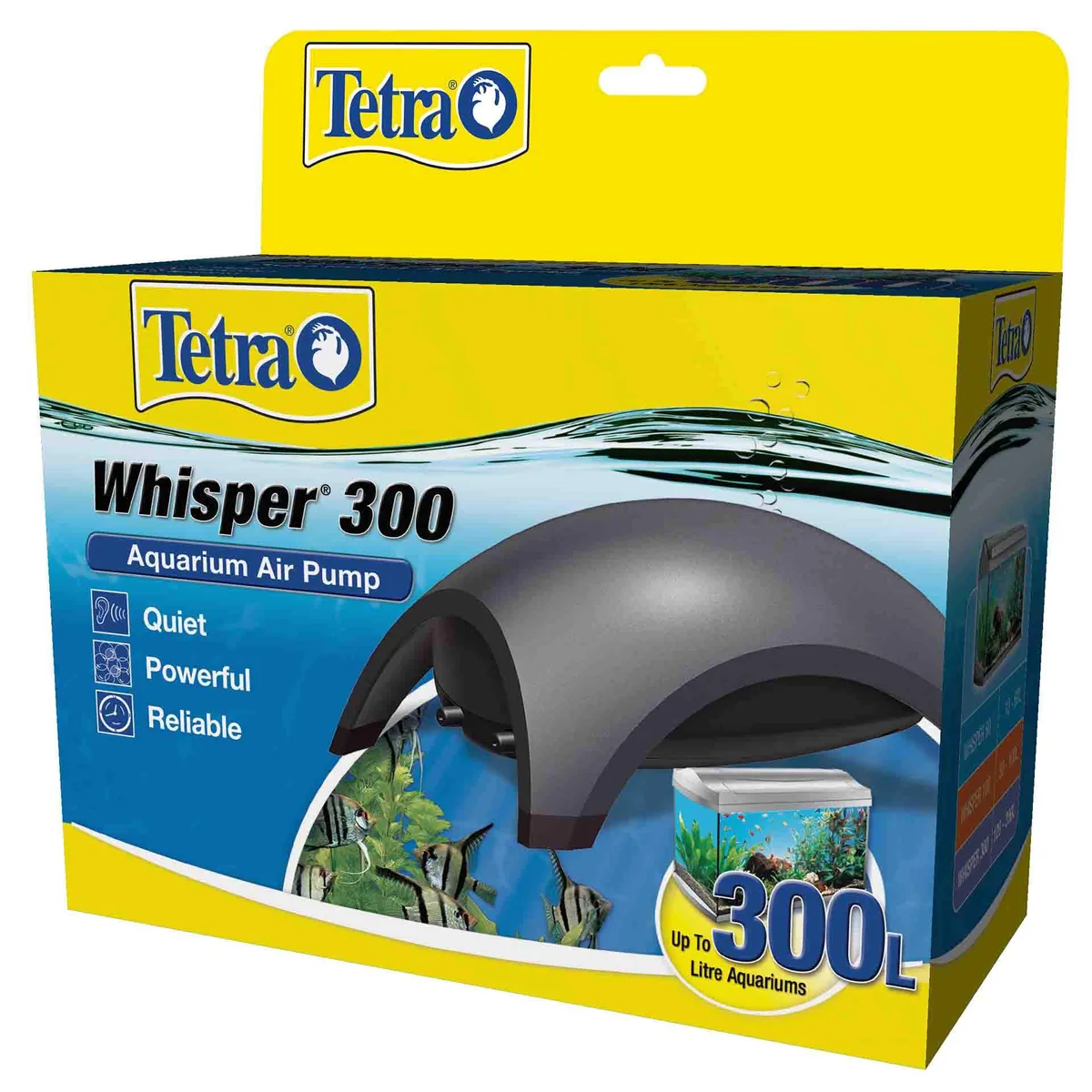
The Whisper 300 fits owners who want a familiar multi-outlet pump and easy access to airline accessories. Its appeal is practical: it can feed several small sponge filters or air stones when each branch has modest resistance. Use a gang valve to close unused outlets and keep the remaining lines balanced. Pros: common brand; simple controls; useful for small and medium tanks. Cons: not a high-pressure industrial pump; vibration depends on the shelf. Tetra’s air pump support pages are the best place to verify the current model.
Fluval Q2 Air Pump
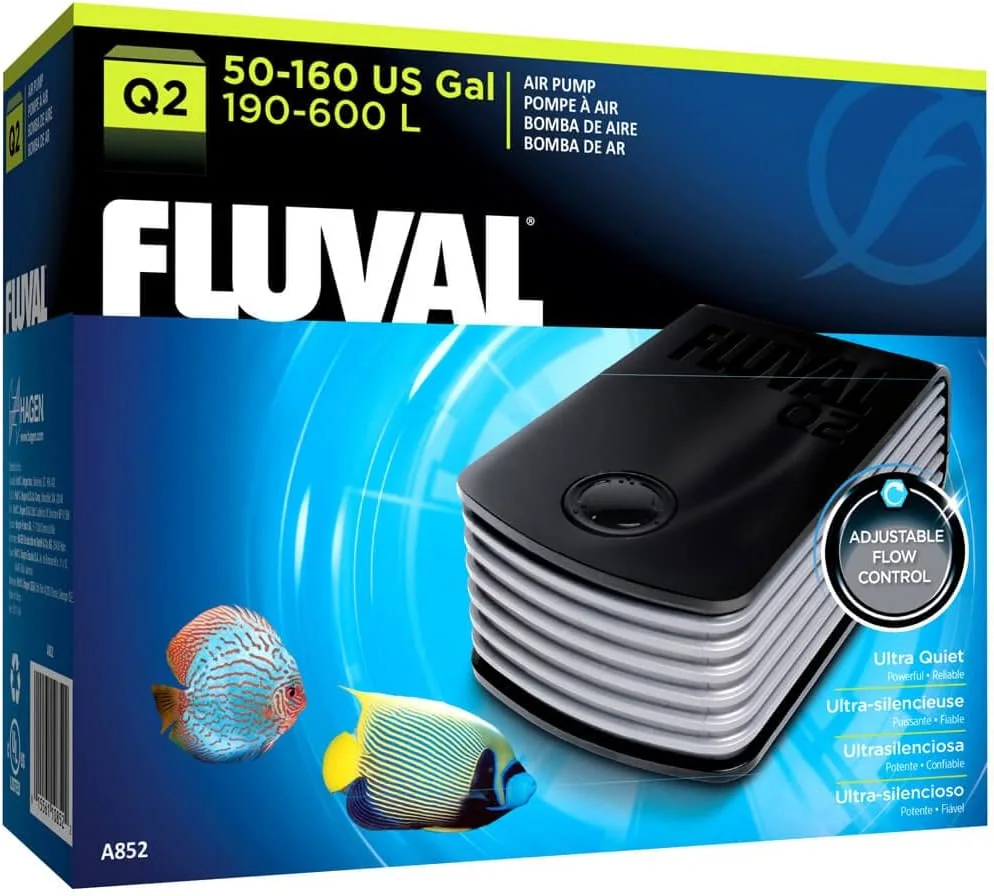
The Fluval Q2 is a better fit when noise matters more than having four controls on the pump itself. Its two outlets can each be split with a gang valve, giving you more branches while retaining a central adjustment point. Splitting one outlet does not create more airflow, so leave reserve for the deepest tank. Pros: quiet-focused design; output adjustment; useful for a pair of aquariums. Cons: needs external splitters for a larger rack; check valves add resistance. See Fluval’s Q-series information before choosing a voltage variant.
Pawfly 4 Outlet Aquarium Air Pump
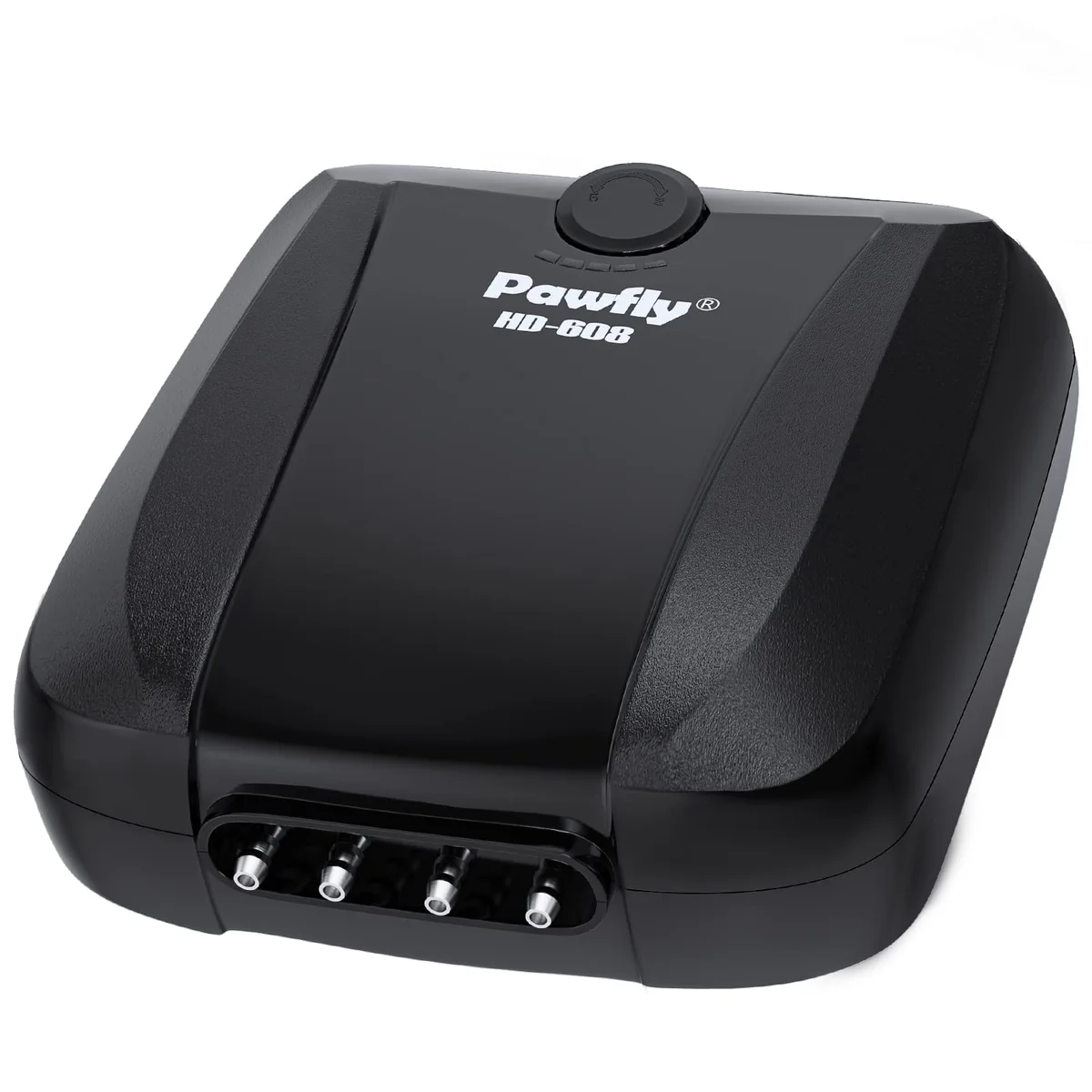
Pawfly’s four-outlet format suits a budget rack where each aquarium needs a small independent line. It is most useful with shallow sponge filters, breeder boxes or air stones rather than several deep biofilters. Inspect the included tubing and valves because bundles can change. Pros: compact; multiple outlets; inexpensive entry point. Cons: accessory quality varies; less suitable for long runs and deep tanks. Use a rigid shelf and a soft isolation pad to reduce transmitted vibration.
Uniclife 64 GPH Aquarium Air Pump
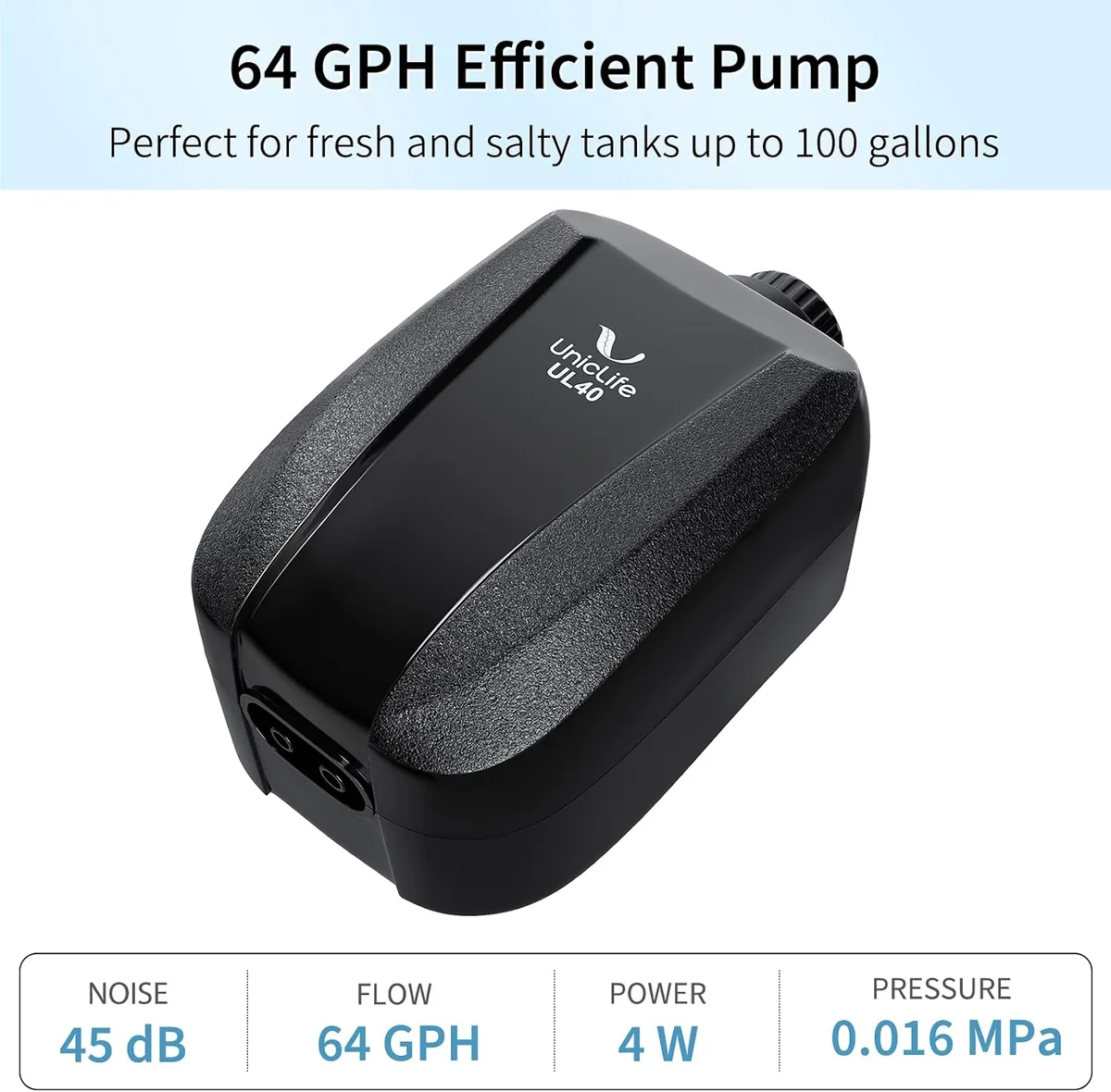
The Uniclife 64 GPH model targets a busier setup that needs more reserve than a basic desktop pump. Treat the advertised number as a starting comparison, not guaranteed flow at every depth. Count the total lift and resistance from all tanks, then retain a spare outlet or split line for future expansion. Pros: high advertised output; adjustable control; useful for several branches. Cons: more airflow can mean more noise; the exact kit needs checking. A gang valve with individual taps makes balancing easier than pinching airline tubing.
Marina 200 Air Pump
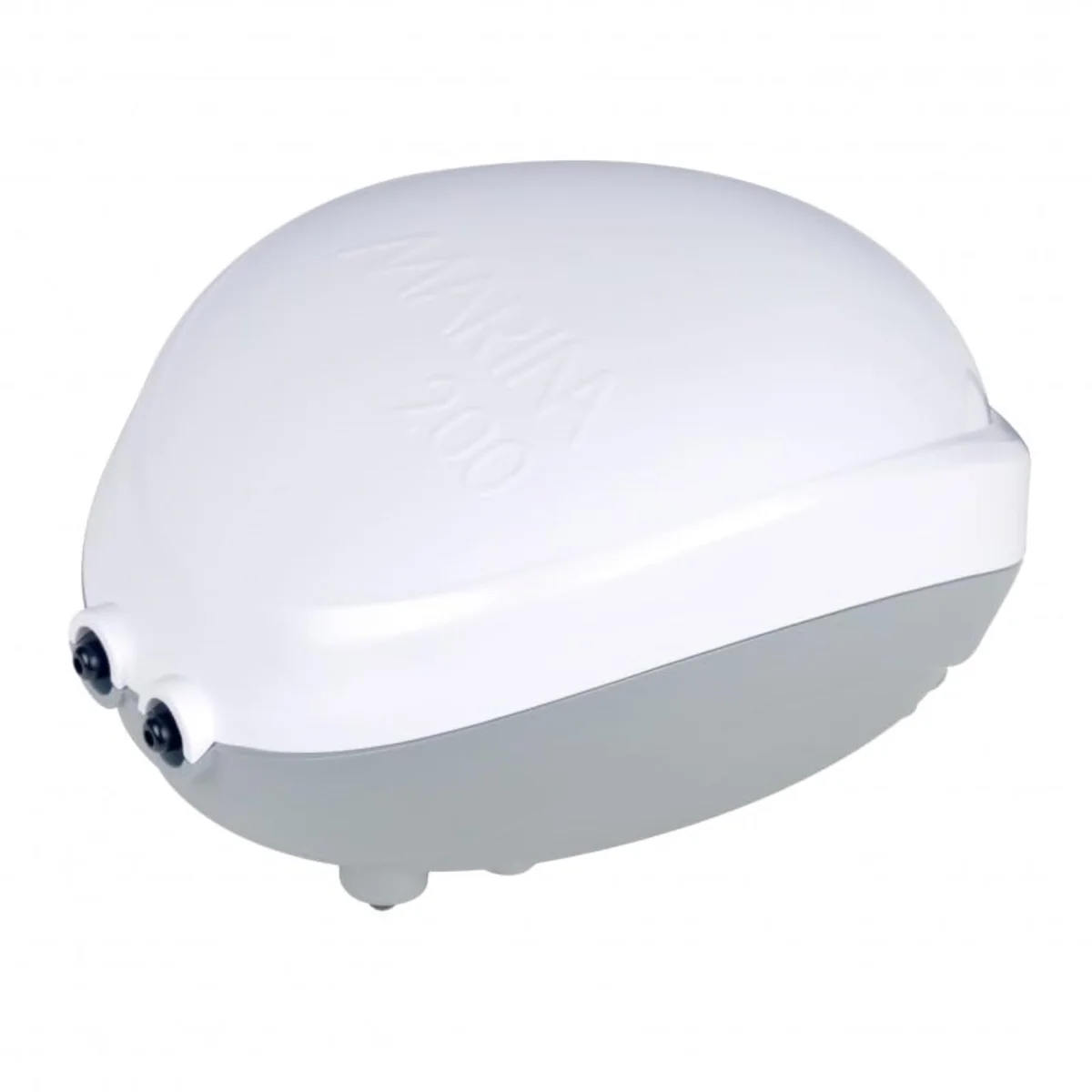
The Marina 200 makes sense when the rack contains several smaller aquariums and the lines are short. It is easier to manage than buying a separate pump for every nano tank, while its four-outlet layout keeps branches organized. It has less headroom for deep tanks or dense sponge filters, so do not choose it from outlet count alone. Pros: four outlets; straightforward setup; good small-tank fit. Cons: modest pressure reserve; may need a larger model for expansion. Confirm the pump’s current specifications through Marina’s equipment range.
Hygger Quiet High Output Air Pump
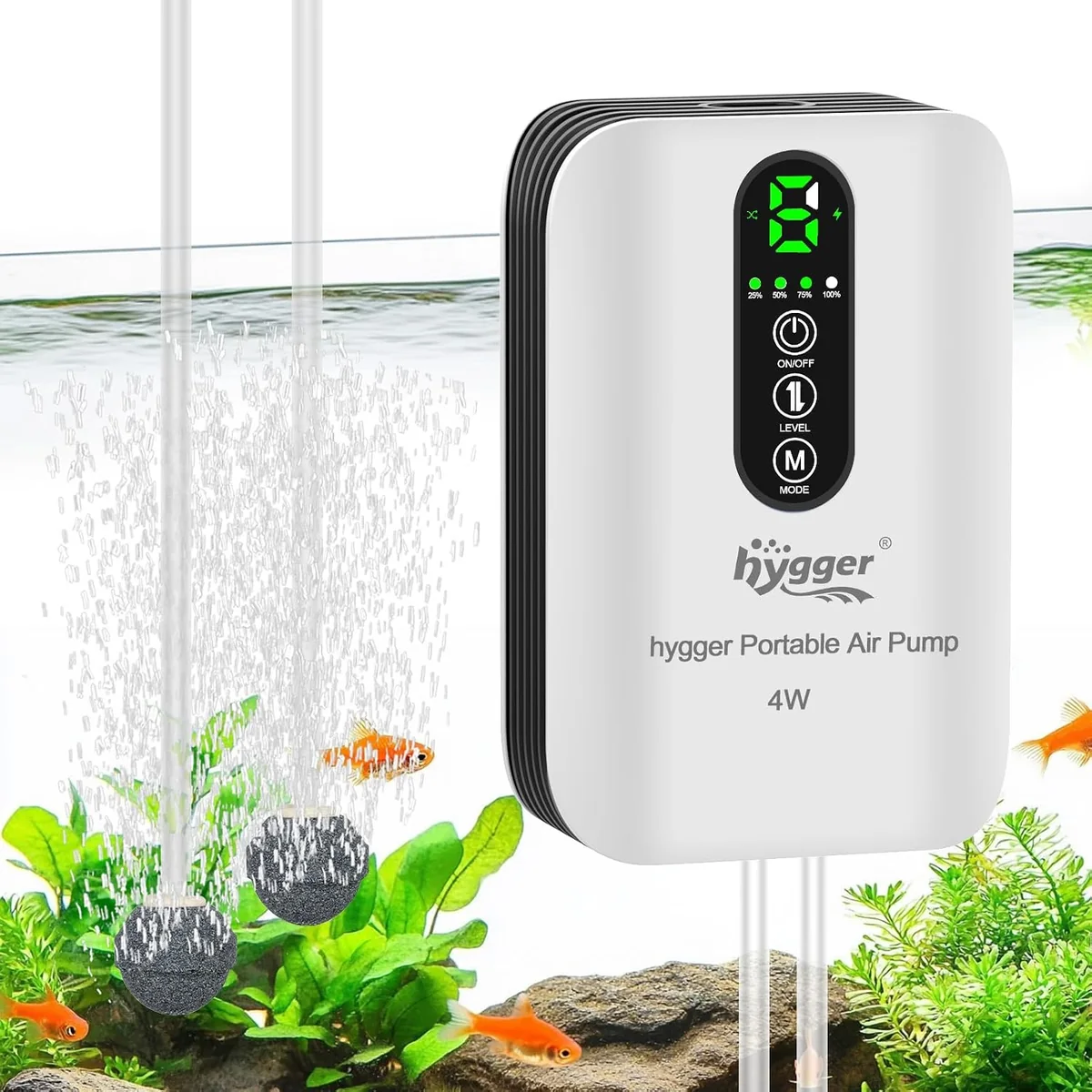
Hygger sells several high-output pump configurations, so this is the pick that requires the most careful listing check. Match the exact outlet count, wattage, maximum depth and included manifold to your rack. The appeal is adjustable output for a larger air network, but a high setting can create excessive surface movement in planted aquariums. Pros: broad output range; useful expansion capacity; often supplied with controls. Cons: model variants are easy to confuse; noise depends on isolation and load. Buy only after confirming the precise product page and replacement diaphragm availability.
How to size one pump for multiple tanks
Start with the deepest tank, not the largest tank volume. Air pressure must overcome water depth before the pump can supply useful bubbles. Add the resistance of sponge filters, fine air stones, check valves and long tubing. A pump’s maximum flow at zero pressure says little about its output at operating depth. Leave capacity unused so a dirty sponge or a new branch does not collapse circulation across the rack.
Use one check valve per aquarium branch. This prevents a power outage or a failed pump from siphoning water back toward the pump. Put the pump above the highest water line where practical, and test every connection for bubbles before leaving the room. A manifold with individual taps is easier to tune than a collection of improvised splitters. Keep unused taps closed, but do not dead-head a pump unless its instructions allow it.
Noise comes from the diaphragm, feet, shelf and tubing. A soft pad can stop shelf vibration, while a hard, level surface keeps the pump stable. Do not cover ventilation slots to make it quieter. Heat is another reason to avoid oversizing blindly. A warm enclosed cabinet can shorten diaphragm life and raise room temperature. Leave air around the pump and follow its duty-cycle guidance.
One central pump is tidy and can lower equipment cost, but it creates a single point of failure. Two smaller pumps divide the risk and let you maintain one side of the rack while the other continues. For valuable livestock, keep a spare pump or battery air pump ready. A central-air system becomes attractive for many tanks, but it needs a pressure-rated manifold, isolation valves and a plan for failure. It is not automatically quieter or simpler.
Related reading: best aquarium air pump for a 10-gallon tank and best aquarium filter for a 20-gallon tank.
Frequently asked questions
Can one air pump run four aquariums?
Yes, if its usable output covers the combined depth and filter resistance. Four shallow lines are easier than four deep sponge filters. Use individual valves so one restricted branch does not take all the air.
Do I need a check valve on every tank?
That is the safest arrangement. A check valve on each branch limits backflow if the pump stops or a line becomes submerged differently from the others.
Is a gang valve better than several splitters?
Usually. A gang valve keeps branches organized and lets you adjust each line. Select one with enough taps and avoid very restrictive miniature valves on a high-output system.
Should a multi-tank pump run all the time?
Air-driven filtration normally needs continuous operation. If you switch it off for feeding, keep the pause short and follow the instructions for the connected equipment.
Are two pumps safer than one?
Two pumps provide redundancy and can reduce long airline runs. They cost more and add another device to maintain, but that tradeoff is sensible for crowded racks or valuable fish.
Sources and methodology
We compared manufacturer product information from Eheim, Tetra, Fluval, Marina and other listed brands, focusing on outlet count, pressure-related setup, controls, serviceability and multi-tank fit. Amazon links use precise tagged searches because current regional ASINs and bundles can change. No hands-on testing was performed.