
Buying guide
Best aquarium heater for a saltwater tank
A saltwater heater should be easy to inspect, protected from livestock, and paired with monitoring that catches a thermostat problem.
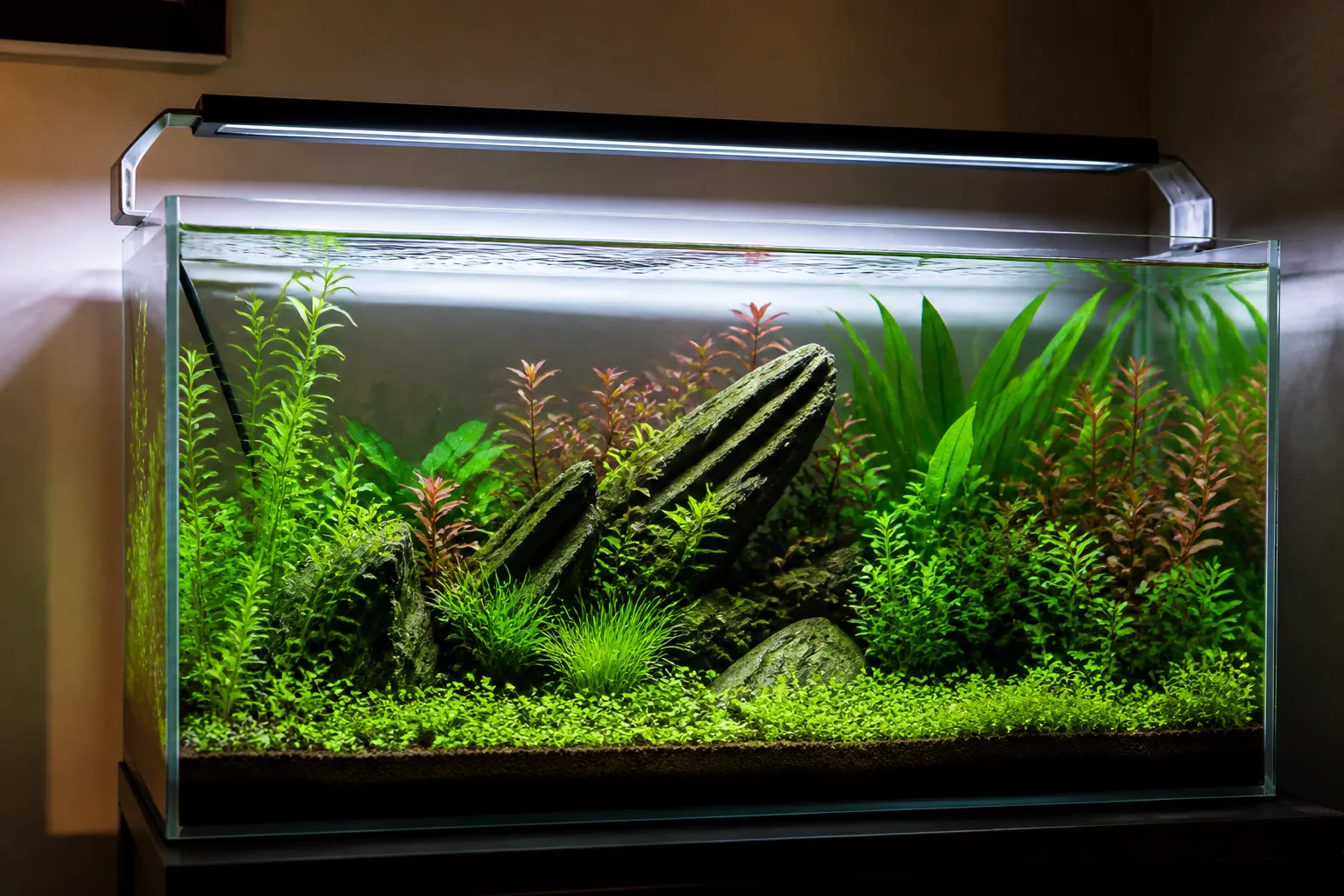
Quick comparison
| Product | Best for | Main drawback |
|---|---|---|
| HITOP Aquarium Titanium Heater | Titanium body with an external control box | Confirm controller and wattage in the listing |
| Finnex Titanium Heating Element | A separate controller-based setup | The element is not a complete control system |
| Aqueon Pro Aquarium Heater | Conventional submersible glass heater | Glass needs careful handling and guarding |
| Eheim Jager TruTemp Heater | Calibratable glass thermostat | Long body can be awkward in a rear chamber |
| Cobalt Aquatics Neo-Therm Pro | Slim heater form in a display tank | Check saltwater and guard guidance |
| Fluval E Electronic Heater | A visible electronic temperature display | Display and sensor features add complexity |
| Hygger Titanium Aquarium Heater | Titanium element with digital controls | Controller and probe details vary |
This is a research-based guide, not a hands-on test. Heater choice depends on water volume, room temperature, circulation, and exact wattage and revision. Confirm operating instructions, voltage, minimum water level, cable routing, and saltwater suitability before buying. A thermostat can fail in either direction, so use an independent thermometer and inspect the heater during water changes.
Our picks
HITOP Aquarium Titanium Heater
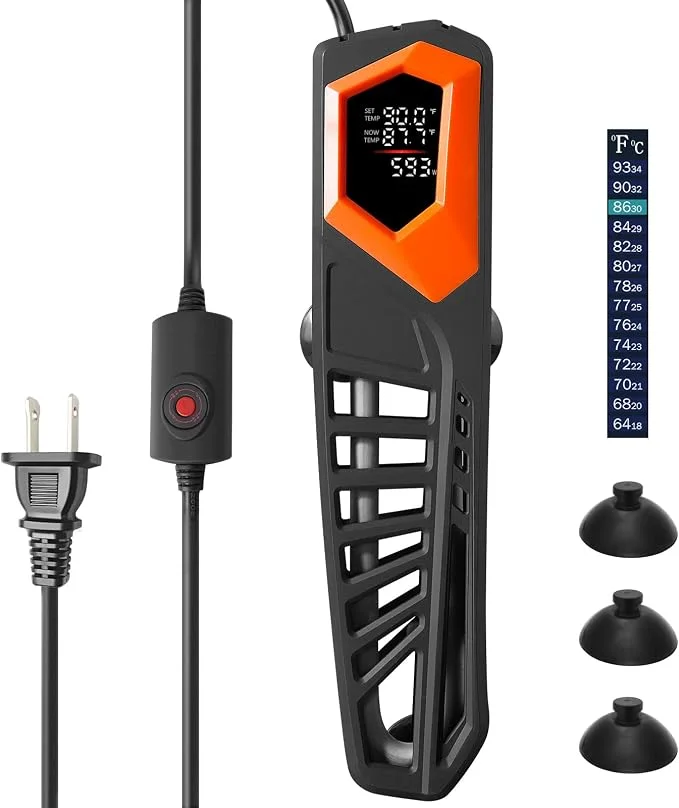 The HITOP titanium heater is a good first comparison when you want a metal heating element and an external control arrangement. Titanium avoids the fragile glass form, but the controller, probe, and heater still need a dry, accessible installation. Put the element in steady flow, keep the control box above splash level, and confirm that the selected kit includes the parts shown in the listing. Titanium does not make a heater immune to a stuck thermostat, so an independent thermometer remains necessary. Pros: titanium body; accessible controls; useful for a sump layout. Cons: package contents vary; controller placement takes planning.
Finnex Titanium Heating Element
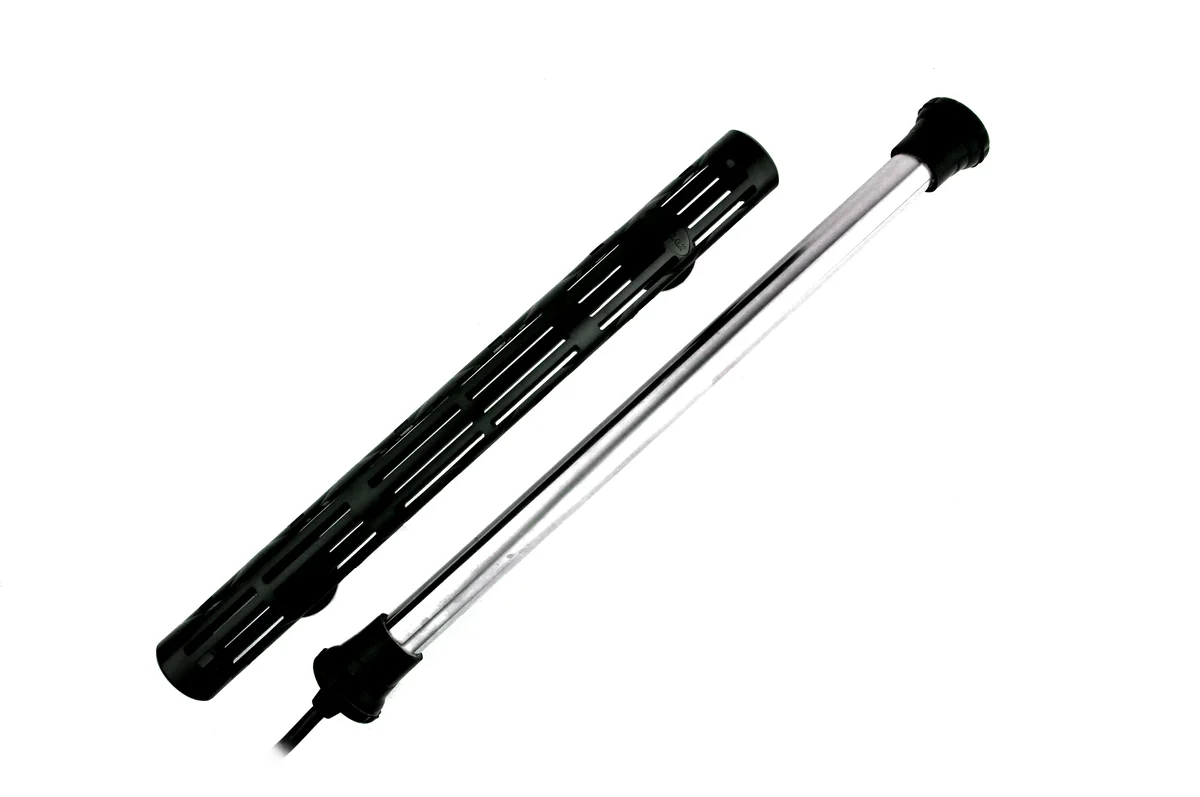 Finnex’s titanium heating element is for an aquarist building a controller-based system rather than buying a single glass thermostat. That separation helps in a saltwater cabinet because the element sits in water while switching hardware stays accessible and dry. It also creates a responsibility: the element alone does not explain how the system will regulate temperature. Match it to a compatible controller, read current wiring instructions, and provide water movement around the element. Pros: metal form; flexible controller placement; useful for equipment rooms. Cons: incomplete as a standalone purchase; wiring and compatibility require checking.
Aqueon Pro Aquarium Heater
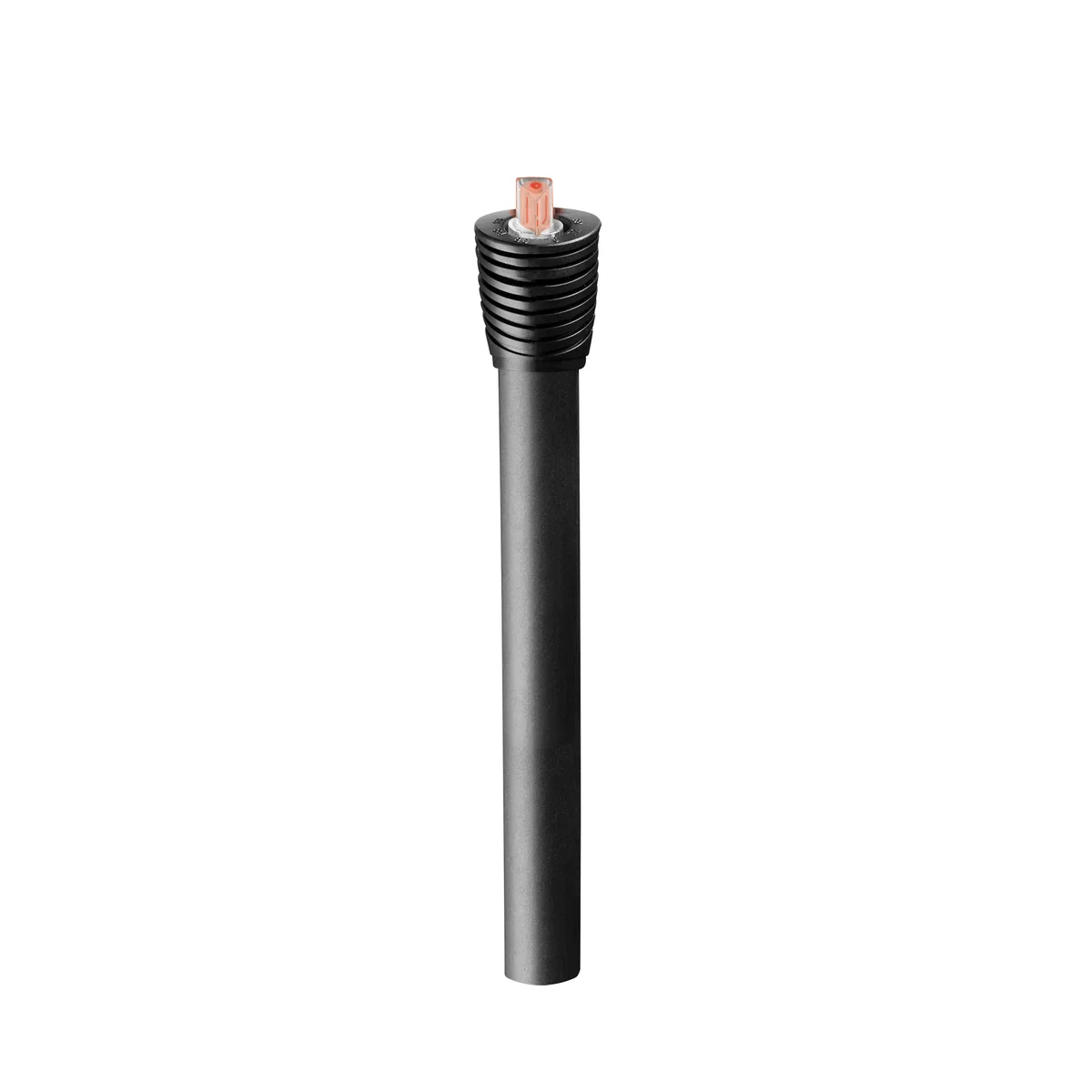 The Aqueon Pro is the conventional choice for someone who wants a self-contained submersible heater with a familiar glass-tube shape. In a saltwater display, mount it where a pump provides even flow and where rockwork or a guard prevents livestock from leaning against it. The glass body needs more care during maintenance than titanium. Let it cool according to the instructions before exposing it to air, and inspect suction cups and cable for salt creep. Pros: straightforward format; easy to understand; widely available family. Cons: glass needs care; internal thermostat still needs monitoring.
Eheim Jager TruTemp Heater
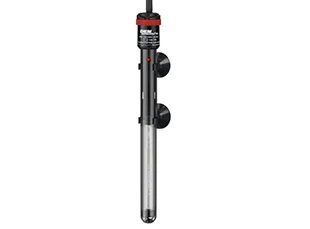 The Jager TruTemp appeals to buyers who want a long glass heater with an adjustable thermostat and calibration step. Calibration is useful only when you compare the setting with a reliable thermometer and follow the manual. Measure the chamber before ordering. Its length can be inconvenient behind a skimmer, rockwork, or narrow rear compartment, and the heater must stay properly submerged. Pros: adjustable thermostat; calibration is a practical check; traditional form. Cons: long body; glass and placement make maintenance less forgiving.
Cobalt Aquatics Neo-Therm Pro
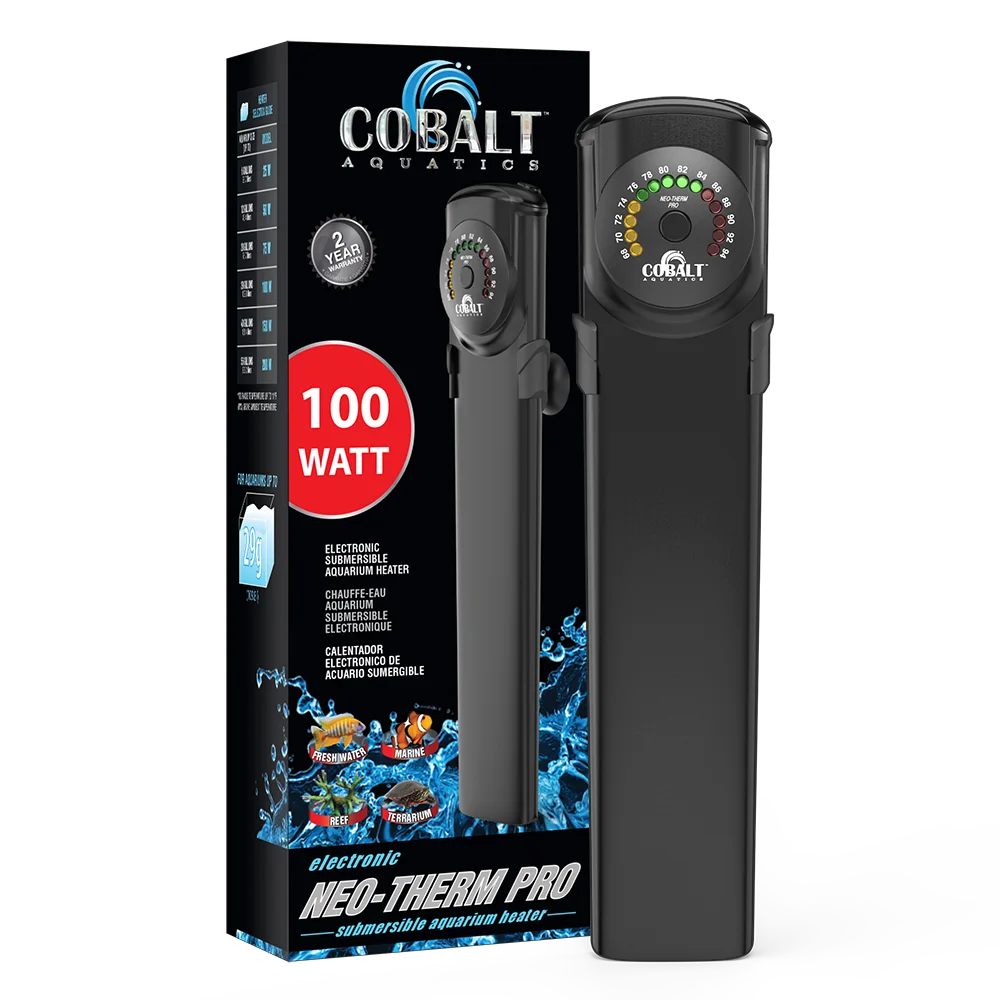 The Neo-Therm Pro is worth comparing when the heater has to fit against the back wall of a display. Its slim, flat-bodied style takes less visual space than a bulky tube, which helps in a small reef with limited equipment chambers. Confirm the exact model’s guard and saltwater instructions, then keep it in flow rather than wedged between rock and glass. A compact body does not solve poor circulation or make an alarm unnecessary. Pros: slim form; discreet display installation; easy to place in a tight layout. Cons: model guidance matters; restricted flow can create uneven heating.
Fluval E Electronic Heater
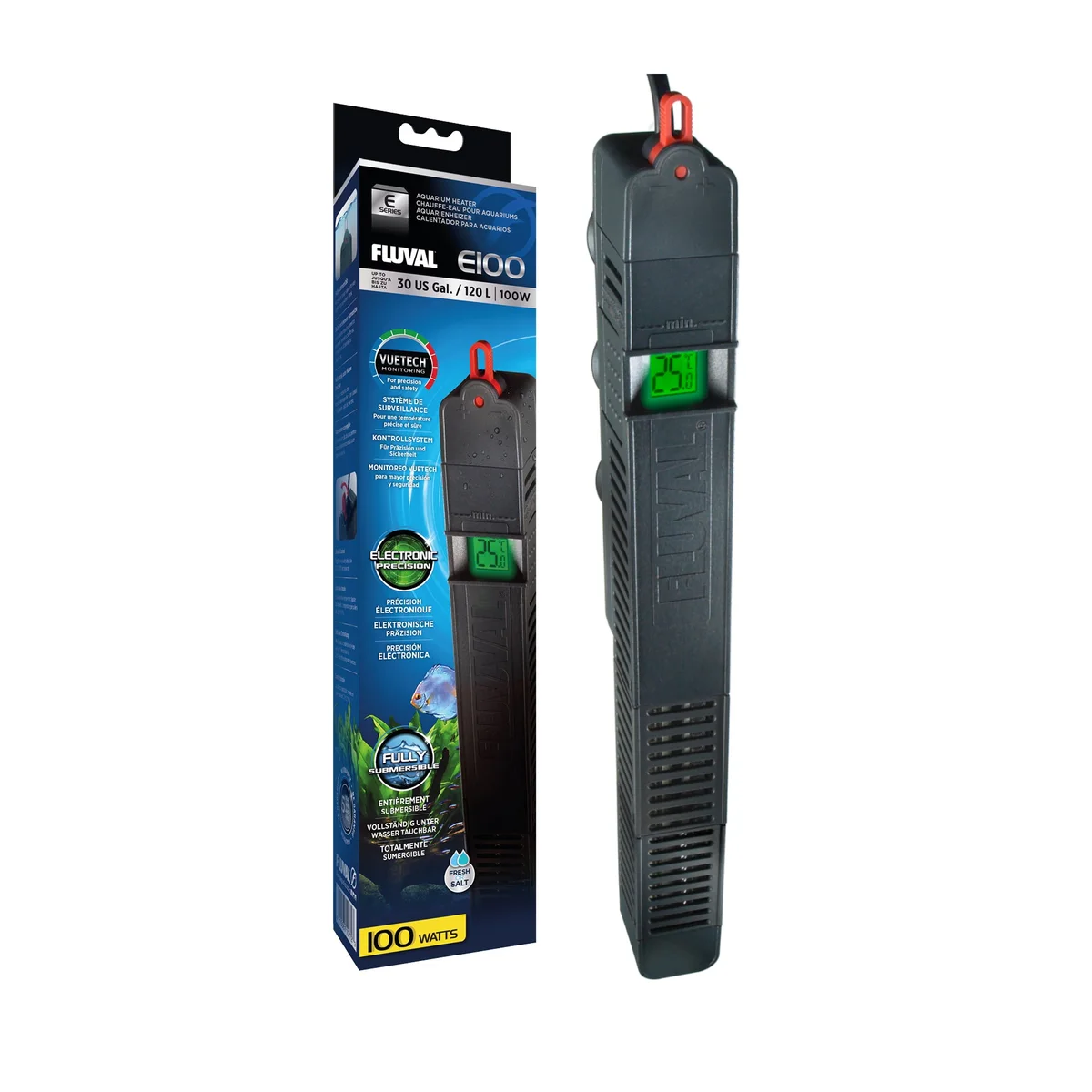 The Fluval E is the pick for an aquarist who wants temperature information visible on the heater instead of hidden behind the cabinet. An electronic display makes a quick daily check easier, while the heater still needs correct flow and full submersion. Keep the display where you can see it without opening the cabinet, and compare it with a separate thermometer during setup. Extra electronics mean more indicators to understand, so read warning behavior in the current manual instead of guessing from a flashing screen. Pros: visible readout; convenient daily check; tidy display-tank fit. Cons: more electronic complexity; display is not a second thermometer.
Hygger Titanium Aquarium Heater
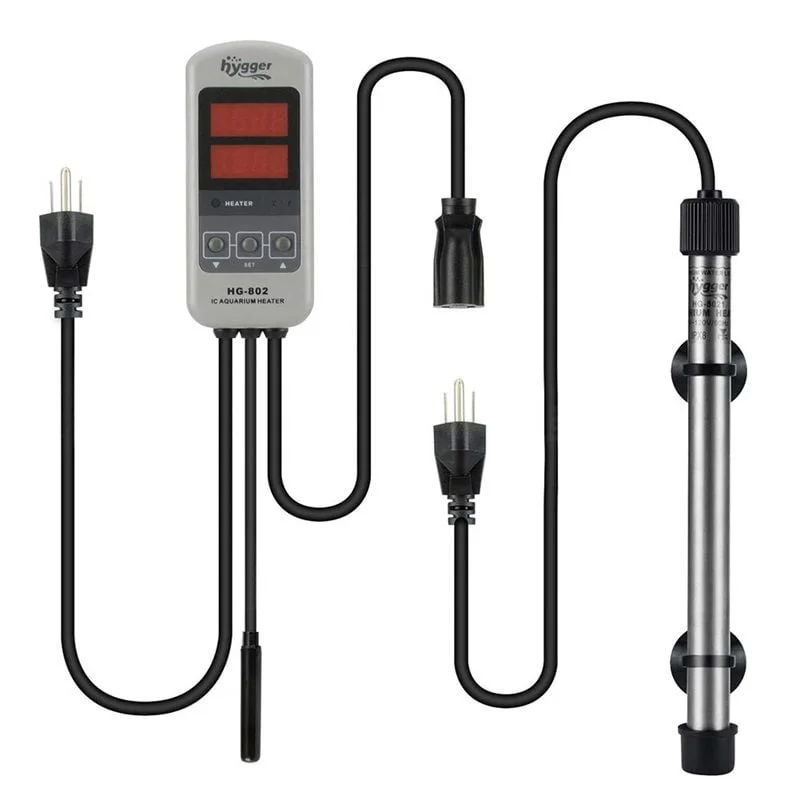 The Hygger titanium heater gives budget-minded saltwater keepers another controller-based option. The important detail is the package, not the brand name alone. Listings can differ in wattage, probe arrangement, controller interface, and included suction cups, so compare those details before checkout. Mount the probe away from the heating element and place the element where water circulates through the chamber. Keep the controller dry and make a drip loop. Pros: titanium element; digital control format; useful for a sump or rear chamber. Cons: listing variations; probe placement needs attention.
How to choose an aquarium heater for a saltwater tank
Start with actual water volume and coldest room conditions, then follow the maker’s sizing guidance. A heater that is too powerful for a small system can raise temperature quickly if its control fails. A heater that is too small may run constantly. Use a separate thermometer near livestock and place the heater in moving water, not a stagnant pocket behind rockwork.
Glass and titanium affect handling. Glass heaters need protection from knocks and temperature shock. Titanium elements are less fragile in form, but their controller and probe remain vulnerable to salt spray. A guard helps with curious fish and invertebrates. Leave clearance to remove the heater without draining the aquarium.
During water changes, unplug the heater before the water level drops below its minimum. Wipe salt creep from cables and inspect suction cups. A controller or alarm can reduce the chance of an unnoticed failure, but it cannot replace a daily temperature check.
Frequently asked questions
What is the best heater for a saltwater tank?
The best choice depends on installation. HITOP or Hygger titanium options suit an external-controller layout. Aqueon Pro and Eheim Jager suit buyers who prefer conventional submersible heaters. Match wattage and dimensions to the tank.
Is titanium safer than glass in a reef tank?
Titanium changes the heater body’s material and handling risk. It does not prevent thermostat failure or remove the need for a guard, flow, and independent temperature monitoring.
Should a saltwater heater be in the display or sump?
Either can work when the heater stays submerged in steady flow and remains accessible. A sump hides equipment. A display installation is easier to inspect, but it must be protected from livestock and rockwork.
Can I leave the heater plugged in during a water change?
Unplug it before the water level falls. Exposing a powered heater to air can damage it or create a safety hazard. Restore the water level before reconnecting.
Do I need a temperature controller as well as a heater thermostat?
An independent controller or alarm can provide another layer of monitoring. It is useful for a valuable reef, but it still needs a correctly placed probe and a separate thermometer.
Recommendation
Choose a titanium element with accessible controls when your sump or cabinet can keep electronics dry. Choose glass when you want a simple all-in-one form and can protect it from knocks. In either case, prioritize steady flow, a guard, an independent thermometer, and enough clearance to remove the heater during maintenance.
Sources and methodology
We checked manufacturer information from Finnex, Aqueon, Eheim, Cobalt Aquatics, Fluval, and Hygger. We compared heater material, controller form, placement, inspection, saltwater maintenance, and failure-related tradeoffs. Product listings can change, so confirm exact model, wattage, included parts, and instructions. Product photos depict the named models or stated variants. No hands-on testing was performed.