
Best Filter for a 5 Gallon Tank (2026): 7 Gentle Nano Picks
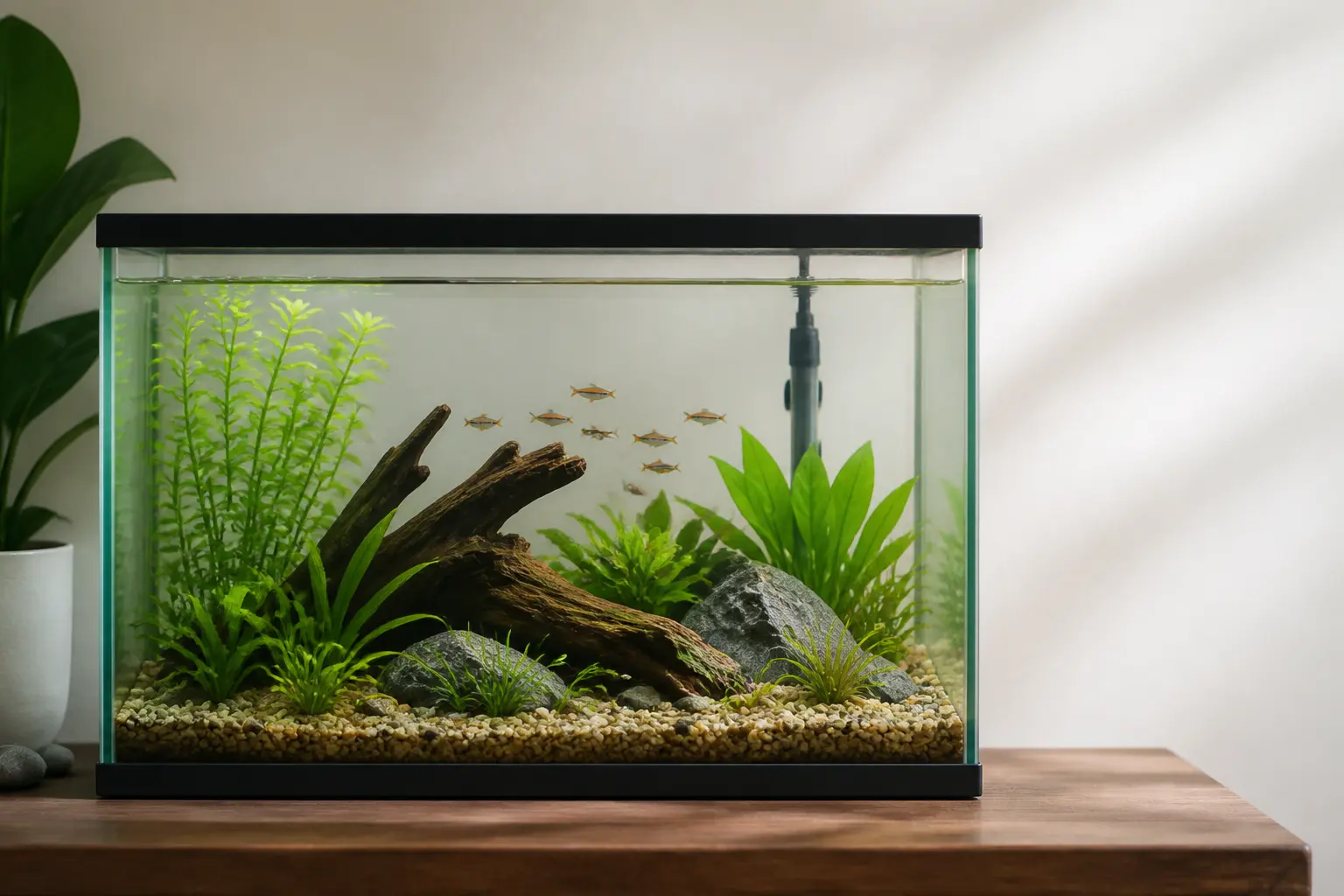
The best filter for a 5-gallon tank is usually a small sponge filter or a compact adjustable hang-on-back model. My default pick is the AquaClear 20 when you want adjustable flow and room for useful media. For a betta, shrimp, or fry, a small air-powered sponge filter is safer and easier to tune. A filter rated for a much larger aquarium can create a tiring current and take up too much space.
This guide compares seven filters that can physically suit a nano aquarium. I have not tested these units in a lab or aquarium. The recommendations come from published manufacturer specifications, filter design, and the practical constraints of a five-gallon tank. Check the listing and your local electrical requirements before ordering.
Quick comparison
| Filter | Best for | Flow control | Media style |
|---|---|---|---|
| AquaClear 20 Power Filter | Adjustable HOB | Yes | Basket |
| Tetra Whisper 10 Internal Filter | Simple internal setup | Limited | Cartridge |
| Aqueon QuietFlow Internal Power Filter 10 | Small planted tanks | Yes | Cartridge |
| Aquaneat Aquarium Sponge Filter | Shrimp and fry | Air valve | Foam |
| Pawfly Aquarium Sponge Filter | Quiet nano filtration | Air valve | Foam |
| NICREW Slim Internal Filter | Minimal footprint | Yes | Foam |
| Zoo Med Nano 10 External Canister Filter | Media flexibility | Valve | Canister |
Our picks
AquaClear 20 Power Filter
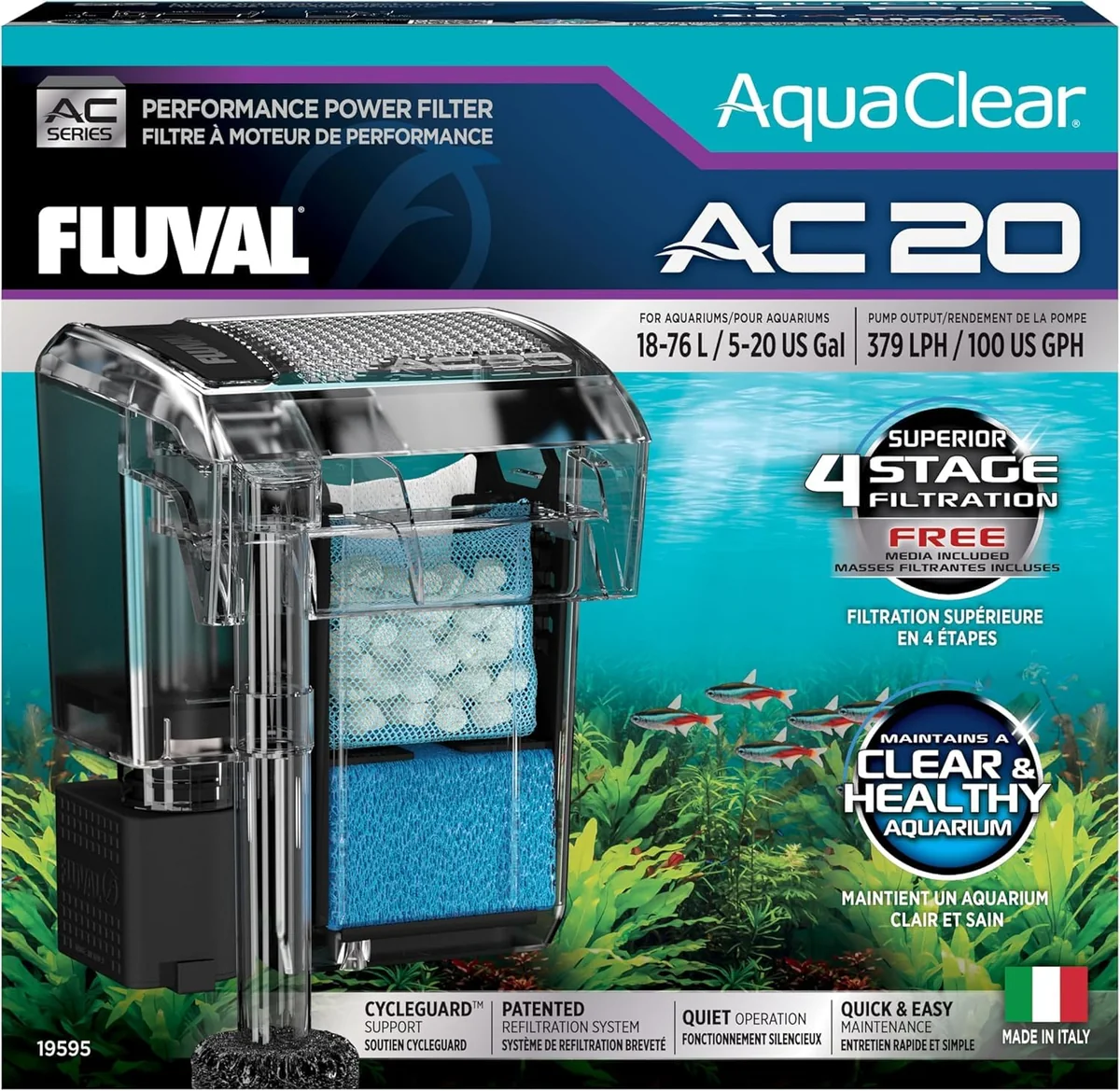
The AquaClear 20 is the most flexible choice here if you can fit a hang-on-back filter on the rim. Its adjustable flow gives you a way to reduce current for a betta or increase circulation for a lightly stocked tank. The media basket also lets you keep mechanical foam and biological media instead of relying on one disposable cartridge. On a five-gallon tank, turn the flow down first and watch whether fish can rest comfortably.
Pros: adjustable flow, reusable media, easy access for cleaning. Cons: occupies the back rim, needs a properly fitted lid, and the intake still needs a sponge guard for shrimp or fry.
Tetra Whisper 10 Internal Filter
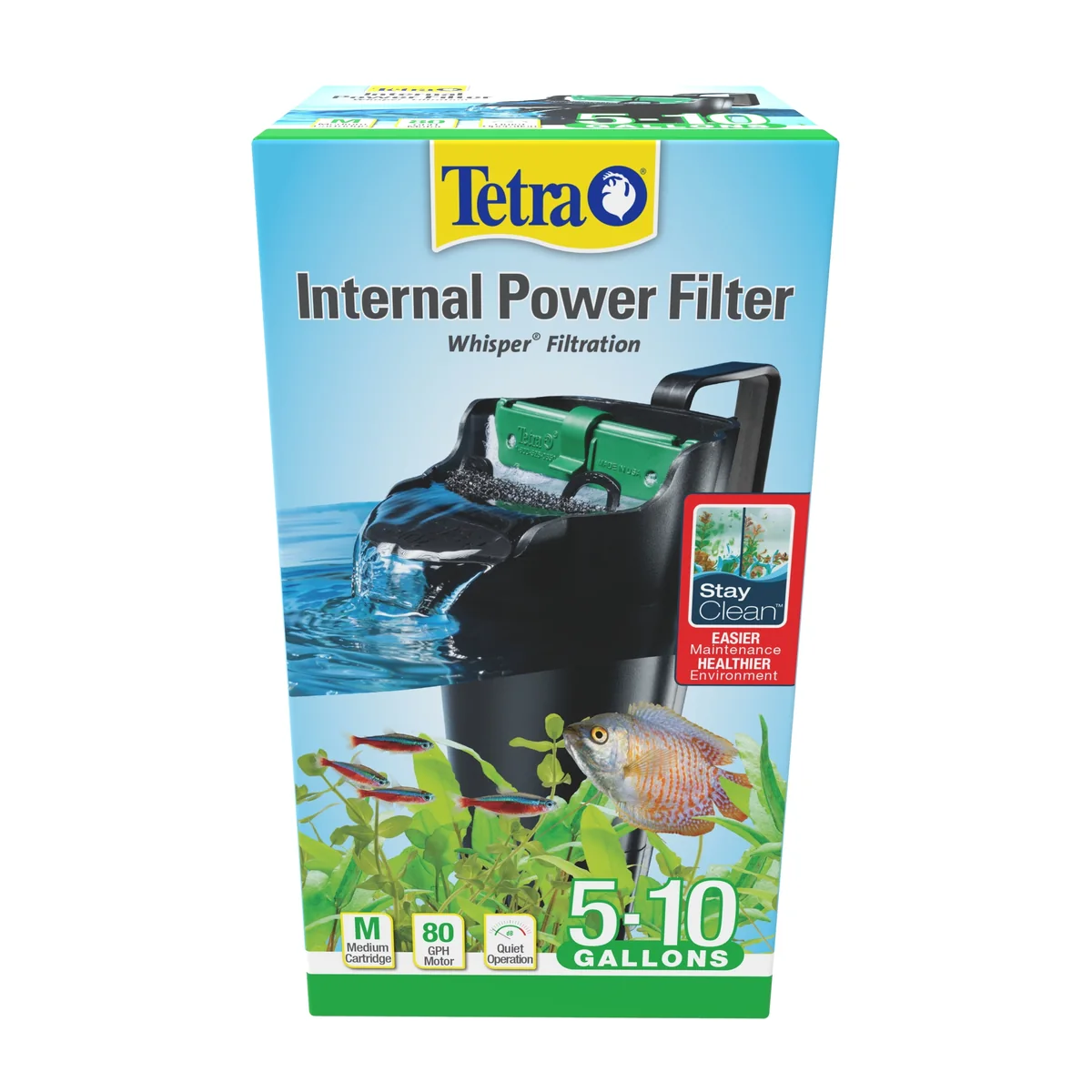
The Whisper 10 is a straightforward internal option for a tank where a rear-mounted unit will not fit. Internal filters keep the pump and media inside the aquarium, so measure the available corner before buying. Its small size suits a lightly stocked five-gallon setup, but cartridge-based designs are less flexible than a media basket. A pre-filter sponge can protect small livestock and make the intake less hazardous.
Pros: compact, simple installation, no rear clearance. Cons: takes aquarium space, replacement cartridges add cost, and the flow may still need baffling for long-finned fish.
Aqueon QuietFlow Internal Power Filter 10
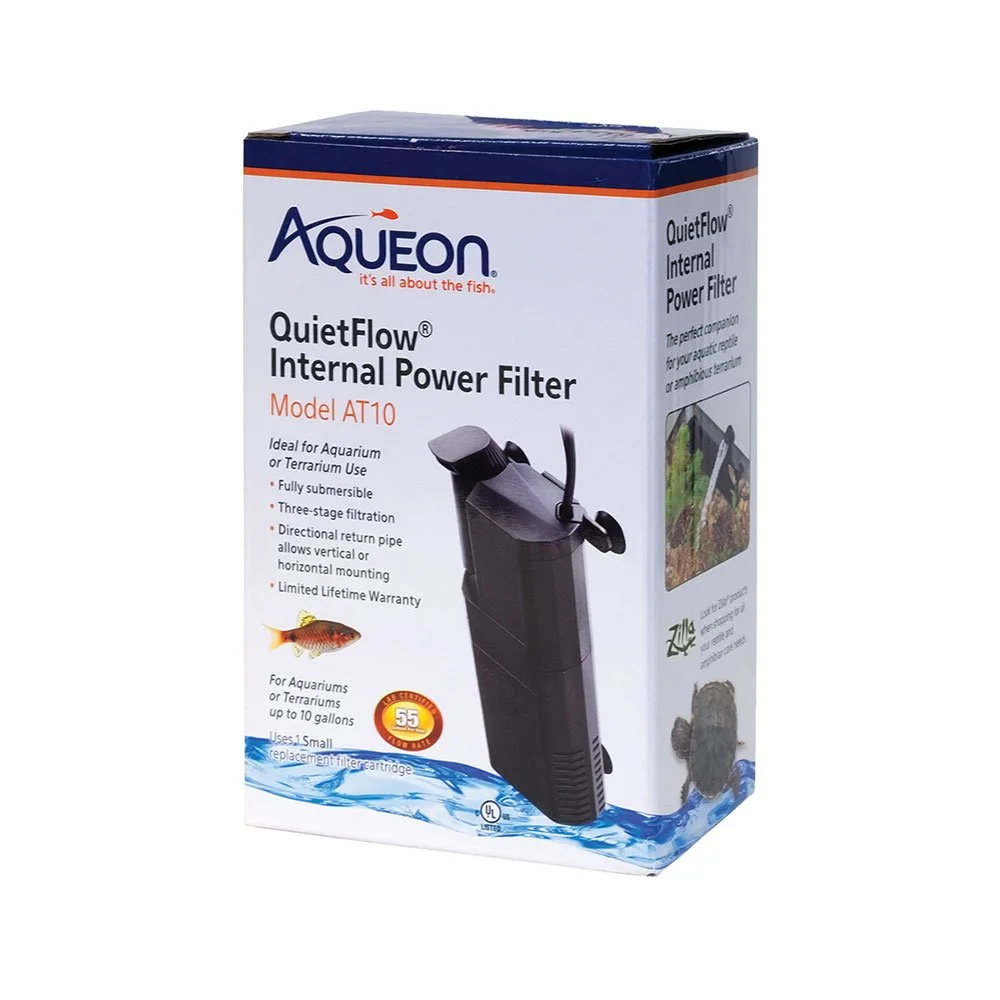
This compact internal power filter makes sense when you want powered filtration without hanging hardware over the rim. The adjustable outlet helps, although the outlet position and the tank’s water level determine how gentle it feels. It is a reasonable match for a small planted aquarium with a few small fish. Keep the intake clear of gravel and add a guard when keeping shrimp.
Pros: small footprint, adjustable output, easy to see when water movement stops. Cons: internal volume is limited, cleaning requires lifting it from the tank, and cartridges may not suit every keeper.
Aquaneat Aquarium Sponge Filter
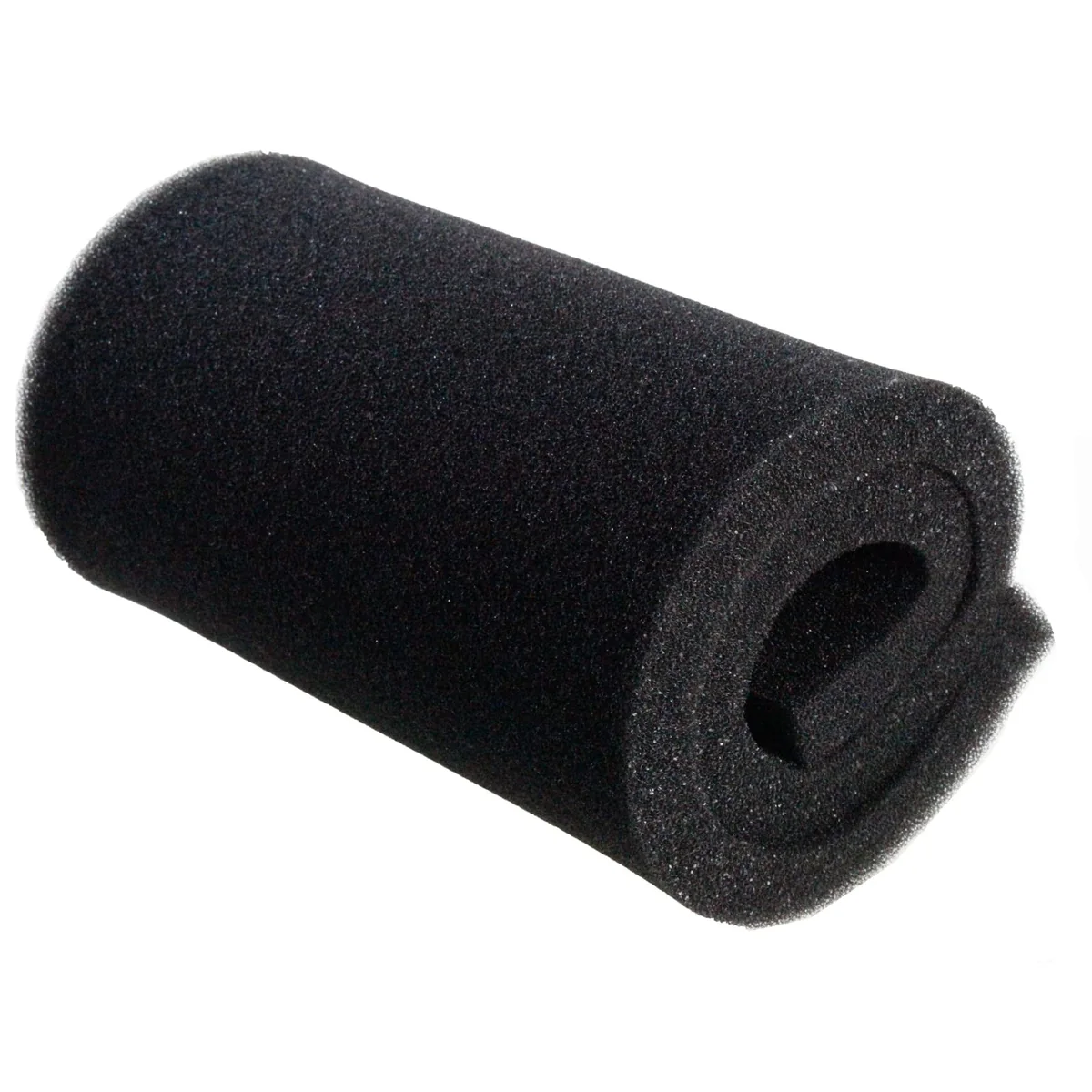
A small Aquaneat sponge filter is my safer starting point for shrimp, fry, and a betta that dislikes strong flow. It needs an air pump, airline, and check valve, but the foam intake is naturally gentler than an exposed power-filter intake. Squeeze the sponge in a bucket of removed aquarium water, never under chlorinated tap water, to preserve its useful bacteria.
Pros: gentle intake, inexpensive media, strong choice for shrimp. Cons: needs an air pump, visible in the tank, and produces bubbles that some fish dislike.
Pawfly Aquarium Sponge Filter
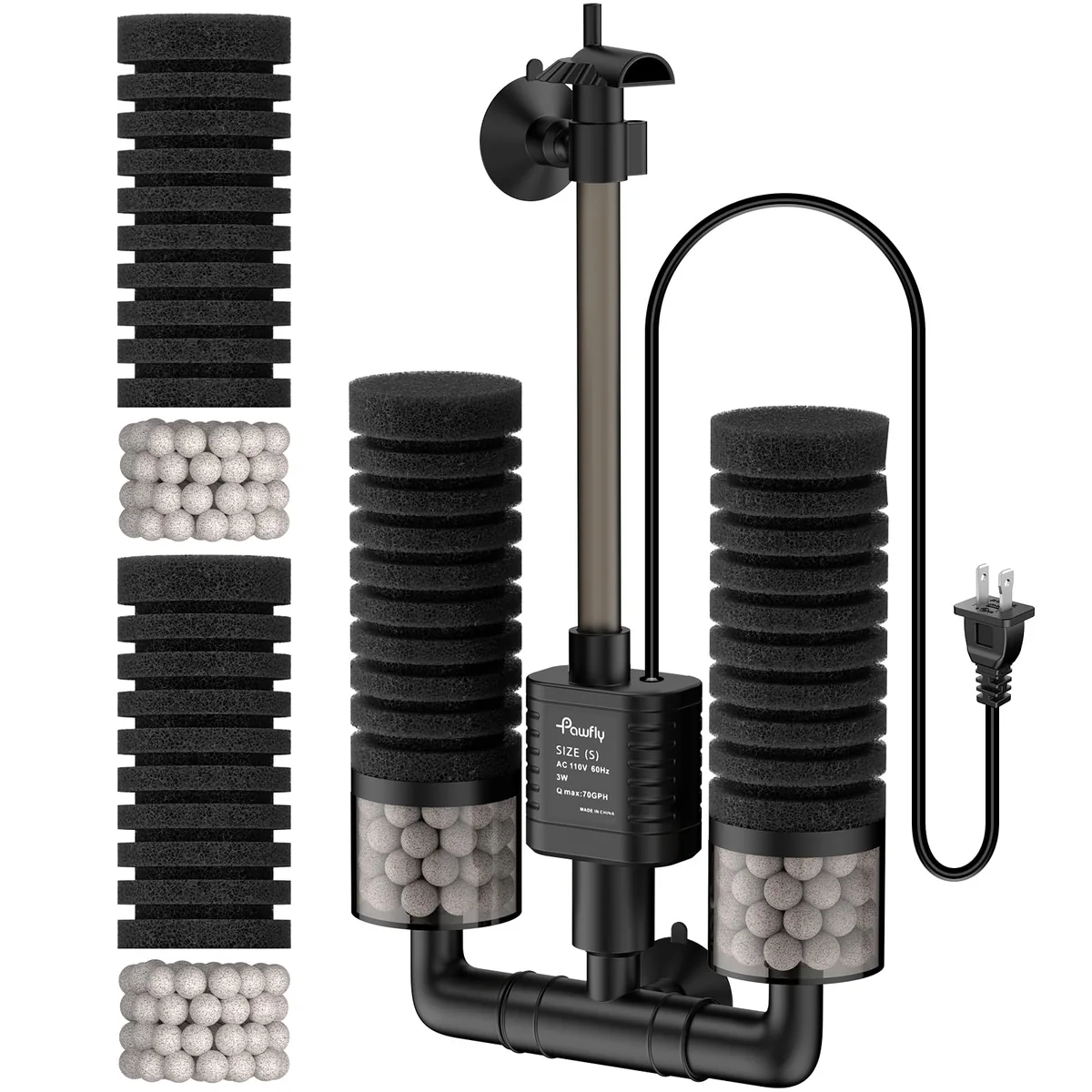
Pawfly’s small sponge format is another sensible nano choice when livestock safety matters more than a hidden installation. Match the sponge size to the aquarium and use an adjustable air valve so the surface only ripples gently. The foam provides both particle capture and a place for beneficial bacteria. It is especially practical in a quarantine or breeding tank because it is easy to move after cycling.
Pros: gentle flow, shrimp-safe foam intake, easy to seed. Cons: needs airline equipment, can look utilitarian, and the foam needs regular rinsing.
NICREW Slim Internal Filter
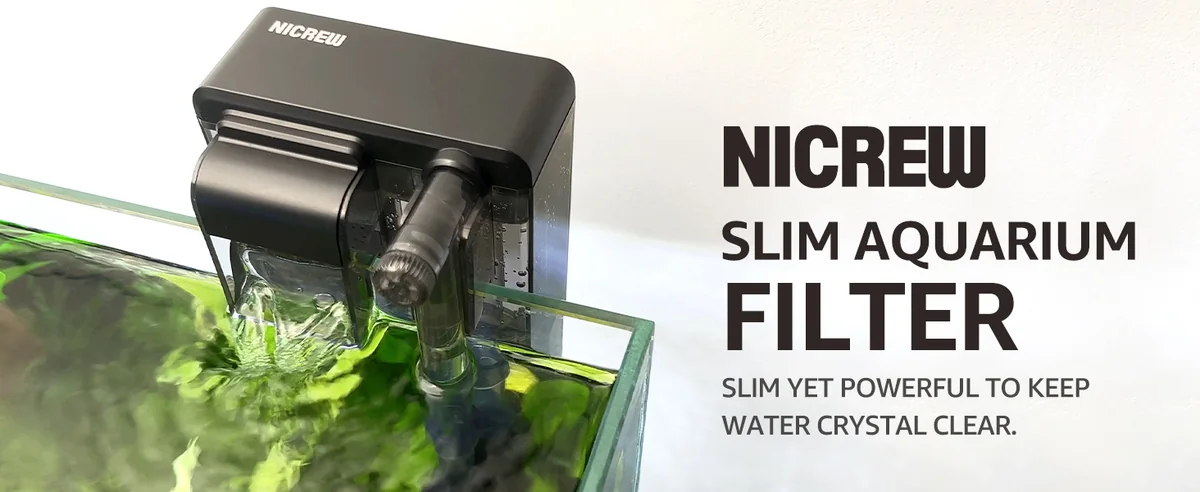
The NICREW Slim is worth considering when a narrow internal body is easier to hide than a sponge or HOB. Confirm the model’s listed capacity and flow adjustment because NICREW sells several similar-looking filters. A foam intake guard improves safety for shrimp. Leave room around the outlet so plants or hardscape do not turn a modest pump into a turbulent jet.
Pros: narrow body, powered circulation, washable foam option. Cons: model variants differ, internal space is limited, and it still needs careful flow positioning.
Zoo Med Nano 10 External Canister Filter
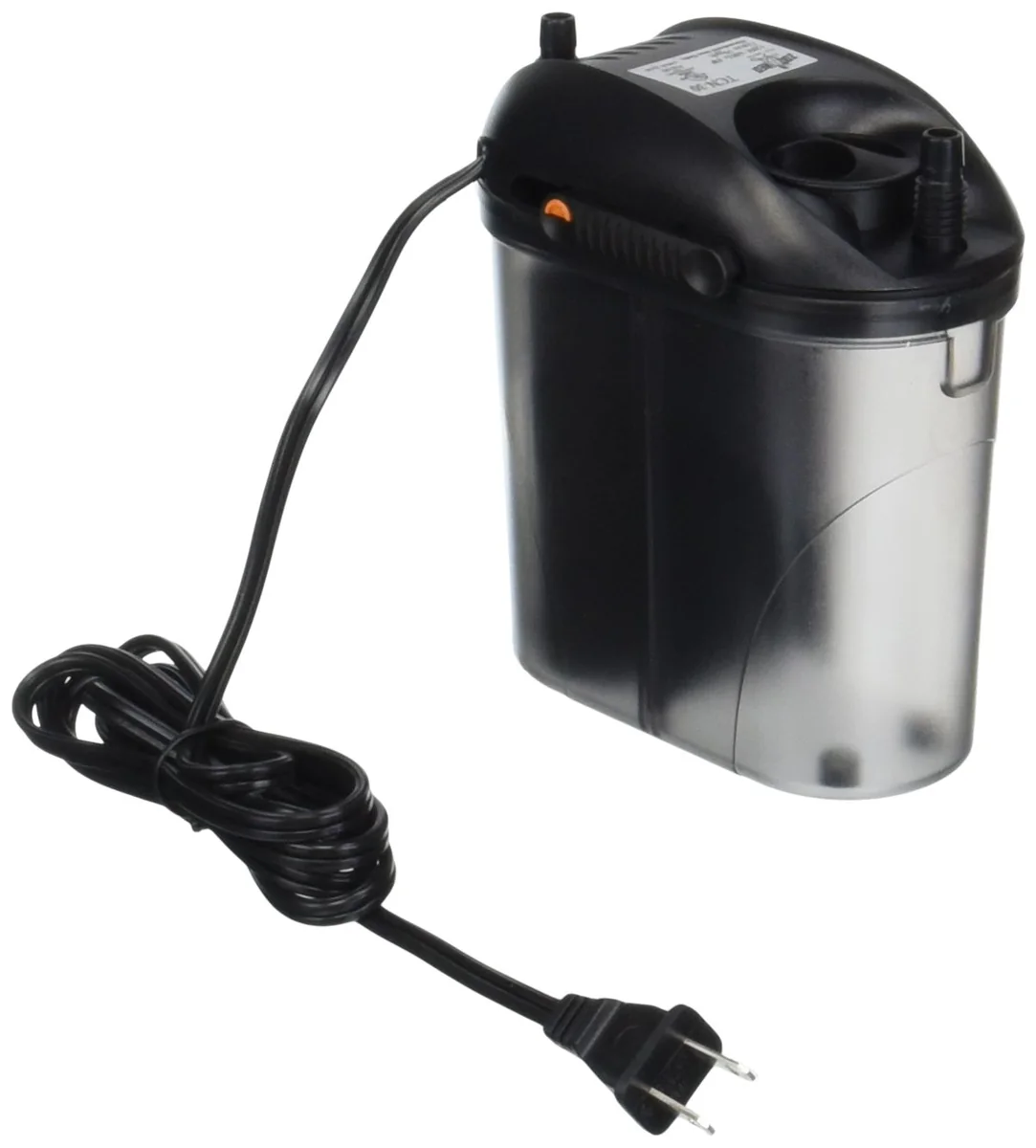
An external nano canister is a specialist choice for a five-gallon aquascape where you want the display clear and you value media flexibility. It costs more and adds hoses, seals, and priming steps. That complexity is hard to justify for a simple betta bowl-sized setup, but it can make sense when the aquarium is densely planted and every inch inside matters. Check cabinet placement and leak-safe hose routing before choosing it.
Pros: keeps equipment outside, flexible media, clean display. Cons: higher complexity, more connections to inspect, and potentially too much flow if set up carelessly.
What matters in a 5-gallon filter
Flow is the first constraint. A five-gallon tank has little room for fish to escape a strong jet. Look for adjustable output, a spray bar, or a sponge pre-filter. A betta should be able to reach the surface and rest without being pushed around. Shrimp and fry need an intake that cannot pull them into an impeller.
Footprint matters almost as much as flow. Measure the tank’s rear rim, lid cutout, and corner depth. Internal units consume swimming space, while HOBs need a level rim. Sponge filters are often the most forgiving, but they need an air pump outside the tank.
Use a filter with enough media for the stock level, not merely the biggest pump rating. Foam catches debris and houses bacteria. Rinse it in removed tank water during a partial water change. Replace media only when it falls apart, and never replace every biological surface at once.
Prime a new filter with dechlorinated water and confirm that the intake stays submerged. Never run a powered unit dry. After installation, watch the waterline, listen for rattling, and check that the outlet still moves water after the tank settles. A pre-filter sponge also adds a useful cleaning interval before debris reaches the main filter.
FAQ
Is a filter required for a 5-gallon aquarium?
Most stocked five-gallon aquariums benefit from filtration because it moves water through biological media and improves oxygen exchange. A filter does not replace water changes or sensible stocking.
Can a 5-gallon tank use a filter rated for 10 gallons?
It can if the flow is genuinely adjustable and the outlet can be softened. A fixed high-flow filter is a poor choice even when its rating sounds safe on paper.
Are sponge filters safe for shrimp?
Yes, a properly sized sponge filter is among the safer designs for shrimp and fry. Use a check valve and set gentle bubbles with an air control valve.
How often should I clean a nano filter?
Check flow weekly. Rinse clogged foam in removed aquarium water when flow drops, often every few weeks. The exact interval depends on stocking, feeding, and plant debris.
Sources and methodology
I compared manufacturer product pages and manuals for the listed filter types, then checked aquarium-care guidance from aquarium retailers and established fishkeeping resources for flow, intake protection, cycling, and maintenance practices. Product suitability is an editorial assessment for a five-gallon use case, not a claim of hands-on testing. Models, dimensions, stock, and electrical versions can change. Confirm the current listing before purchase.