
Buying guide
Best wavemaker for a nano reef tank
A nano wavemaker needs a genuinely gentle minimum, a mount that suits thin glass, and a guard you can clean without dismantling the aquarium.
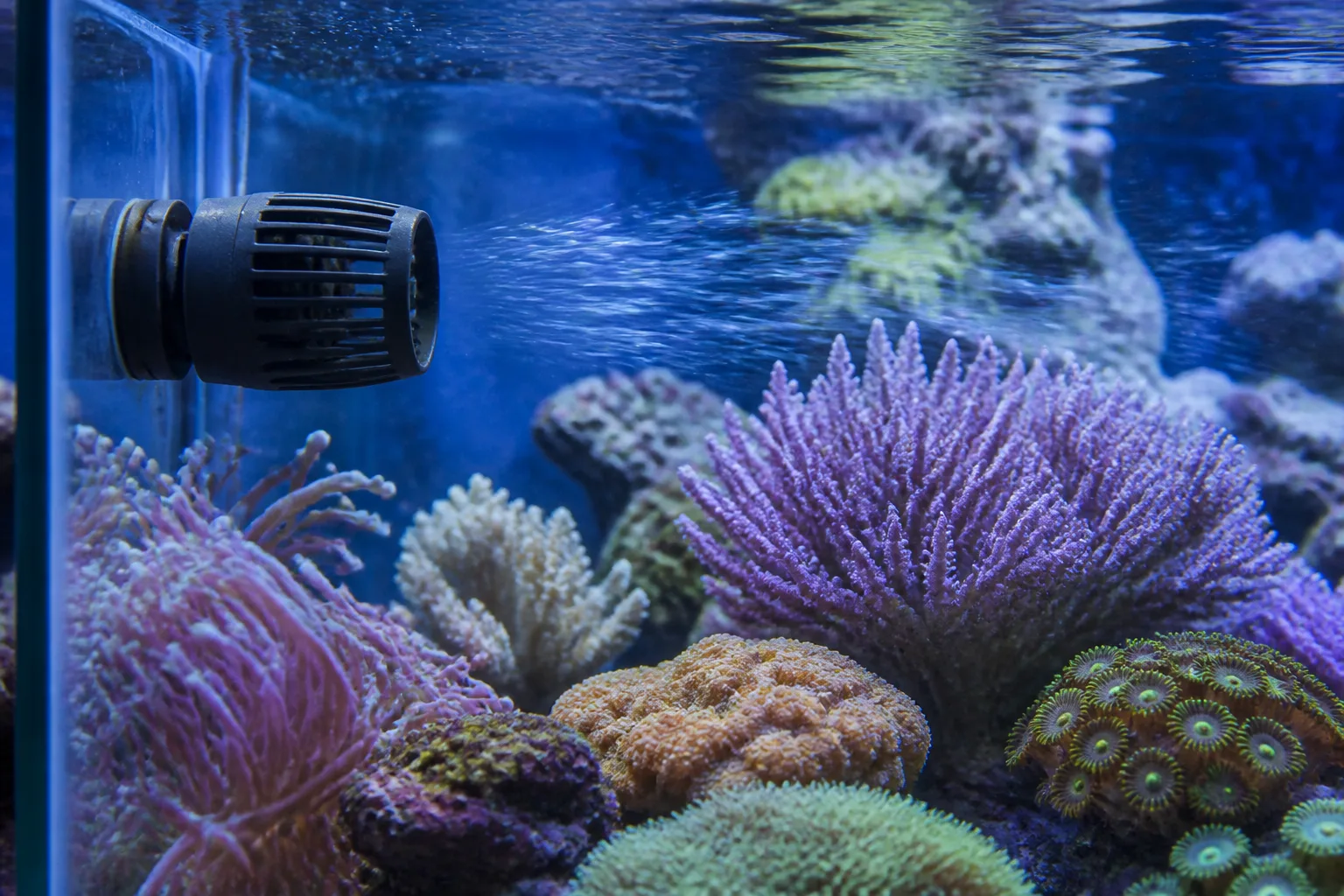
Quick comparison
| Product | Best for | Main drawback |
|---|---|---|
| AI Nero 3 | Small reef with app control | The app adds setup overhead |
| Sicce Voyager NANO 2000 | Compact directional circulation | Less programmable than smart pumps |
| Tunze Turbelle Nanostream 6040 | Adjustable nano layouts | Check controller and accessory requirements |
| Jebao SLW-5 | Budget variable flow | Warranty and parts vary by seller |
| Hydor Koralia Nano 900 | Simple, small footprint | Fixed output gives less fine control |
| Current USA eFlux Wave Pump 660 | Tanks using the LOOP system | Full control may require a separate controller |
| Maxspect Gyre Jump MJ-GF2K | Broad movement across a nano | Cleaning the rotors takes more attention |
This is a research-based shortlist, not a hands-on ranking. Nano aquariums punish excess: a pump that seems modest in a large display can lift sand, fold a mushroom coral, or leave a fish fighting the current in a small box. Confirm the current model, glass thickness, power supply, controller compatibility, and included magnet before ordering. Product ranges and retailer listings change.
Our picks
AI Nero 3
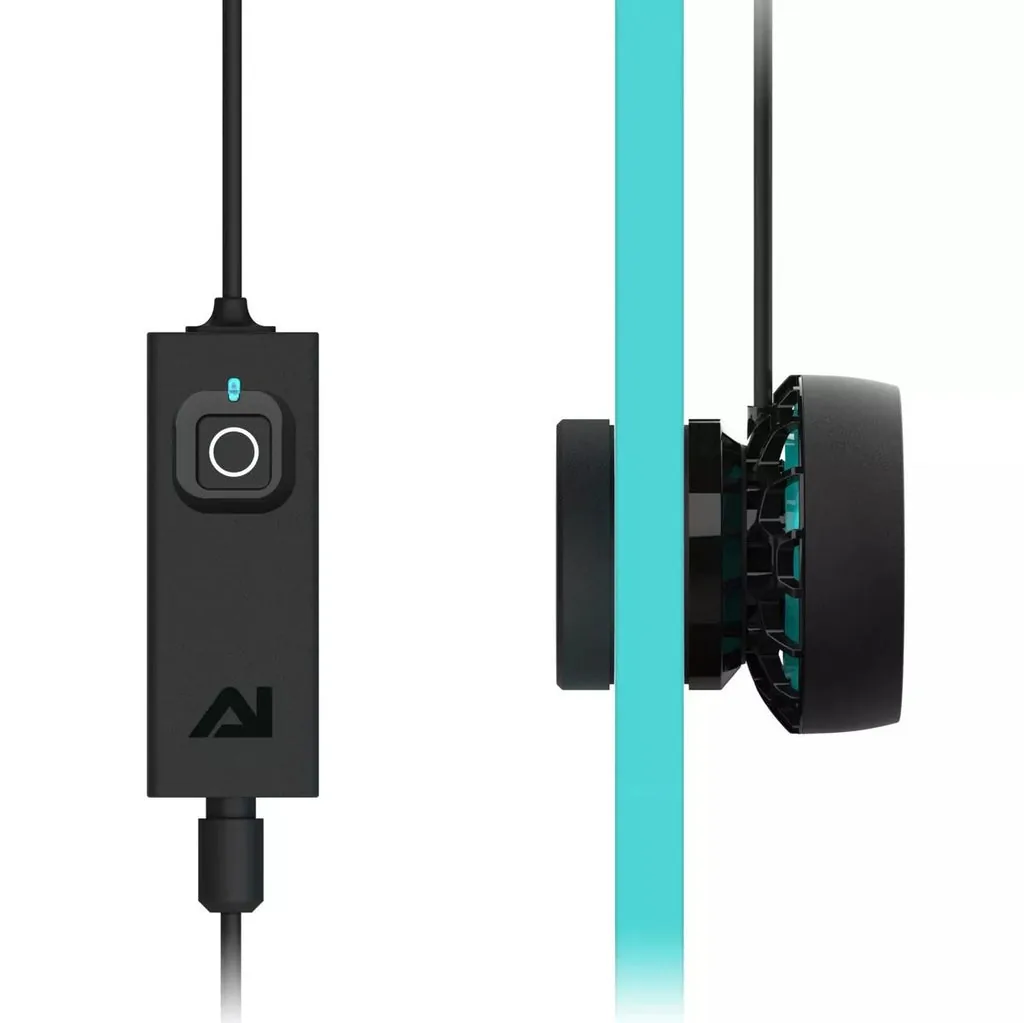
The Nero 3 is the sensible starting point when a nano reef needs a small, wide-flow pump with gradual adjustment. AI documents constant, pulse, and random modes, with control through its app ecosystem. That makes it easier to soften the first setting and create a daily routine rather than repeatedly nudging a knob. The round wet side sits inside the aquarium while the dry motor stays outside, so leave room around the glass and route the cord away from salt spray. Its intake still needs a visual check after feeding and maintenance. For a mixed nano with soft coral and a few fish, the broad outlet is more useful than a narrow blast aimed at one colony. The catch is software. A buyer who wants a plug-in-and-forget device may find app pairing unnecessary. Pros: small profile, several flow patterns, fine remote adjustment. Cons: app setup and exact glass compatibility need checking. See AI’s Nero range for current specifications.
Sicce Voyager NANO 2000
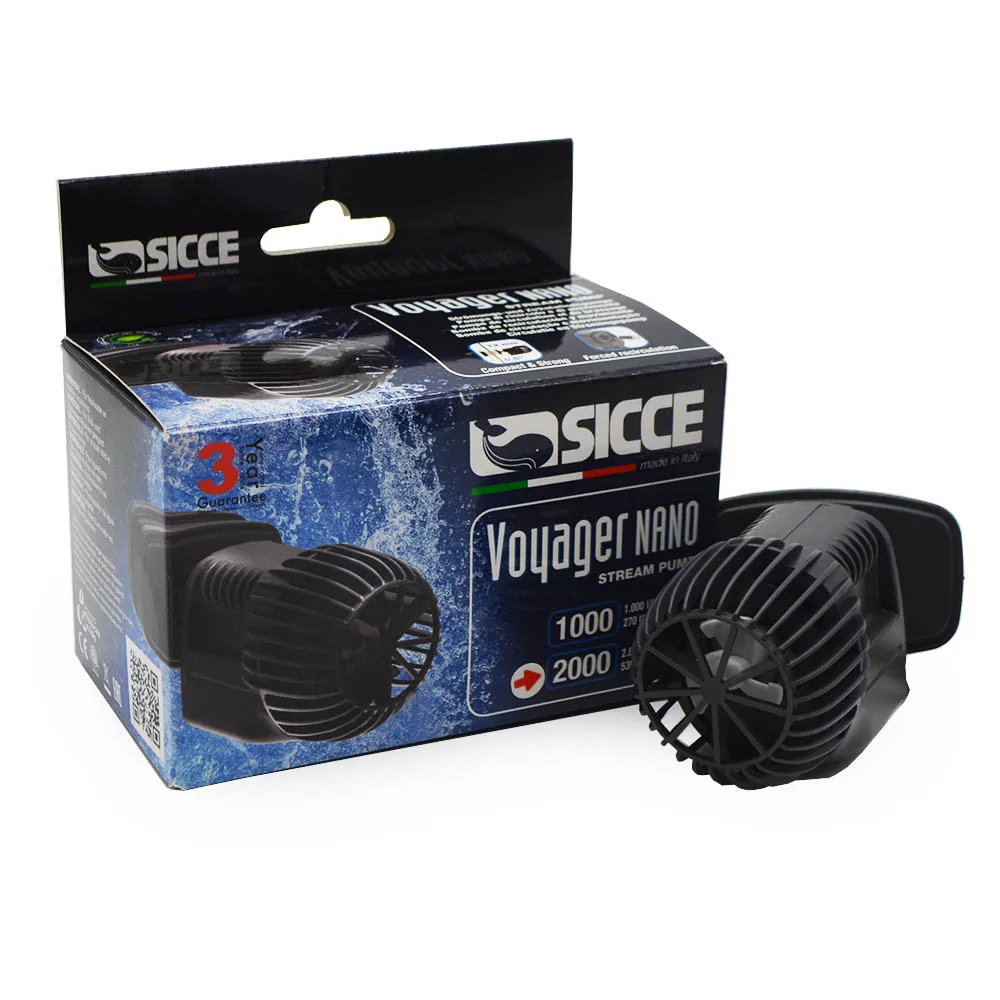
Sicce’s Voyager NANO 2000 is a better fit for a keeper who values a compact directional pump over an app-controlled schedule. The propeller body points where you need it, and its magnetic mounting format helps on a small pane where bulky brackets steal space. Aim it along the front or behind the rock rather than straight at a leather coral. The front guard is a service point, not decoration. Turn the pump off, remove salt and algae, and inspect the propeller before it becomes noisy or sheds debris. A simple pump has an honest limitation: without the same pattern programming offered by smart models, you shape variation with placement or an external controller. That can be an advantage for a beginner who wants fewer settings, but it leaves less room for a changing coral garden. Pros: tidy body, straightforward placement, serviceable mechanical design. Cons: less built-in scheduling and less control over a very low output. Check Sicce’s Voyager line for the current regional version.
Tunze Turbelle Nanostream 6040
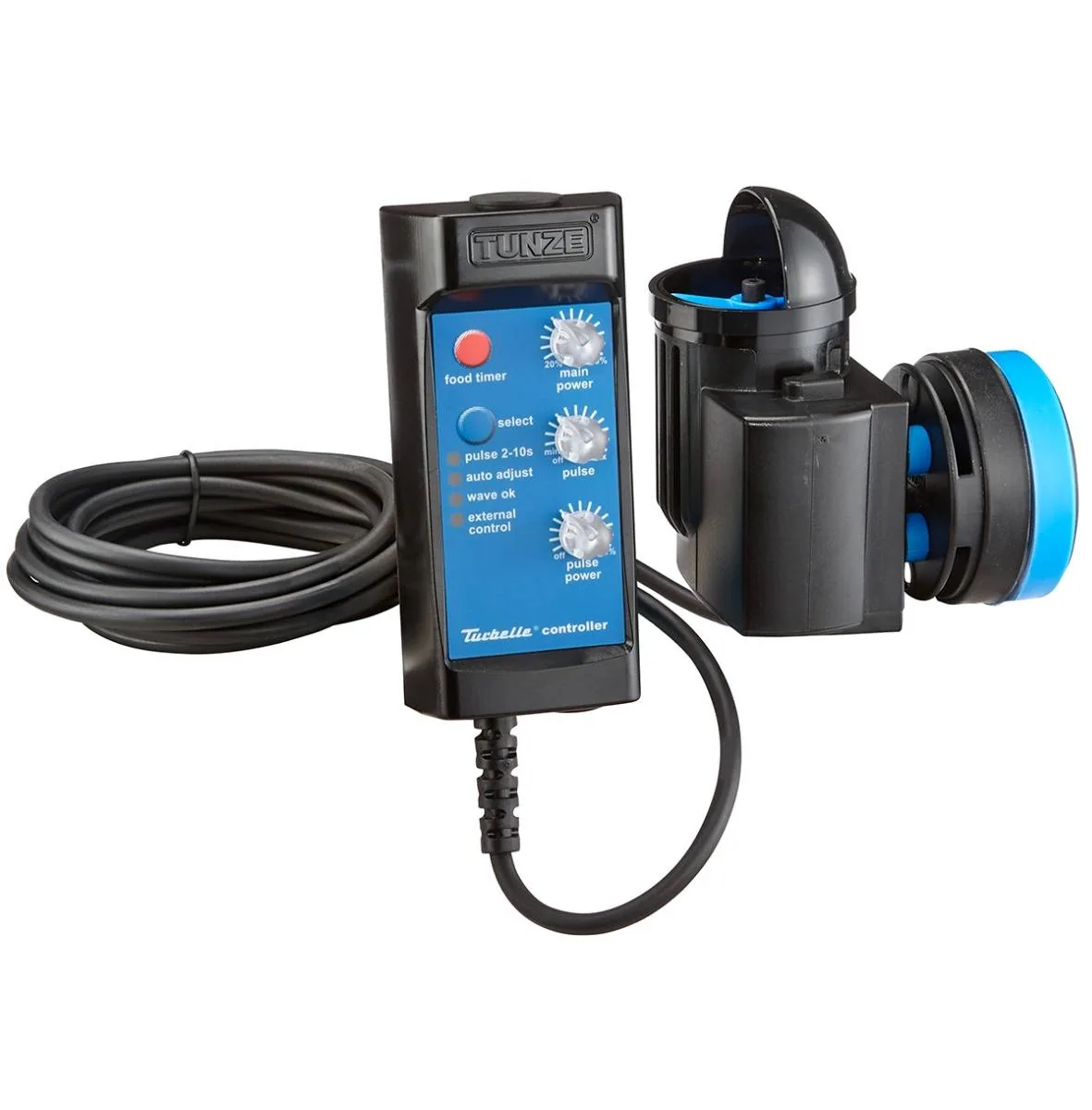
The Nanostream 6040 belongs on the shortlist when flexible positioning matters more than the smallest possible pump body. Tunze’s nano stream format uses a magnet mount and a protected propeller housing, while the adjustable holder lets you change the direction without moving the outside magnet. That is useful in a narrow cube where one or two degrees can change whether sand stays put. Some 6040 setups use a controller for pulsing and timing, so verify which package is in the listing instead of assuming a controller is included. Keep the cable above a drip loop and inspect the intake cover during water changes. Its drawback is practical rather than dramatic: the hardware and accessories can make this a more involved purchase than a fixed-output nano pump. Pros: adaptable angle, protected intake, established service parts. Cons: package and control requirements need careful checking. Tunze publishes the current Nanostream information.
Jebao SLW-5
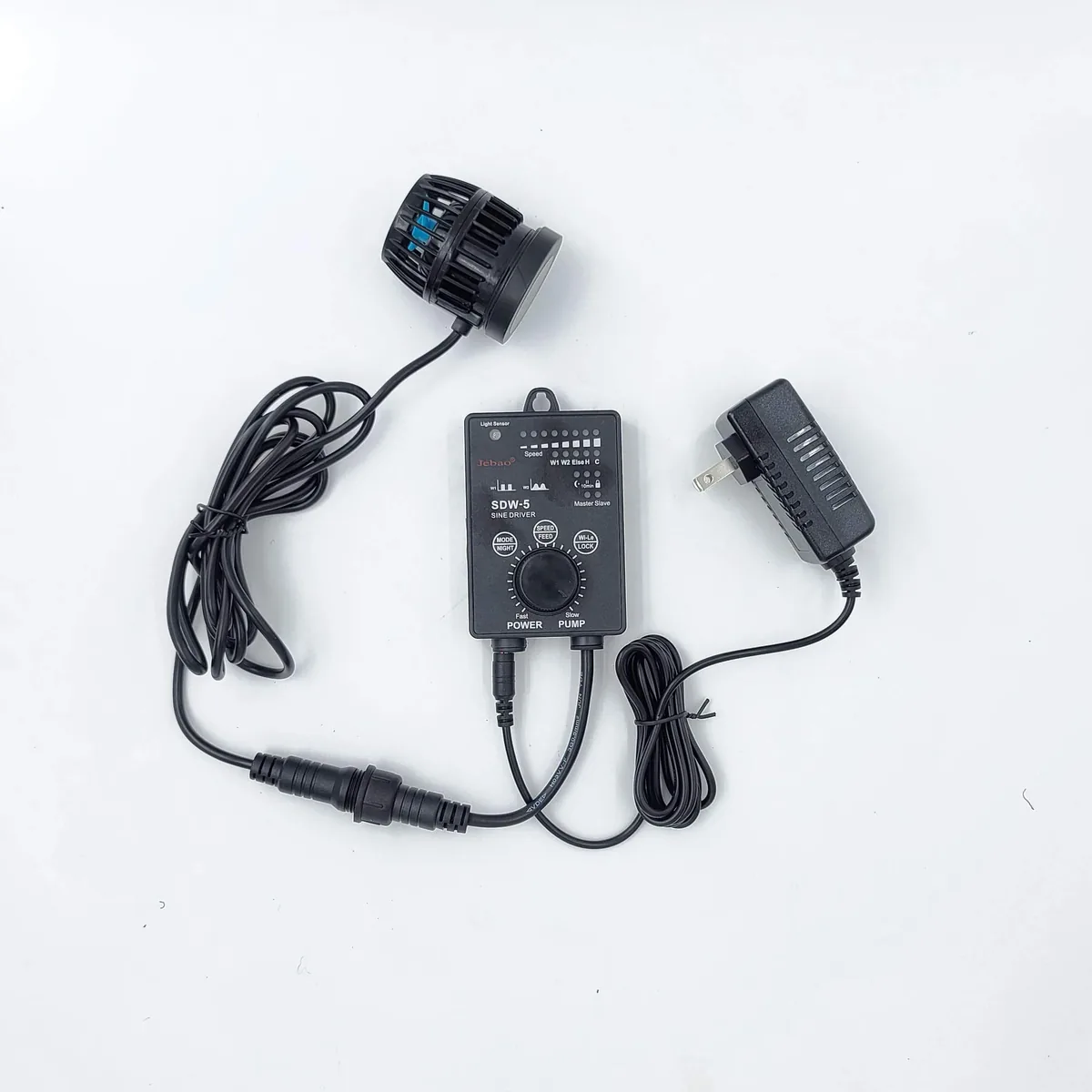
The SLW-5 is the budget pick for someone who wants variable speed and a low-profile, broad outlet without paying for a premium app ecosystem. Its controller can provide a steady run or changing pattern, so start with a restrained setting and watch the sand bed before raising it. The internal pump should sit where its cable can form a drip loop, and the magnetic mount must match the aquarium’s pane thickness. Protect small snails and curious fish by keeping the intake cover in place. Jebao products are sold through many resellers, which means the included power supply, regional plug, warranty route, and spare parts deserve more attention than the product name alone. Pros: controllable shape of flow, compact body, generally accessible price tier. Cons: seller support and long-term parts access are less predictable. Use Jebao’s SLW information to compare the current model before checkout.
Hydor Koralia Nano 900
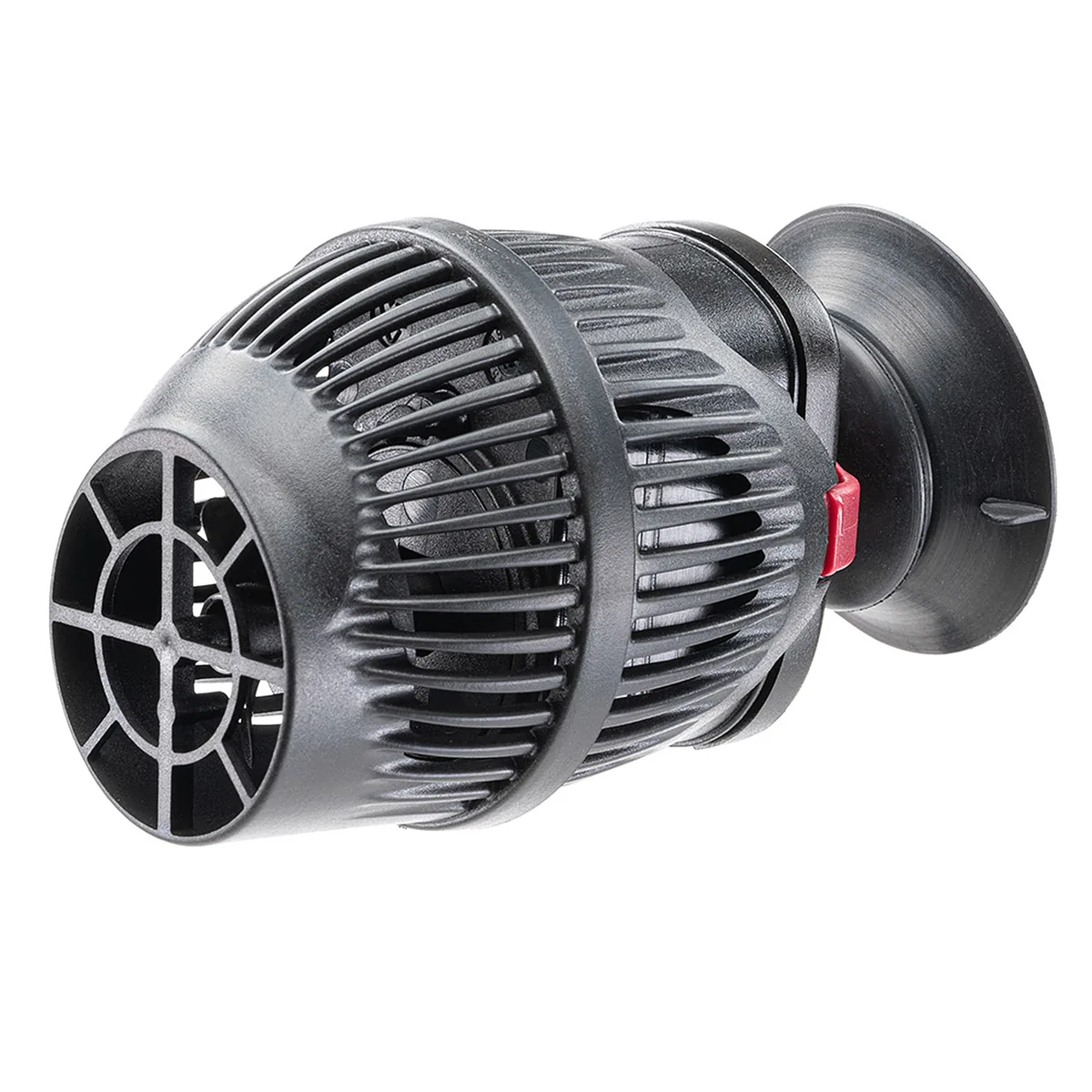
The Koralia Nano 900 is for the nano keeper who prefers a small, conventional circulation pump and can live without programmable patterns. Its compact propeller housing and magnetic attachment make it easy to place high on a side panel, then angle the stream across the rockwork. That placement can create a calmer pocket behind the rock for a shy fish or a soft coral that dislikes a direct jet. Clean the front cover and rotor regularly because a small amount of algae can change the sound and flow. Fixed output is the important tradeoff. You control the aquarium mostly with position, rock arrangement, or an external timer, not a built-in ramp. Pros: uncomplicated operation, small footprint, easy directional aiming. Cons: fixed flow is less forgiving as livestock grows. Confirm the exact regional model through Hydor’s movement-pump collection.
Current USA eFlux Wave Pump 660
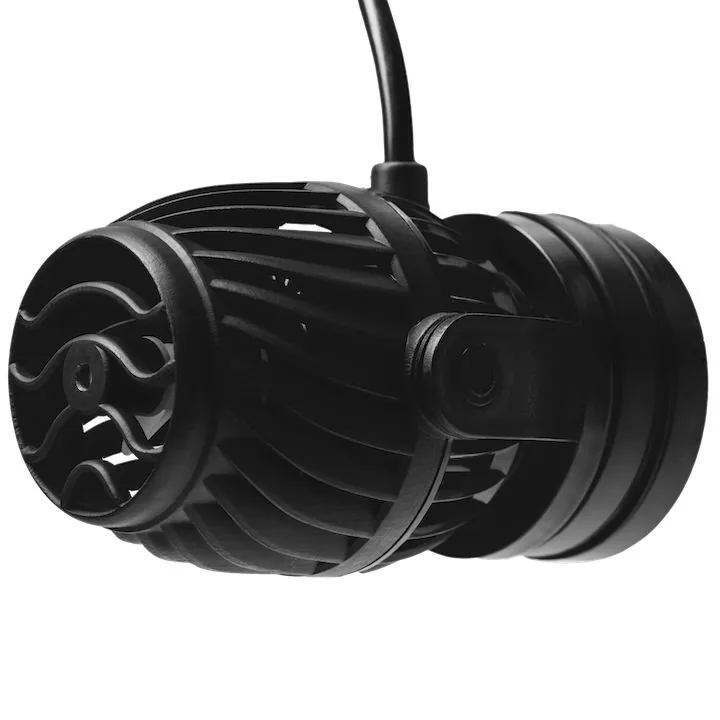
The eFlux Wave Pump 660 makes most sense when the aquarium already uses Current USA’s LOOP control system. Its value is the ecosystem: a compatible controller can coordinate flow changes with other equipment instead of adding another unrelated remote. The pump head can be directed across the display, and the guard gives a physical barrier around the propeller. On a nano, put it high enough to avoid a sand storm but low enough to move water behind the rock. The decision is less attractive if this is the only eFlux device you own, because full scheduling may require additional control hardware. Turn it off before removing the wet side and keep the cable connection dry. Pros: ecosystem control, adjustable direction, protected rotor. Cons: the complete setup can cost and occupy more than a stand-alone pump. Read Current USA’s eFlux documentation and match the controller version.
Maxspect Gyre Jump MJ-GF2K
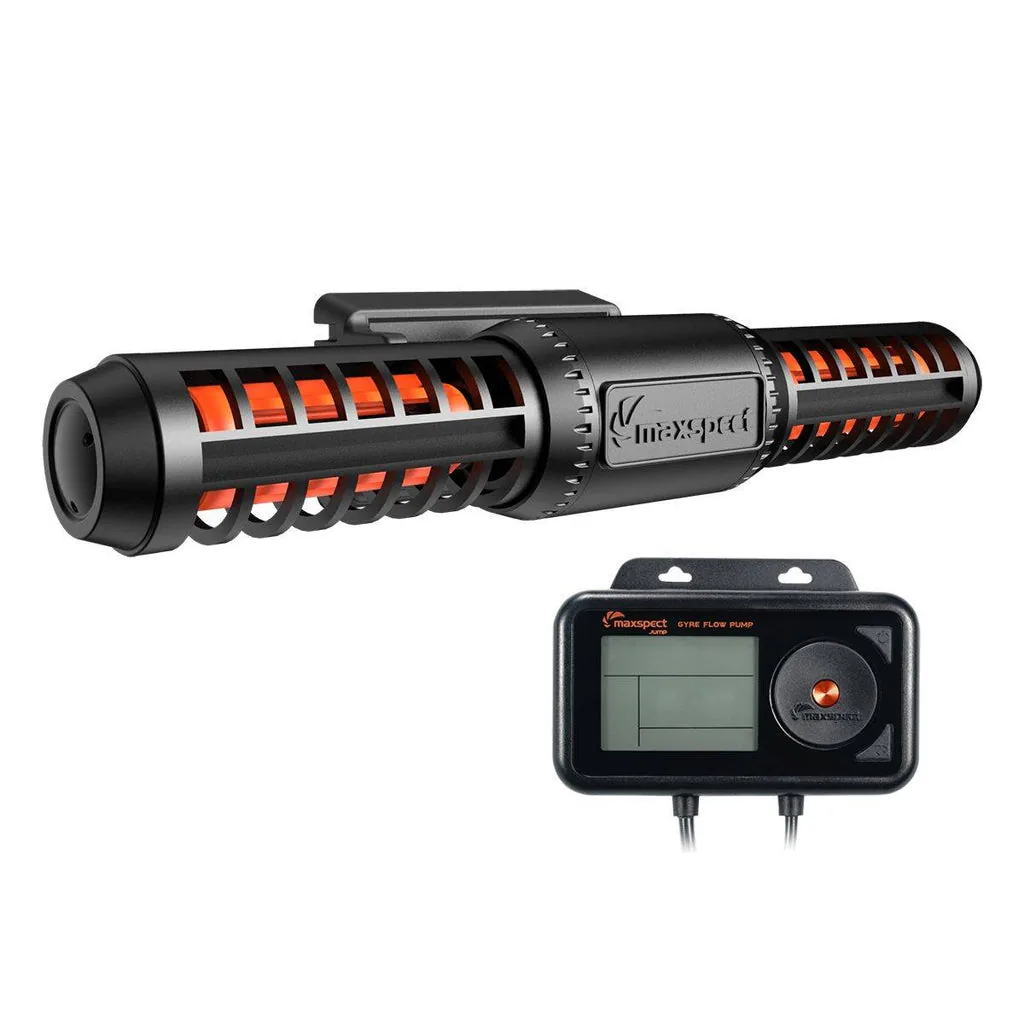
The Gyre Jump MJ-GF2K is the outlier here. Instead of a round point source, its cross-flow body is intended to push water across more of the aquarium. That can help a nano with dense rockwork and a dead corner, provided the lowest usable setting is gentle enough for the livestock. Mount it with clear access to both rotor covers. The longer body also makes cleaning less of a grab-and-go job than a tiny propeller pump, so service space matters before installation. Use an angled placement or rockwork to break the stream, and never let a soft coral sit directly in the outlet path. Pros: broad cross-tank movement, useful for awkward layouts, programmable options in the Jump range. Cons: larger cleaning footprint and more setup sensitivity in a very small tank. Check Maxspect’s Gyre Jump range for the current model and controller details.
How to choose a nano wavemaker
Measure the glass before comparing flow modes. Record pane thickness, the clear area around the proposed mount, and the distance from the surface to the pump. A magnet that is too weak can slide; one that is too strong can chip glass when it snaps together. Leave enough cable to make a drip loop below the outlet and keep the plug away from salt creep.
Start with circulation aimed along the long wall or behind the rock structure. A nano reef benefits from moving water through gaps where waste settles, but the coral should not stay pinned in one direction. Begin on the lowest setting, wait through a feeding cycle, and look for sand lifting, retracted polyps, or fish avoiding one side of the tank. Change one variable at a time. Pulse and random modes are useful only after a steady baseline works.
The intake guard matters as much as the motor. Small snails, loose macroalgae, and wandering anemones can find a pump. Switch it off before touching the wet side. Rinse the cover and rotor in removed aquarium water, inspect the cord for damage, and replace a cracked guard. Do not run a pump with its protective housing missing.
Frequently asked questions
Can a nano reef wavemaker be too powerful?
Yes. A strong pump can excavate sand, whip soft coral tissue, and leave fish with no quiet route. A controllable pump with a low usable setting is safer than chasing a headline flow figure.
Where should a wavemaker sit in a nano tank?
Usually high on a side or rear pane, aimed across the surface or behind rock. Keep the outlet below the waterline and away from a coral that needs a calmer pocket. Test placement with the pump off before committing the magnet.
Do soft corals need random mode?
No. They need suitable movement and oxygen exchange. A steady, moderate stream is a good starting point. Add variation only when you can still identify where calm areas remain.
How often should I clean a small wavemaker?
Inspect it weekly for salt, algae, and snails. Clean the guard and rotor when buildup changes sound or output. Follow the model’s manual for disassembly and avoid tap water on delicate electronics.
Is a rear-chamber mount different from a display mount?
Yes. Rear chambers have narrow baffles and changing water levels, so a magnet pump may not fit or may run partly exposed. Measure the chamber and choose a pump designed for that space.
Recommendation
For most nano reef owners, I would compare the AI Nero 3 and Sicce Voyager NANO 2000 first. Choose the Nero 3 if app-based patterns and gradual adjustment matter. Choose the Sicce when a compact directional stream and fewer controls are the better match. The other five earn a place when an existing controller, a fixed-output preference, a broad cross-flow layout, or a particular mount changes the decision.
Sources and methodology
We reviewed current manufacturer pages from AI, Sicce, Tunze, Jebao, Hydor, Current USA, and Maxspect. We compared pump form, adjustment method, mount placement, intake protection, cleaning access, and nano-reef suitability. No hands-on testing was performed. Product images are category visuals and may not show the exact branded model. Verify the current manual, regional voltage, warranty, and retailer listing before purchase.