
Buying guide
Best protein skimmer for a nano reef tank
A nano skimmer earns its space only when the collection cup is reachable and the water level stays predictable.
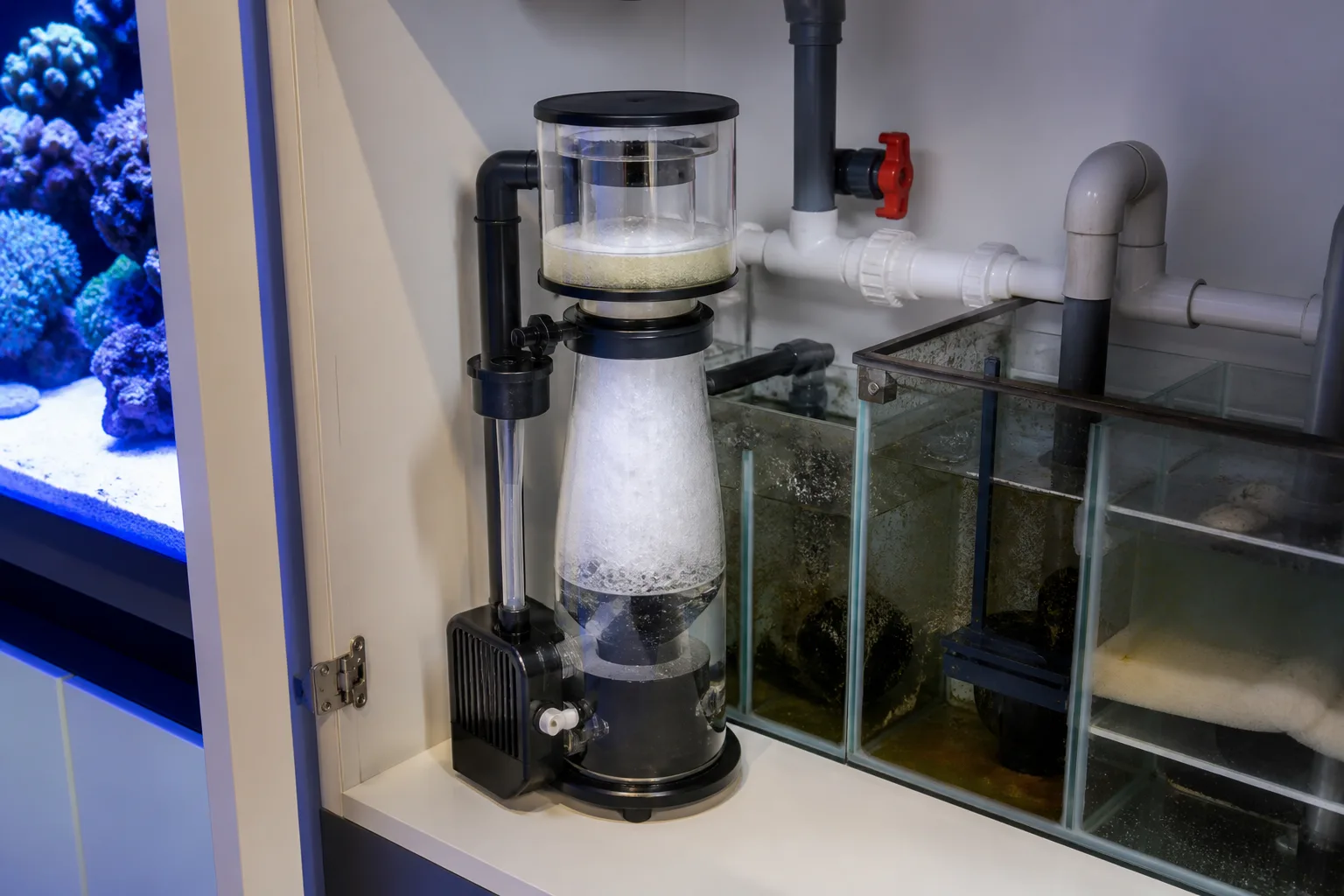
The Tunze Comline DOC Skimmer 9001 is my first look for a nano reef with a rear chamber or a small sump. Its published size range and accessible cup make the choice easier to check on paper. For a tank with no suitable chamber, the Fluval Sea PS1 is a practical HOB-style alternative. The right skimmer still depends on water depth, livestock load and whether you can tolerate pump noise beside your desk.
This is a research-based guide, not a hands-on test. Measure the operating water depth, lid clearance and cup removal path before ordering. Ratings are not guarantees for every bioload.
Quick comparison
| Product | Format and fit | Nano reef drawback |
|---|---|---|
| Tunze Comline DOC Skimmer 9001 | Internal or rear-chamber nano skimmer | Needs the correct immersion depth |
| Fluval Sea PS1 Protein Skimmer | HOB-style marine nano setup | External footprint and tuning noise |
| AquaMaxx NF-1 Nano Skimmer | Small in-chamber skimmer | Check chamber width and cup access |
| Bubble Magus QQ1 | Compact hang-on skimmer | HOB body can compete with a lid |
| Innovative Marine SkimMate Ghost | Rear-chamber AIO installation | Primarily useful where that chamber fits |
| Aquatic Life 115 Mini Internal Skimmer | Internal nano or small sump use | Cup and pump need service room |
| IceCap K1 Nano Skimmer | Small sump or chamber setup | Confirm depth and replacement parts |
Our picks
Tunze Comline DOC Skimmer 9001
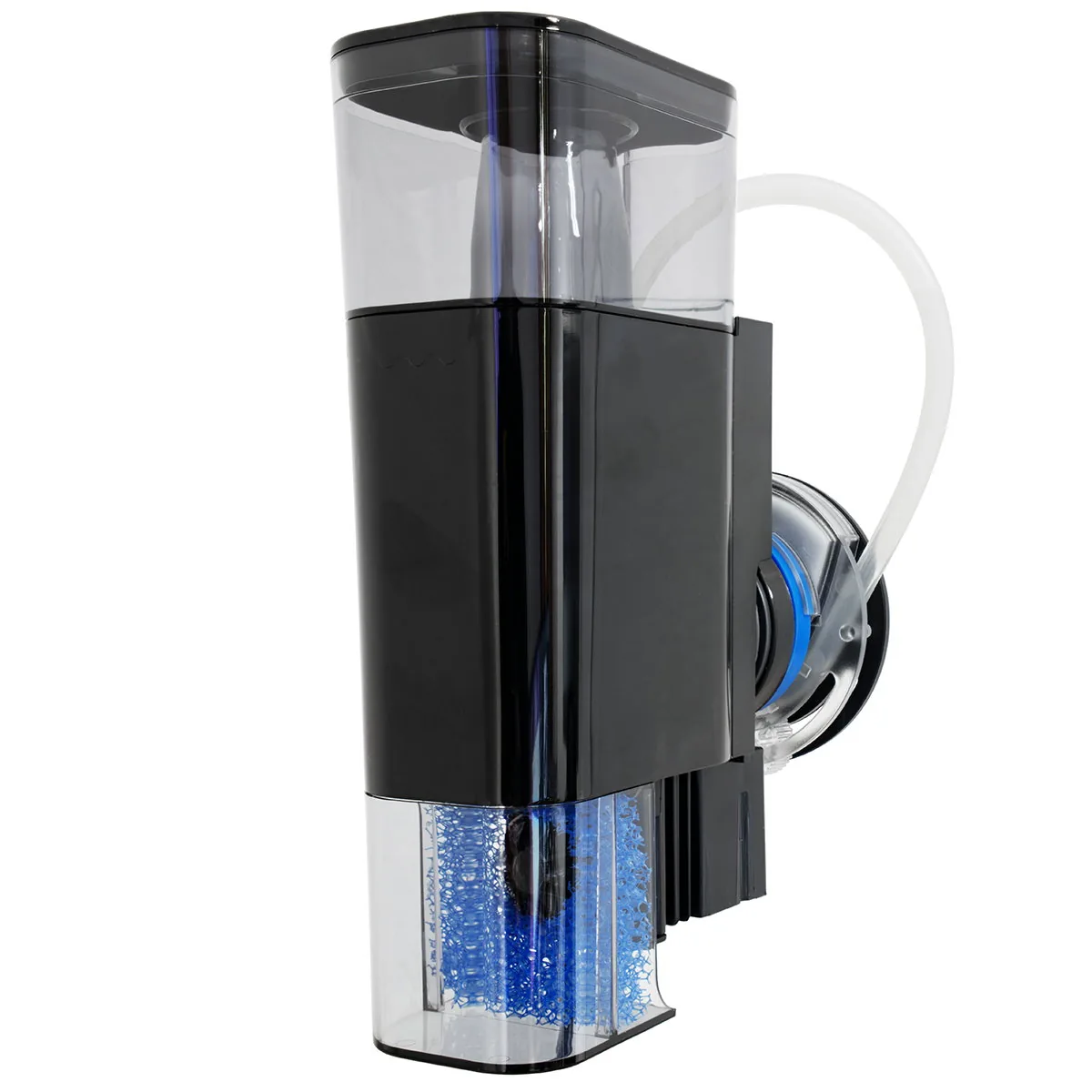
Tunze publishes a recommended seawater range, an immersion-depth range and a collection-cup volume for the 9001. Those details are unusually useful for a nano buyer because you can measure the rear chamber before spending money. The internal Comline shape keeps the pump and foam path inside the aquarium rather than hanging a body outside the glass. Leave a clear path to lift the cup. Pros: clear fit criteria and compact internal format. Cons: a chamber that runs too deep or too shallow will make tuning frustrating.
Fluval Sea PS1 Protein Skimmer
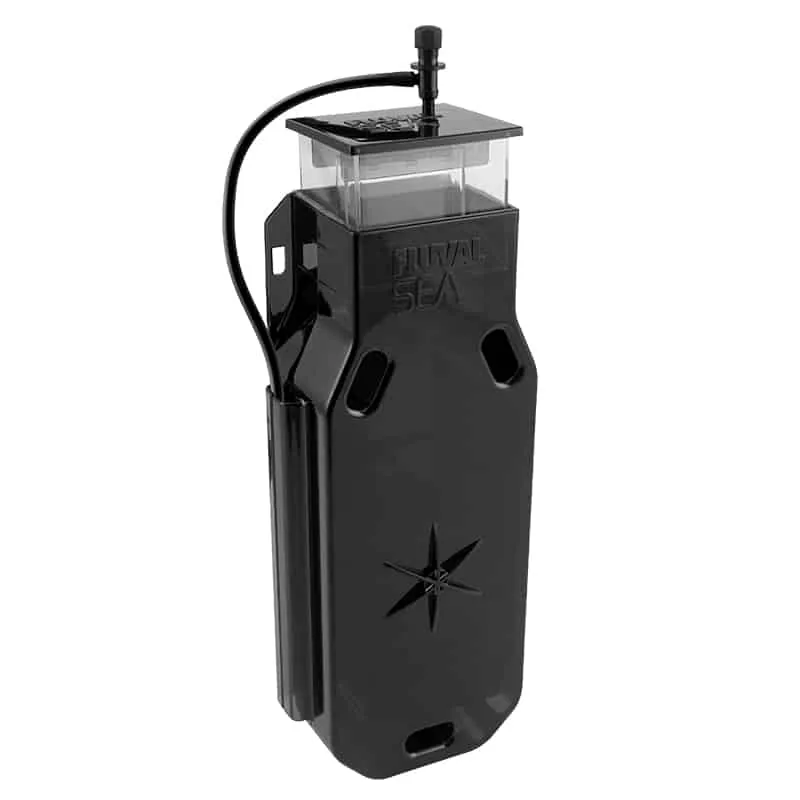
The PS1 suits a small reef keeper who prefers a hang-on arrangement and has no free rear chamber. That mounting style leaves the display interior less crowded, but it adds equipment outside the tank and may interfere with a tight lid or wall clearance. Put the collection cup somewhere you can remove it without moving the aquarium. Pros: useful option for rim-mounted installations. Cons: external space, visible plumbing and the possibility of pump noise close to a living area.
AquaMaxx NF-1 Nano Skimmer
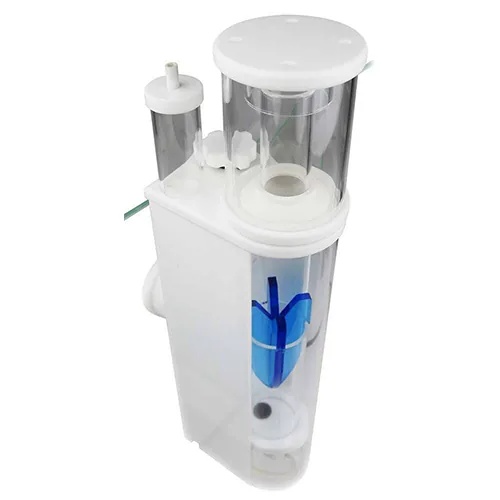
The NF-1 is a sensible candidate for a compact chamber or small sump when its footprint leaves room for the cup and pump. A skimmer can technically fit while still being a poor daily choice if the cup hits the lid. Measure both the body and the hand movement needed to remove it. Start with conservative water and air settings during break-in. Pros: compact in-chamber approach. Cons: cramped access turns routine emptying into a chore.
Bubble Magus QQ1
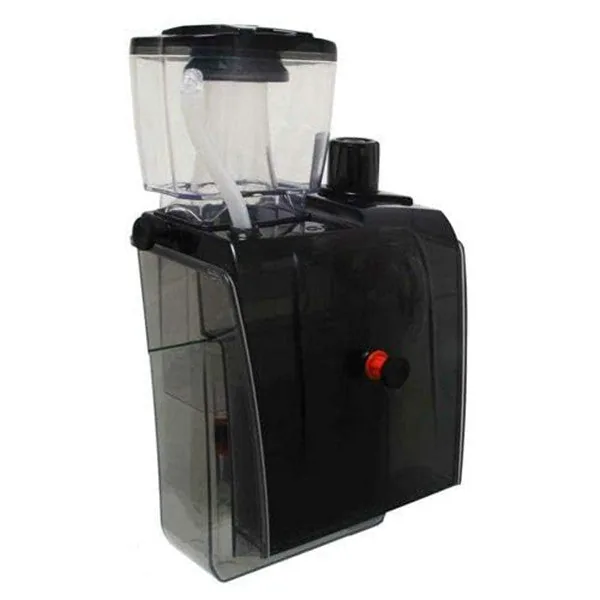
The QQ1 is a hang-on format for a small marine aquarium. That makes it attractive when an internal chamber is already occupied by a heater or media basket. The trade is physical: the skimmer occupies space behind the tank and needs a stable water interface. Check the rim, lid and return path, then consider whether the pump’s sound will be obvious in a quiet room. Pros: frees internal chamber volume. Cons: HOB hardware is less tidy on a covered nano tank.
Innovative Marine SkimMate Ghost
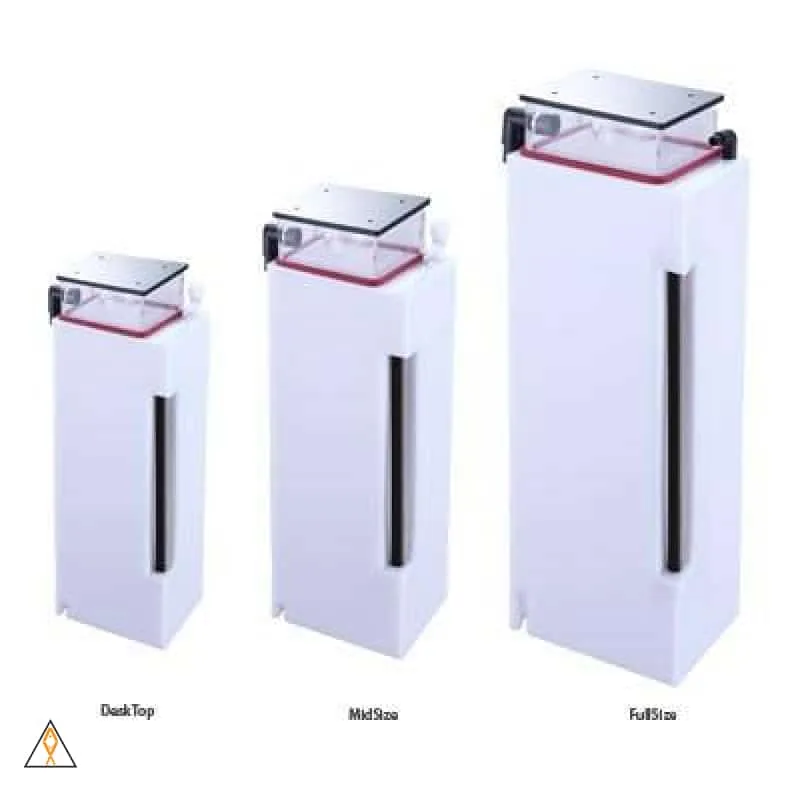
The SkimMate Ghost is best treated as an aquarium-specific choice. Rear-chamber equipment is neat when the tank was designed around it, but a generic nano cannot guarantee the required width, water level or mounting points. Check the aquarium model and current product revision. Pros: a clean AIO-chamber concept where compatible. Cons: poor universal fit, with little reason to force it into an unrelated tank.
That narrow compatibility is the reason it sits below the universal-looking picks. When the tank and skimmer were designed together, fewer brackets and hoses are left to improvise.
Aquatic Life 115 Mini Internal Skimmer
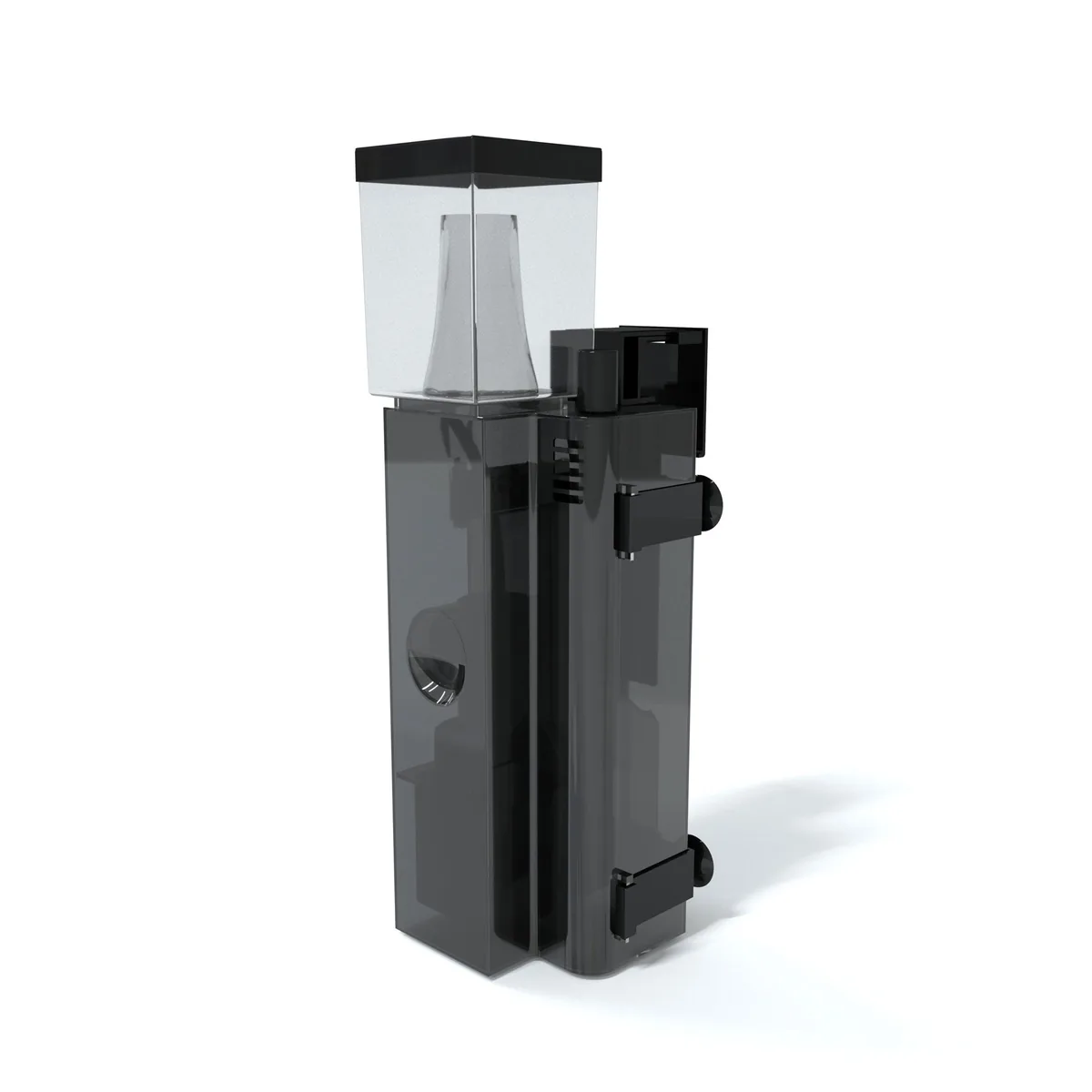
An internal skimmer such as the 115 Mini can work in a small sump when the water depth and cup clearance line up. Internal placement avoids adding another box to the outside glass, yet it consumes valuable chamber volume. Keep the pump accessible for cleaning and make sure the cup can come out without dismantling the return section. Pros: contained installation. Cons: service access is the real limiting dimension.
Treat the chamber as a service area, not dead storage. A few minutes saved at every cleaning is worth more than a marginally smaller body.
IceCap K1 Nano Skimmer
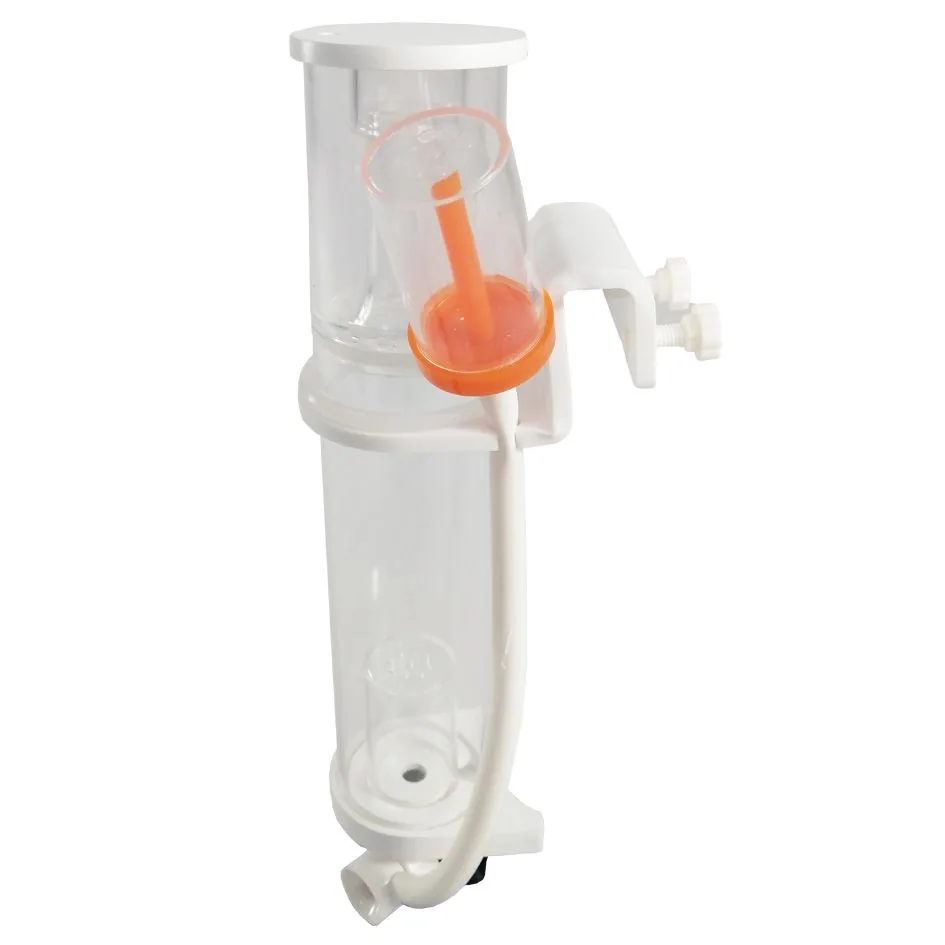
The K1 Nano belongs on a shortlist for a small sump or rear filtration section where its body and operating depth fit. Do not buy on the word nano alone. Small skimmers still need a stable water level, a clear cup path and enough room around the pump. Pros: purpose-sized category option. Cons: confirm the current depth, mounting arrangement and replacement-cup availability first.
Ask the seller for the current manual if the listing is vague. Revisions can change the parts that matter most in a tight chamber.
What to check before buying
Measure the chamber at its normal operating level, not only when the return pump is off. Record width, front-to-back depth and the vertical space above the water. Then measure the cup itself and draw the path it needs to come out. That last check catches many nano mistakes. A skimmer hidden under a lid is not useful if emptying it requires removing half the filtration system.
Water-level stability is the next filter. Evaporation changes salinity and changes skimmer foam height too. An auto top-off or consistent daily top-up helps, but it does not make an incorrectly sized skimmer behave. Follow the manufacturer’s depth guidance and adjust air or water in small moves. New plastic and freshly mixed saltwater can produce unstable foam, so give the setup time before chasing every change in the cup.
Noise deserves an honest tradeoff. Air draw, pump vibration and the return outlet all add sound. A HOB body can transmit vibration through the rim, while an internal pump can hum through the glass. Product pages rarely predict how a specific cabinet or room will sound. Leave a little clearance, keep the pump clean and avoid resting the skimmer against the aquarium wall when the design does not require it.
Finally, decide whether a skimmer is necessary. A light bioload, regular water changes and other export methods may be enough for some nano reefs. A skimmer takes up scarce space and removes some compounds you may prefer to retain. Buy one when its waste export and aeration solve a real maintenance problem, not because every reef needs the same equipment list.
Frequently asked questions
Is an internal or HOB skimmer better for a nano reef?
Neither wins universally. Internal models save outside space, while HOB models preserve a crowded rear chamber. The tank’s water depth, rim and lid decide the practical fit.
How often should I empty the cup?
Empty it when it fills and clean the cup before residue blocks the neck. The interval depends on bioload and tuning, so inspect it rather than following a made-up calendar.
Why does a new nano skimmer overflow?
Break-in, additives, changing water depth and aggressive adjustment can all destabilize foam. Start conservatively, keep the cup secure and follow the manual.
Will a skimmer remove all nitrate?
No. It exports some dissolved organic waste before or as it breaks down. Testing, water changes and sensible feeding still matter.
Recommendation
Choose the Tunze 9001 when its published depth and compact internal format match your chamber. Choose the Fluval Sea PS1 when a hang-on installation solves your layout. In either case, cup access and stable water level matter more than a bigger rating on the box.
Sources and methodology
We checked manufacturer information from Tunze, Fluval, AquaMaxx, Bubble Magus, Innovative Marine, Aquatic Life and IceCap. We compared mounting format, chamber fit, cup access, water-level needs and likely nano-tank tradeoffs. No hands-on testing was performed. Verify the current manual and regional model before purchase.