
Buying guide
Best protein skimmer for an all-in-one tank
An AIO skimmer must fit the rear chamber and still leave room to remove its cup. Measure the chamber before choosing a model.
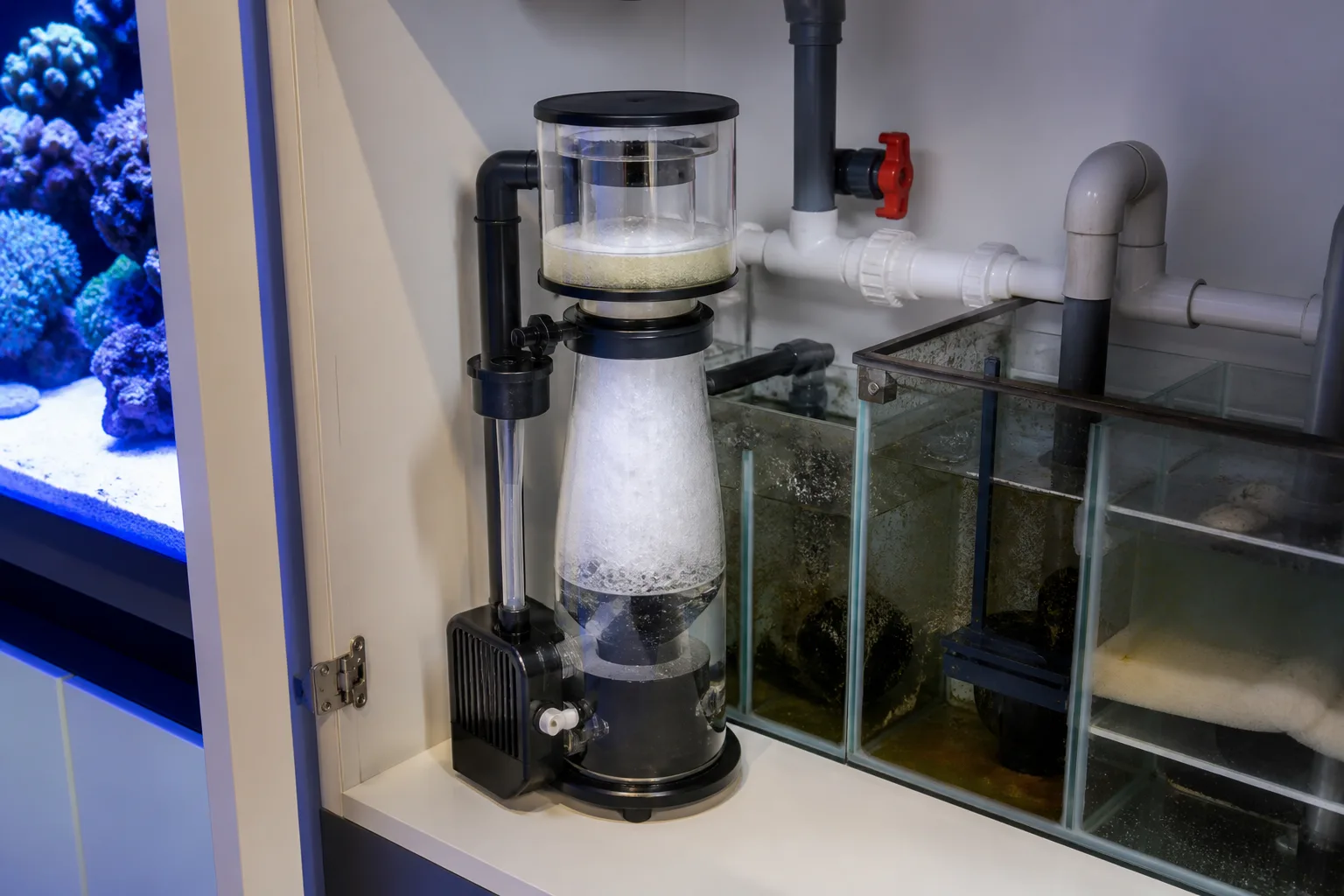
Quick comparison
| Product | Best fit | Main tradeoff |
|---|---|---|
| Innovative Marine NuvoSkim DC | Matching rear chambers | Confirm exact tank and bracket |
| Tunze Comline DOC Skimmer 9001 | Small rear chamber | May not suit a larger AIO |
| AquaMaxx NF-1 | Hang-on beside an AIO | Needs a clear rim and drain path |
| Bubble Magus QQ1 | Compact hang-on layout | Body and cup remain visible |
| Bubble Magus MiniQ | Very small chambers | Limited bioload headroom |
| IceCap K1 Nano | Compact chamber | Verify baffle and cup clearance |
| AquaMaxx HOB-1.5 | No usable rear skimmer bay | Larger external footprint |
This is a research-based guide, not a hands-on test. AIO rear chambers are not standard sizes. Check the exact manual, chamber width and depth, baffle height, rim thickness, cup clearance, power requirements, and return terms before ordering. A model designed to hang on the display has different noise and microbubble risks from one sitting in the rear chamber.
Our picks
Innovative Marine NuvoSkim DC
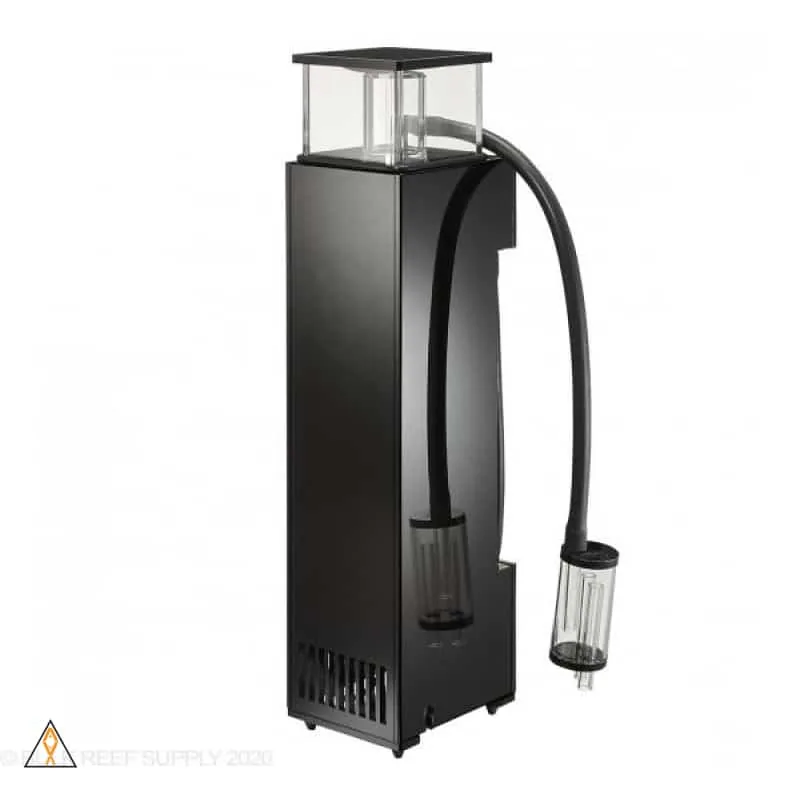 Start here when the AIO comes from the same ecosystem and the current bracket or chamber guidance matches it. Matching brands can reduce guesswork, but measuring still matters. Check that the cup lifts out with the lid and light in their normal positions. Pros: purpose-built AIO comparison; compact rear-chamber concept; control angle for changing loads. Cons: compatibility depends on the exact aquarium and version.
Tunze Comline DOC Skimmer 9001
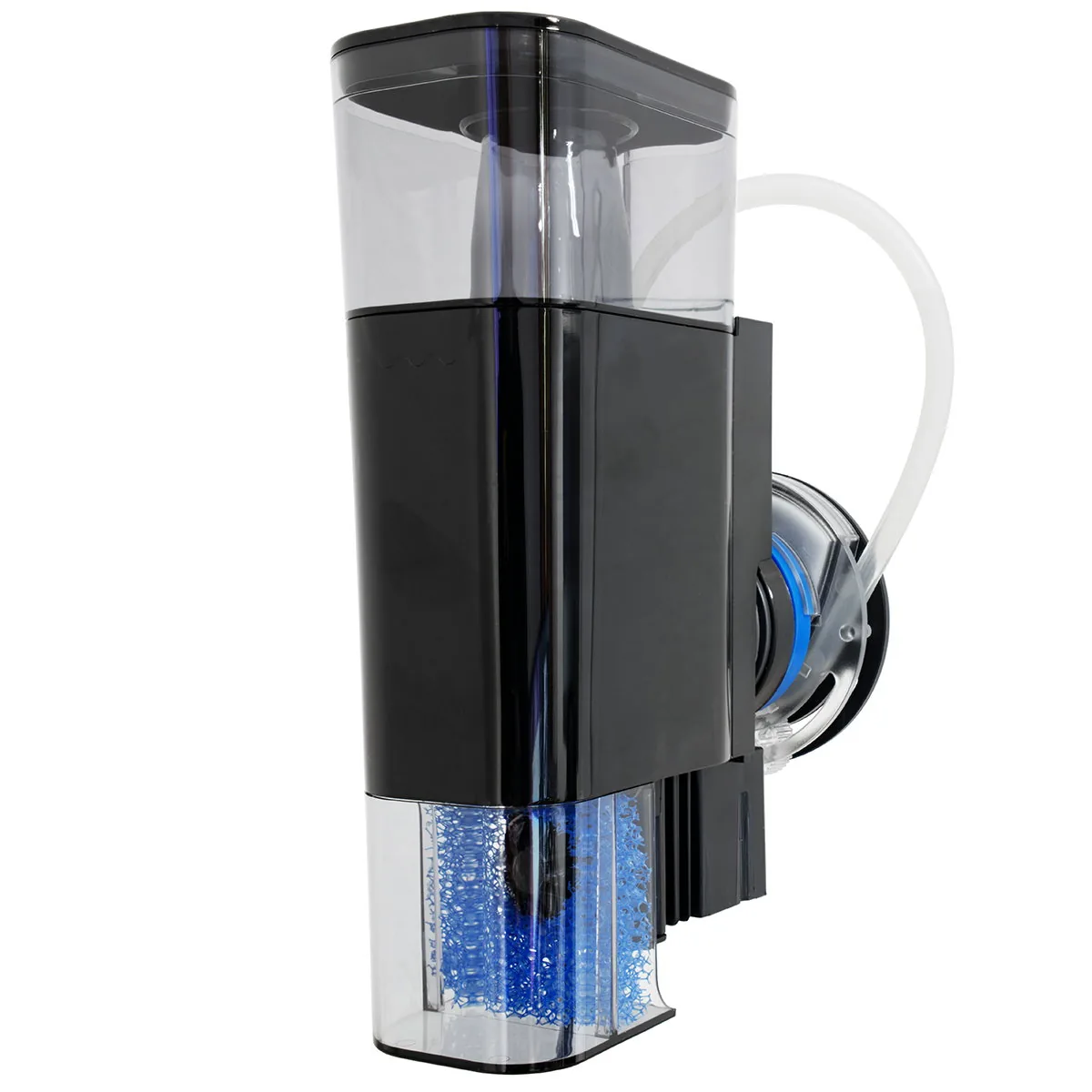 Tunze lists this model for small marine aquariums, with an immersion depth of about 135 to 155 mm and a body listed at 110 by 63 by 215 mm. That makes it easy to screen against a rear chamber, although the holder and cup still need a clear path. Pros: published dimensions; compact body; magnet-holder format. Cons: the documented recommended volume may be too limited for a larger AIO or heavy stock.
AquaMaxx NF-1
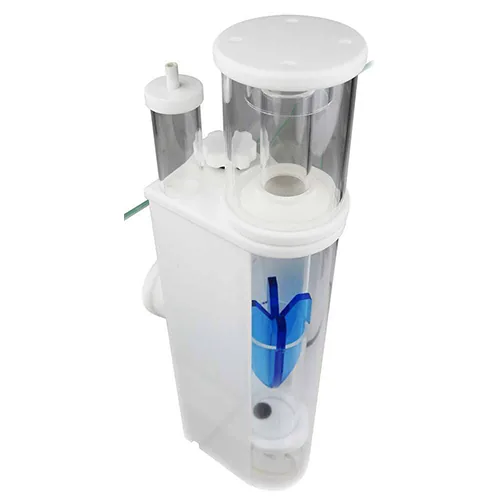 The NF-1 is useful when the rear chamber is occupied by media, an intake, or a heater. A hang-on installation needs a level rim, secure body, and clear return route. Check whether the lid must stay open and whether cup removal interferes with the light. Pros: frees the rear chamber; works with crowded filtration plans; cup stays visible. Cons: external placement can add noise and takes space beside the display.
Bubble Magus QQ1
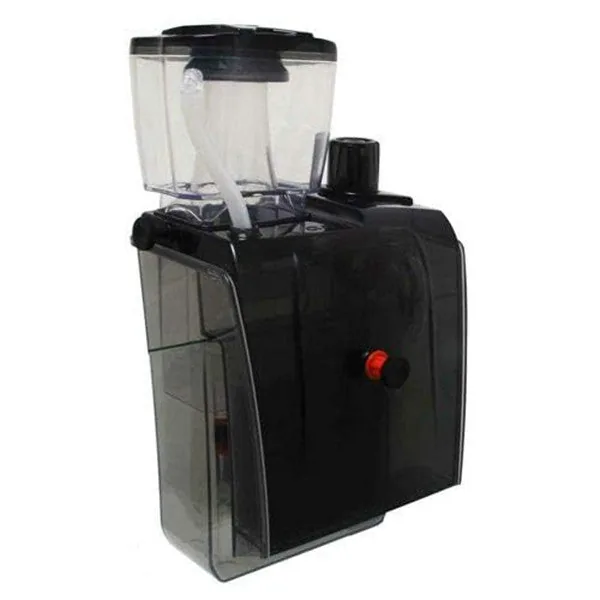 QQ1 deserves a look for a small AIO where a compact hang-on body is easier than forcing gear into a narrow chamber. Mounting is the deciding point. Inspect rim thickness, return direction, and the space needed to lift the cup. Pros: compact hang-on format; short fit checklist; leaves rear space for media. Cons: visible equipment and possible microbubbles when the return meets the display.
Bubble Magus MiniQ
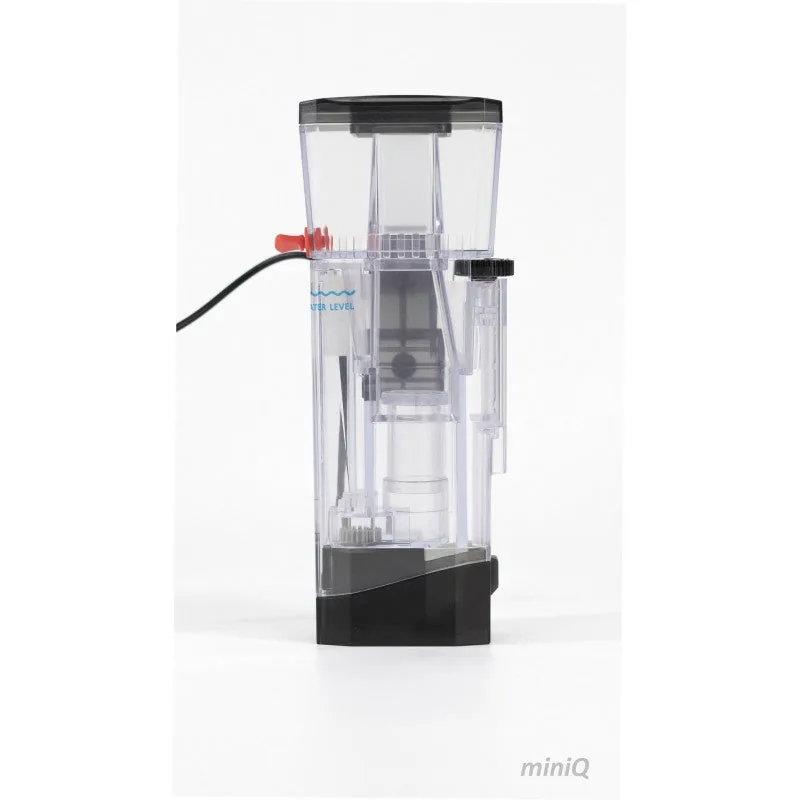 Choose this style when the chamber is genuinely small and the livestock plan is modest. Small does not mean maintenance-free. Make sure the cup comes out with the lid and light installed, and leave access to the air intake. Pros: aimed at tight installations; keeps the display clear; easy to compare with other small models. Cons: less headroom for a growing fish load and potentially fussier tuning in a shallow chamber.
IceCap K1 Nano
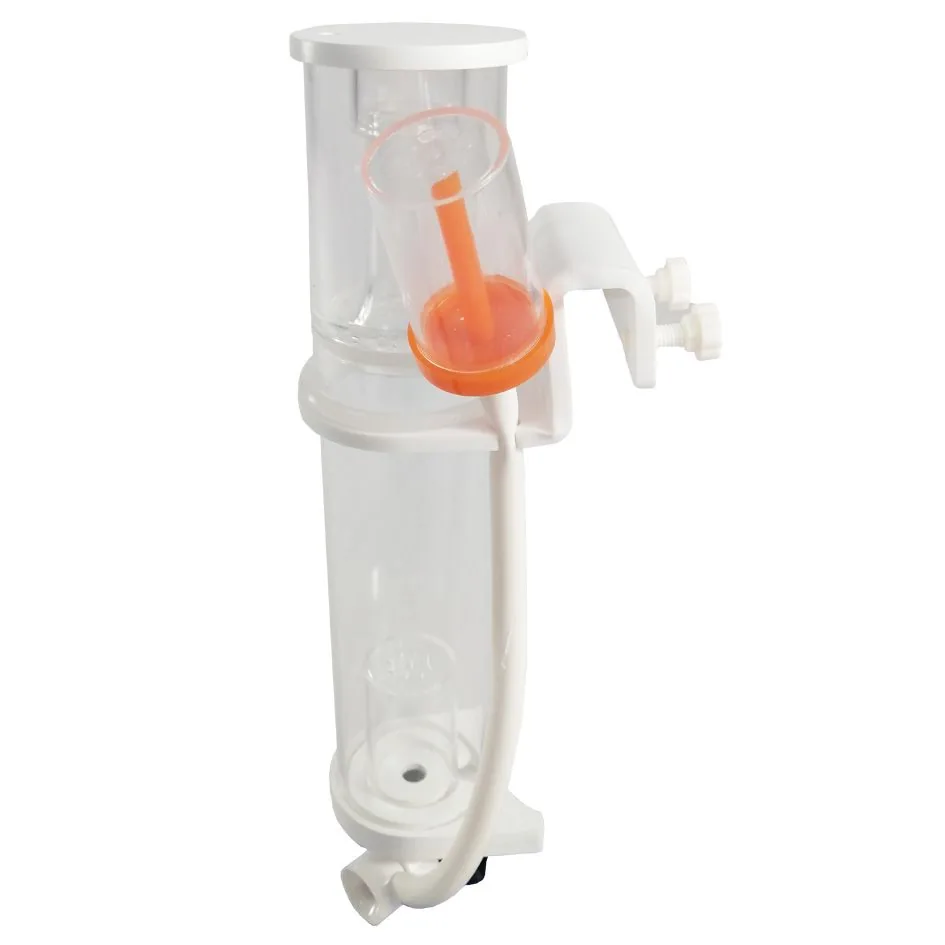 The K1 Nano belongs on a compact AIO shortlist when its intake, body width, and operating depth fit the rear section. Measure around baffles rather than relying on a tank class. A skimmer touching a return pump or media basket can transfer vibration and make service harder. Pros: compact comparison option; suited to small bays; useful when a full-size body will not fit. Cons: chamber fit and cup clearance still need a physical check.
AquaMaxx HOB-1.5
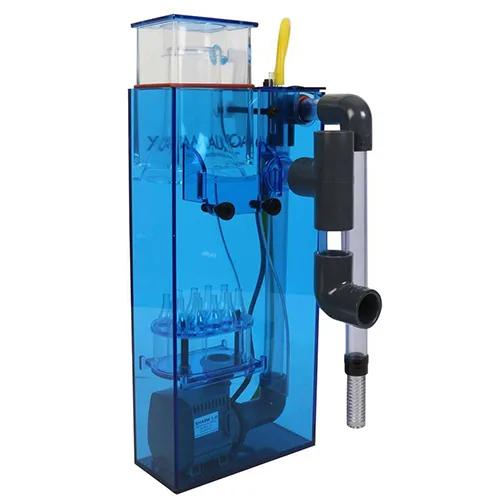 This is the external fallback for an AIO whose rear chambers cannot accept a skimmer. It is not a rear-chamber pick. The rim must support the body, the return must not splash, and the room beside the tank must fit the cup. Pros: avoids a cramped chamber; useful when media fills the back; easy to inspect. Cons: consumes display-side space and can expose more pump noise and microbubbles.
How to choose a skimmer for an AIO
Measure the rear chamber at its narrowest point. Record width, front-to-back depth, water depth, baffle height, lid opening, and the distance above water to the underside of the cup. Check the pump and cable route too. A skimmer can fit into a chamber and still fail because the cup cannot come out.
Mounting changes the rest of the decision. Rear models should sit securely without blocking the return pump or media basket. Hang-on models need a level rim and a return path that does not splash the light or cabinet. Avoid resting a body against a baffle if vibration reaches the glass.
Microbubbles and noise deserve their own checks. A new skimmer may release bubbles while it settles. A return outlet aimed at the display makes that obvious. Check outlet direction, keep the intake clear, and change one setting at a time. If the pump hums against a baffle, fix the installation before chasing foam adjustments.
Service access is the test buyers miss. Remove the cup, reach the air intake, clean the neck, and inspect the pump without emptying the rear section. If that routine feels awkward on paper, it will be worse once salt creep builds up.
Frequently asked questions
Can any nano skimmer fit an all-in-one aquarium?
No. Rear chambers differ in width, depth, baffles, and lid openings. Compare exact model dimensions with the measured chamber and cup path.
Is a hang-on skimmer better than a rear-chamber model?
Only when the rear section is too crowded or shallow. Hang-on units can be easier to service, but need rim space and may add visible noise or microbubbles.
How do I reduce microbubbles in an AIO?
Check the return route, water depth, and pump placement first. Let a new skimmer settle as directed, and keep the outlet from firing directly into the display.
Why is my AIO skimmer noisy?
Vibration against a baffle, salt creep in the air path, an unstable water level, or a louder external pump can contribute. Inspect the installation before blaming the model.
How often should I remove the cup?
Follow the manual and empty it before overflow. The key buying test is whether removal is easy enough that you will actually do it.
Recommendation
Measure first, then start with the Innovative Marine NuvoSkim DC if the AIO and bracket match. For a small chamber with published dimensional guidance, compare the Tunze 9001. If the rear section is full, compare the NF-1, QQ1, and HOB-1.5 by rim space, return path, noise tolerance, and cup access. A serviceable compact skimmer beats a larger one wedged behind the tank.
Sources and methodology
We checked manufacturer information from Innovative Marine, Tunze, AquaMaxx, Bubble Magus, and IceCap. We compared rear-chamber dimensions, mounting, cup removal, service access, microbubble paths, and noise considerations. Tunze’s published dimensions and immersion range are included above. Images are category visuals and do not depict exact branded models. No hands-on testing was performed.