
Buying guide
Best gravel vacuum for large tanks
Large aquariums need reach and a sensible waste route. A longer hose, useful bell size, and reliable shutoff save more time than a tiny intake designed for a nano tank.
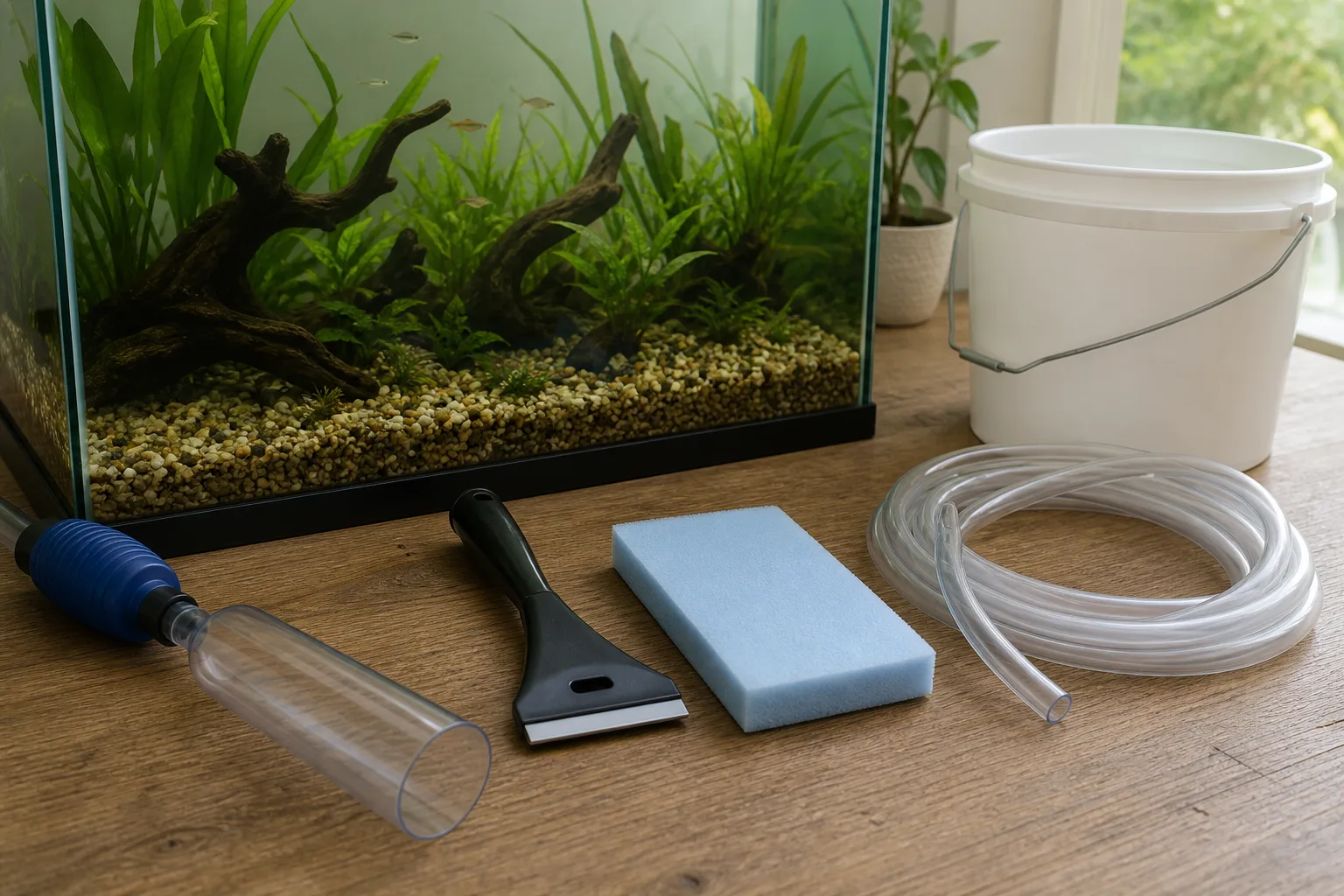
On a 75-gallon aquarium, the main question is not whether a siphon can move water. It is whether the hose reaches the drain, whether the receiving container can handle the flow, and whether you can clean a broad gravel bed without stopping every few minutes. My first choice for a faucet or direct-drain setup is the Python No Spill Clean and Fill. For bucket changes, look at the larger Aqueon, Marina, or Lee’s formats. Electric cleaners have a place for debris collection, but they are rarely the fastest way to export a large volume of old water.
Quick comparison
| Product | Best fit | Main drawback |
|---|---|---|
| Python No Spill Clean and Fill | Faucet connection and direct drain | Needs compatible plumbing and hose space |
| Aqueon Aquarium Siphon Vacuum | Large bucket-based changes | Carrying full buckets is tiring |
| Fluval Aqua Vac Plus | Powered debris collection | Collection capacity is not a drain |
| Marina Easy Clean Gravel Cleaner | Conventional siphon work | Confirm tube length and size |
| Lee’s Gravel Vacuum | Simple manual maintenance | Manual priming and bucket handling |
| NICREW Electric Gravel Cleaner | Targeted waste removal | Power and filter upkeep remain |
| hygger Aquarium Gravel Cleaner | A kit with alternate connections | More parts to store and inspect |
This is a research-based guide, not a hands-on test. Amazon links use tagged searches because hose lengths, package sizes, and regional variants change. The maintenance image is a category visual and may not show the exact branded model. Measure the route from the aquarium to the sink, floor drain, or bucket before ordering.
Our picks
Python No Spill Clean and Fill
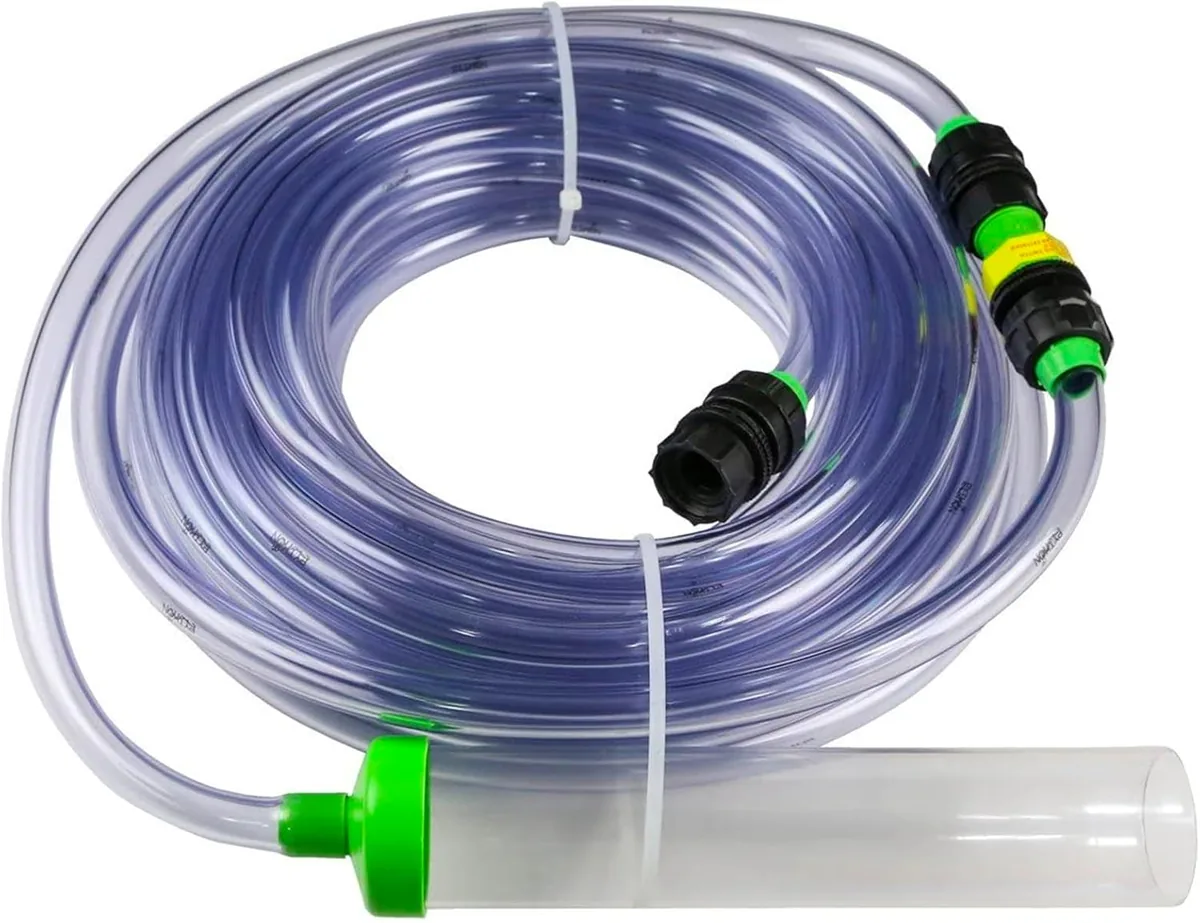
Python is the strongest fit when a large tank sits close enough to a compatible faucet or drain route. The attraction is less lifting: old water can travel through the hose rather than through a succession of heavy buckets. Measure the run and keep the outlet visible while water moves. A faucet connection adds setup and adapter questions, and a direct-drain arrangement is a poor choice if the hose cannot be secured. Pros: long-run convenience; suited to faster changes. Cons: plumbing compatibility matters; hose storage takes room.
Aqueon Aquarium Siphon Vacuum
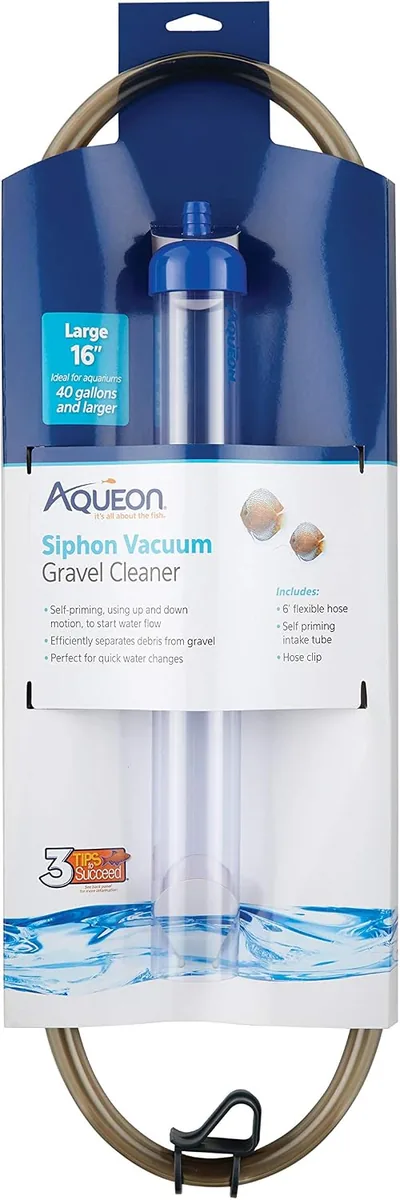
Choose the Aqueon siphon format when you want a familiar bucket change and the tank is not positioned for a faucet connection. A larger bell can cover more open gravel per pass than a nano cleaner, which is useful on a broad 55- or 75-gallon bed. That same size can disturb rooted plants if pushed too deeply. Set the bucket on a stable floor position, keep the discharge end anchored, and never assume one household bucket is enough. Pros: direct, understandable setup; broad gravel coverage. Cons: bucket lifting is the bottleneck; verify the selected size.
Fluval Aqua Vac Plus
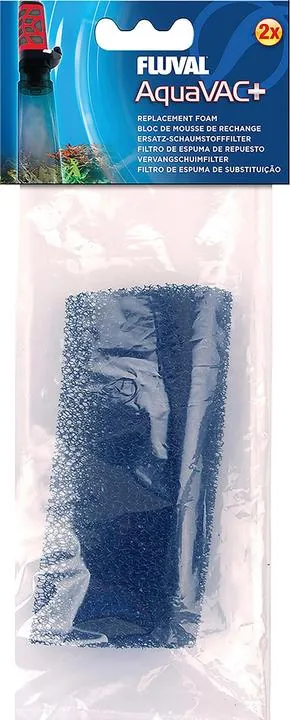
The Aqua Vac Plus is a useful alternative when you want to collect solid waste without routing dirty water across the room. It works best for spot passes over a heavily soiled area, before or between scheduled water changes. A powered collection tool does not remove the same volume as a drain hose, so do not buy it expecting bucket-free refills. Keep the electrical equipment and plug dry, and rinse its collection components after use. Pros: avoids siphon priming; useful for isolated messes. Cons: collection capacity limits long jobs; requires cleaning and power.
Marina Easy Clean Gravel Cleaner
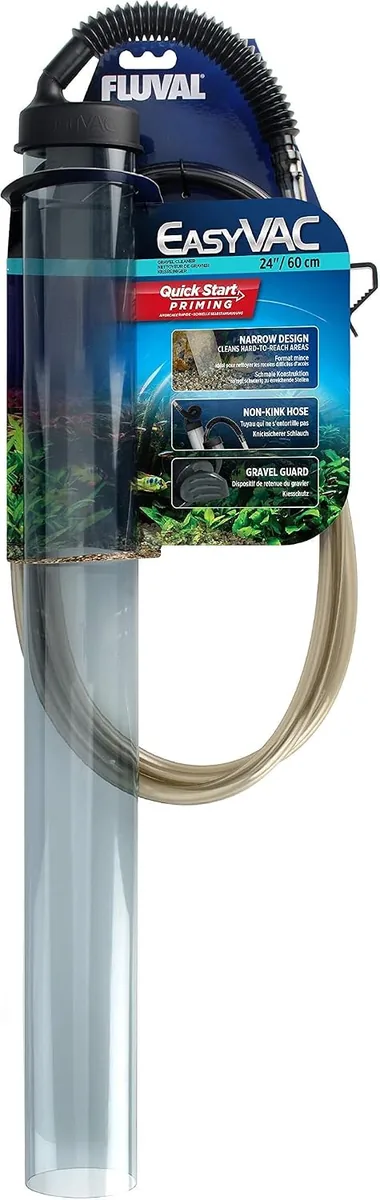
Marina’s Easy Clean line belongs on a large-tank shortlist when you prefer a conventional siphon and can select a tube that reaches the back corners. Confirm the current package because listings can group several sizes under one name. Use overlapping sections in the gravel, pausing when the water in the bell clears. It is less compelling for a tank beside a utility sink where a direct-drain changer saves more handling. Pros: familiar manual method; useful for section-by-section cleaning. Cons: reach depends on the package; bucket work remains.
Lee’s Gravel Vacuum
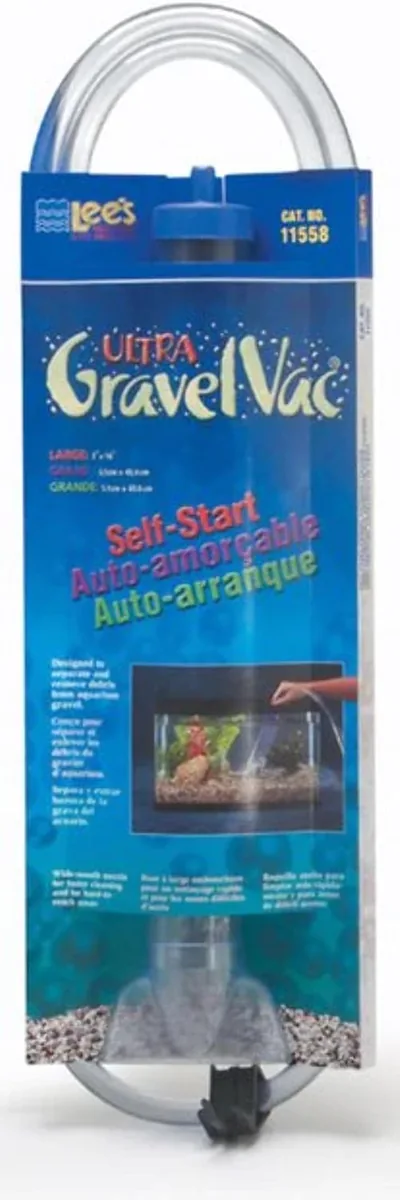
Lee’s manual vacuums are a sensible pick when replacement parts and a plain operating method matter more than a powered motor. For a large aquarium, select a tube length that lets you reach the substrate without leaning over the rim, then keep the bucket close enough to monitor. The simple design does not remove the physical work of moving water. Pros: easy-to-understand parts; good spare-tool candidate. Cons: manual priming; short packages are awkward on deep or wide tanks.
NICREW Electric Gravel Cleaner
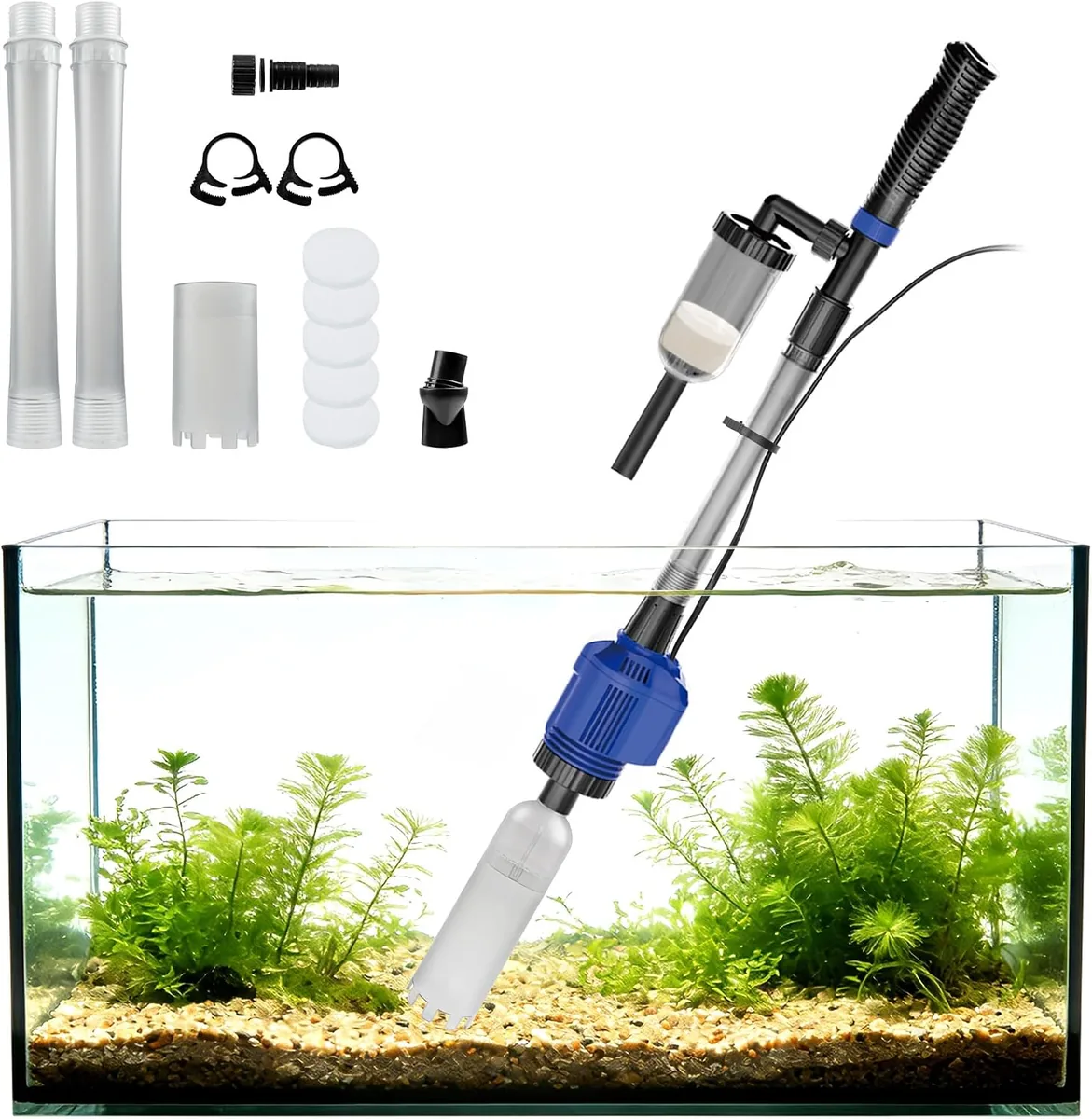
NICREW’s electric format can save time when the job is concentrated waste under a feeding area or in front of a canister-filter return. It is not the obvious choice for a full large-tank water change, because collected solids and removed water are separate jobs. Check the current listing for the included intake pieces, keep the cord away from splash, and clean the filter before it clogs mid-session. Pros: fast spot cleanup; no manual siphon start. Cons: limited collection run; power and filter maintenance.
hygger Aquarium Gravel Cleaner
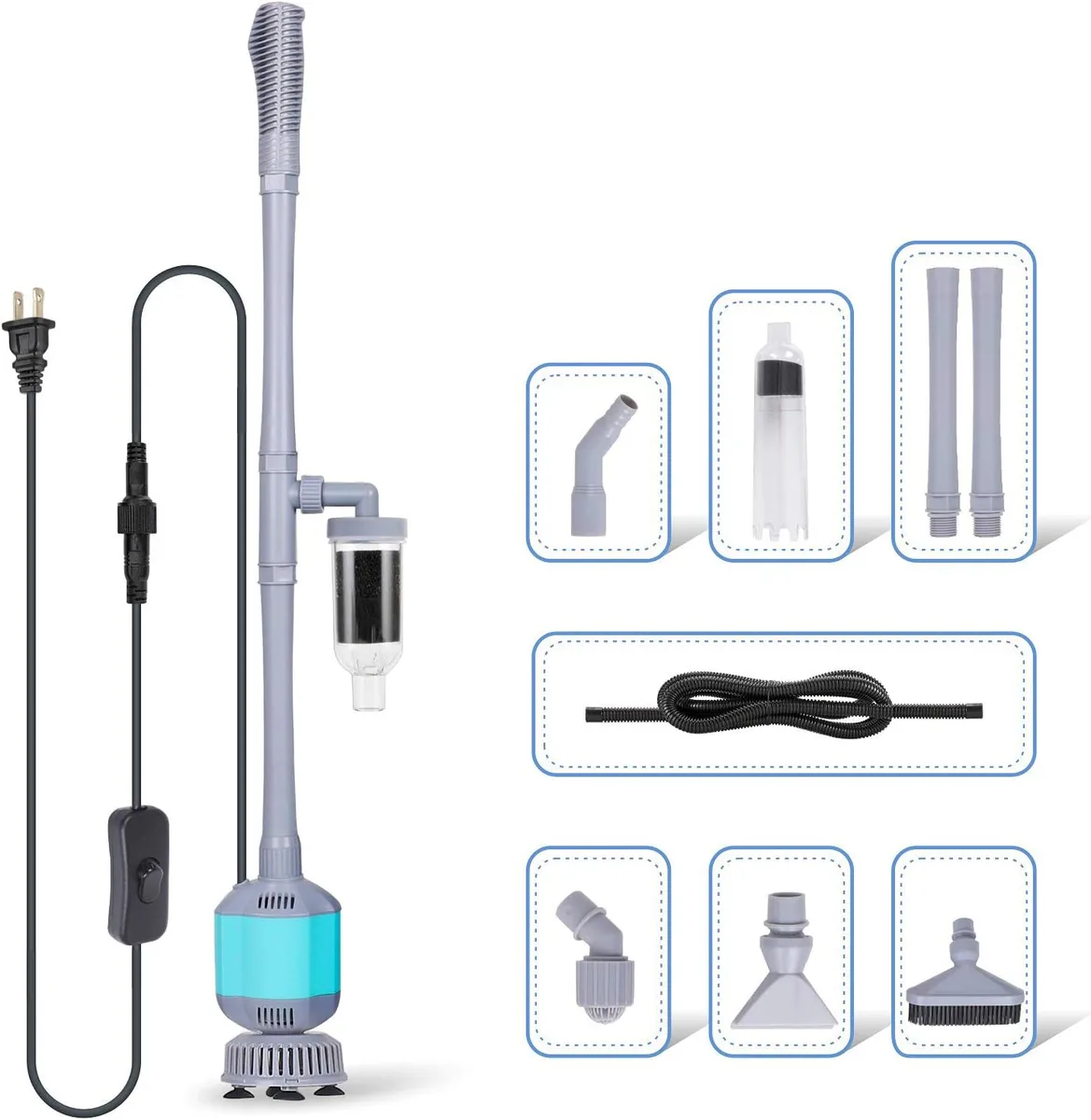
The hygger range is worth a look if its current kit offers the hose and connector arrangement your stand needs. Alternate fittings can make it easier to work around a tall rim or reach a floor container, but extra pieces also mean more seals to check before a wet session. It is a better fit for an owner who enjoys adjusting the setup than for someone seeking a single permanent drain line. Pros: adaptable kit approach; useful for awkward layouts. Cons: package contents vary; more storage and leak points.
Buying criteria for a large tank
Measure first. Record the distance from the tank rim to the waste bucket, utility sink, floor drain, or approved outdoor discharge point. Add slack for moving the bell along the front and back panels. A hose that barely reaches will pull on the aquarium rim or pop loose. A very long hose is not free convenience either. It holds residual water, takes longer to drain after use, and needs a safe storage route.
Decide whether you want a bucket or a direct drain. Buckets work anywhere, but large volumes turn carrying into the slowest part of maintenance. A faucet-connected changer reduces lifting and can refill through the same route, yet it needs the correct adapter and careful temperature control. A floor drain is convenient only when the hose is secured and the drain can accept the flow. Keep a shutoff valve or hose pinch within reach. Never leave a running changer unattended.
Bell size controls cleaning speed. A larger opening clears an open gravel field with fewer passes. It is clumsy around dense stems, caves, and small hardscape, where a narrower tube gives better control. Do not stir every inch of a deep bed just because the tool can reach it. Work in sections, stop when the discharge clears, and leave some substrate undisturbed for the aquarium’s established microbial community.
Plan the refill before you drain. Condition and temperature-match replacement water, keep towels beside every connection, and mark the normal waterline on the glass. When the change ends, confirm the heater and filter are submerged before restoring power. Rinse the vacuum with plain water, hang the hose open, and keep the bucket separate from household cleaning supplies.
For more guidance on the water route itself, see the best aquarium water changer for large tanks. This page focuses on gravel removal and bell control, not only refill speed.
FAQs
Is a larger gravel vacuum always faster?
No. A larger bell covers open gravel quickly, but it is harder to steer around plants and hardscape. Choose the biggest opening that still fits the layout you clean.
Can I drain a large aquarium straight into a sink?
Only if the hose connection is secure and the sink can handle the flow. Watch the outlet throughout the job, and keep a shutoff point beside the aquarium.
How long should the hose be?
Measure the real route from rim to drain or container, then add movement slack. Do not guess from tank size because stands, doors, and sink positions change the route.
Are electric gravel cleaners suitable for full water changes?
Usually they are better for collecting concentrated debris. A siphon or water changer exports old water more directly, while an electric unit can handle a quick dirty patch.
How fast should I clean a deep gravel bed?
Work in sections and pause when the water clears. Aggressive full-bed stirring can cloud the aquarium and disturb rooted plants, even when the tank is large.
Recommendation
Choose Python No Spill Clean and Fill when a secure faucet or direct-drain route is available. Choose a larger Aqueon, Marina, or Lee’s siphon when buckets are the practical option. Add Fluval or NICREW for targeted debris, not as a substitute for a high-volume water changer.
Sources and methodology
We checked manufacturer information from Python, Aqueon, Fluval, Marina, Lee’s Aquarium, NICREW, and hygger. We compared hose reach, bell coverage, drain or bucket workflow, flow control, storage, and model-specific tradeoffs for large gravel aquariums. No hands-on testing was performed. Confirm the current size, connectors, voltage, compatibility, and checkout price before ordering.