
Buying guide
Best automatic fish feeder for multiple feedings
For several meals a day, the useful feeder is the one that repeats a small portion reliably and stays put above the water.
Quick comparison
| Product | Best for | Main drawback |
|---|---|---|
| Eheim Everyday Fish Feeder | Straightforward repeat schedules | Drum and mount need careful setup |
| Fish Mate F14 Aquarium Fish Feeder | Many separate meal slots | Tray format needs room above the tank |
| Fluval PF2 Automatic Fish Feeder | Adjustable daily timing | Check lid clearance and battery fit |
| Petbank Automatic Fish Feeder | Hopper-style convenience | Food can bridge if kept humid |
| NICREW Automatic Fish Feeder | Small tanks and simple portions | Fine adjustment takes trial runs |
| Juwel Automatic Feeder | Integrated aquarium lids | Compatibility depends on the lid design |
| Fish Mate F14P Feeder | Portion-by-slot planning | A full tray is less flexible than a hopper |
This is a research-based guide, not a hands-on test. Confirm the current model, power method, included mount, and food compatibility at checkout. Run the feeder beside the aquarium for several days before leaving. Count what falls into a cup, inspect the seal after feeding, and keep the normal total daily ration unchanged.
Our picks
Eheim Everyday Fish Feeder
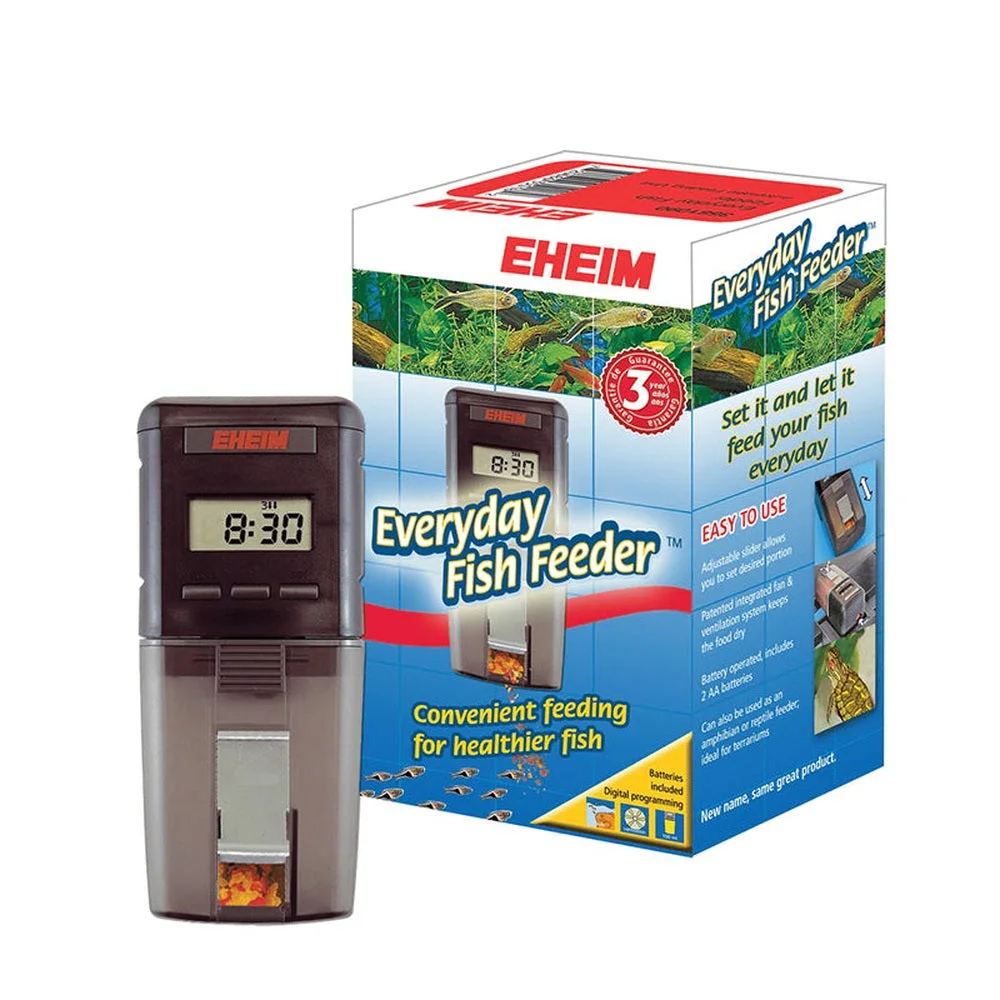 Eheim’s everyday feeder is a sensible starting point when you want the same routine repeated at set times. Its rotating food drum suits dry portions that need to leave the container one opening at a time. Divide the day’s ration into small releases instead of treating the hopper as permission to feed more. Mount it where the outlet clears the lid and where you can remove the drum for cleaning. The drawback is setup sensitivity: a crooked mount or damp flakes can change the drop. Pros: familiar drum format; useful for split meals. Cons: requires a dry, level installation and a supervised calibration run.
Fish Mate F14 Aquarium Fish Feeder
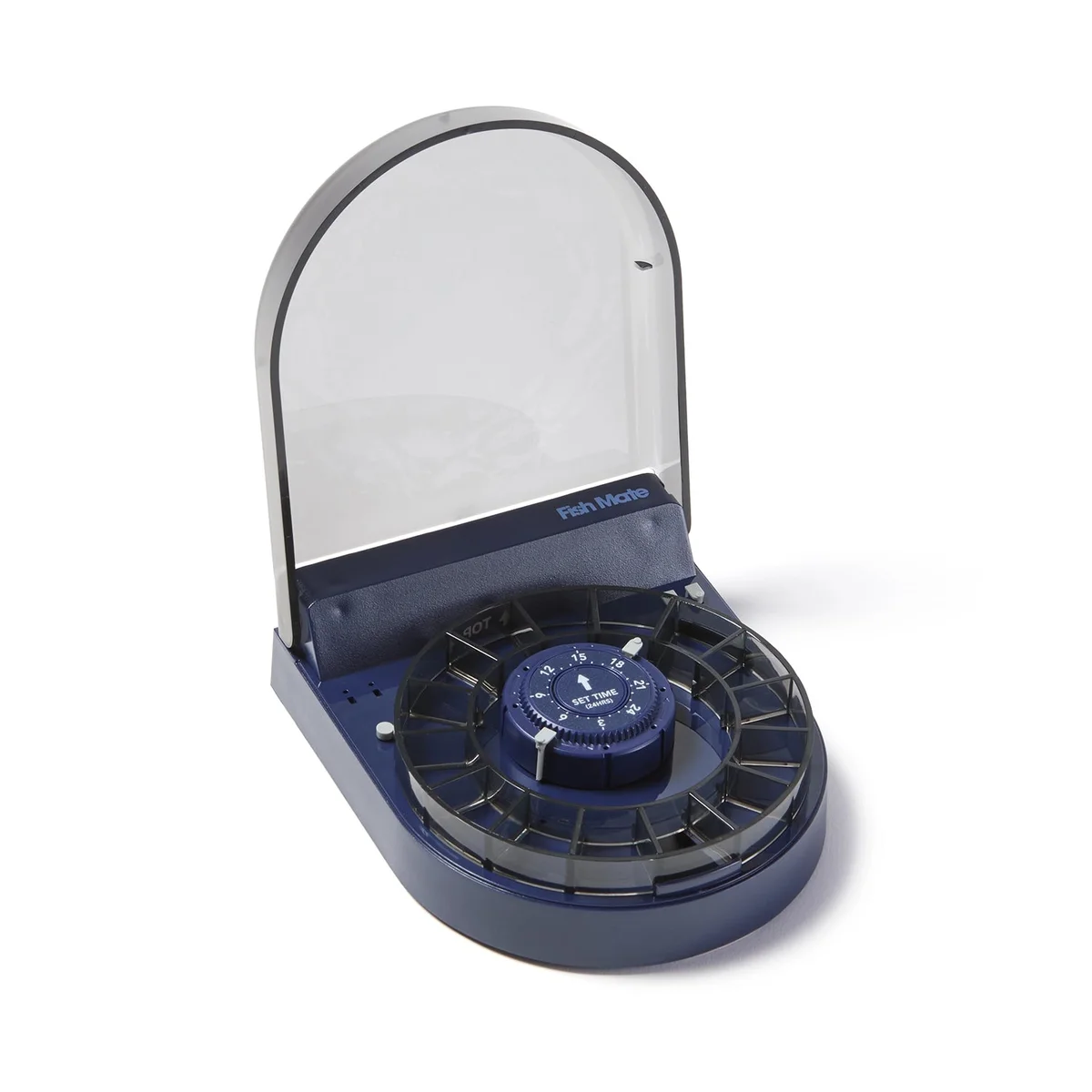 The F14’s defining idea is a rotating tray with individual food positions. That makes it appealing when you want to decide the meals in advance, especially for an aquarium that needs frequent small offerings. You can inspect the loaded tray before it starts, then match each slot to the intended feeding time. It is less convenient for a constantly changing routine because changing one meal means opening the tray. Leave clearance for the tray and keep the feeder away from splash. Pros: visible slot-by-slot planning; no large open pile of food. Cons: fixed tray format limits last-minute changes and needs careful lid clearance.
Fluval PF2 Automatic Fish Feeder
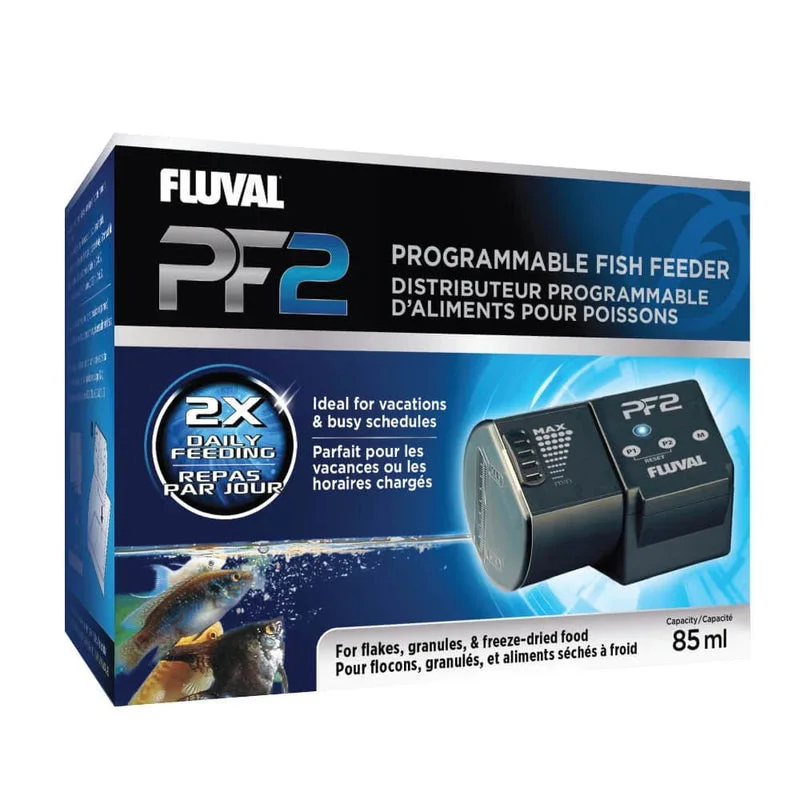 The PF2 belongs on this list for aquarists who want a programmable drum and an adjustment process they can repeat. Set the clock first, then set each daily release and watch the food land in a dry feeding area rather than against the glass. The key test is not how much the chamber holds. It is whether the smallest useful opening gives the fish the portion you intend. Check that the tank lid leaves room for the body and that battery access remains possible. Pros: programmable timing; practical fit for split meals. Cons: the actual portion still depends on food shape and the opening setting, so calibration is unavoidable.
Petbank Automatic Fish Feeder
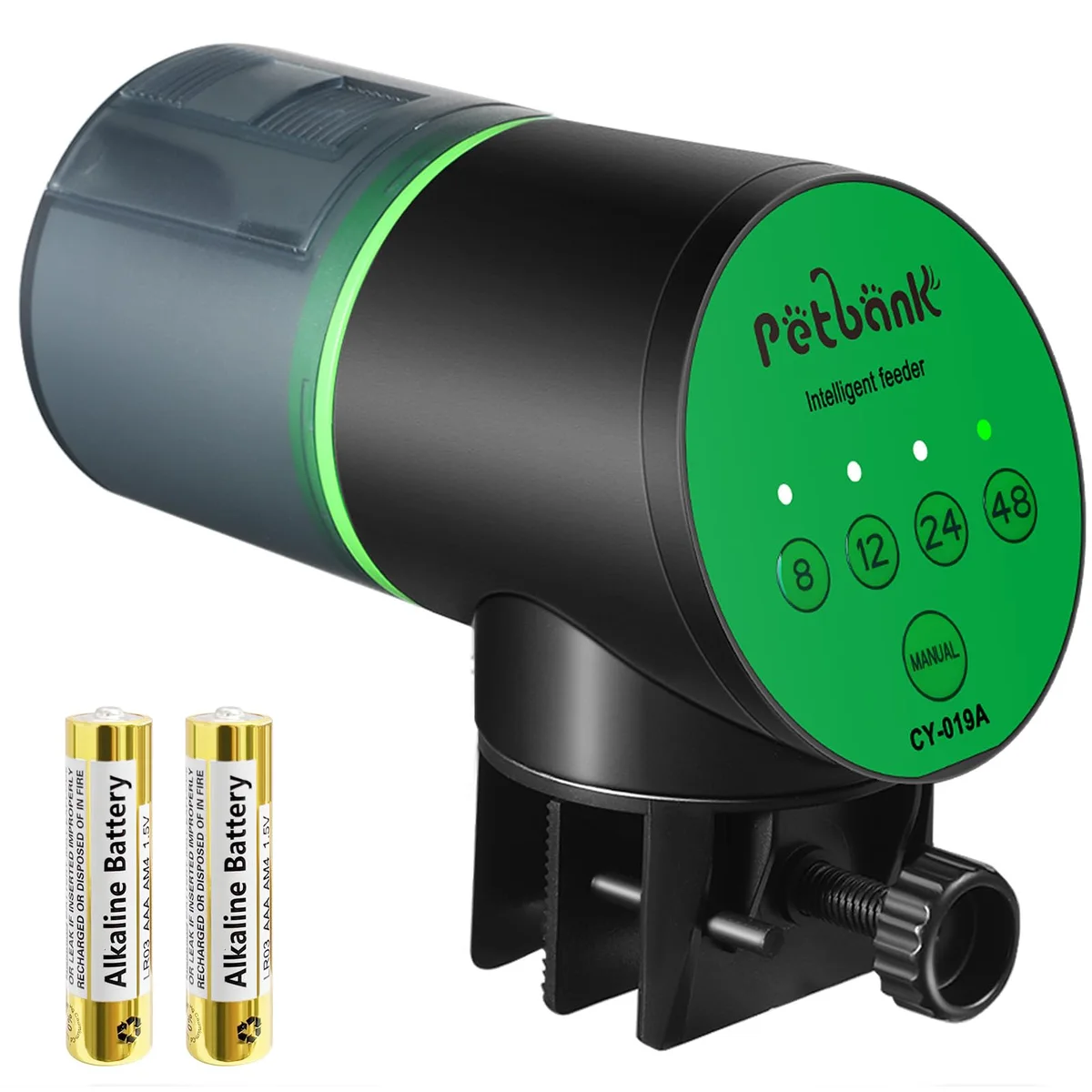 Petbank’s hopper approach suits owners who want several programmed releases without preparing a separate tray for every day. A sealed cover and a stable attachment matter more than a generous reservoir. Keep the opening pointed away from condensation and do not load food that already feels soft. When using flakes, shake the feeder gently during a supervised trial and check whether pieces bridge over the outlet. Its specific weakness is humidity management. A feeder can be perfectly programmed and still miss a meal if wet food clumps. Pros: convenient hopper workflow; useful for repeat schedules. Cons: placement and dry storage determine whether the portion actually exits.
NICREW Automatic Fish Feeder
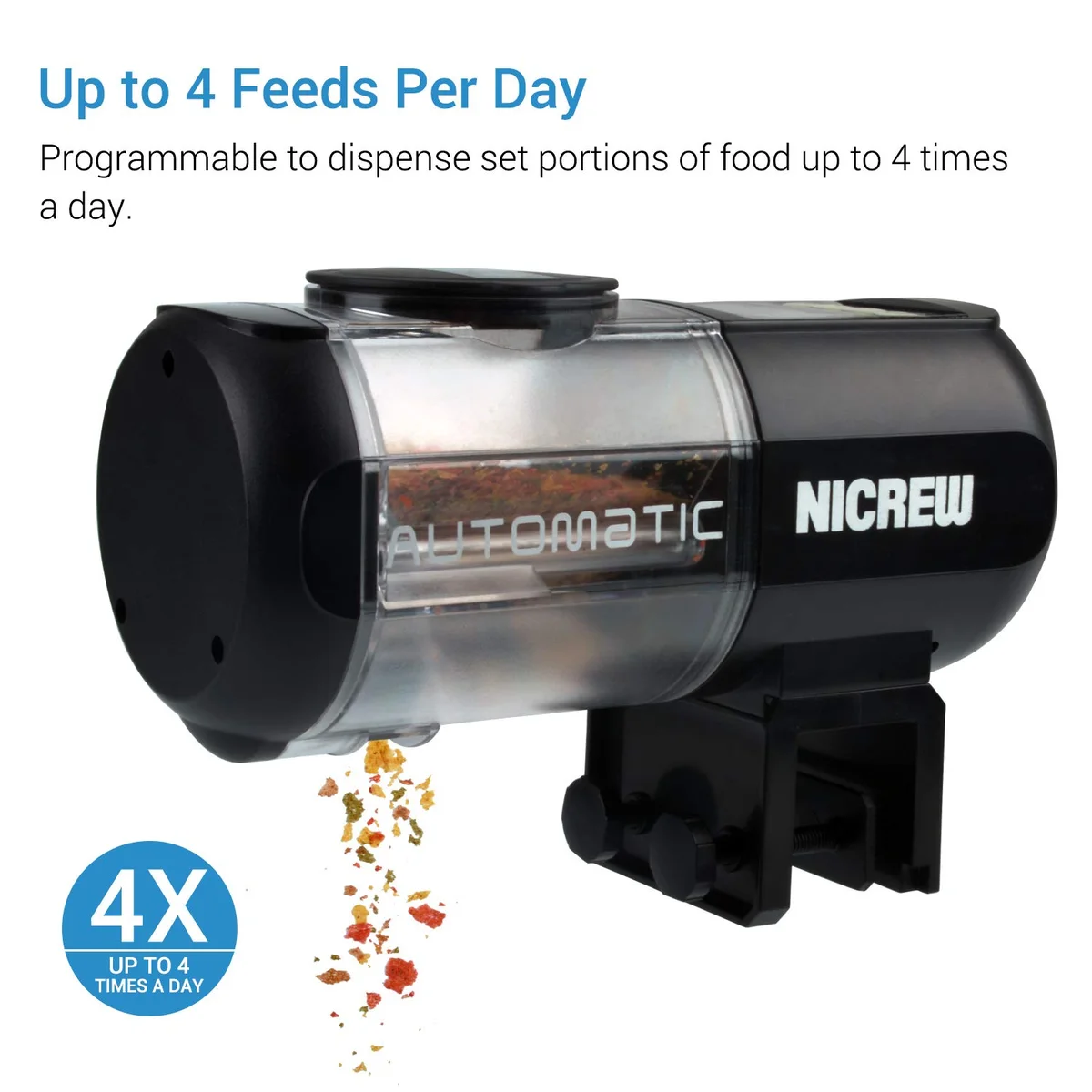 NICREW is a good candidate when the aquarium has little spare space around the lid. Its value here is practical rather than flashy: a compact automatic dispenser can handle a split routine if the control wheel or opening is easy to reach after installation. Test the lowest setting with the actual pellet or flake mix, because a setting that works for one shape may drop too much of another. Keep a hand-fed meal on the same schedule while calibrating, then remove it before relying on the machine. Pros: compact footprint; simple path to multiple releases. Cons: small adjustment changes can matter, so portion checks take patience.
Juwel Automatic Feeder
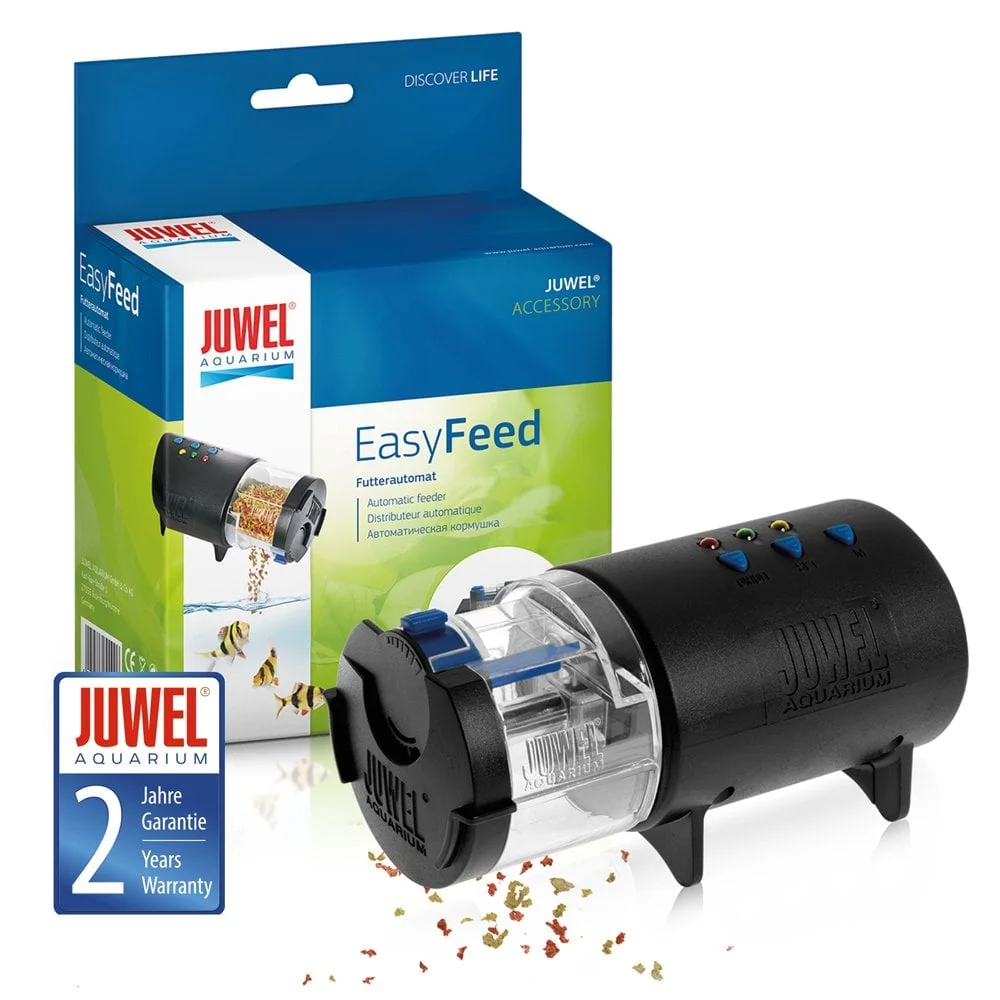 Juwel’s feeder makes most sense when you already use a Juwel aquarium lid or a similarly arranged feeding opening. An integrated-looking installation reduces the chance of a loose clip tipping into the water, but only if the opening and feeder body truly match. Measure the available space before ordering and confirm the current model’s attachment method. Program separate small releases, then watch for food landing on the lid rather than in the tank. Pros: neat option for compatible lid layouts; supports a tidy feeding position. Cons: the lid is part of the decision, so it is a poor universal pick for tanks with unusual covers.
Fish Mate F14P Feeder
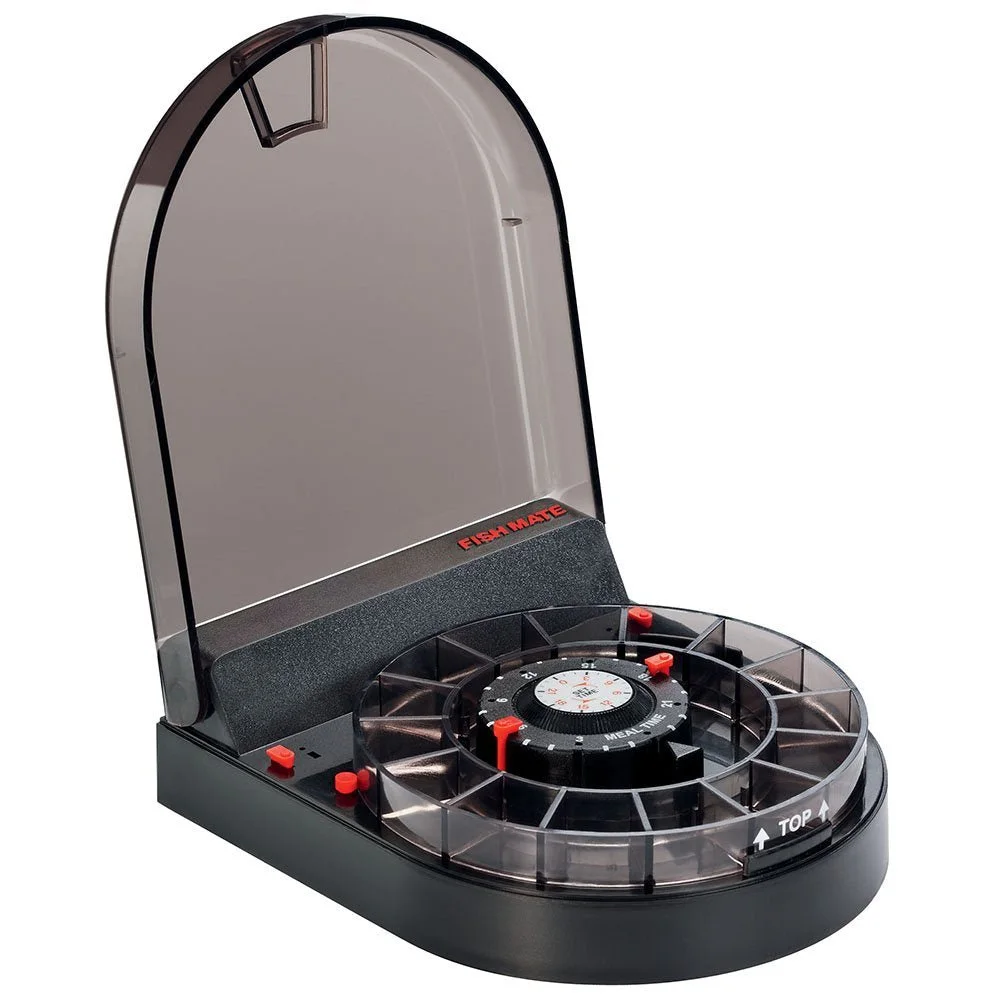 The F14P is for the buyer who prefers pre-portioned slots to estimating a rotating opening. Load only the meals you have decided to serve, and the tray gives you a quick visual check before the program begins. That is useful for a caretaker because an empty position is obvious. It also creates a clear compromise. You trade hopper flexibility for a finite set of prepared meals, and you need to keep the tray dry during storage. Check the exact P variant and power details before buying. Pros: easy visual portion planning; useful for a fixed feeding calendar. Cons: changing the schedule means reworking the tray rather than editing one hopper setting.
How to choose for several daily feedings
Start with the fish’s normal total ration and divide it into the number of meals recommended for that stock. The feeder’s job is distribution, not extra food. Choose a drum when you need editable times and a tray when you value visible, pre-portioned slots. For flakes, look for a cover and an outlet that stay away from tank condensation. For pellets, check that the opening does not let several pieces fall together.
Mounting is a safety choice. The body should sit level, the outlet should clear the lid, and the food should fall into moving water. A loose clip can shift the drop point or put the device in the aquarium. Battery models need fresh cells and accessible controls. Mains-powered models need a cable route that cannot pull the feeder toward the water. Confirm the current instructions for the exact variant.
Run a dry test first, then a wet test with the food you actually use. Catch each release in a cup, record the setting, and repeat it on another day. Clean crumbs before they absorb humidity. If you will be away, ask someone to check the food, lid, and fish rather than relying on the schedule alone.
Frequently asked questions
Is more frequent feeding automatically healthier?
No. More releases only help when they divide the appropriate daily ration. A feeder should not increase the amount of food served.
Can an automatic feeder handle flakes?
Many drum or hopper feeders can dispense dry flakes, but flakes vary in size and can bridge when damp. Test the exact food in the exact feeder before leaving.
Should I use a tray or a hopper?
Use a tray when pre-portioned meals and a visible schedule matter most. Use a hopper when you need to change times or portions without preparing every slot again.
Where should the feeder sit?
Place it level above a feeding opening, away from splash and condensation, with enough clearance to remove the lid and reach the controls.
How long should I test it?
Run several complete days at the intended times. Confirm every release, inspect the food for clumping, and make sure the mount has not shifted.
Recommendation
Choose Eheim for a straightforward programmable drum, Fish Mate for visible tray portions, or Juwel when your lid is a confirmed match. Whichever format you buy, calibrate with the real food and preserve the fish’s normal daily ration. A trusted check during an absence is still worth arranging.
Sources and methodology
We checked product information from Eheim, Fish Mate, Fluval, NICREW, Juwel, and current retailer listings. We compared scheduling format, portion adjustment, food protection, mounting, and maintenance. Product photos depict the named models or stated variants. No hands-on testing was performed.