
Buying guide
Best aquarium thermometer for accuracy
The best aquarium thermometer for accuracy is the one you can position in moving water, read at a glance and verify against a second reference.
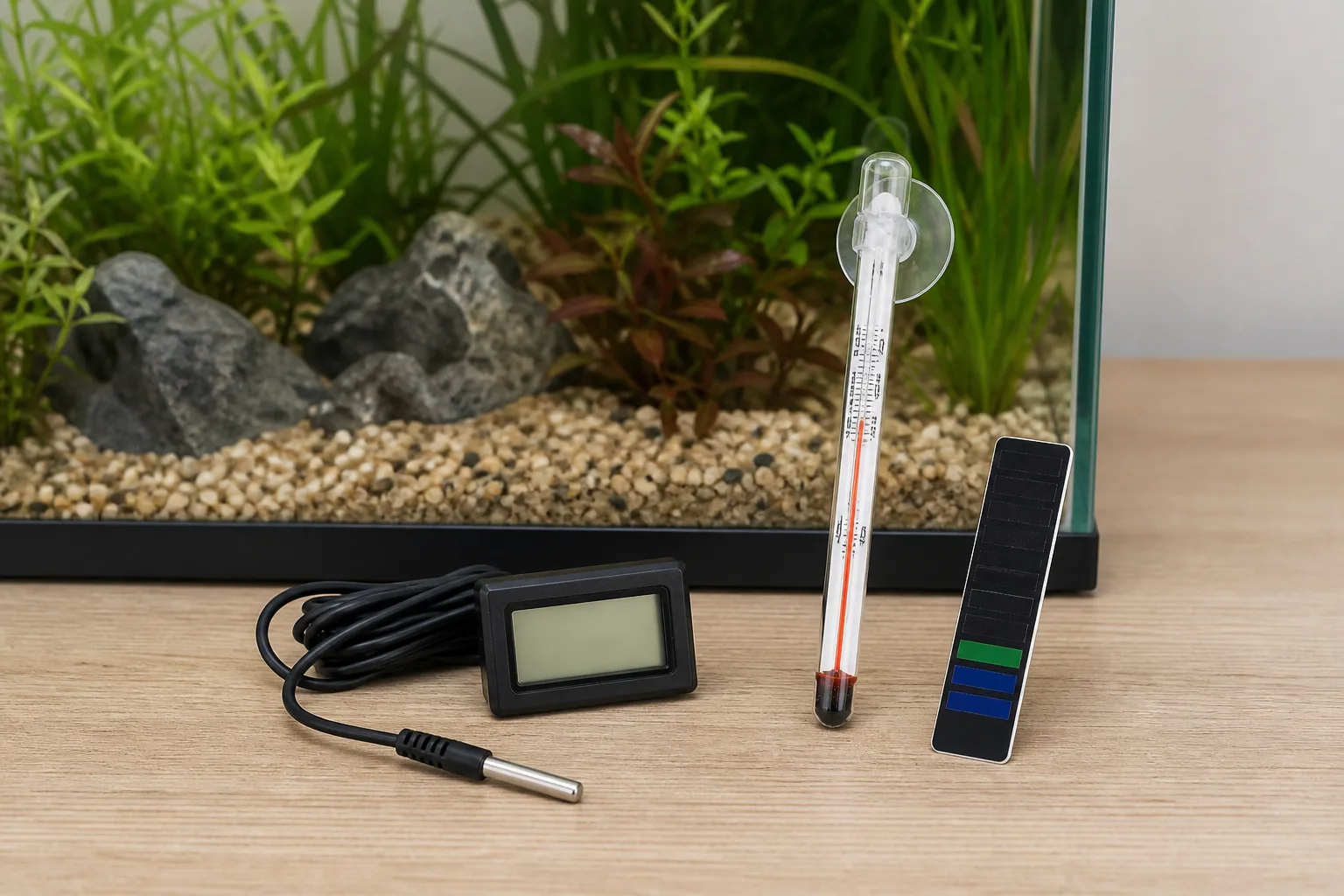
For dependable readings, start with the sensing format rather than a large number on the package. A submerged digital probe gives you a remote display, while a floating or glass thermometer puts the scale in the water. Stick-on strips are convenient, but they measure the glass surface and are a poor choice when a small temperature change matters. This research-based guide is not a hands-on test. Confirm the current model, attachment method and retailer stock before ordering.
Quick comparison
| Product | Best for | Main drawback |
|---|---|---|
| Zoo Med Digital Aquarium Thermometer | Remote digital reading | Battery and probe placement matter |
| Fluval Digital Aquarium Thermometer | Neat digital setup | Confirm the mounting method |
| Marina Deluxe Floating Thermometer | Simple in-tank check | You must read it at the glass |
| AQUANEAT Digital Aquarium Thermometer | Everyday probe monitoring | Display stays outside the water |
| DIGITEN Digital Aquarium Thermometer | Cordless stick-on reading | Reads through the aquarium wall |
| Penn-Plax Floating Aquarium Thermometer | Low-tech tanks | It can move from the chosen spot |
| VIVOSUN Digital Aquarium Thermometer | Budget digital monitoring | Seal and battery life need attention |
Our picks
Zoo Med Digital Aquarium Thermometer
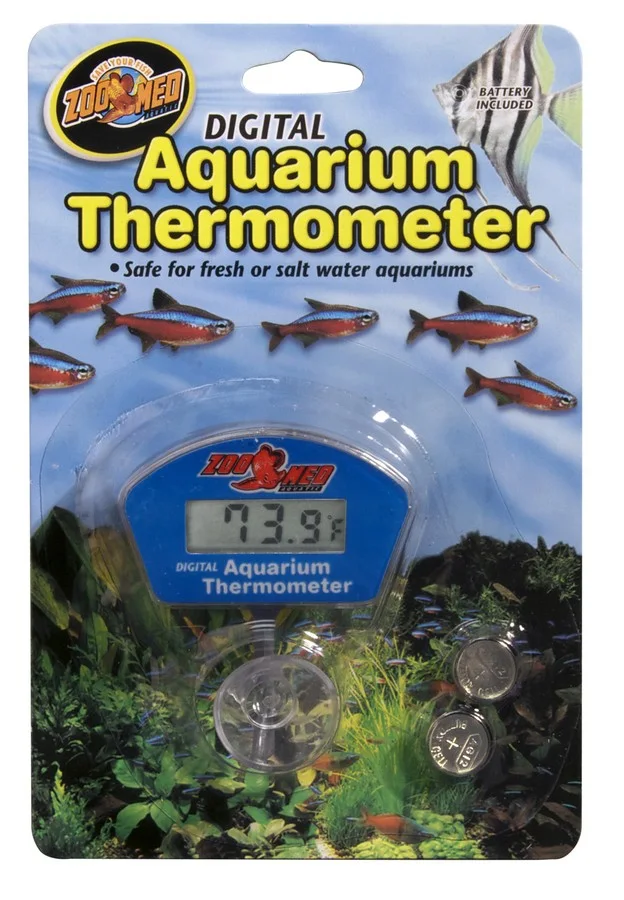 Zoo Med’s digital aquarium thermometer is the sensible starting point when you want the display outside the tank and the sensor in the water. A remote probe lets you keep the readout visible without putting a housing across the glass. Place the probe in a gently circulating area, away from the heater body and return nozzle. That position tells you more about the water your fish experience than a hot or cold equipment pocket. The tradeoff is dependence on a battery, cable and intact seal. Pros: readable remote display and flexible probe placement. Cons: a loose probe or weak battery can make a trustworthy-looking number misleading.
Fluval Digital Aquarium Thermometer
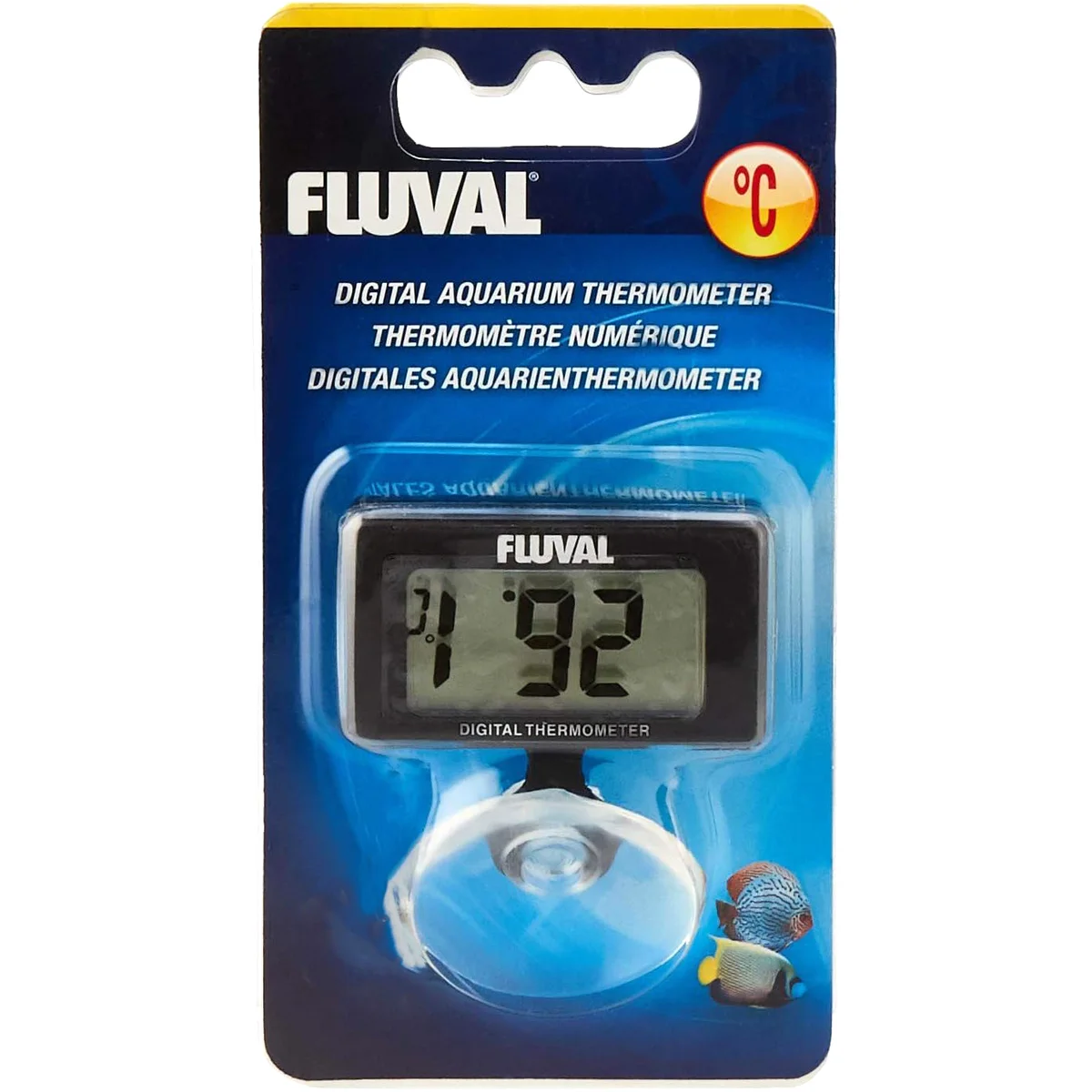 Choose this Fluval option if a clean digital setup fits your aquarium better than a floating scale. Digital output is easier to read under a hood or in a dim room, but the display does not make the measurement inherently more accurate. Mount the sensing part where flow mixes the tank, then check whether the cable or attachment pulls it toward the heater. Keep condensation out of the display housing and replace the battery before it becomes an emergency. Pros: clear numerical display and a tidy appearance. Cons: the installation format must suit your rim, lid and cable route.
Marina Deluxe Floating Thermometer
 The Marina floating design suits a keeper who wants a direct, always-visible in-tank scale. It needs no battery and avoids a separate remote sensor, so there are fewer electronic parts to troubleshoot. Accuracy still depends on where the float sits. Keep it in open water, not wedged against the glass, heater or filter intake, and make sure you can read the scale at eye level. Its main weakness is movement. A floating body can drift into a different current and show a slightly different local temperature. Pros: no battery and simple visual checking. Cons: it is less fixed than a mounted probe.
AQUANEAT Digital Aquarium Thermometer
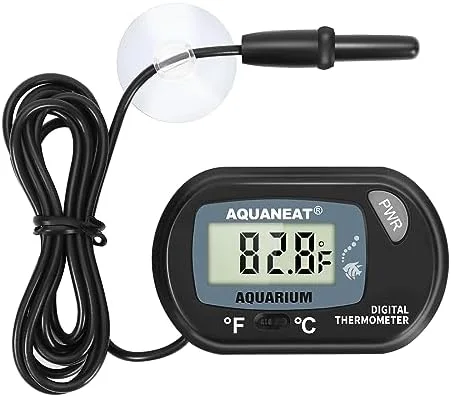 Aqueon makes a practical choice for routine checks when you prefer a thermometer that stays in the aquarium. Treat the name as a product family and confirm the exact listing before purchase, since attachment and display details can vary by version. Put it at the middle height of the tank in an area with steady circulation. Avoid reading immediately after a water change because the new water may not have mixed. Pros: familiar aquarium-focused format and easy daily checks. Cons: variant details need verification, and any suction attachment can lose its grip.
DIGITEN Digital Aquarium Thermometer
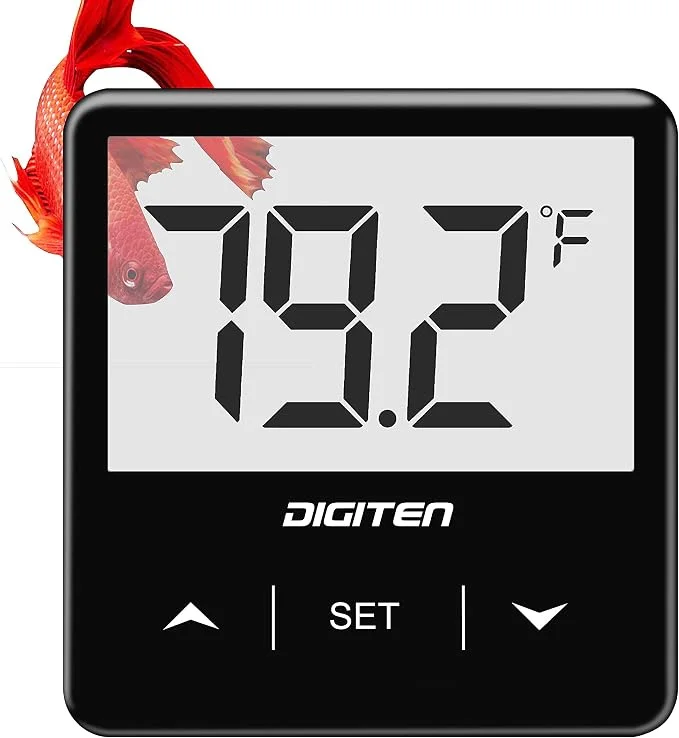 Tetra’s aquatic thermometer is worth considering when a protected in-tank scale is easier for everyone in the household to use. Glass-style instruments do not ask you to interpret a tiny LCD or remember a battery schedule. They do ask for careful handling during cleaning and maintenance. Set it where the scale faces the room and the sensing bulb is not touching décor. Pros: passive operation and a quick visual check. Cons: a glass instrument is a poor fit for rough maintenance, active fish that knock equipment, or anyone who needs a remote readout.
Penn-Plax Floating Aquarium Thermometer
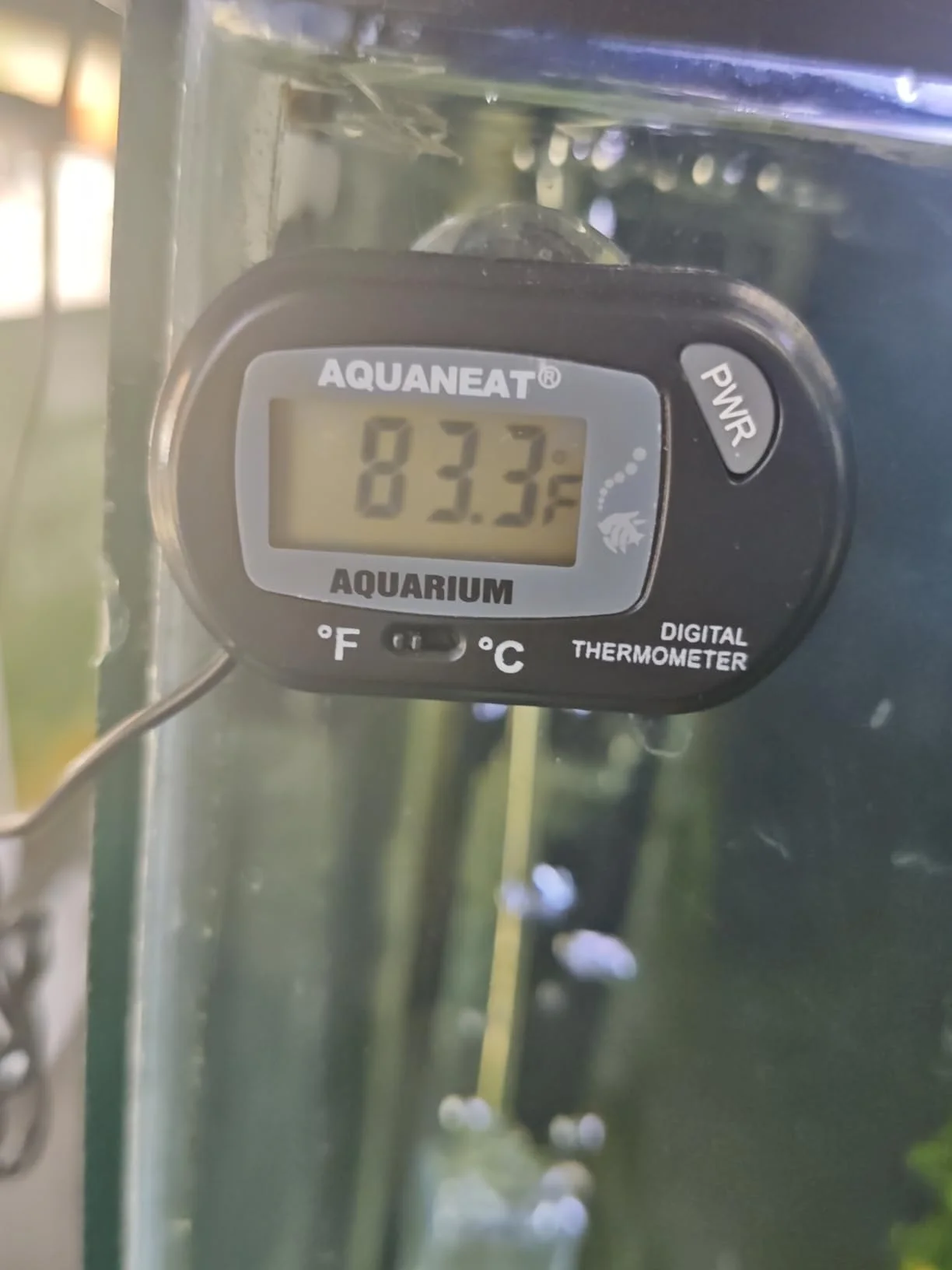 Penn-Plax is another low-tech route for a tank where you want a floating reference rather than a powered display. It can be useful during setup because you can move it around and look for temperature differences between the heater side and the opposite end. Do not mistake that mobility for a flaw in every reading. It becomes a problem only when you leave it drifting and assume it always measures the same location. Pros: portable and battery-free. Cons: the reading is location-dependent, and the body needs protection from knocks.
VIVOSUN Digital Aquarium Thermometer
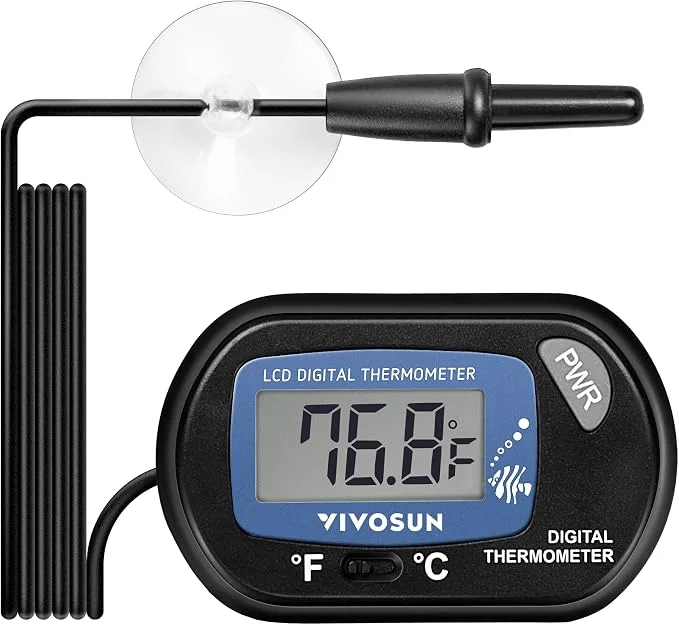 VIVOSUN’s digital aquarium thermometer fits a buyer who wants a numerical display without moving to a larger controller. Before ordering, check whether the listing includes the probe and attachment style you need. Digital thermometers are convenient, but the sensor must remain submerged as directed and the display must stay dry. Pros: easy-to-read digital format and a compact monitoring role. Cons: lower-cost electronic housings deserve closer checks for condensation, cable damage and battery condition.
Buying criteria for a genuinely useful reading
First decide where you want to read the temperature. A probe model puts the display outside the tank and is useful when the aquarium has a lid or sits below eye level. A floating or glass model is easier to understand at a glance, but you must look through the glass and keep the instrument from drifting. A strip on the outside pane is the least convincing option for accuracy because it responds to the glass, room air and nearby drafts as well as the water.
Placement beats decimal resolution. Keep the sensor in moving water at the depth occupied by the animals. Do not tuck it beside a heater, under a cold-water return, against the glass, or behind dense décor. After a water change, wait for mixing before treating the reading as the tank’s normal temperature. A thermometer that changes when moved across the aquarium may be revealing circulation differences rather than failing.
Cross-check a new instrument against a second thermometer in the same cup of aquarium water. Use the same depth and give both enough time to settle. If they disagree, repeat the comparison with a third reference or a known water temperature instead of adjusting the heater to chase one display. Most hobby thermometers are not laboratory instruments. A calibration button, if the model has one, does not remove the need to verify the reference. Record the usual morning reading and the reading after the lights have been on so a real change stands out.
Look for the practical limits too. Batteries eventually weaken, suction cups release, glass can break, probes can corrode and displays can fog. A thermometer that is accurate but impossible to see behind the hardscape is not useful in daily care. Choose the format you will actually check.
Frequently asked questions
Are aquarium thermometers accurate enough for fishkeeping?
They can be useful when positioned in circulating water and cross-checked. Do not treat a displayed decimal as proof of laboratory accuracy.
Is a probe better than an internal thermometer?
A probe gives flexible placement and an outside display. An internal glass or floating model needs no battery, but it can be harder to read and easier to knock or move.
Do aquarium temperature strips measure the water?
They measure the outside glass area. Room temperature, drafts and the tank wall can influence the result, so use a submerged thermometer when the reading affects livestock care.
How do I check a thermometer before trusting it?
Put it and a second reference in the same container of aquarium water, away from direct heat. Let them settle, compare them, and repeat the check at another location in the tank.
Recommendation
Pick a submerged digital probe if you want a clear remote readout, or choose a fixed floating or glass thermometer if you prefer battery-free simplicity. In either case, correct placement and one repeatable cross-check matter more than buying the most elaborate display.
Sources and methodology
We checked product and care information from Zoo Med, Fluval, Marina, Aqueon, Tetra, Penn-Plax, and VIVOSUN. We compared sensing format, display location, placement, maintenance and the limits of cross-checking. No hands-on testing was performed, and no accuracy figure is claimed without a current manufacturer specification.