
Buying guide
Best aquarium substrate for goldfish
Goldfish dig, stir the floor and produce plenty of waste. Pick a smooth bed that will not fit easily in the fish's mouth, then choose a layout you can clean without uprooting every plant.
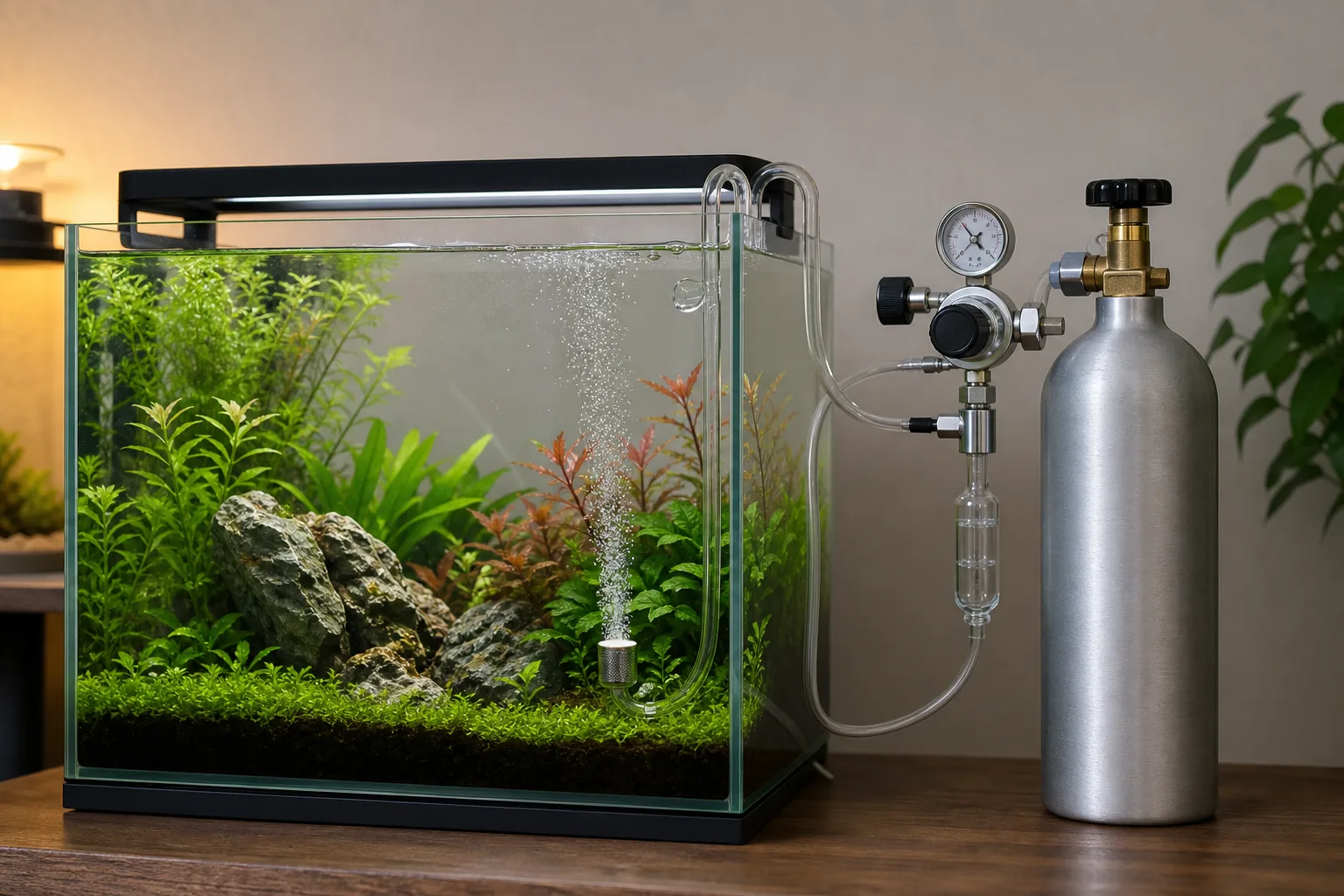
Goldfish are enthusiastic diggers. They mouth the bottom while feeding, push gravel aside and stir anything loose into the water column. That behavior makes substrate safety and waste removal more important than a decorative color match. Smooth sand or large, rounded gravel can work. Tiny gravel that may be swallowed, sharp chips and deep pockets full of mulm are poor choices. This is a research-based guide, not a hands-on test. Confirm the current product variant and grain description before ordering.
Quick comparison
| Product | Best fit | Goldfish-specific caution |
|---|---|---|
| CaribSea Super Naturals Aquarium Sand | Open sand floor | Siphon above the surface |
| Seachem Flourite Black Sand | Planted display with dark color | Porous grains need gentle cleaning |
| CaribSea Eco-Complete | Rooted plants in an inert-style layout | Check the current name and bag |
| Imagitarium Snowy River Aquarium Gravel | Rounded gravel layout | Reject chips and mouth-sized pieces |
| AquaNatural Diamond Black Sand | Dark, low-profile floor | Confirm its aquarium grain texture |
| Spectrastone Shallow Creek Gravel | Visible open gravel | Gaps can catch food and waste |
| CaribSea Gemstone Creek | Natural-looking stream bed | Inspect size and finish first |
Our picks
CaribSea Super Naturals Aquarium Sand
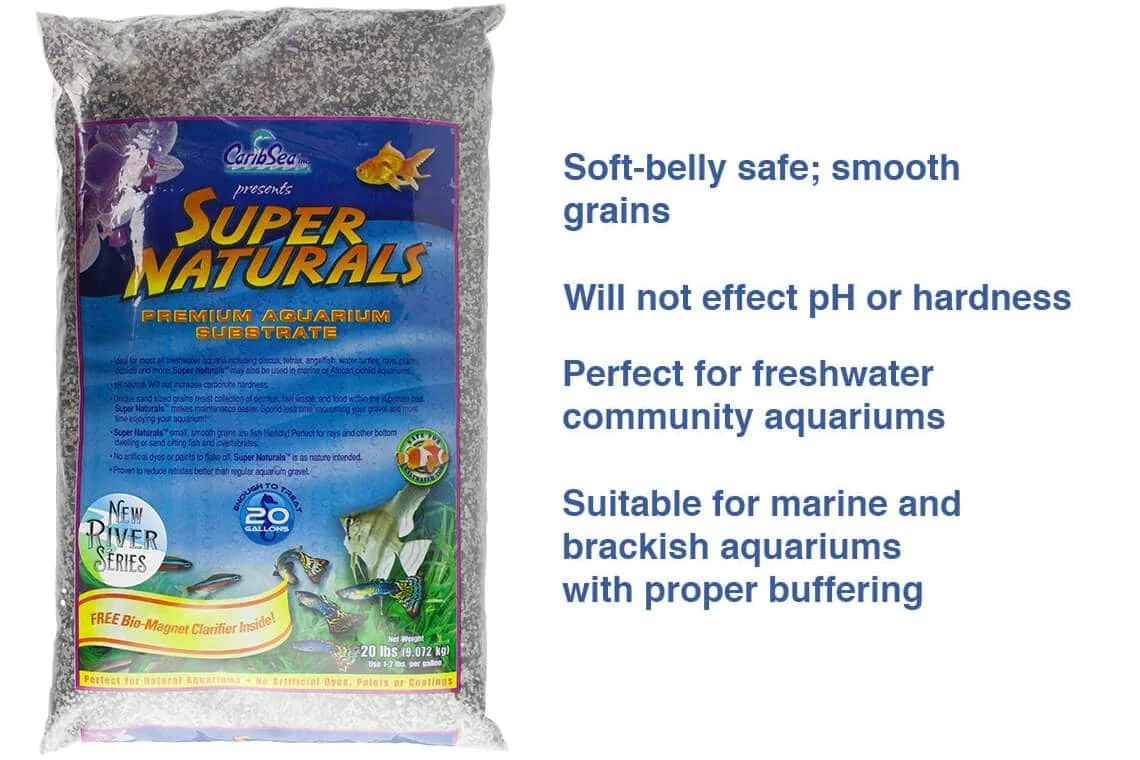 This is the strongest starting point when cleaning matters more than root-heavy planting. A continuous sand surface leaves fewer large cavities for pellets to disappear into, while goldfish can still sift the top layer. Use a siphon just above the bed and move slowly so you lift debris without removing the sand itself. Keep the layer low enough to inspect and avoid piling it behind ornaments. Pros: easy visual checks and a simple floor. Cons: careless vacuuming removes sand, and compacted deep sand is still hard to maintain.
Seachem Flourite Black Sand
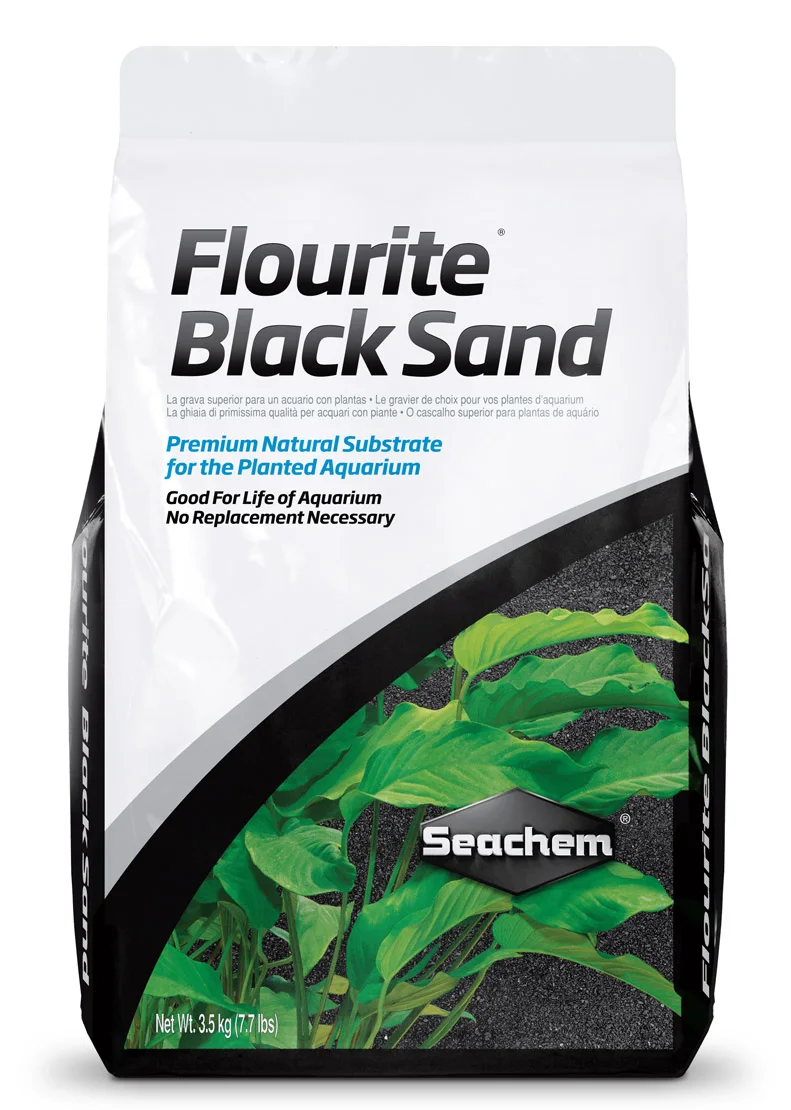 Seachem says Flourite Black Sand is a stable porous clay gravel for freshwater planted aquariums, with no chemical coating and no intended pH change. It can suit a goldfish display with hardy rooted plants, but its fine texture calls for a careful siphon rather than aggressive stirring. Rinse natural dust before setup and add water slowly over a bowl, as Seachem recommends. Pros: dark color, plant support and stable material. Cons: debris can sit among the grains, and initial cloudiness takes patience.
CaribSea Eco-Complete
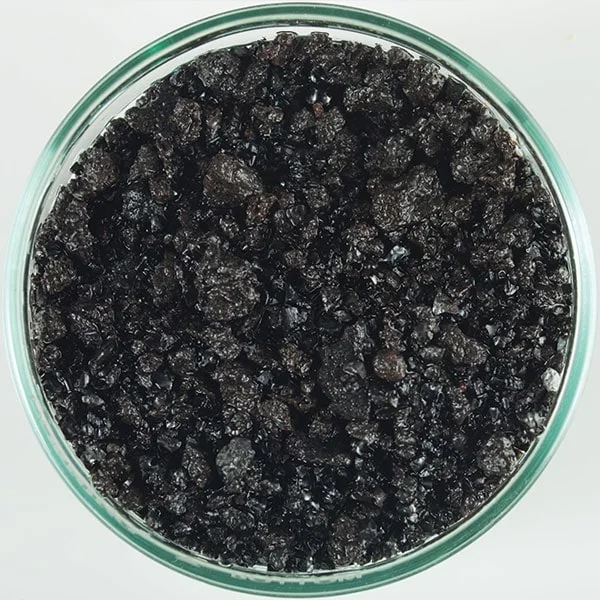 CaribSea now presents the freshwater product as Eco-Planted, while older listings still use Eco-Complete. It belongs on this list for a planted goldfish tank, not because a goldfish needs plant nutrients. The porous grains can hold plants more securely than a bare glass floor, but the fish may rearrange them as it forages. Anchor roots with stones only when those stones are smooth and too large to swallow. Pros: plant-oriented bed and natural dark appearance. Cons: naming changes and extra attention around waste pockets.
Imagitarium Snowy River Aquarium Gravel
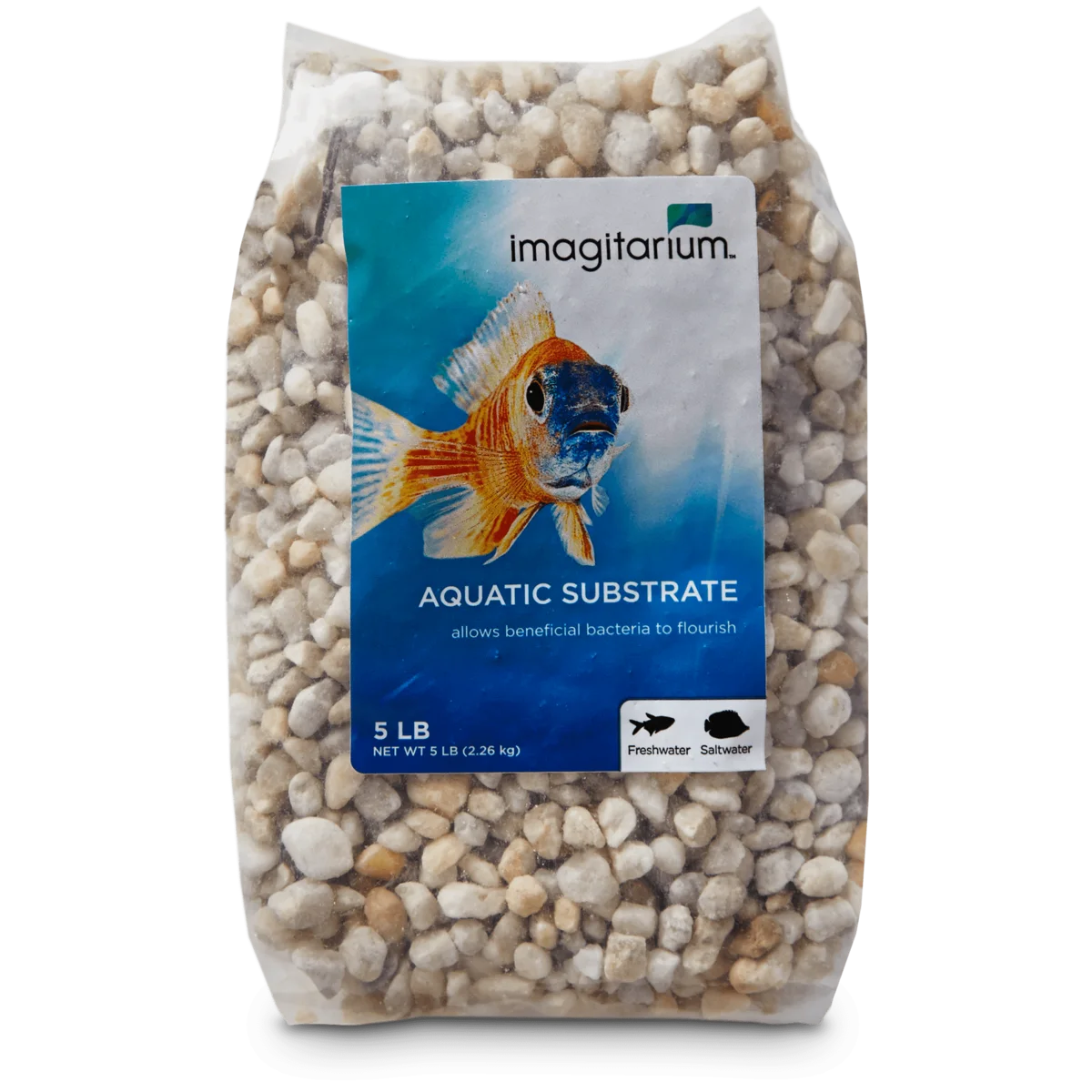 Gravel can be practical in a goldfish tank because a gravel tube reaches between the stones during cleaning. The safety question is the actual size and finish of the variant, not the brand name. Avoid pieces that are sharp, chipped or small enough for your fish to mouth. A sparse layer gives plants something to grip while leaving fewer hiding places for food. Pros: familiar maintenance and firm plant anchoring. Cons: gaps collect waste if you rush the siphon, and product listings may show several finishes.
AquaNatural Diamond Black Sand
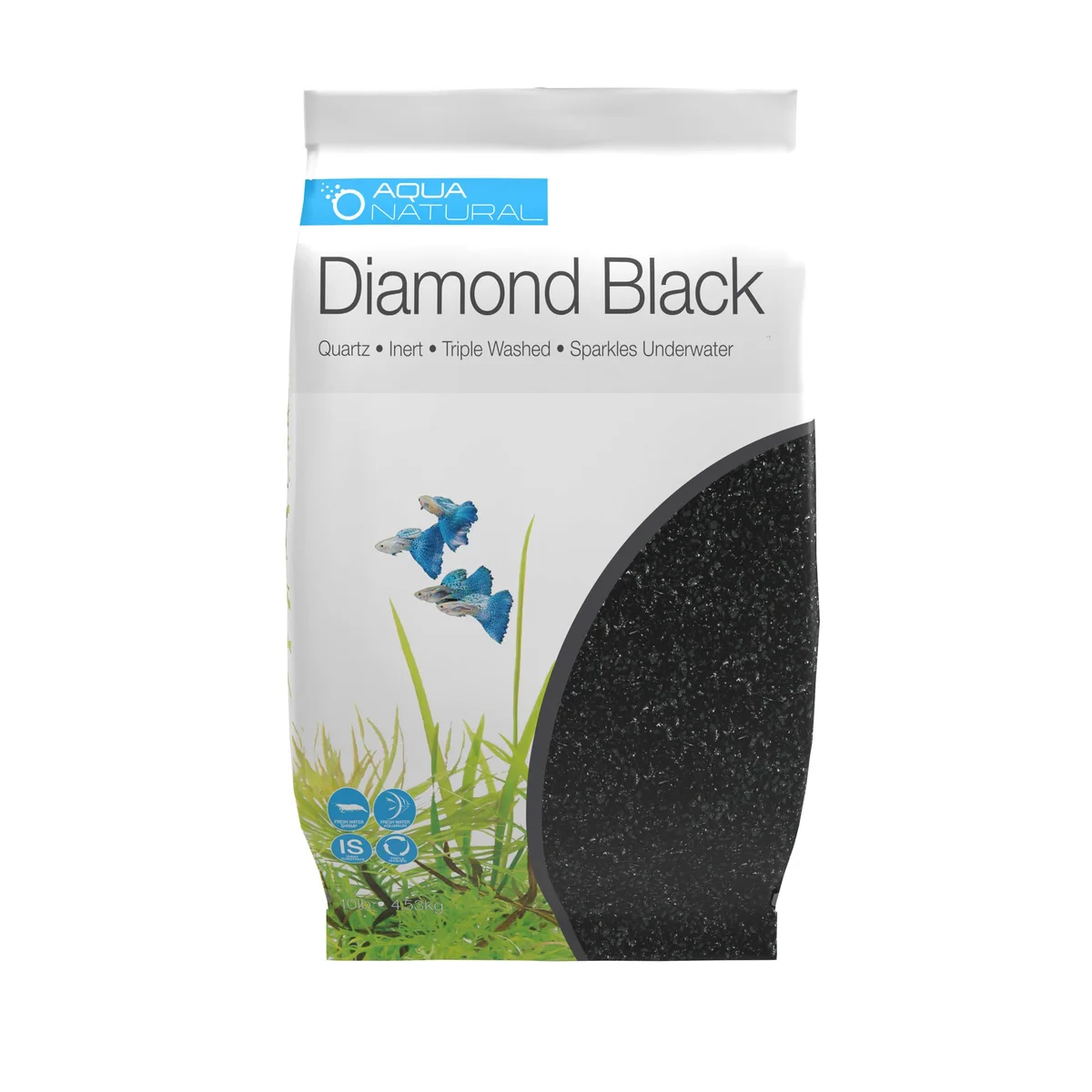 Black sand is a neat fit for a low, open layout where you want the fish to stand out. Goldfish will disturb it, so make sure the bed does not form a tall ridge beneath decorations. Skim over the surface during water changes and check dark areas for leftover food. Read the listing carefully because a photograph cannot prove that the grains are smooth or appropriately sized. Pros: uncluttered floor and easy rearrangement. Cons: dark waste is less visible, and careless digging can cloud the water.
Spectrastone Shallow Creek Gravel
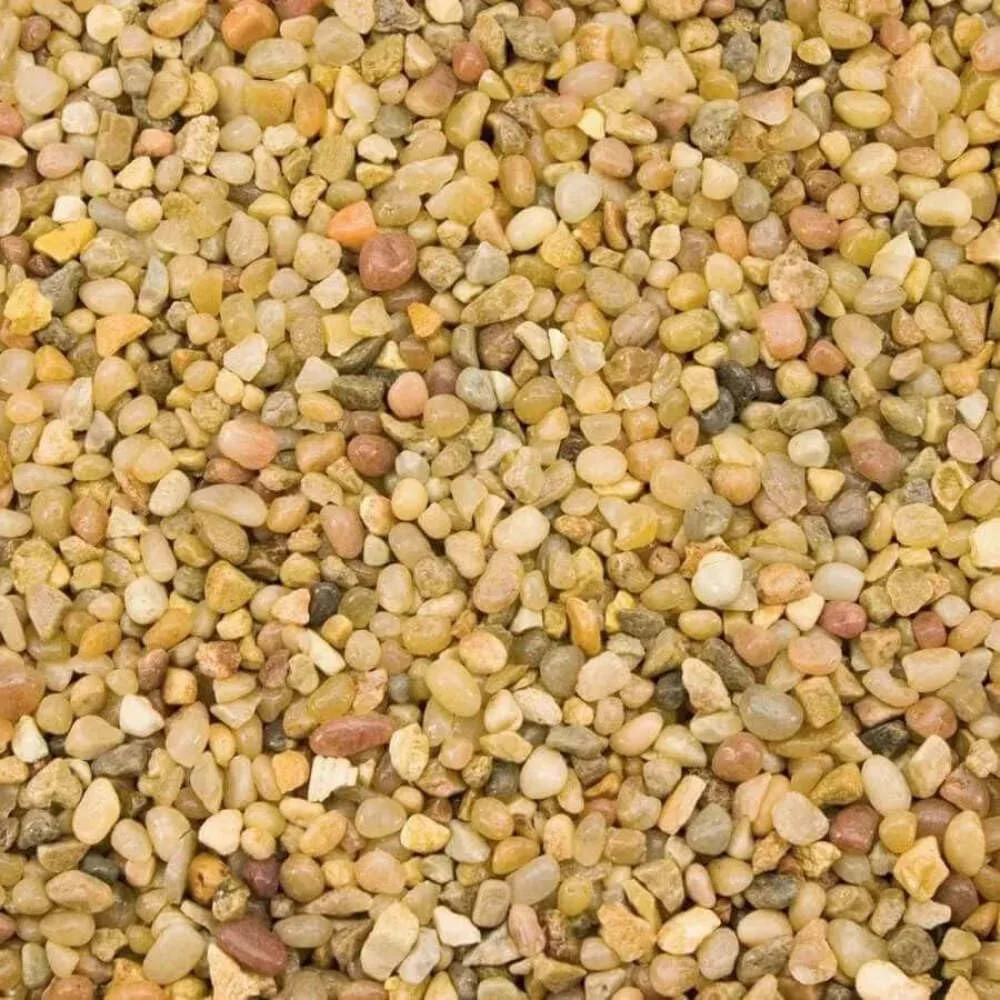 This creek-style option suits a display that wants visible stones and a broad planting area rather than a thick soil bed. Goldfish can push it around, so leave space around the filter intake and use heavy, smooth ornaments if you need to protect a plant. Vacuum in sections instead of lifting the whole floor at once. Pros: open visual layout and straightforward spot cleaning. Cons: wider gaps trap pellets, and every stone still needs a tactile safety check.
CaribSea Gemstone Creek
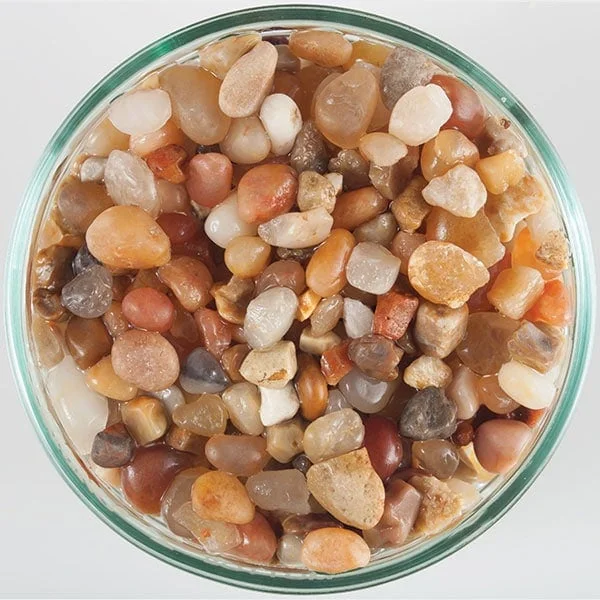 Gemstone Creek is a candidate for keepers who prefer the look of a stream bed over a flat black floor. Treat it as a visual gravel choice, not a waste-management shortcut. Check the individual stones for edges and choose a size that cannot be swallowed by the fish in your aquarium. Keep the layer shallow so a gravel tube can reach through it. Pros: natural-looking variation and firm anchoring points. Cons: mixed sizes make cleaning less uniform and can create pockets beneath larger stones.
Buying criteria and maintenance
Goldfish dig for food and often take substrate into the mouth while doing it. There is no universal grain size that is safe for every goldfish, because fish size and the product’s actual pieces vary. The useful rule is to remove anything that is sharp or plausibly swallowable after you inspect the bag. If you cannot identify the grain size from a listing, ask the seller or choose a different product.
Waste trapping is the second test. Coarse gravel leaves cavities where pellets and feces can settle. Fine sand keeps a more even surface, but a deep layer can compact and needs careful surface cleaning. Either material can work when you keep it shallow, provide good circulation and vacuum routinely. Substrate does not replace a suitably sized filter or water changes.
Goldfish may uproot delicate stems while foraging. Choose tough plants, attach them to smooth rocks or wood, or use a shallow gravel area that gives roots a chance to hold. Do not bury the crown of a plant, and avoid sharp weights that create a second injury risk. Active aquasoil is rarely the simplest answer for a fish that constantly rearranges the floor. An inert substrate keeps chemistry more predictable.
Before setup, rinse inert sand or gravel in a bucket. Add it before water, then fill over a bowl to reduce disturbance. During a water change, clean one section at a time. Hover over sand, or push a gravel tube into the spaces without plunging so deeply that you tear out every root. Lift ornaments occasionally and check below them for trapped food. If the bed smells or contains persistent dark pockets, remove waste rather than covering it with another layer.
Frequently asked questions
Can goldfish swallow aquarium gravel?
They can mouth small pieces while feeding. Inspect the actual product and fish behavior, then remove pieces that could be swallowed or have sharp edges.
Is sand easier to clean than gravel?
Sand leaves less room for food to fall into, but it needs a gentle surface siphon. Gravel lets a tube reach between pieces, although those gaps can hold more waste.
Should goldfish tanks have planted soil?
Only if the plants and maintenance plan justify it. An inert substrate is easier to monitor when goldfish are digging and stirring the floor.
How do I stop goldfish from uprooting plants?
Use sturdy plants, smooth anchors and a planting area with enough material around the roots. Some rearranging is normal and should shape the layout choice.
Recommendation
For a clean, fish-first layout, choose CaribSea Super Naturals Aquarium Sand and keep the bed shallow. If you prefer gravel, compare the actual stones in Imagitarium, Spectrastone or Gemstone Creek and reject anything sharp or swallowable. Use Flourite Black Sand or Eco-Complete only when rooted plants are central to the aquarium and you are prepared to clean around a more textured bed.
Sources and methodology
We checked manufacturer information from CaribSea, Seachem, AquaNatural, Imagitarium, and Spectrastone. We compared digging behavior, ingestion risk, waste access, plant anchoring and cleaning. No hands-on testing was performed, and no prices or unsupported product dimensions are stated.