
Buying guide
Best aquarium CO2 system for a nano tank
The best nano CO2 setup is the one you can adjust in tiny steps, shut off reliably and fit beside the tank.
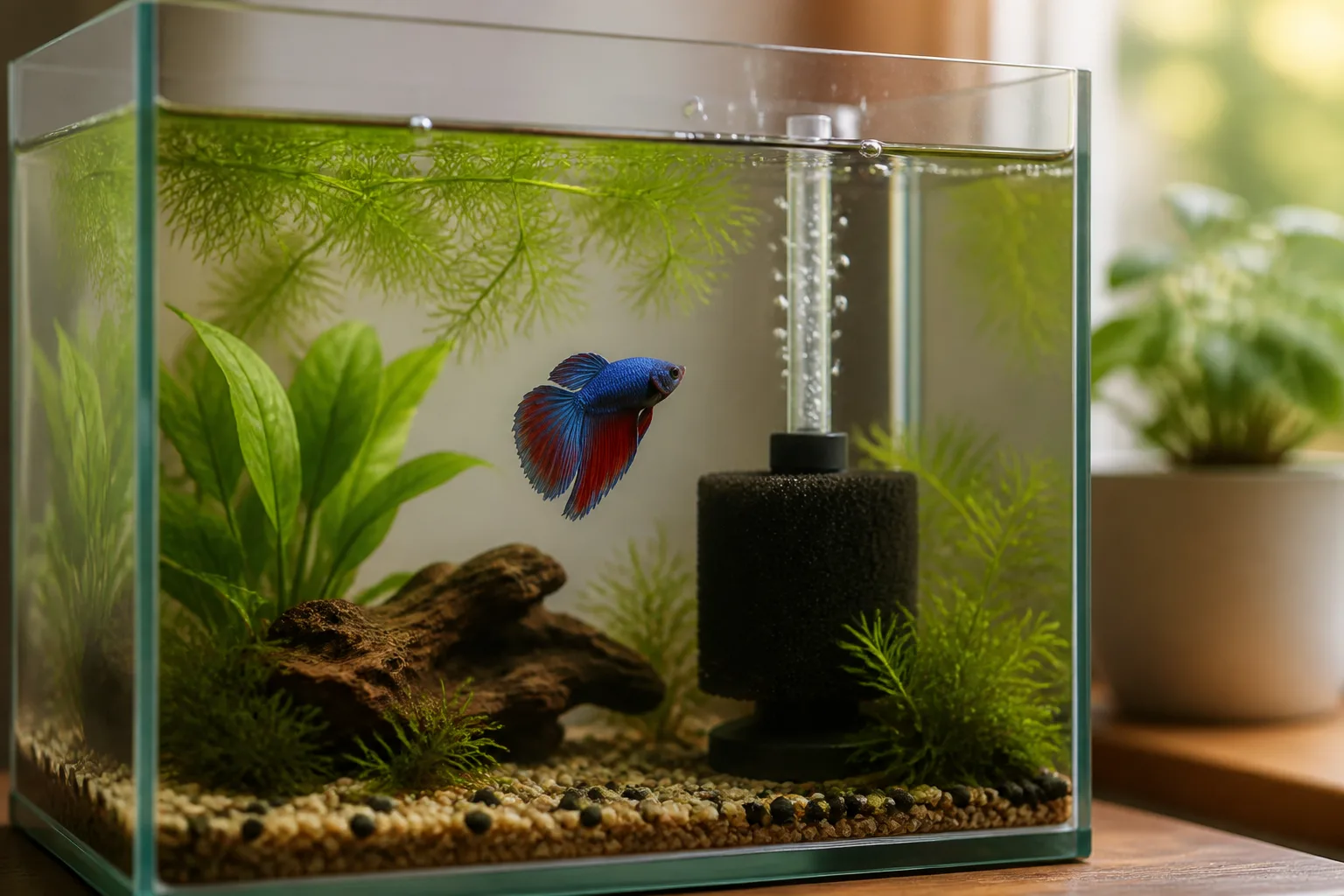
For most nano planted tanks, I would start with the Fluval Pressurized CO2 Kit if its small disposable cylinder format suits your routine. If you want a refillable cylinder and a regulator you can keep as the aquarium grows, the CO2Art Pro-SE is the more adaptable choice. Neither makes CO2 foolproof. A few extra bubbles in a small tank can change livestock conditions quickly, so fine control and a dependable shutoff matter more than headline output.
This is a research-based guide, not a hands-on test. Check the exact regional model, cylinder thread, voltage and stock before ordering.
Quick comparison
| Product | Best fit | Nano-tank tradeoff |
|---|---|---|
| Fluval Pressurized CO2 Kit | Small, packaged starter system | Disposable cylinders need replacing |
| Dennerle Nano CO2 Complete | Compact planted nano | Confirm local refill or cartridge supply |
| CO2Art Pro-SE Regulator | Refillable-cylinder setup | More parts and bench space |
| FZONE Aquarium CO2 Regulator | Compact regulator with visible adjustment | Verify connector and revision |
| UNS Mini CO2 Regulator | Minimalist small-tank hardware | May need separate cylinder and diffuser |
| Milwaukee MA957 CO2 Regulator | A regulator you can tune and monitor | Needs compatible aquarium fittings |
| AQUARIO Neo CO2 Kit | Complete biological nano package | Output is not timer-controlled |
Our picks
Fluval Pressurized CO2 Kit
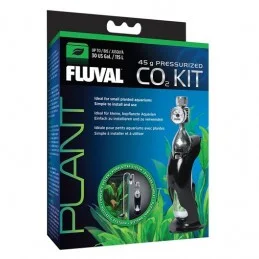
Fluval lists this as a pressurized kit for smaller aquariums, which makes it an easy starting point when you want the main pieces together. Its compact cylinder approach saves cabinet space and avoids buying a full-size bottle immediately. The catch is supply: disposable cartridges become a recurring task, and you must confirm that the current kit includes the fittings you need. Use the regulator’s adjustment gradually, add a check valve, and shut the gas off when the lights are out if your timer arrangement allows it. Pros: tidy starting package. Cons: cartridge dependence and limited expansion.
Dennerle Nano CO2 Complete
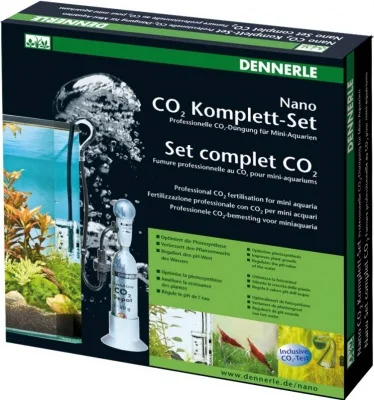
Dennerle’s Nano CO2 range is aimed at small planted aquariums and is a sensible match when neat tubing and a small footprint matter. It is the sort of setup that works well on a desk tank where a large regulator would look absurd. Look closely at the exact Complete package because contents and cylinder format differ by market. A small cartridge can be convenient, but it is not the same long-term proposition as a refillable bottle. Pros: nano-oriented format. Cons: check replacement supply before committing.
CO2Art Pro-SE Regulator
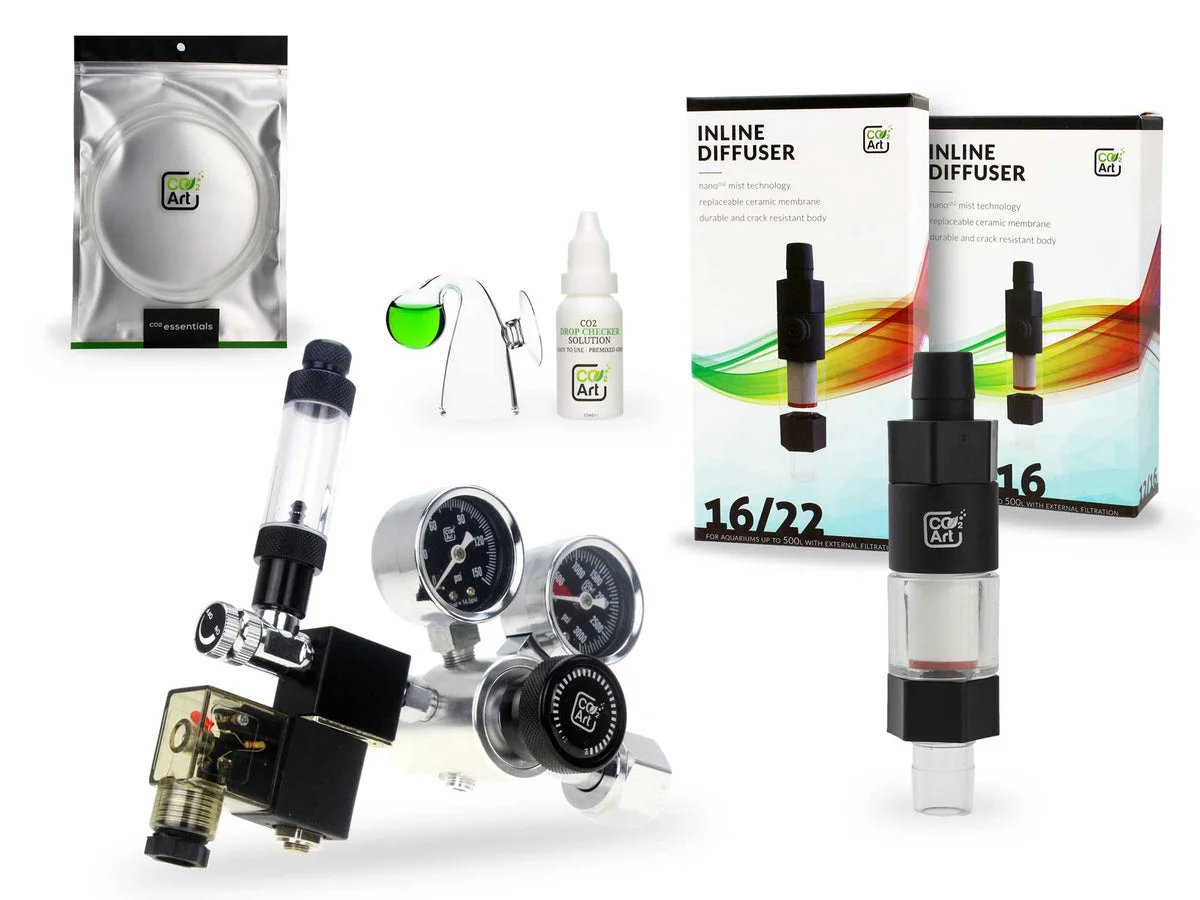
The Pro-SE is a regulator-first choice for an aquarist who already has, or plans to buy, a refillable cylinder. That route costs more effort up front, yet it avoids designing the aquarium around disposable cartridges. The regulator can be paired with a bubble counter, fine needle adjustment and a solenoid, depending on the exact listing. For a nano tank, install the needle valve where you can reach it without bumping the cylinder. Pros: room to build a durable system. Cons: separate parts, tubing and cylinder compatibility to verify.
FZONE Aquarium CO2 Regulator
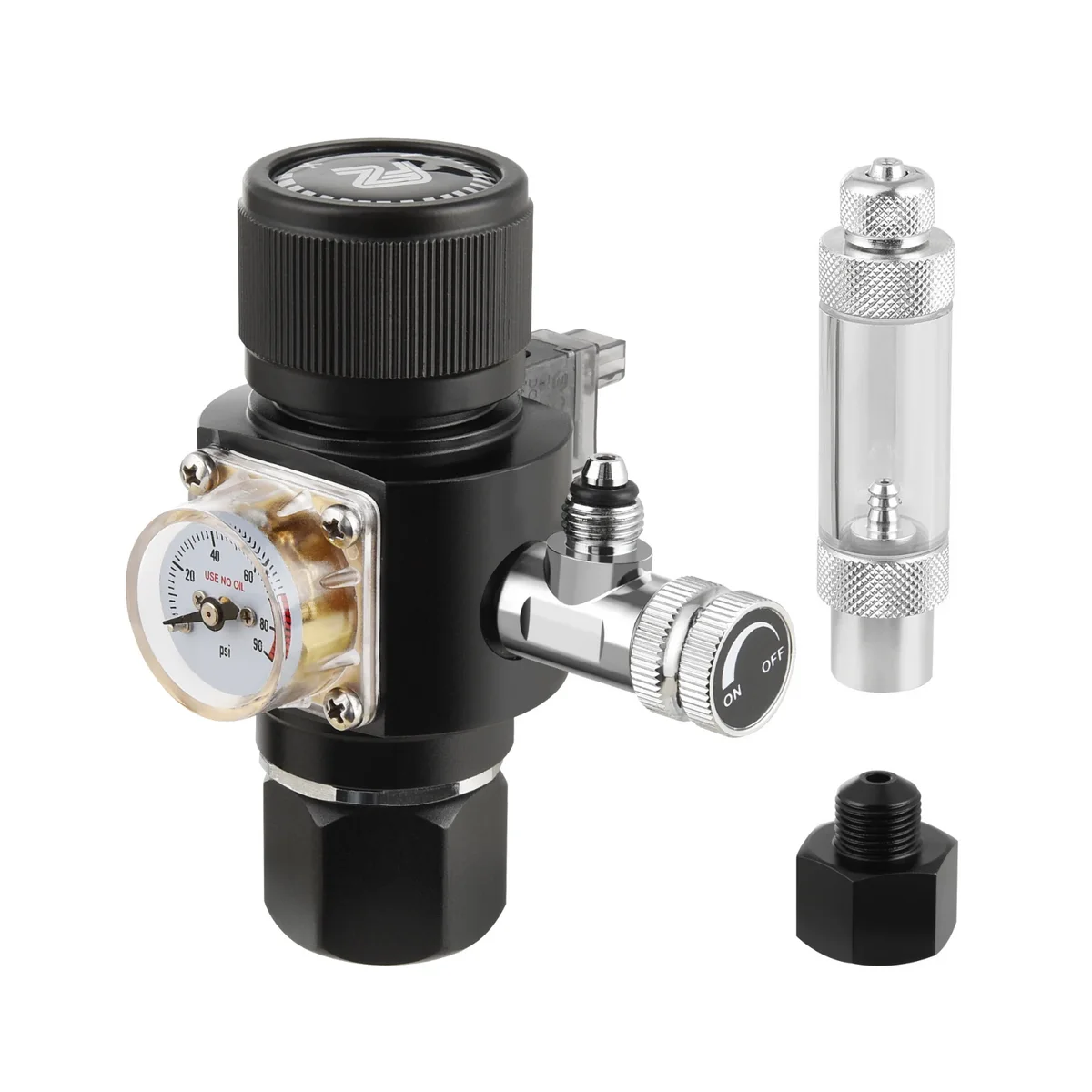
FZONE sells compact aquarium regulators in several configurations, so read the listing rather than assuming every photograph describes the same revision. This pick makes sense when you want a visible pressure gauge and a small control body, but still intend to use a proper pressurized cylinder. Check whether the model has the solenoid you want and whether the outlet matches your tubing. Pros: compact regulator layout. Cons: model variation makes the exact listing important.
UNS Mini CO2 Regulator
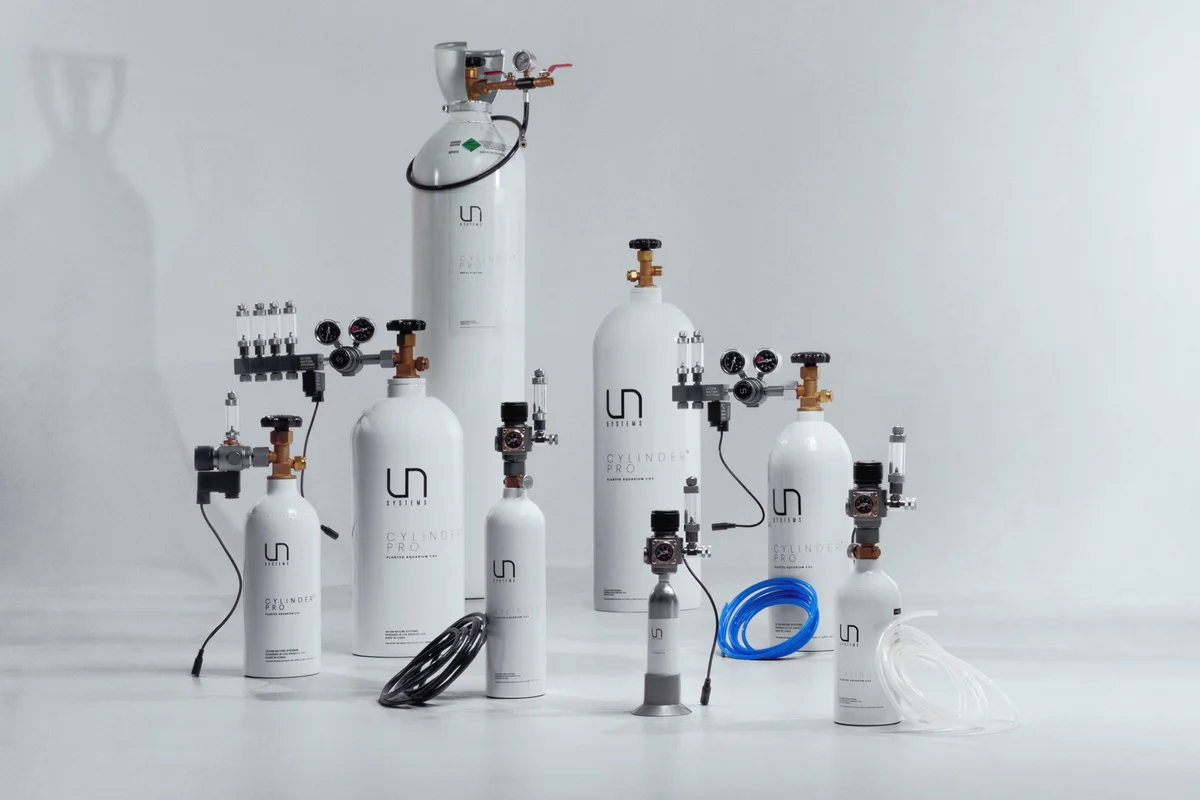
The UNS Mini is for the aquascaper who wants the hardware to disappear behind a small aquarium. It is a regulator component, not a promise that every part of a working CO2 line is in the box. Budget for a cylinder, diffuser, check valve and tubing unless the seller clearly lists them. Its appeal is the small footprint. Its drawback is equally simple: tiny equipment leaves little room to hide an awkward adapter. Pros: discreet scale. Cons: more shopping and connector checks.
Milwaukee MA957 CO2 Regulator
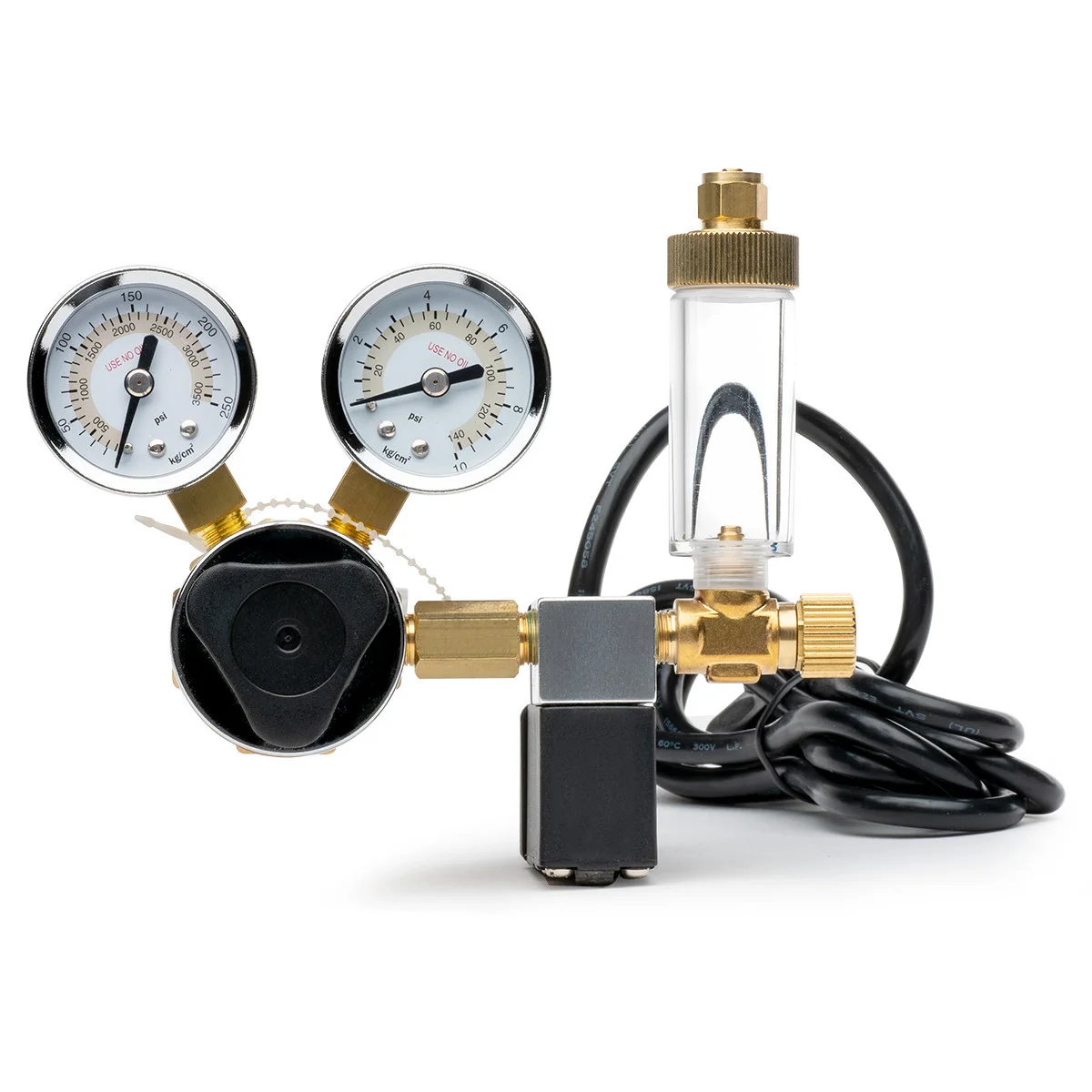
The MA957 is worth considering when you prefer a familiar regulator layout and are comfortable assembling the rest of the line. It is not a nano kit, so judge it by the cylinder and valve arrangement, not by the tank label on a seller page. A regulator that is physically larger can still be workable if it sits securely in the cabinet. Pros: conventional component approach. Cons: less tidy than a purpose-built nano kit.
AQUARIO Neo CO2 Kit
AQUARIO’s Neo CO2 Kit is a compact biological route for planted aquariums. It includes the reaction bottle, tubing and diffuser, so it avoids cylinder and regulator compatibility decisions. Output is not timer-controlled, making conservative stocking and surface agitation important in a nano tank. Pros: compact matching kit. Cons: non-adjustable biological output and periodic refills.
It is a better fit for a buyer who values a matching set over mixing brands. Measure the cabinet first, because a complete package still needs a safe place for the cylinder.
How to choose CO2 for a nano tank
Start with the cylinder. A disposable cartridge is tidy and accessible, while a refillable bottle usually gives you a longer-lived hardware path. Neither is automatically safer. The regulator must deliver a stable, very small adjustment, and the cylinder must stand upright where it cannot be knocked into the aquarium.
Next, check the fine adjustment and shutoff. A solenoid can coordinate injection with the lighting schedule, but it adds a plug, a failure point and another connection to inspect. A bubble counter helps you see changes, yet bubble count is not a universal dose because pressure, diffuser pores and tubing differ. A diffuser should fit the outlet and sit where circulation can distribute gas without blasting livestock.
Leak-check every connection with the system pressurized, then begin at the lowest practical setting. Use a drop checker as a slow trend signal, keep surface movement for gas exchange, and watch fish or shrimp directly. If animals gasp or behave abnormally, stop CO2 and increase aeration. Nano tanks have less water to dilute a mistake, which is the main reason to value slow adjustment over maximum output.
Frequently asked questions
Is a pressurized system necessary for a nano tank?
No. Low-tech plants can grow without added CO2. Pressurized equipment is useful when the plant list and light level justify tighter carbon control.
Should I use a disposable cartridge or refillable cylinder?
Choose the format you can replace reliably. A cartridge saves space, while a refillable bottle may make more sense if you expect to keep CO2 long term.
Where should the diffuser go?
Place it in a circulation path, away from a strong surface ripple and away from animals that could be trapped against it. Follow the diffuser instructions.
Can a timer control CO2?
Many solenoid-equipped systems can be switched with a suitable timer. Confirm the electrical specification and inspect the setup after a power interruption.
Recommendation
Pick the Fluval kit for a compact, packaged start, or the CO2Art Pro-SE when refillable-cylinder flexibility matters more than cabinet simplicity. In either case, buy for fine control, secure connections and a replacement plan you will actually follow.
Sources and methodology
We checked manufacturer information from Fluval, Dennerle, CO2Art, FZONE, UNS, Milwaukee Instruments and AQUARIO. We compared format, adjustment, cylinder approach and nano-tank fit. No hands-on testing was performed. Confirm the exact regional product and package before purchase.