
Buying guide
Best aquarium chiller for a reef tank
A reef chiller earns its space when room heat pushes the aquarium past a stable range, but the plumbing and ventilation plan matters as much as the unit.
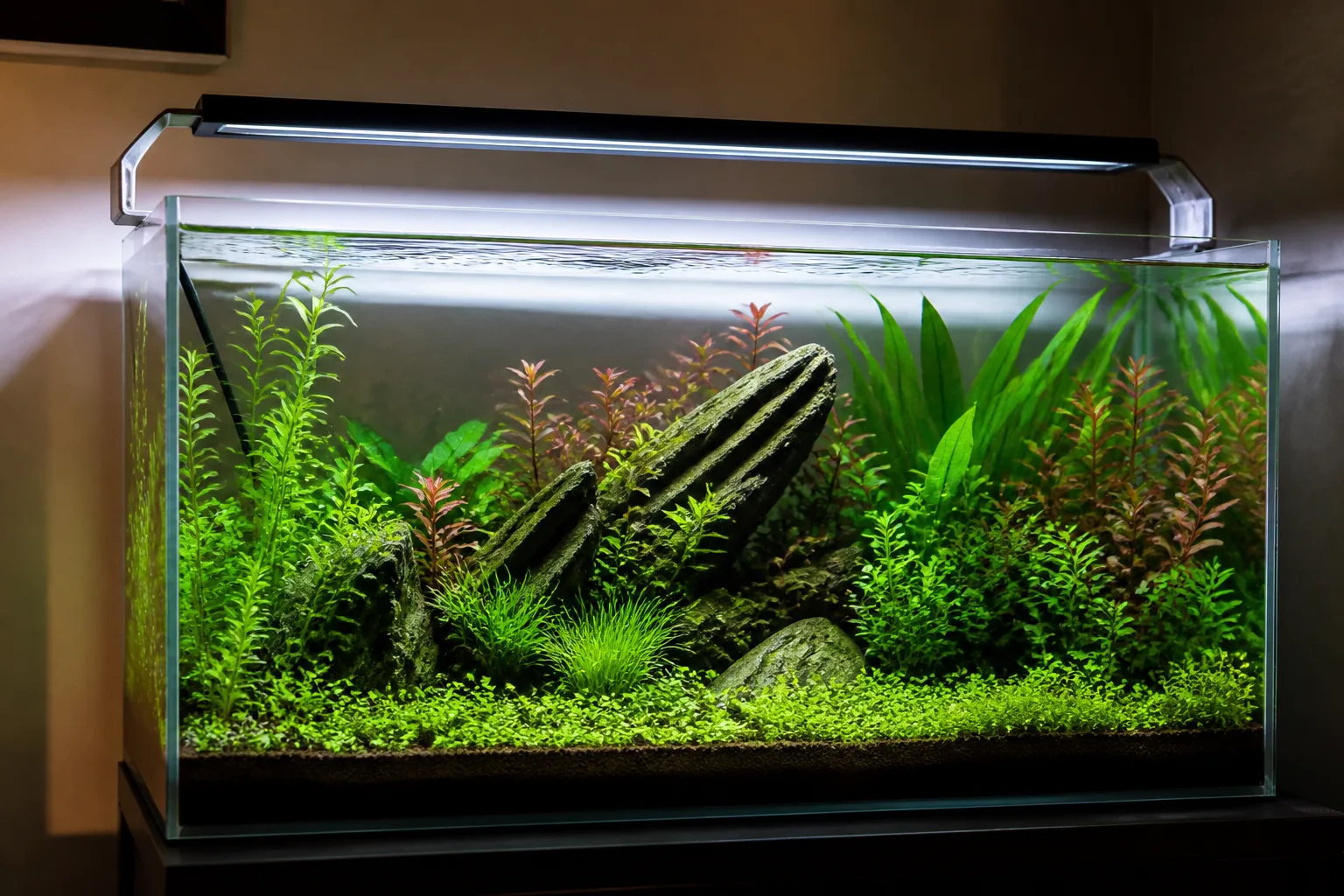
The best reef chiller is the one that matches the heat entering your system and can be installed with a clean, serviceable water path. The TECO TK150 is a sensible starting point for buyers who want a purpose-built aquarium unit and clear temperature control. The JBJ Arctica 1/15 HP is another established format to compare. This is research, not a hands-on test. Check the exact model, electrical requirements, connections, ventilation clearance, and retailer stock before ordering.
Quick comparison
| Product | Best for | Main drawback |
|---|---|---|
| TECO TK150 | Dedicated reef cooling | Needs open airflow around the case |
| JBJ Arctica 1/15 HP | Compact plumbed systems | Confirm current fittings and controller |
| JBJ Arctica 1/10 HP | Larger reef installations | More room and electrical planning |
| Active Aqua AACH10HP | Chiller plus separate pump | Pump and tubing are your responsibility |
| Hailea HC-130A | Small plumbed setups | Verify reef-safe materials and support |
| Hailea HC-300A | Higher heat load planning | Larger footprint and warm exhaust |
| Poafamx Aquarium Chiller | Basic controller-led cooling | Listing details vary by model |
Our picks
TECO TK150
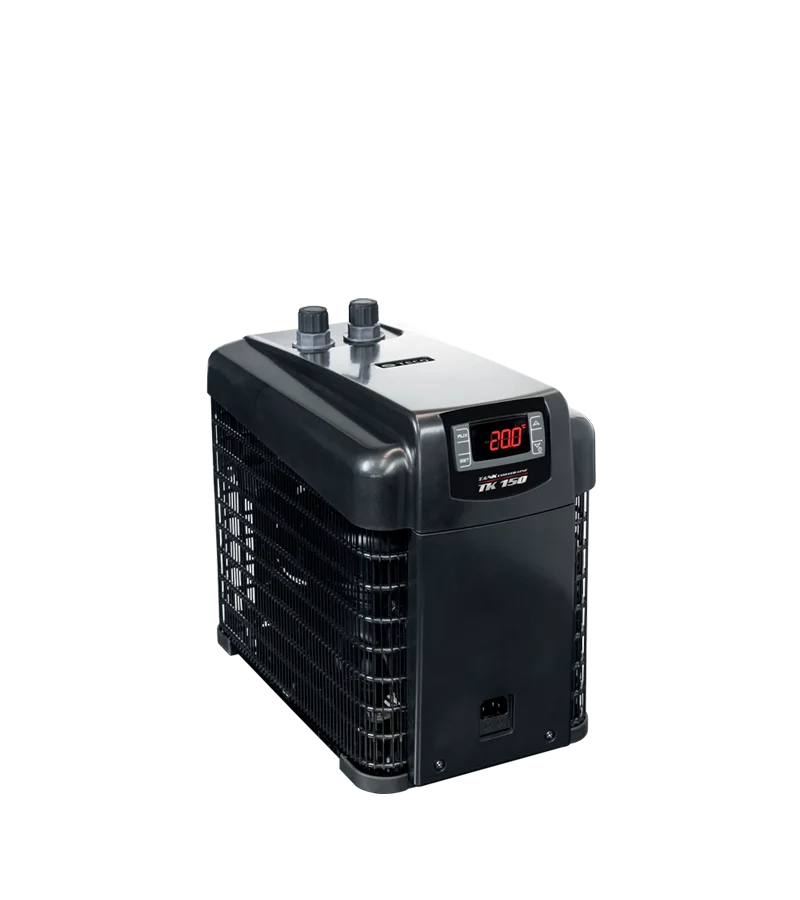 The TK150 is the cleanest first comparison for a reef keeper who wants a dedicated inline chiller. Put it outside the stand where its exhaust can leave the room instead of recirculating into a closed cabinet. The water path needs a pump, tubing that matches the fittings, and an easy way to isolate the unit for service. Use the built-in control only after checking its instructions, and keep a separate thermometer in the aquarium so a controller fault does not go unnoticed. Pros: purpose-built aquarium format, clear control approach, straightforward category fit. Cons: ventilation space is part of the installation, not an optional detail.
JBJ Arctica 1/15 HP
 The 1/15 HP Arctica belongs on a shortlist for smaller reef systems where an inline unit can sit beside the sump. Do not buy by horsepower alone. Confirm the maker’s current application guidance, then allow for the pump, head height, unions, and a bypass or shutoff that makes cleaning less disruptive. A chiller that fits the water volume but has no breathing room around the case will add heat back to the room. Pros: compact chiller format, familiar reef use, serviceable inline layout. Cons: exact fittings and included controller parts must be verified.
JBJ Arctica 1/10 HP
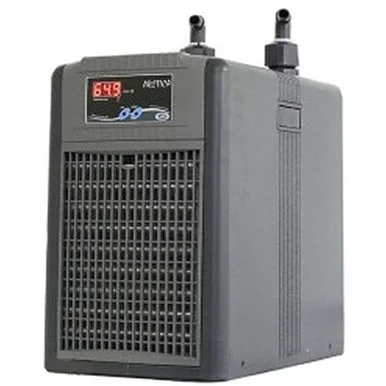 The 1/10 HP version is the sensible step up when the room, lights, pumps, or enclosed stand add more heat than a compact unit can comfortably manage. The bigger case needs a deliberate location and a circuit that can handle the equipment already running the reef. Route the return so it mixes through the sump rather than short-circuiting straight back to the chiller intake. Pros: useful larger-system option, conventional plumbing, separate controller planning. Cons: takes more floor or cabinet space and can warm a poorly ventilated room.
Active Aqua AACH10HP
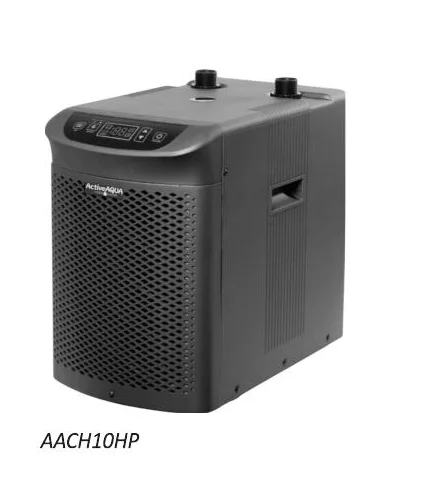 Active Aqua is a fit for buyers comfortable choosing the pump and plumbing separately. That flexibility is useful when the sump already has a spare return path, but it shifts responsibility to you. Use a pump suited to the chiller’s stated water path, secure every hose, and add unions where you will need to disconnect the unit. Confirm the materials and controller arrangement for saltwater use in the exact listing. Pros: flexible system design, familiar inline approach, useful for custom plumbing. Cons: there is more to specify and install than with a packaged setup.
Hailea HC-130A
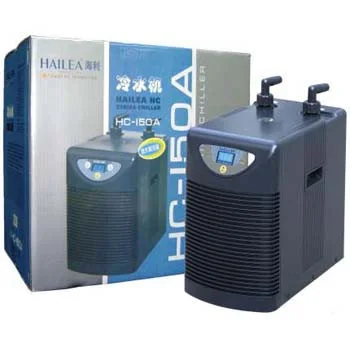 The HC-130A is worth comparing for a compact installation where the chiller can sit in open air next to the stand. Treat the listing as a starting point, not a complete reef specification sheet. Confirm connections, electrical version, controller behavior, and support before committing. Leave enough hose length to remove the unit without spilling water, and keep the intake away from detritus in the sump. Pros: compact category option, familiar controller-led operation, separate placement from the display. Cons: exact regional versions and reef compatibility need careful checking.
Hailea HC-300A
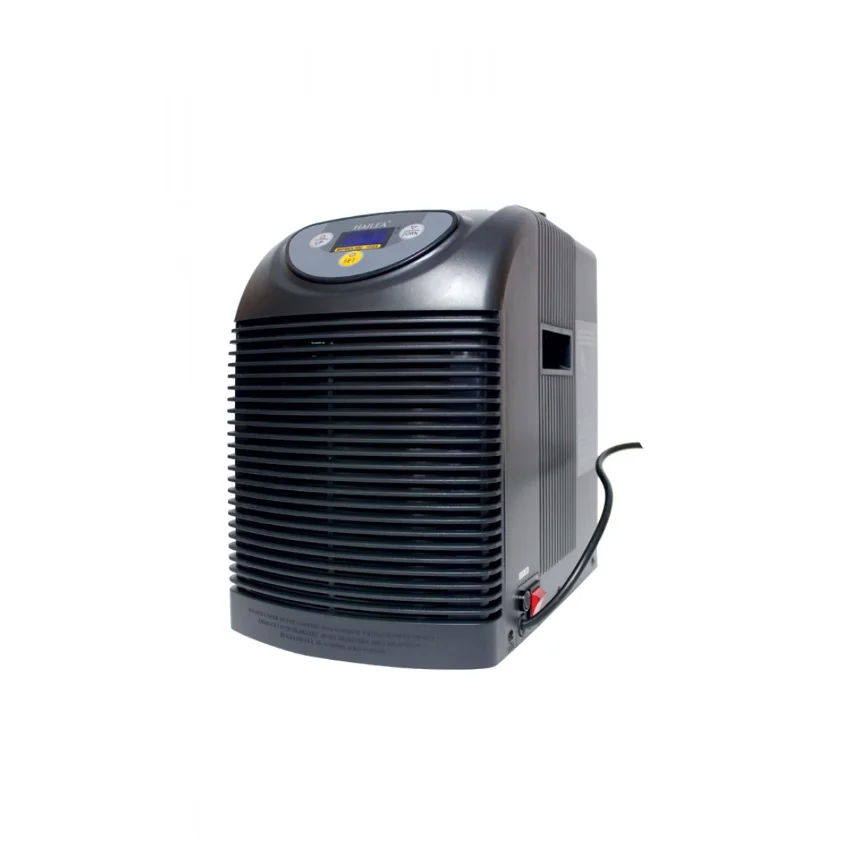 The HC-300A belongs on a shortlist when the heat load calls for a larger chiller body and the room can accept its exhaust. Measure doors, stand openings, hose runs, and service clearance before buying. A large unit trapped in a cabinet may make the room hotter while it works. Plan a drain or towel space for hose removal, and use a separate alarm or thermometer to catch a failed pump. Pros: larger cooling category, useful for planning around room heat, accessible external placement. Cons: footprint, exhaust heat, and plumbing are hard to hide.
Poafamx Aquarium Chiller
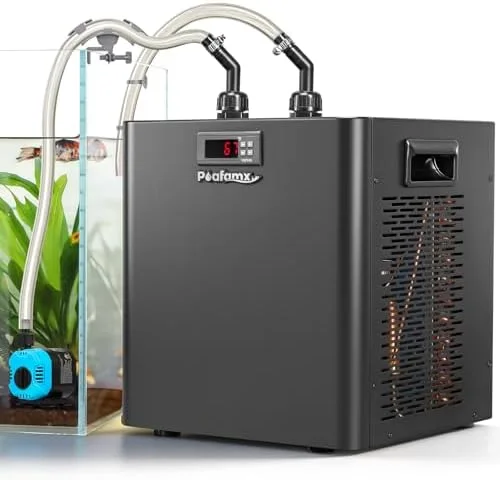 Poafamx is a marketplace option for a buyer who wants a controller-led chiller and is willing to read the exact listing closely. Product names can cover several versions, so check inlet and outlet sizes, the power supply, controller functions, and the seller’s return policy. Keep a spare thermometer in the display and test the pump path for leaks before leaving the system unattended. Pros: accessible category choice, external installation, controller-focused operation. Cons: model details and support may vary between listings.
How to choose a reef chiller
First identify the heat source. Room temperature, direct sun, lighting, return pumps, skimmers, and a closed stand all add heat. A chiller removes heat from the water, but its warm exhaust enters the room. If the room keeps heating, the unit runs more often. Shade the aquarium, improve room ventilation, or move hot equipment outside the stand before buying a larger chiller. This can reduce the load without adding another appliance.
Most aquarium chillers use an inline topology. A pump draws water from the sump, sends it through the chiller, and returns it to the sump or display. Use hose or pipe that matches the manufacturer’s connections. Add unions or shutoff valves where you need to remove the unit. Keep the intake clear of sand and detritus, and prevent the return from immediately feeding the intake again. A bypass can help with service, but only install one if you understand how it changes the water path.
Ventilation is non-negotiable. Leave the clearances in the manual, keep the fan and vents free of dust, and avoid a sealed cabinet. Listen for a change in fan sound and inspect salt creep around fittings. Clean the water path when deposits restrict circulation. Before opening anything, unplug the pump and chiller, close the valves, and protect the floor from residual water.
Use the chiller controller as one layer of protection, not the only measurement. Put an independent thermometer or alarm in the display. Make temperature changes gradually and watch livestock after maintenance. A chiller cannot compensate for a failed circulation pump, a blocked hose, or a controller that has lost power. Label the plugs, keep drip loops above the outlet, and test the system after every plumbing change.
Frequently asked questions
Does every reef tank need a chiller?
No. Measure the aquarium through the warm part of the day first. If fans, room ventilation, or moving hot equipment solve the problem, a chiller may add cost and heat to the room without helping enough.
Where should a reef chiller sit?
Place it on a stable surface with the manufacturer’s ventilation clearance. Outside an enclosed stand is often easier to service and lets warm exhaust leave the cabinet. Keep it near enough to the sump for a short, secure water path.
Does a chiller need its own pump?
Some systems use a dedicated pump, while others use a suitable return path. Follow the exact model’s water-flow instructions and size the plumbing to the stated connections. Do not guess from the tank label alone.
Can a chiller make a room hotter?
Yes. A chiller moves heat out of the aquarium and releases it as warm air. In a closed room or cabinet, that heat can raise the room temperature and make the unit run more often.
Should I use a separate temperature controller?
Use an independent thermometer or alarm even when the chiller has its own controller. A second reading gives you a way to spot a probe, pump, or power problem before the reef drifts for long.
Recommendation
Start with the TECO TK150 when its installation requirements fit the reef and room. Compare the JBJ Arctica 1/15 HP for a compact inline layout, or step up to the 1/10 HP class when the heat load and available space justify it. The right choice includes the pump, hose path, ventilation, controller checks, and service access. The chiller is only one part of that system.
Sources and methodology
We checked manufacturer information from TECO, JBJ Aquariums, Active Aqua, and Hailea. We compared installation topology, controller use, ventilation needs, pump planning, service access, and room-heat tradeoffs. Images are product assets from the existing chiller image set. No hands-on testing was performed. Confirm current model details, saltwater suitability, connections, and retailer availability before checkout.