
Buying guide
Best Aquarium Chiller for an Axolotl: 7 Cooling Options
A chiller is useful when your measured tank temperature will not stay safely cool, but size it around tank volume, room heat and flow.
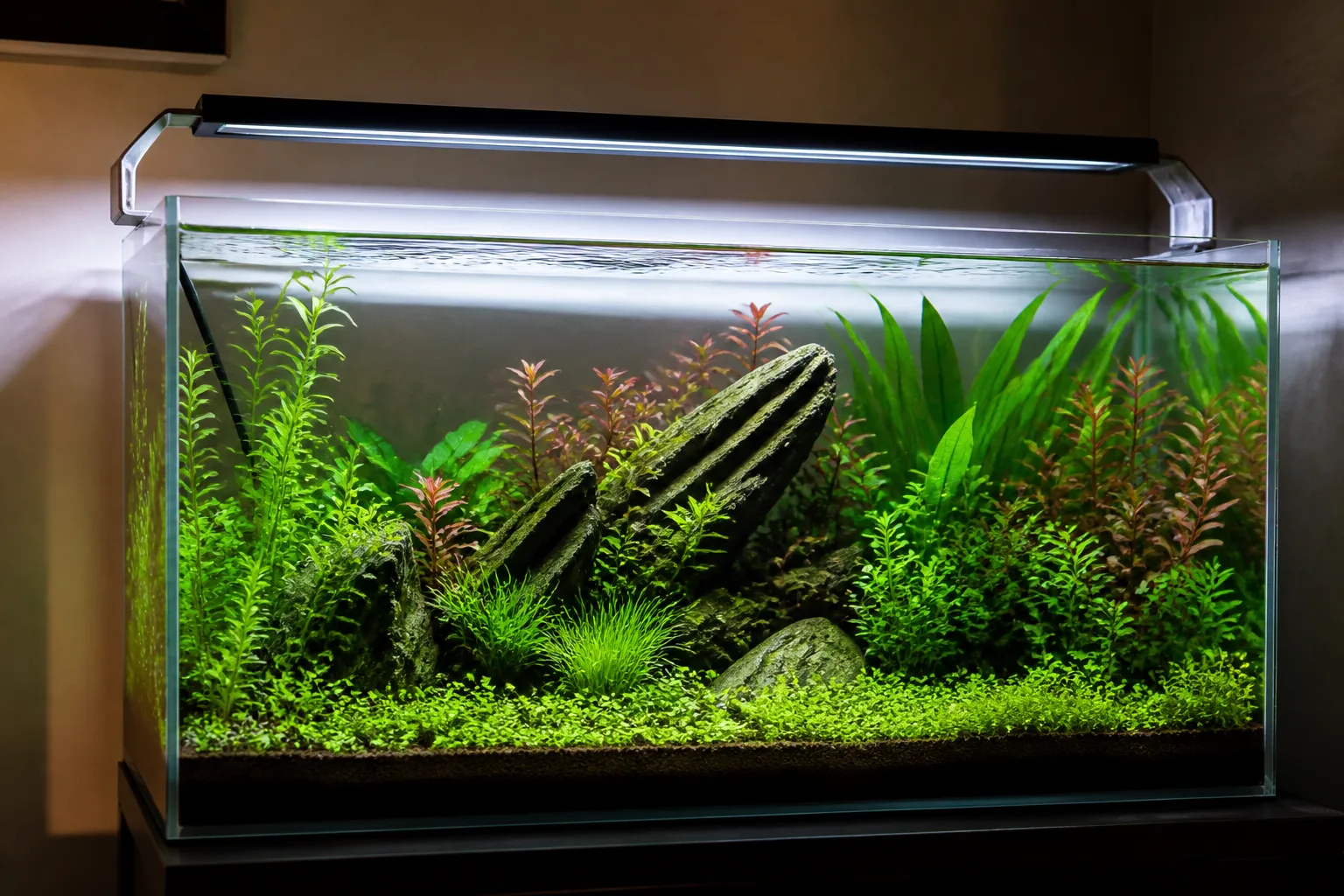
Axolotls need cool, stable water. Veterinary and husbandry sources commonly place the ideal range around 60 to 64°F (16 to 18°C), and warn against sustained high temperatures. Measure your aquarium before buying a chiller. A fan, shade and a cool room may solve a mild problem. A compressor chiller is the dependable choice when summer temperatures remain high. This guide is research-based, not a hands-on test.
Quick comparison
| Product | Best for | Main advantage | Main drawback |
|---|---|---|---|
| TECO TK 150 Aquarium Chiller | Up to about 40 gal | Published flow and range | Expensive, voltage check |
| JBJ Arctica 1/15 HP Chiller | Small systems | Titanium exchanger | Needs pump sizing |
| JBJ Arctica 1/10 HP Chiller | Warmer rooms | More cooling headroom | Oversizing cost |
| Active Aqua AACH10HP Chiller | Small/medium tanks | Common compact format | Verify current specs |
| Hailea HC-130A Chiller | Smaller aquariums | Compact compressor class | Voltage varies |
| Hailea HC-300A Chiller | Larger tanks | Higher capacity | Bulky and noisy |
| Poafamx Aquarium Water Chiller | Budget buyers | Lower-cost candidate | Specs and support vary |
The seven options
TECO TK 150 Aquarium Chiller
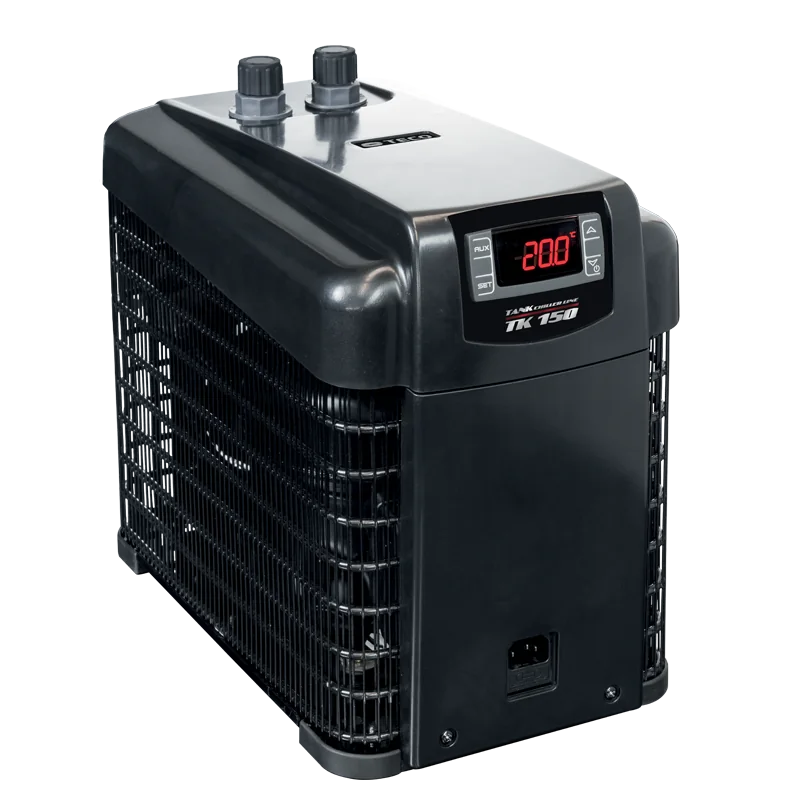
TECO’s TK 150 publishes a 150-liter capacity, 300 to 500 L/h flow range and 5 to 30°C water range. It is a strong documented fit for a roughly 40-gallon system, subject to room heat. Pros: clear specifications; professional construction. Cons: check 115/230 V version and price. TECO.
JBJ Arctica 1/15 HP Chiller
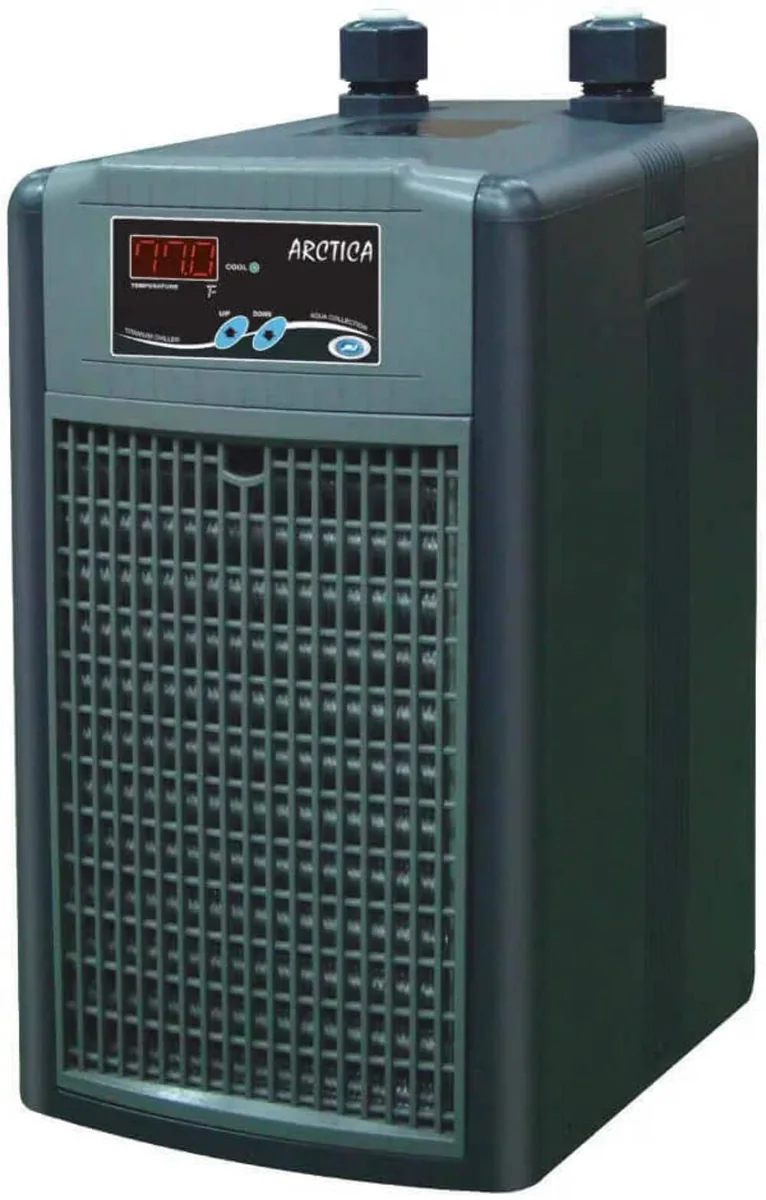
The JBJ Arctica 1/15 HP is a smaller titanium-exchanger candidate. Match the exact capacity to the real tank and room. Pros: aquarium-specific chiller line. Cons: needs a compatible pump. JBJ.
JBJ Arctica 1/10 HP Chiller
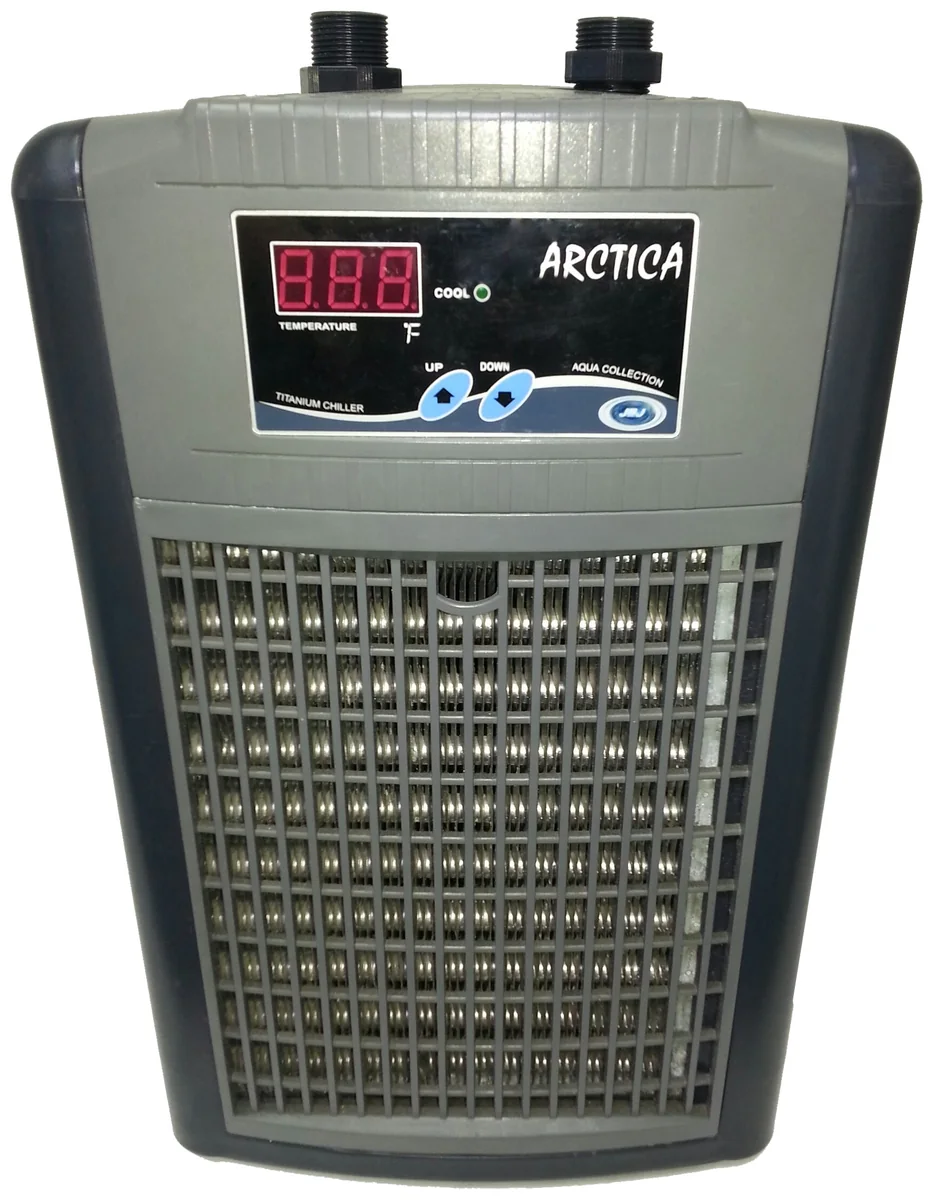
The JBJ Arctica 1/10 HP adds cooling reserve for a warmer room or larger tank. Do not buy by horsepower alone. Pros: more headroom. Cons: higher cost and heat output.
Active Aqua AACH10HP Chiller
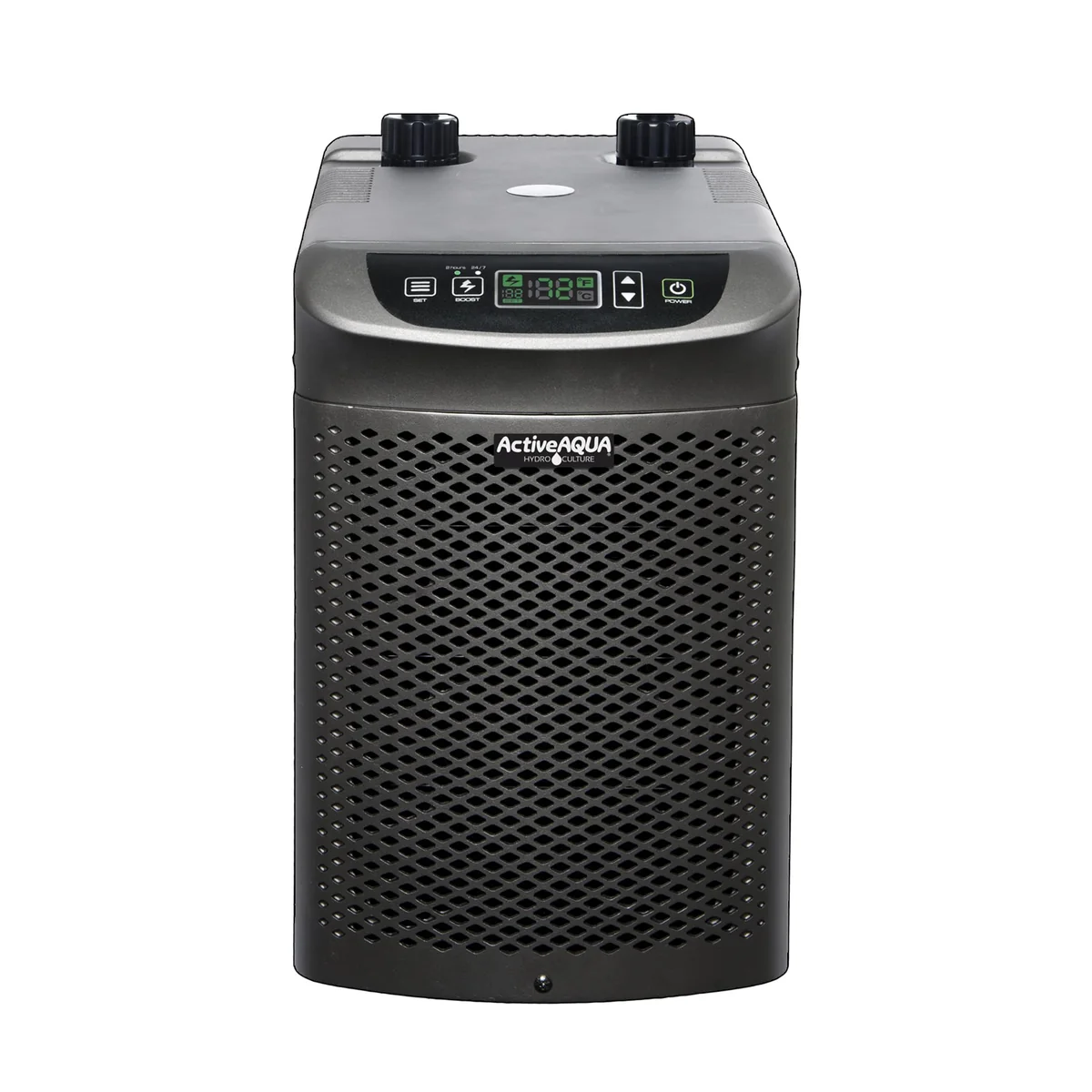
Active Aqua’s AACH10HP is a candidate for small and medium aquariums. Confirm current tank-volume and flow specifications before purchase. Pros: compact category fit. Cons: retailer listings can differ. Hydrofarm.
Hailea HC-130A Chiller
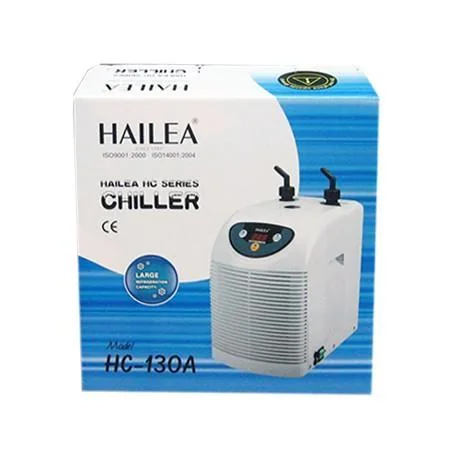
Hailea HC-130A suits smaller systems when its electrical version and rated volume match the setup. Pros: compact compressor class. Cons: verify support and voltage. Hailea.
Hailea HC-300A Chiller
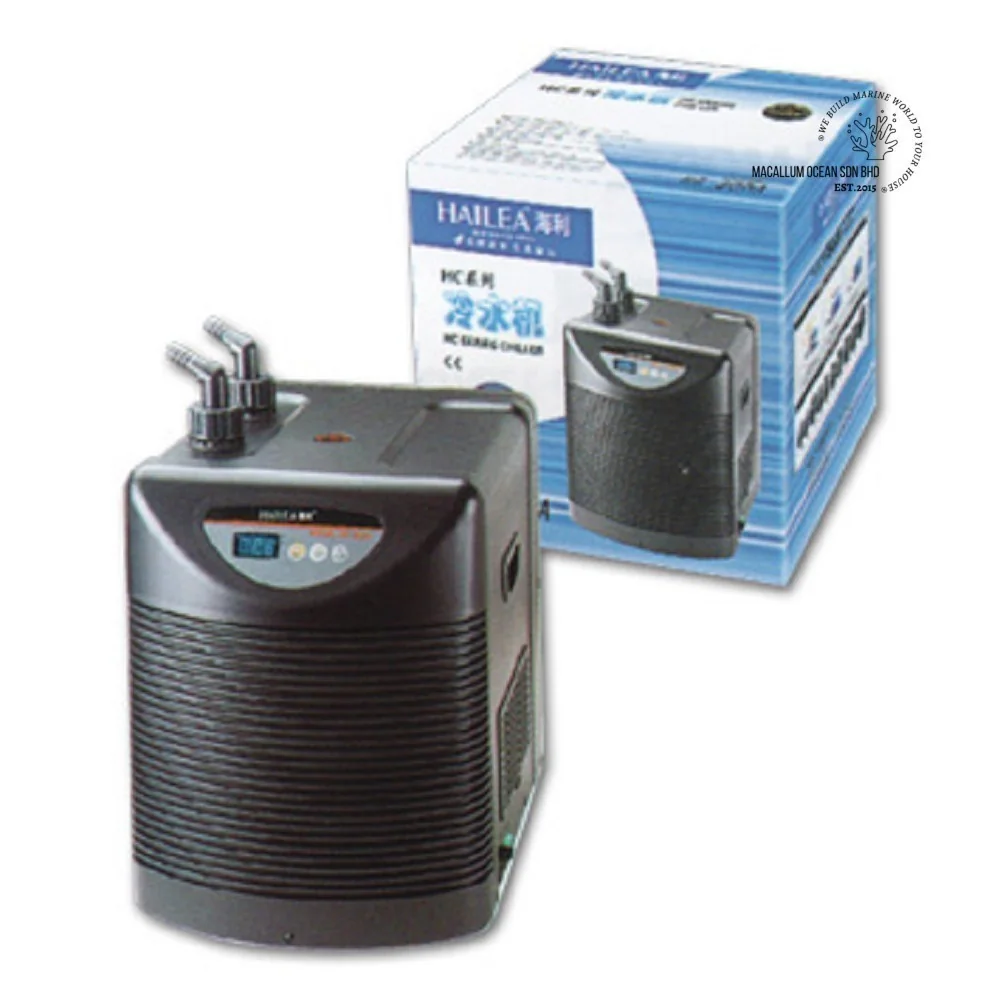
Hailea HC-300A is better reserved for larger tanks or rooms with substantial heat load. Pros: higher capacity. Cons: bulky, with more noise and power use.
Poafamx Aquarium Water Chiller
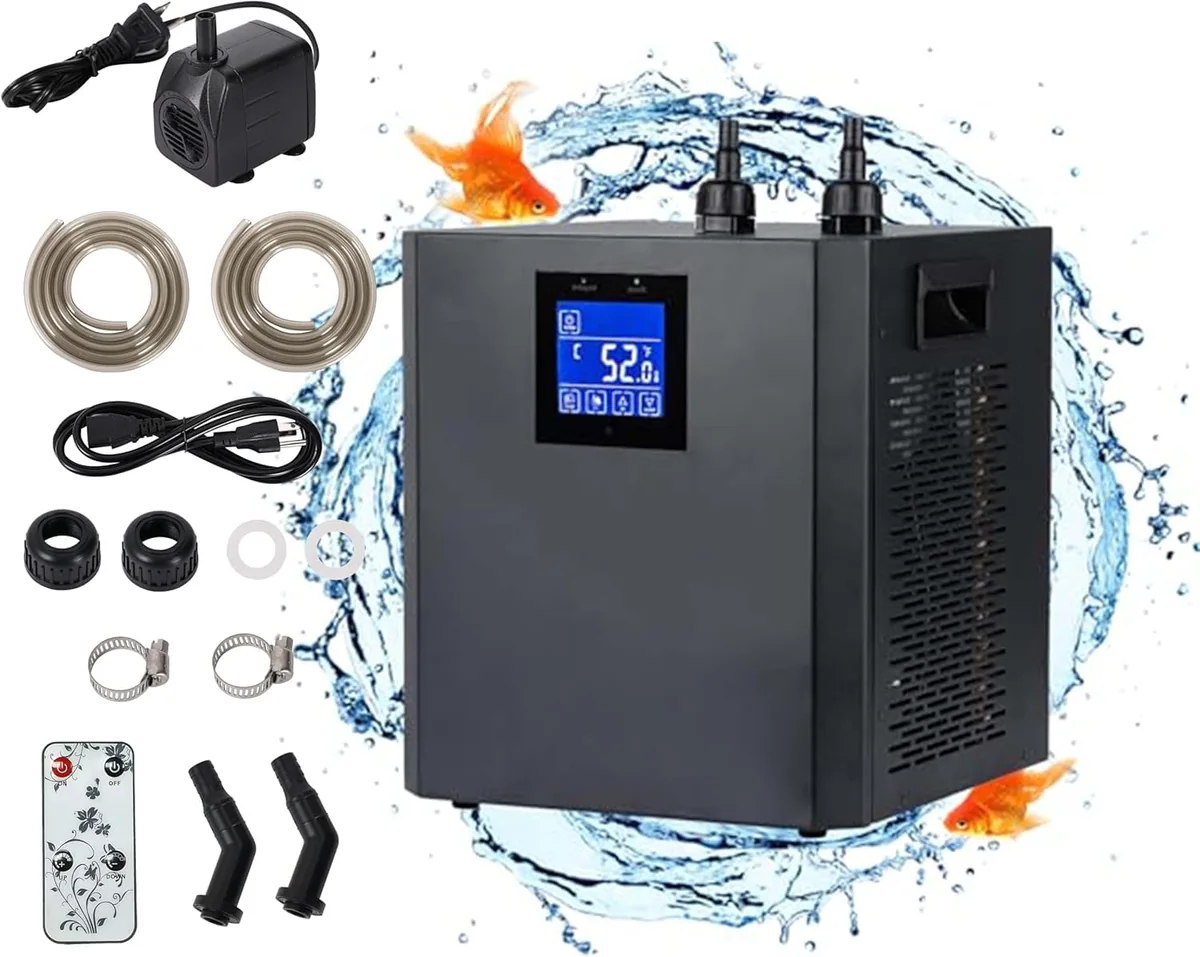
Poafamx is a budget candidate, but treat marketplace specifications cautiously. Confirm flow, temperature range, warranty and return terms. Pros: accessible price category. Cons: less consistent documentation.
Axolotl cooling and safety
Zoo Med recommends 60 to 64°F and says water should never exceed 72°F. PetMD similarly says axolotls do not need a heater and may need a chiller in warm climates. Lower temperature gradually, use a separate thermometer, and keep the probe away from the return line. The pump must provide the chiller’s required flow without creating a strong current that stresses the animal. Never add ice directly to the aquarium. Check evaporation, leaks and temperature daily during hot weather.
FAQs
Does every axolotl need a chiller?
No. Measure first. A cool room and fan may be enough, but a chiller is the more reliable answer when the tank repeatedly runs warm.
What temperature should I set?
Aim around 60 to 64°F, following veterinary advice and avoiding rapid changes.
Can I use a fan instead?
Fans can help modestly through evaporation. They need topping-up and may not hold the target during a heatwave.
Is a chiller safe?
It can be, when correctly sized, maintained and paired with independent temperature monitoring and suitable flow.
Recommendation
TECO TK 150 is the most clearly documented option in this shortlist. JBJ Arctica models are strong alternatives when their exact capacity and US electrical version match your aquarium.
Related guides: best aquarium heater for a 10-gallon tank and best automatic fish feeder for flakes.
Sources and methodology
Sources include TECO and JBJ manufacturer pages plus PetMD, Zoo Med and the RVC veterinary care sheet. No hands-on testing was performed.
Choosing by tank and room
Tank volume is only the first sizing input. A covered 20-gallon aquarium in an air-conditioned room sheds less heat than an open 20-gallon tank beside a sunny window. Measure the temperature at the warmest part of the day for several days before buying. Record room temperature, water temperature and whether lights or pumps are running. This tells you whether a fan is enough or whether refrigeration is needed.
Flow deserves equal attention. A chiller normally sits outside the aquarium and needs a pump or canister-filter loop. Too little flow can reduce cooling performance; too much can create a strong current that makes an axolotl hide or struggle. Use the manufacturer’s stated flow range and diffuse the return with a spray bar or wide outlet. Keep tubing clean because blocked hoses change the actual flow.
Do not chase a number by making sudden adjustments. If water is warm, lower it in small steps while watching the animal and the thermometer. A chiller’s display is not a substitute for an independent thermometer. Place the probe where the axolotl rests, away from the return stream and direct light. Inspect fittings for drips, clean dust from the condenser, and leave ventilation around the unit. Compressors release heat into the room, so a cramped cabinet can make the problem worse.
Fans remain a reasonable first step when the room is only slightly warm. They increase evaporation, so mark the water line and top up with conditioned water. Never place ice directly in the tank. It creates a cold patch and makes temperature control harder. For a long hot spell, arrange a person to check the aquarium, the water level and the chiller alarm or power connection. Axolotls are sensitive to heat and water-quality swings, so cooling equipment should support stable husbandry rather than replace it.