
Buying guide
Best protein skimmer for a 20-gallon tank
A 20-gallon reef rewards a small, controllable skimmer that fits the chamber and leaves room to remove its cup.
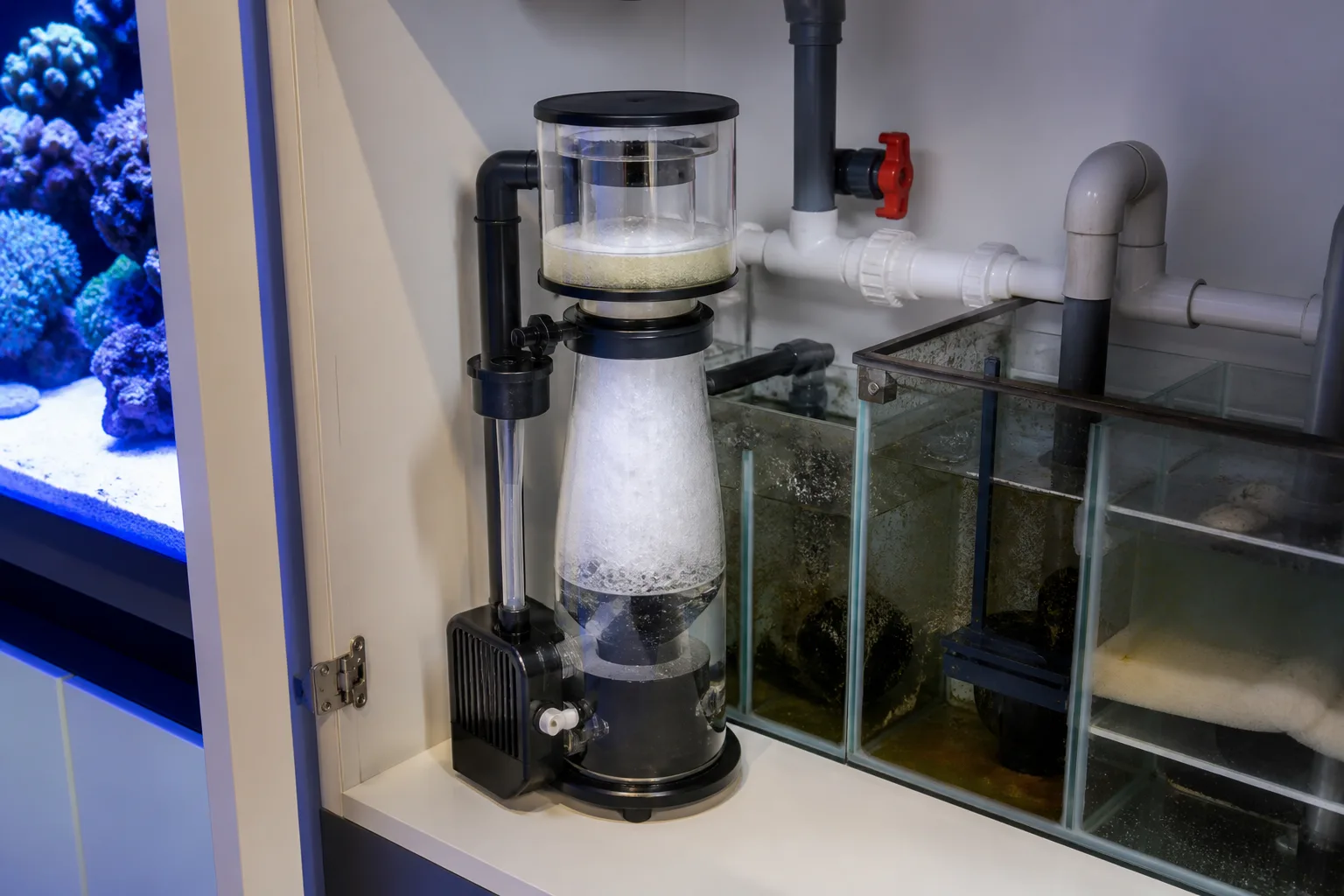
For most 20-gallon reefs, I would start with a compact internal or hang-on-back model rather than a large sump skimmer. The right choice depends on where the aquarium has usable, stable water depth. This is a research-based guide, not a hands-on test. Check the current manual, dimensions, voltage and retailer listing before ordering.
Quick comparison
| Product | Format and fit | Main drawback |
|---|---|---|
| Tunze Comline DOC Skimmer 9001 | Internal, compact rear chamber | Needs measured depth and cup clearance |
| IceCap K1 Nano Skimmer | Internal nano installation | Break-in and foam adjustment take patience |
| Bubble Magus QQ1 | HOB, useful when the tank has no sump | Hang-on clearance and possible pump noise |
| Fluval Sea PS1 Protein Skimmer | Compact HOB-style reef option | Confirm mounting space on the rim |
| AquaMaxx NF-1 Nano Skimmer | Small internal or sump use | Exact operating depth is a deal-breaker |
| Eshopps Nano Protein Skimmer | Compact sump or HOB layouts | Verify the current variant and depth |
| Tunze Comline DOC Skimmer 9002 | Internal chamber with more room | Uses more space than a tiny nano body |
These are candidates for different layouts, not seven promises that every tank needs a skimmer. A stable water line matters more than a generous box rating. Keep the retailer link handy for the exact variant, since manufacturers and sellers sometimes change model names.
Our picks
Tunze Comline DOC Skimmer 9001
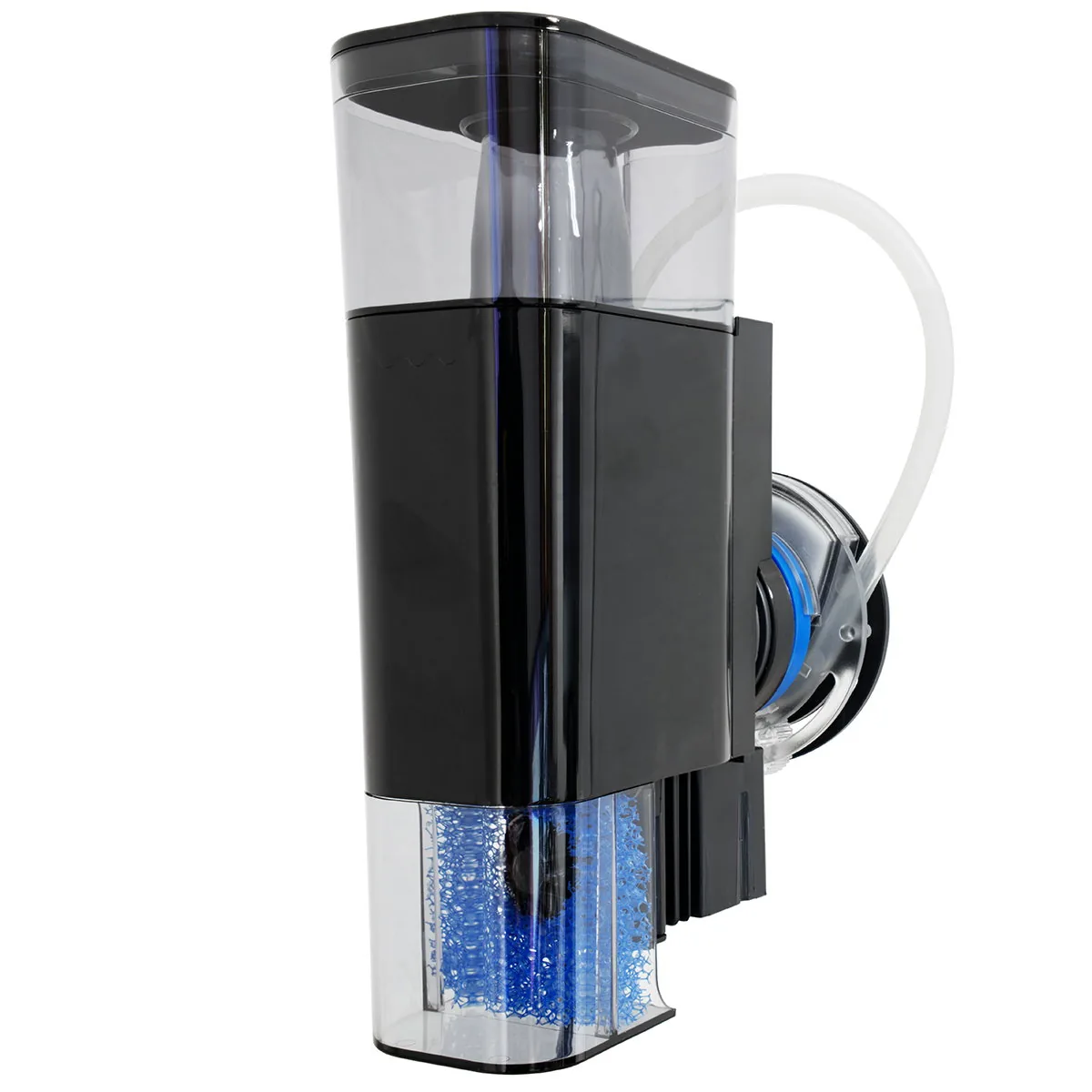
The 9001 is the first internal design I would measure for a small reef with a rear chamber or sump section. Its enclosed footprint helps only if the chamber is wide enough and the collection cup can come out vertically. Water depth must remain within Tunze’s stated range. Evaporation can change foam behavior quickly. Pros: tidy internal format for compact layouts. Cons: chamber access and stable depth are mandatory, and the pump can still be audible.
IceCap K1 Nano Skimmer
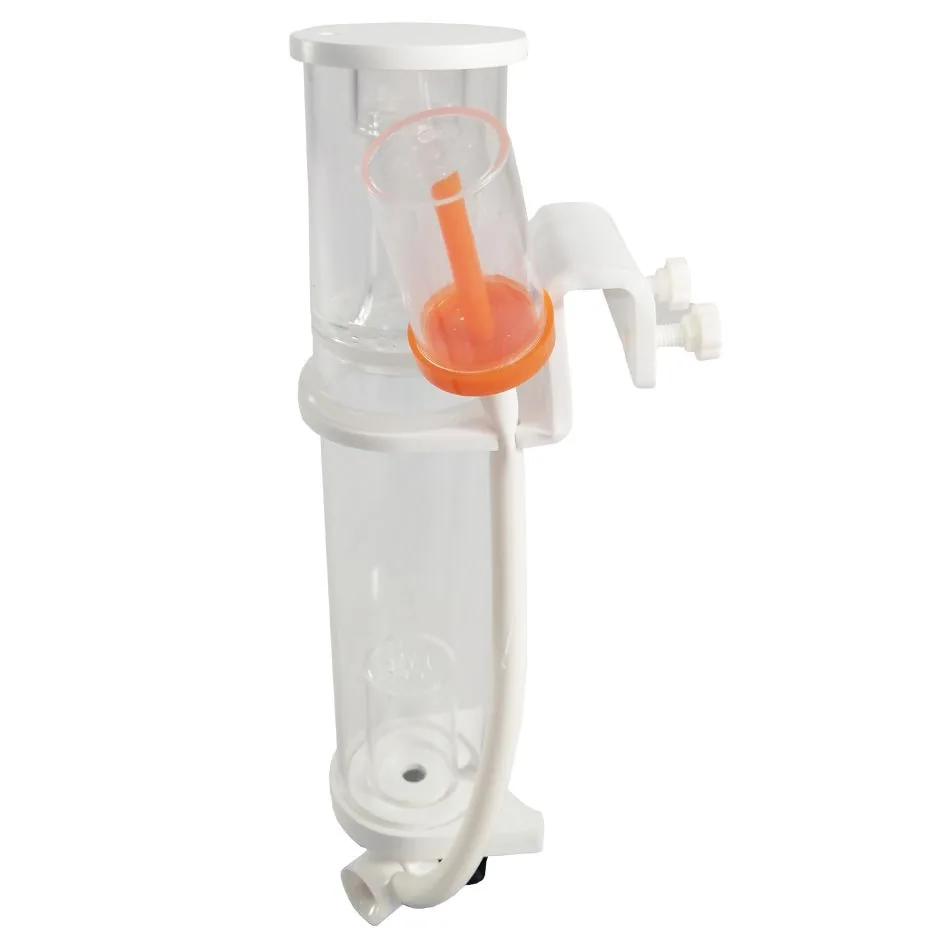
The K1 Nano makes sense when you want an internal unit with a small physical footprint. Measure water depth and the space above the tank. A skimmer that fits below the rim but blocks cup access is a bad bargain. Make small air or water adjustments while the foam settles. Pros: compact approach for a nano reef. Cons: shallow chambers, additives and changing water level can make tuning fussy.
Bubble Magus QQ1
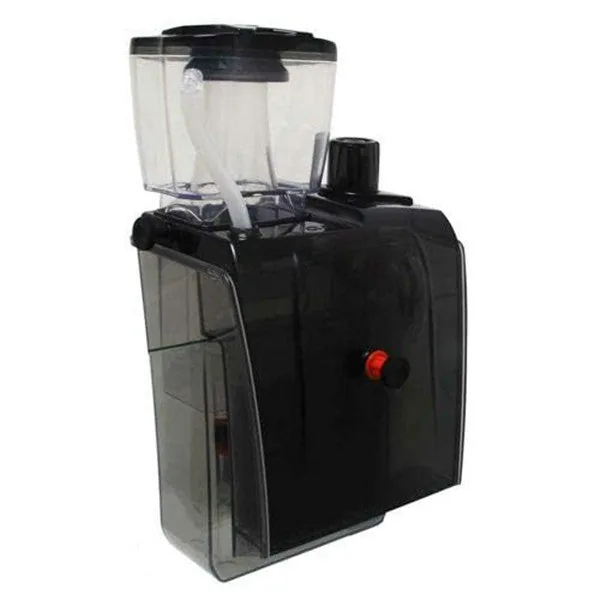
The QQ1 is a useful HOB direction for a 20-gallon aquarium without a sump. It saves internal real estate, though it adds a box behind the tank. Check rim thickness, rear clearance and the cup path before buying. HOB units are especially sensitive to evaporation. Pros: no sump required and straightforward cup access. Cons: the rear footprint may crowd a wall, and pump or air noise is easy to hear beside the display.
Fluval Sea PS1 Protein Skimmer
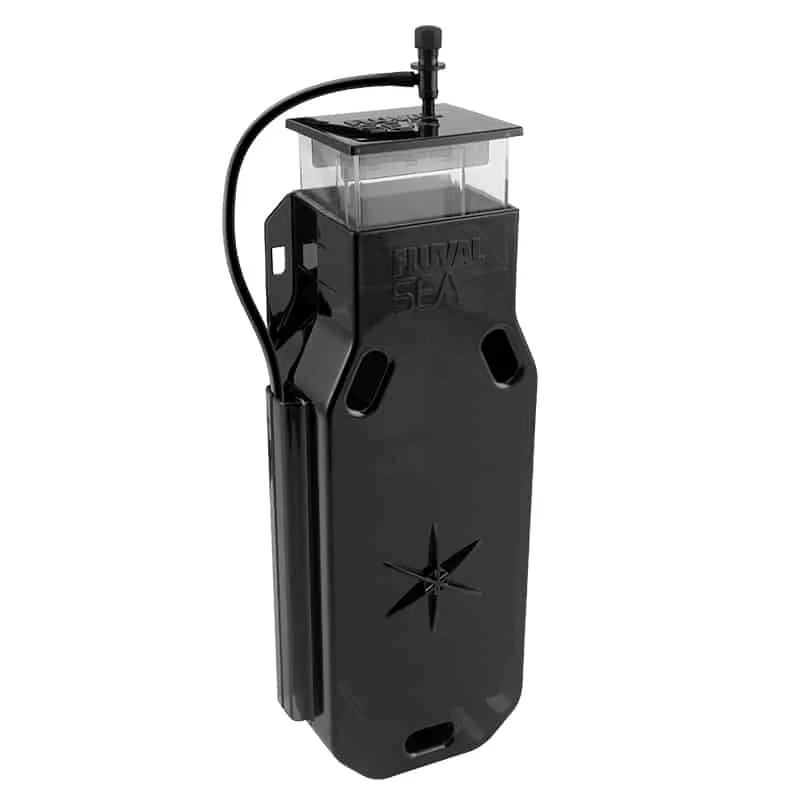
The Fluval Sea PS1 belongs on the HOB shortlist when the rim and back panel leave enough mounting room. It is more practical for a bare-rim setup than a tight hooded tank. Confirm cup removal and the outlet path. A small tank magnifies every overflow, so begin conservatively. Pros: external mounting preserves display space. Cons: it fails when a lid or wall leaves no rear clearance, and stable water height still matters.
AquaMaxx NF-1 Nano Skimmer
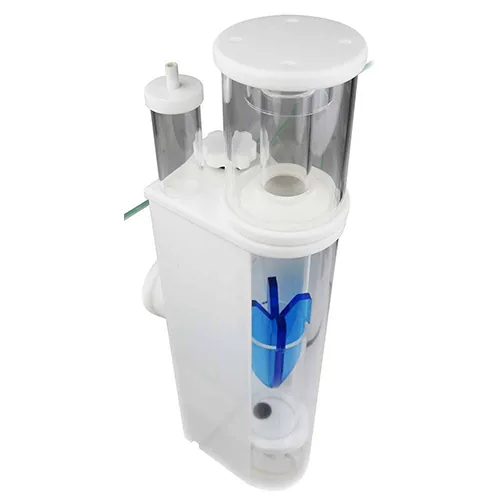
The NF-1 is worth comparing for a small sump or rear compartment where a nano body can sit at the specified depth. Record the chamber’s water line with the return pump running, then check the level when it stops. Cup access, airline routing and drip-loop space all count. Pros: compact sump-friendly shape. Cons: it becomes frustrating if the chamber runs too deep or a brace blocks the cup.
Eshopps Nano Protein Skimmer
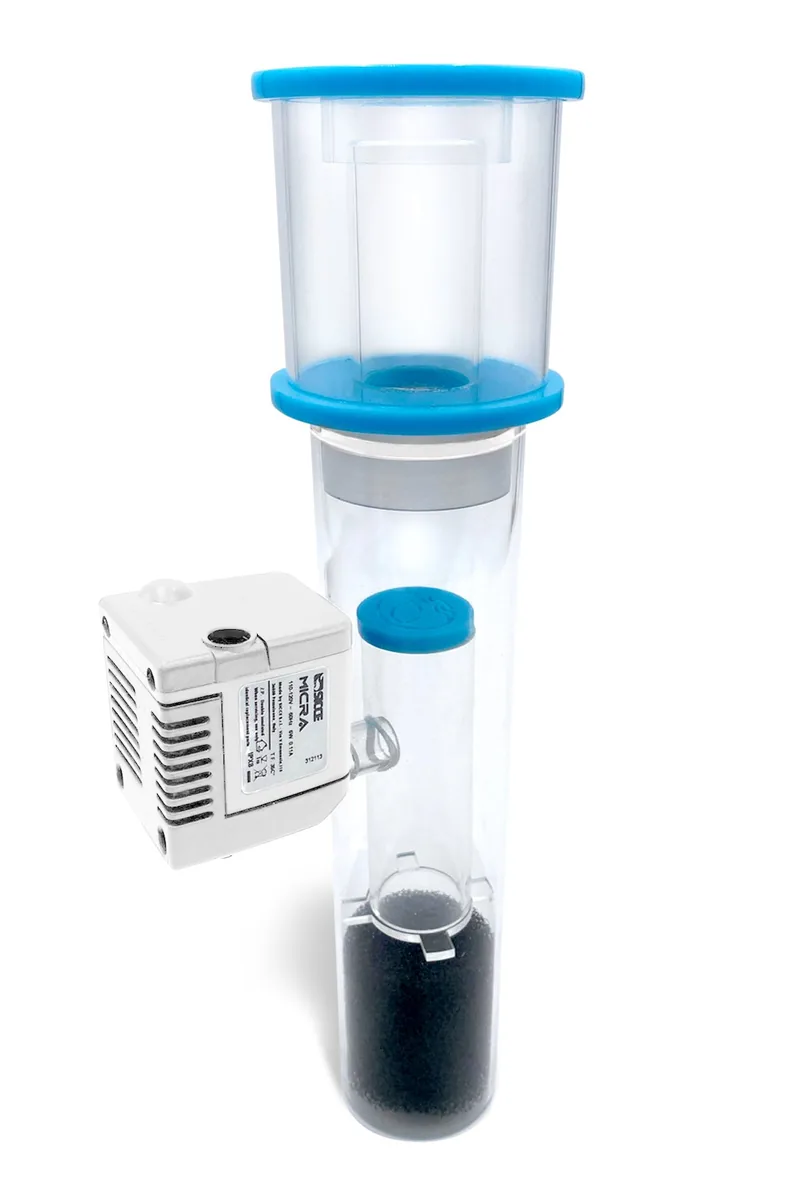
The Eshopps nano model is worth checking when the sump or rear chamber is tight. Confirm the current variant, operating depth and cup path before buying because listings can differ. A compact body helps, but only when the pump and cup remain serviceable. Pros: small-system focus and a tidy footprint. Cons: limited chamber clearance can make cleaning awkward, and a changing water line still affects tuning.
Tunze Comline DOC Skimmer 9002
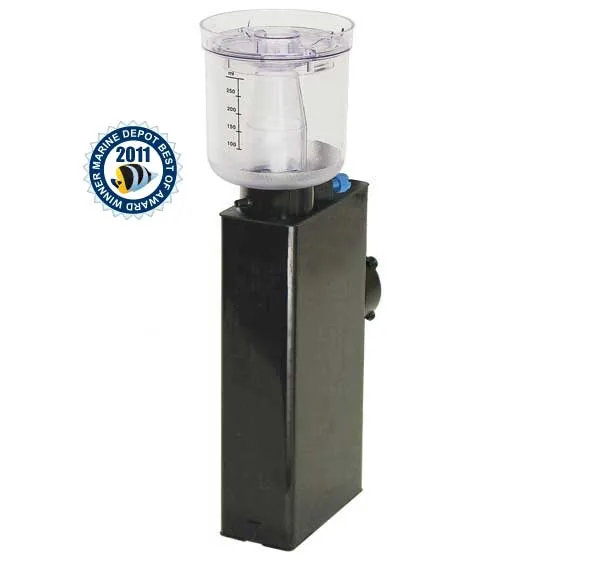
The 9002 is an internal option for a 20-gallon system with more chamber room than a tiny nano compartment. Measure the body, operating depth and vertical cup path before ordering. Internal placement keeps the rear clear, but takes room from media or a return pump. Pros: enclosed installation and clear service logic. Cons: it still needs a steady line, and the larger body may crowd a compact rear chamber.
How to choose for a 20-gallon reef
Start with the installation format. An internal skimmer uses display or rear-chamber space but avoids a large box behind the tank. A HOB skimmer needs a clear rim, wall clearance and a safe return path. An in-sump model is sensible only when the sump has the correct water depth and enough room to lift out the cup and pump. Draw the footprint on paper before ordering. The five-minute measurement prevents weeks of awkward maintenance.
Stable water level is the next filter. Mark the normal operating line, account for evaporation, and do not tune around a temporary fill level. Skimmer foam changes with saltwater depth, new filter media, water conditioners and oily hands. Adjust one thing at a time. If the cup fills with clear water, lower the water or air setting according to the manual and give the foam time to settle. Keep an overflow-safe container nearby during the first adjustments.
Noise deserves a mention in a 20-gallon room. Air draw, vibration against glass and a loose airline can be more noticeable than the motor itself. A soft pad or correctly seated body may reduce vibration, but never block an intake to quiet it. Clean salt creep from the airline and venturi. Rinse the cup and inspect the pump when deposits build up. No skimmer replaces water changes, sensible feeding and regular salinity checks.
Frequently asked questions
Is a protein skimmer necessary on a 20-gallon reef?
No. Some lightly stocked systems manage nutrients with water changes, biological filtration and careful feeding. A skimmer is useful when its maintenance and footprint suit the tank.
Is HOB or internal better for a small aquarium?
Choose internal when rear clearance is tight and the chamber has a stable depth. Choose HOB when you need to preserve display space and have a clear, strong rim. Neither format wins without safe cup access.
Why does a new skimmer make large bubbles?
Break-in, residue, water depth and recent additives can change foam. Follow the manual, make small adjustments and avoid chasing the cup every few minutes.
How often should I clean the collection cup?
Clean it when residue narrows the neck or the waste smells and performance drops. Inspect the airline and pump as part of the same maintenance check.
Recommendation
For a typical 20-gallon reef, measure the chamber first and compare the Tunze 9001, IceCap K1 Nano and Bubble Magus QQ1 against that measurement. Pick the model with a stable operating depth and clear cup access. A smaller skimmer that stays adjusted is easier to live with than a nominally powerful unit that overflows or cannot be serviced.
Sources and methodology
We checked product and setup information from Tunze, IceCap, Bubble Magus, Fluval, AquaMaxx, and Eshopps. We compared format, physical fit, operating-depth needs, cup access and likely tuning issues for a 20-gallon modifier. No hands-on testing was performed. Images are category visuals and may not depict the exact branded model.