
Buying guide
Best aquarium test kit for a shrimp tank
Shrimp need stable water, so choose a test routine that checks cycling values and the hardness measures your species and minerals require.
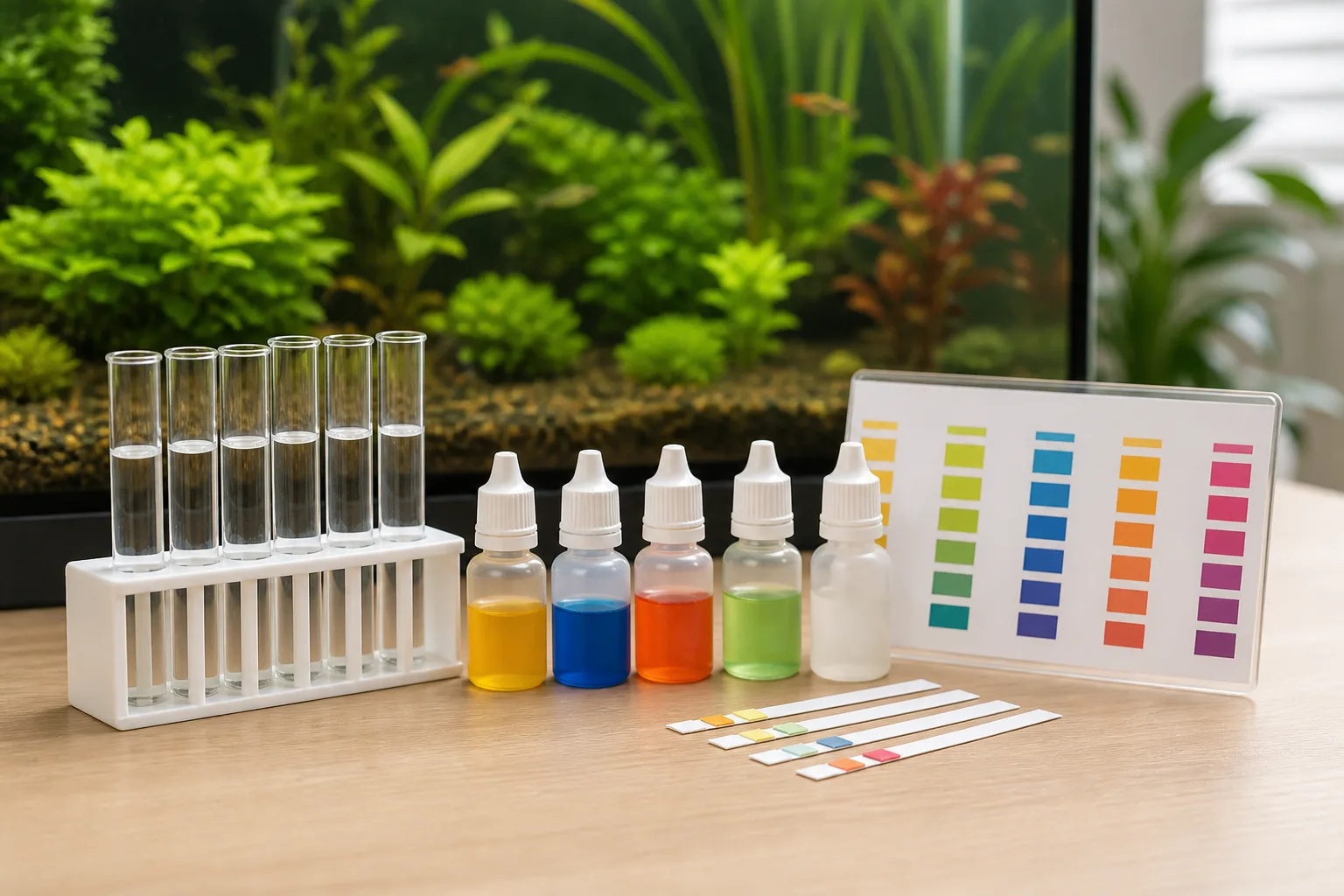
Quick comparison
| Product | Best for | Main drawback |
|---|---|---|
| API Freshwater Master Test Kit | Cycling and core values | GH and KH need separate coverage |
| API GH & KH Test Kit | Shrimp mineral checks | Does not replace cycling tests |
| Tetra EasyStrips 6-in-1 | Quick routine screening | Timing and storage affect readings |
| JBL ProAquaTest CombiSet | Broad freshwater baseline | Confirm current regional contents |
| Seachem MultiTest Ammonia | Focused ammonia checks | One parameter only |
| JBL ProAquaTest GH | Tracking general hardness | Separate KH and cycling tests needed |
| Sera gH-Test | Dedicated GH titration | More hands-on than strips |
This is a research-based guide, not a hands-on test. Check the exact model, reagent life, instructions, and retailer stock before ordering. Shrimp are not a reason to chase a perfect-looking number. Test the water source, substrate, and maintenance routine you actually use, then make changes slowly. Confirm a surprising result before adding minerals or moving livestock.
Our picks
API Freshwater Master Test Kit
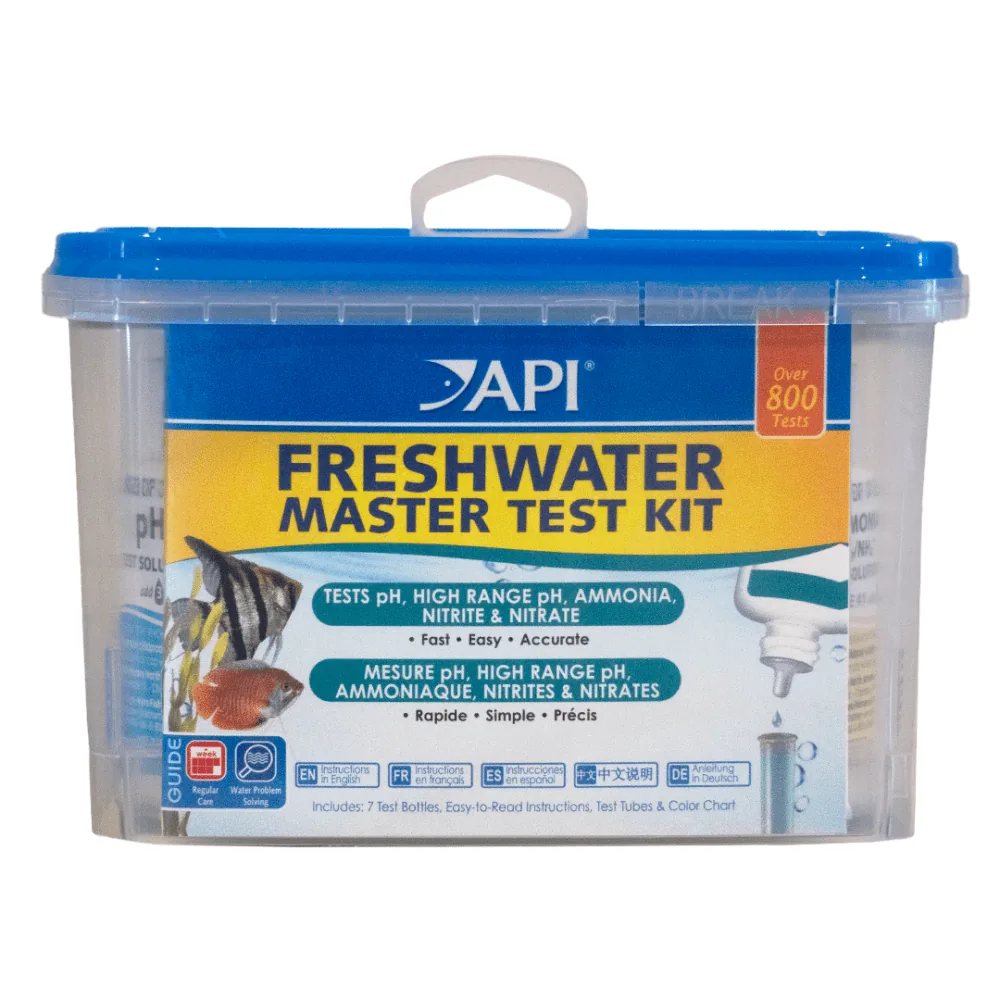 API Freshwater Master Test Kit is the useful first box for a new shrimp aquarium because cycling and core freshwater values come before fine mineral adjustments. Liquid reagents take more work than strips, but the repeatable sample-and-color process gives a beginner a clear routine to practice. It does not answer every shrimp question. GH and KH are separate concerns, and a shrimp keeper should not infer hardness from a cycling result. Pros: strong starting point for ammonia, nitrite, nitrate, and pH checks; familiar workflow; useful during setup. Cons: add a dedicated hardness test for mineral planning.
API GH & KH Test Kit
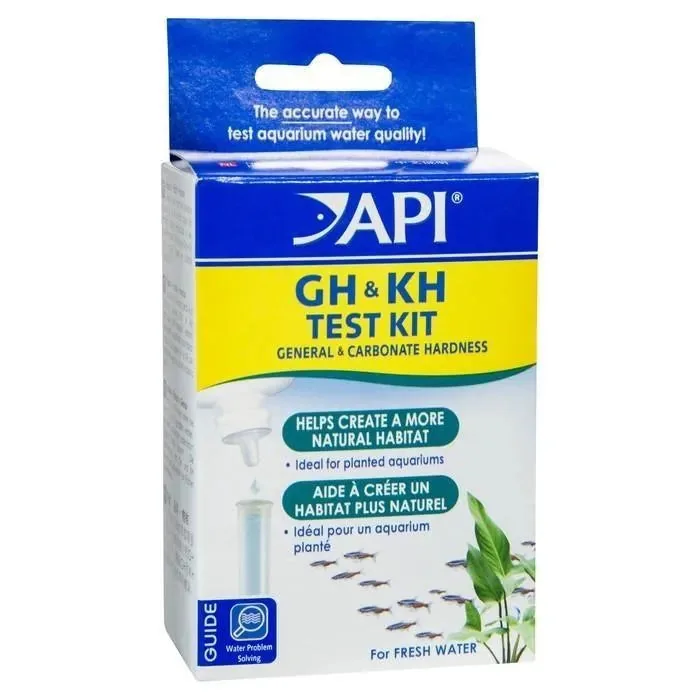 The API GH & KH Test Kit fills the gap that catches many new shrimp keepers. General hardness and carbonate hardness help you understand mineral content and buffering, especially when remineralizing purified water or comparing a tap source with a prepared mix. It is a companion to a cycling kit, not a replacement for ammonia, nitrite, nitrate, and pH checks. Read the endpoint under consistent light and log the result with the water source. Pros: directly focused on shrimp-relevant hardness; useful beside a freshwater master kit; clear role in a mineral log. Cons: two parameters still leave cycling work to another kit.
Tetra EasyStrips 6-in-1
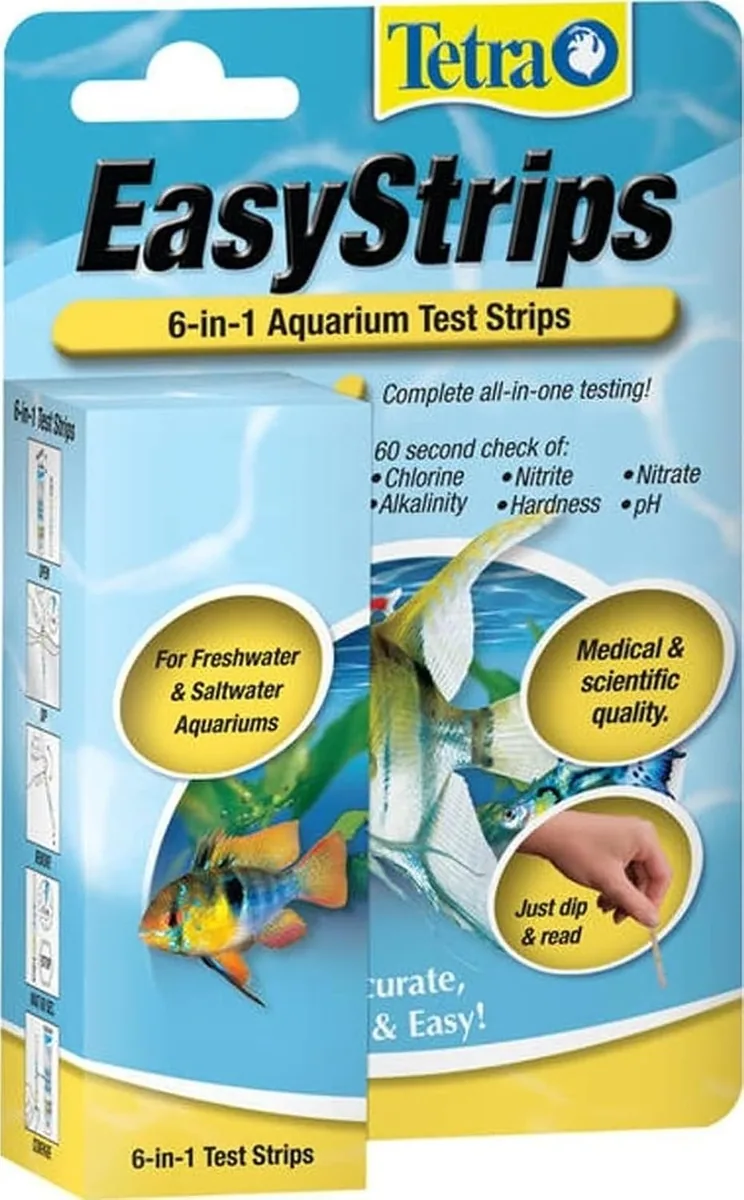 Tetra EasyStrips 6-in-1 suits a beginner who needs a quick screen before a water change or wants a low-fuss trend check. Dip, wait for the stated interval, and compare promptly. That simplicity is the reason to buy it, but strips are easy to spoil with damp storage or a late reading. Use them to notice movement, not to justify a large mineral correction from one pad. Keep a liquid test available during cycling or whenever a result looks wrong. Pros: quick workflow; little glassware; approachable for frequent checks. Cons: timing, light, and storage can make fine color differences hard to read.
JBL ProAquaTest CombiSet
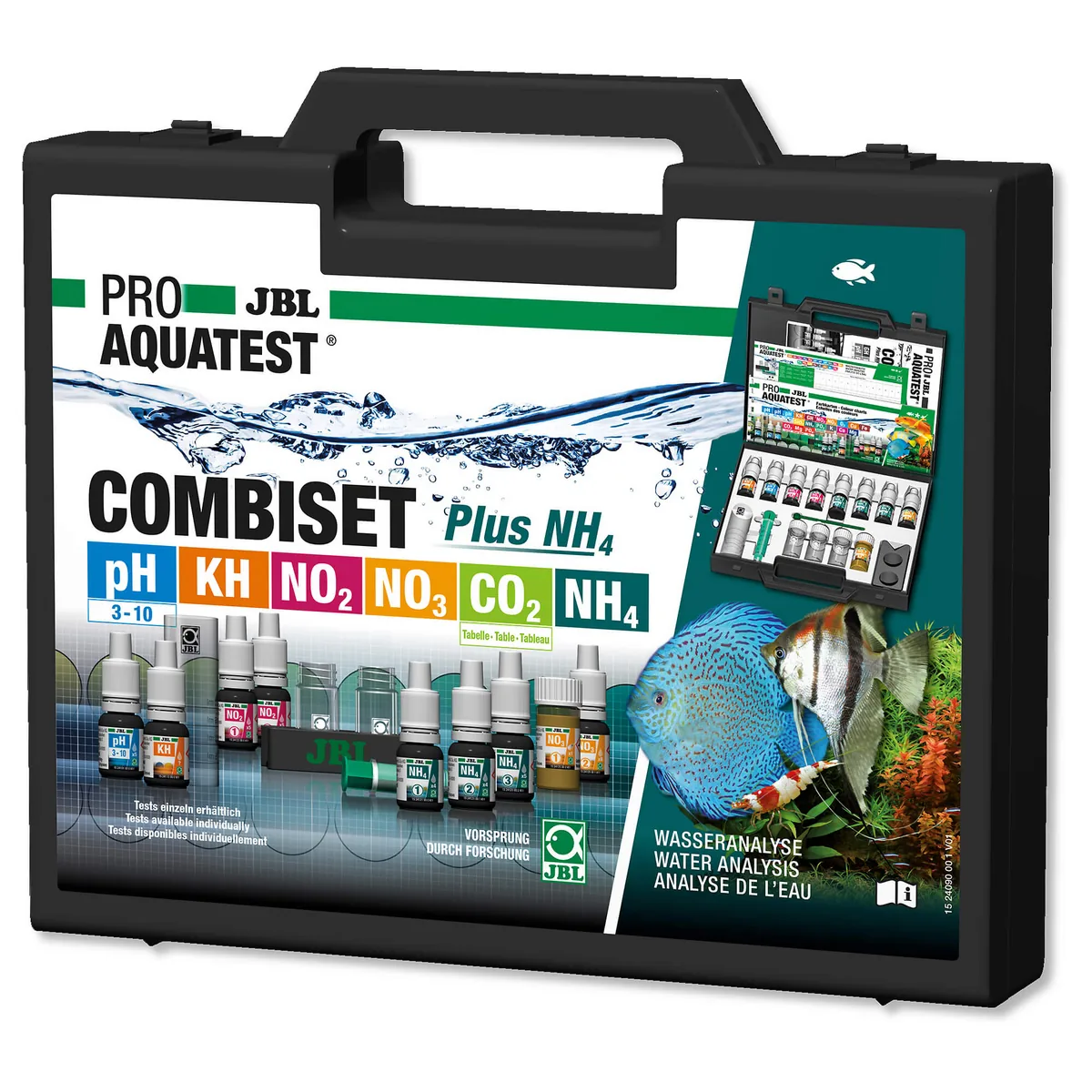 JBL ProAquaTest CombiSet is for a keeper who wants several freshwater checks organized in one purchase. It can make a weekly routine easier to plan than collecting unrelated bottles, and it gives a cycling tank a broader baseline than a hardness-only test. Check the current regional contents before ordering. Shrimp still make GH and KH worth special attention, so confirm those tests are included or budget for separate bottles. Pros: broad freshwater coverage; coordinated liquid workflow; useful for a new aquarium. Cons: a large box may include tests you rarely use and may not cover every shrimp-specific need.
Seachem MultiTest Ammonia
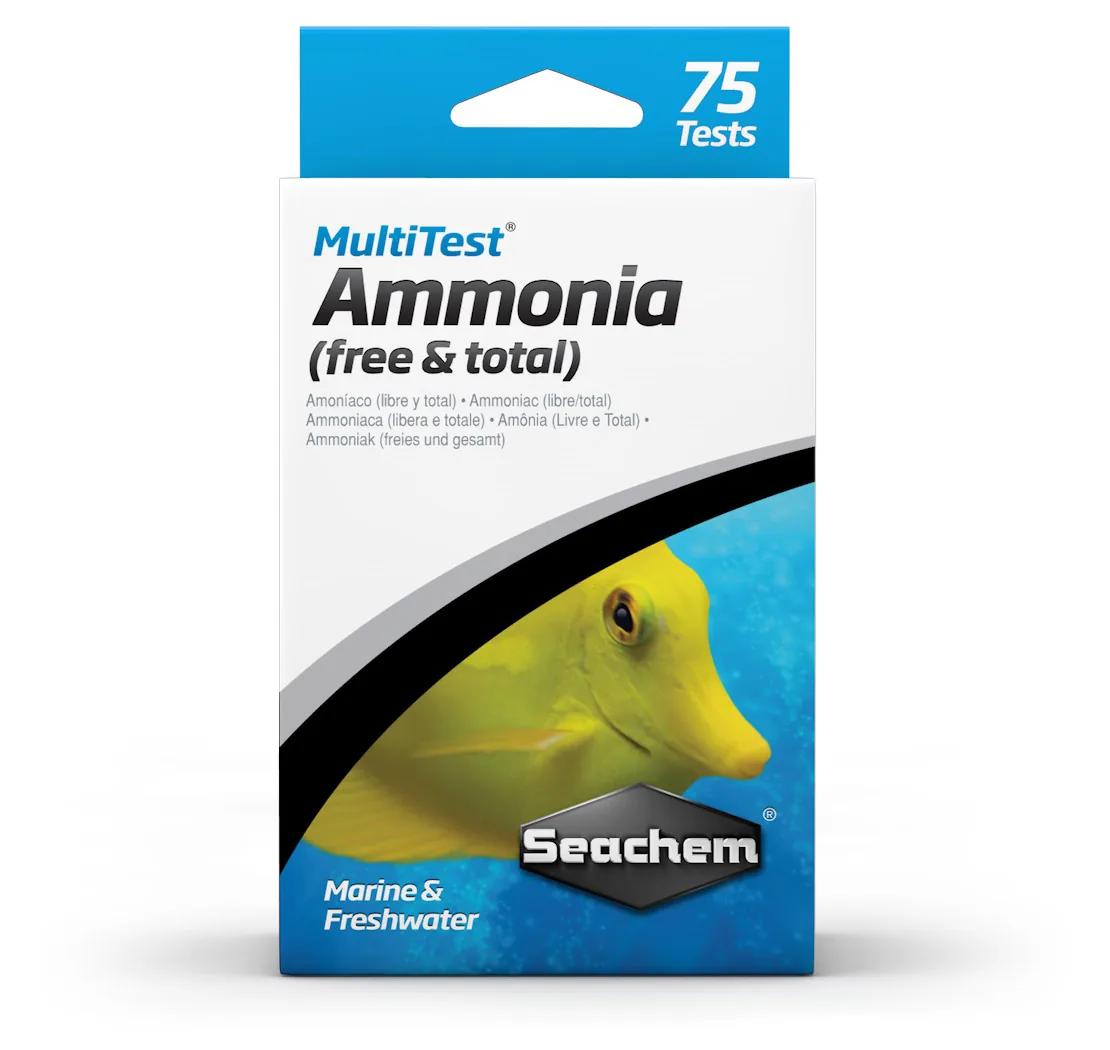 Seachem MultiTest Ammonia is a focused choice when ammonia is the immediate concern, such as a new filter, a recent livestock change, or a suspected problem. That narrow role can be useful because it keeps the question simple and avoids buying a second full box. It cannot tell you whether GH or KH suit your shrimp, and it is not a complete cycling plan. Use it beside hardness tests and record the sample conditions. Pros: focused ammonia monitoring; sensible as a targeted companion; less duplicate coverage. Cons: one parameter leaves the rest of the water routine to other tests.
JBL ProAquaTest GH
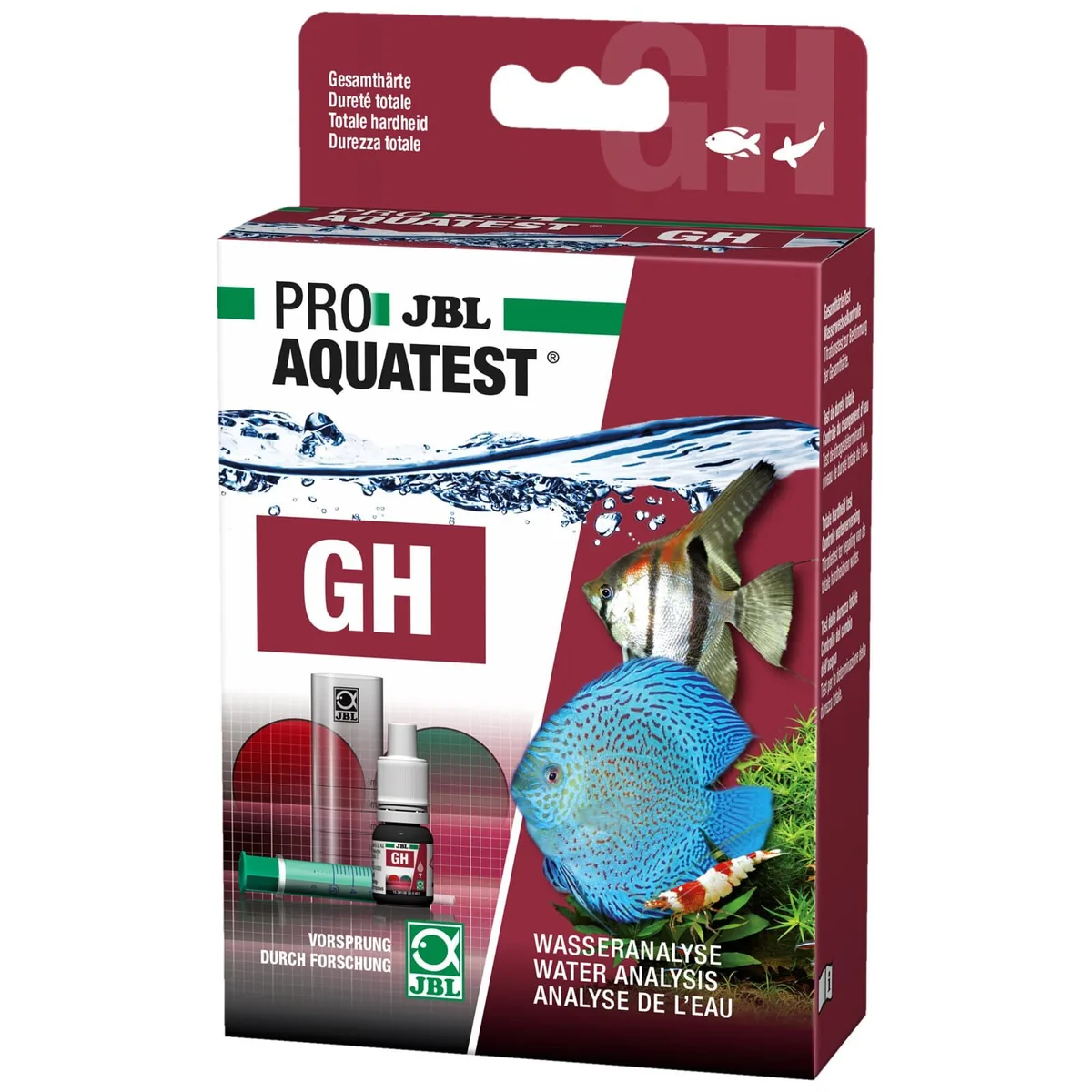 JBL ProAquaTest GH makes sense when general hardness is the number you need to follow, especially after changing remineralizer, water source, or substrate. A dedicated titration keeps the job clear and avoids pretending that a broad strip gives the same answer for every setup. GH alone is not enough for shrimp care. Pair it with a KH test and a cycling method, then use the same source water and mixing routine when comparing logs. Pros: direct hardness focus; useful for mineral adjustments; clearer than guessing from livestock behavior. Cons: one measurement cannot explain buffering or a cycling problem.
Sera gH-Test
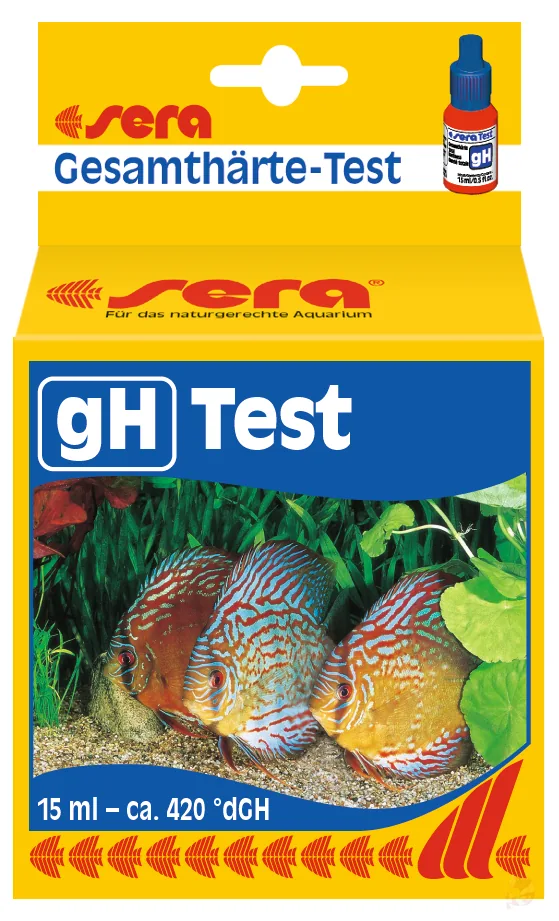 Sera gH-Test is a compact dedicated option for a shrimp keeper who wants to track general hardness without another multi-parameter box. The titration takes longer than a strip, yet that deliberate process can be easier to repeat when you are adjusting remineralized water. It does not cover KH, ammonia, or nitrate, so it belongs in a small testing system rather than standing alone. Keep the drop count and water volume consistent in every entry. Pros: specific GH role; suitable for mineral routines; avoids unused broad tests. Cons: hands-on steps and narrow coverage require companion tests.
How to choose a shrimp tank test kit
Separate two jobs. Cycling checks protect a new or disrupted aquarium. They usually center on ammonia, nitrite, nitrate, and pH. Shrimp-focused mineral checks look at GH and KH, which help you understand hardness and buffering in the water you are preparing. A kit that does one job well may be a better buy than a large bundle with no clear place in your routine.
Liquid tests need a sample tube, drops, a clean reading surface, and attention to timing. Strips are faster and easier to carry, but they need dry storage and an on-time reading. For a new tank, I prefer liquid tests for the decisions that affect whether livestock should be added. Strips are handy for routine screening once you know how their colors compare with your established results.
Write down the water source, remineralizer, date, and result. Test prepared water before it enters the aquarium when you are changing a mineral recipe. If a shrimp tank gives an unexpected number, repeat the test and check the method before dosing. Stability matters more than reacting to every small difference between two readings.
Frequently asked questions
What should I test first in a new shrimp tank?
Start with ammonia, nitrite, nitrate, and pH while the aquarium cycles. Add GH and KH before choosing a mineral routine or adding shrimp. The exact priority depends on the species and water source.
Do shrimp tanks need GH and KH tests?
They are useful when you need to understand mineral content and buffering, especially with remineralized or very soft water. A freshwater master kit may not include both, so check the contents and add dedicated tests if needed.
Are strips good enough for shrimp?
They are convenient for screening and trends when stored dry and read on time. Confirm an unexpected result with a liquid test before making a large water or mineral change.
Is a liquid kit better for beginners?
It takes more steps, but the fixed sample and reagent process is easier to repeat during cycling. Strips are simpler for quick checks. Choose the format you will actually use on schedule.
Can I test prepared remineralized water?
Yes. Testing the prepared water and recording the recipe gives you a reference before it enters the tank. Keep the mixing method and sample timing consistent so later results mean something.
Recommendation
For a new shrimp tank, pair the API Freshwater Master Test Kit with the API GH & KH Test Kit. That split covers cycling and the mineral questions that a shrimp-specific routine adds. If speed matters after the tank is stable, keep Tetra EasyStrips for screening. Choose JBL ProAquaTest GH or Sera gH-Test when hardness, rather than cycling, is the value you adjust most often.
Sources and methodology
We checked manufacturer information from API Fishcare, Tetra, JBL, Seachem, and Sera. We compared each product’s stated purpose, format, parameter coverage, timing burden, and fit for cycling or shrimp mineral checks. Amazon links are search links so current regional contents can be verified. Images are category visuals and do not depict exact branded models. No hands-on testing was performed.